
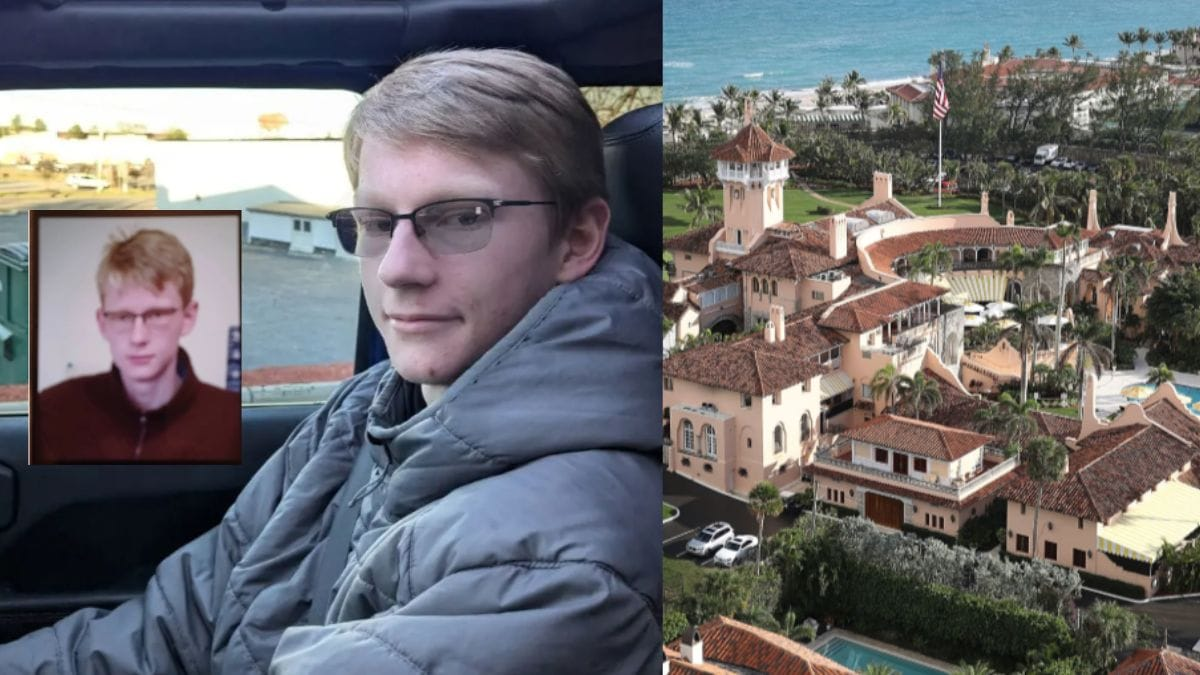
An armed intrusion at one of the most heavily secured private residences in the United States ended in fatal gunfire early Sunday morning, after 21-year-old Austin Tucker Martin breached the protected perimeter of President Donald Trump’s Mar-a-Lago property in Palm Beach, Florida. The confrontation unfolded shortly after 01:30 Eastern Time, when Secret Service agents and a Palm Beach County sheriff’s deputy responded to what authorities described as an immediate and serious security threat.
Martin, who had traveled from North Carolina, was carrying a shotgun and a fuel can when he was spotted near the property’s north gate. He was shot and killed after refusing repeated commands to drop the weapon and instead raising it into what officials described as a firing position. The incident occurred while the president was in Washington, D.C., and not present at the Florida estate.
Nevertheless, security protocols around the property remained fully operational, with layered protective measures in place. The breach triggered a swift and coordinated response from federal and local law enforcement, culminating in a shooting that authorities say was necessary to neutralize the perceived threat. The case has since become the subject of a federal investigation, with officials seeking to establish the full sequence of events leading up to the fatal encounter.
Martin’s identity was confirmed following the shooting, and officials in North Carolina later revealed that his family had reported him missing earlier that same morning. Law enforcement agencies across multiple jurisdictions are now working together to piece together his movements, motives, and preparations in the hours and days before he reached Mar-a-Lago. The incident has renewed public attention on the security surrounding presidential residences and added to ongoing national debates about political violence and threat prevention.
The Early Morning Breach and Confrontation
According to authorities, security personnel first detected Martin as he unlawfully entered the secured perimeter surrounding Mar-a-Lago in the early hours of Sunday morning. The property is protected by multiple layers of security, including an outer cordon managed by local sheriff’s deputies and an inner protective zone controlled by the Secret Service. Surveillance and monitoring systems identified the intruder as he approached the north gate area carrying what appeared to be both a shotgun and a fuel can, immediately elevating the situation to a high-risk security event.
Officers moved quickly to confront Martin and issued verbal commands instructing him to drop the items he was carrying. Palm Beach County Sheriff Ric Bradshaw later explained that the officers’ only verbal instruction was for him to drop the gas can and the shotgun. Martin complied partially by setting down the fuel container but did not surrender the firearm. Instead, according to officials, he raised the shotgun into a shooting stance, prompting an immediate armed response.
At that moment, Secret Service agents and a sheriff’s deputy opened fire. Officials described the use of force as necessary to neutralize a direct and imminent threat to the secured property. Martin was fatally wounded at the scene. Authorities later confirmed that no law enforcement officers were injured during the encounter, and body cameras worn by responding officers captured the confrontation, providing investigators with a detailed record of the incident.
Read : Insane! 23-Year-Old Anthony Thomas Reyes Jumps Mar-a-Lago Wall to Marry Donald Trump’s Granddaughter
Sheriff Bradshaw stated that investigators do not yet know whether the shotgun Martin carried was loaded, and determining that fact is part of the ongoing inquiry. The Federal Bureau of Investigation has joined the investigation to review evidence, reconstruct the sequence of events, and assess whether Martin’s actions were part of a broader plan or a lone incident. Federal authorities are also examining Martin’s travel route from North Carolina to Florida, including whether he acquired the firearm during that journey.
🚨21-year-old Austin Tucker Martin shot and killed after breaching Mar-a-Lago's secure perimeter armed with shotgun and gas canister. Here's what we know⬇️ | @Danamariemctv pic.twitter.com/Wpy5bhNtzJ
— FOX & Friends (@foxandfriends) February 23, 2026
The Secret Service characterized the shooting as a response to unlawful entry combined with the presentation of a weapon. Agency officials emphasized that the individual’s actions and refusal to comply with commands left officers with limited options under established protective protocols. The agency also confirmed that its director traveled to Florida following the incident to conduct operational reviews and reinforce response coordination for critical security events.
Background of the Suspect and Ongoing Investigation
Austin Tucker Martin was identified as a resident of Cameron, North Carolina. Authorities in Moore County confirmed that his family had reported him missing earlier on Sunday morning, only hours before the fatal confrontation in Florida. Local officials stated that their department had no prior law enforcement history involving Martin and that they were not directly involved in the Florida investigation beyond sharing missing-person information with federal authorities.
Investigators are now working to determine how and why Martin traveled from North Carolina to the Palm Beach area. One focus of the inquiry is whether he purchased the shotgun along the route he took south, which could help clarify whether the trip was planned in advance or developed spontaneously. Law enforcement agencies are also reviewing digital records, travel patterns, and communication history in an effort to reconstruct his movements and intentions.
Read : Truth Behind Viral Footage of ‘TACO’ Written in the Sky Above Donald Trump’s Mar-a-Lago Home
Officials have not publicly disclosed any confirmed motive for Martin’s actions. Investigators are examining whether he specifically targeted the Mar-a-Lago property or whether his actions were influenced by other factors. The presence of a fuel can alongside a firearm has drawn particular attention, as it may indicate preparation for multiple forms of disruption or damage. However, authorities have not released definitive conclusions about his plans.
Federal investigators are also analyzing body camera footage, surveillance recordings, and forensic evidence from the scene. These materials are expected to provide a clearer timeline of Martin’s approach, the officers’ response, and the exact sequence of events leading up to the shooting. Such reviews are standard procedure in incidents involving the use of deadly force by federal protective agents.
The Secret Service has emphasized that protective measures at Mar-a-Lago functioned as designed. The layered security system allowed personnel to identify and respond to the threat before it could advance deeper into restricted areas. Officials noted that the property’s protective structure is designed to detect unauthorized access quickly and ensure immediate intervention when a threat is identified.
Security Context and Broader Concerns About Political Violence
The fatal breach at Mar-a-Lago comes against a backdrop of heightened concern over threats directed at prominent political figures and institutions in the United States. Security around presidential residences and travel locations has long been among the most stringent in the country, but recent years have seen multiple incidents that have intensified scrutiny of protective operations.
Read : TikTok CEO Met Donald Trump at Mar-a-Lago Ahead of US Ban
Authorities have repeatedly emphasized that security at Mar-a-Lago includes extensive screening procedures for visitors, vehicle inspections, and continuous monitoring by both local and federal personnel. Detection dogs, metal detectors, and controlled access points are standard features of the property’s protective environment. The presence of both local sheriff’s deputies and Secret Service agents ensures overlapping layers of enforcement designed to respond rapidly to any breach.
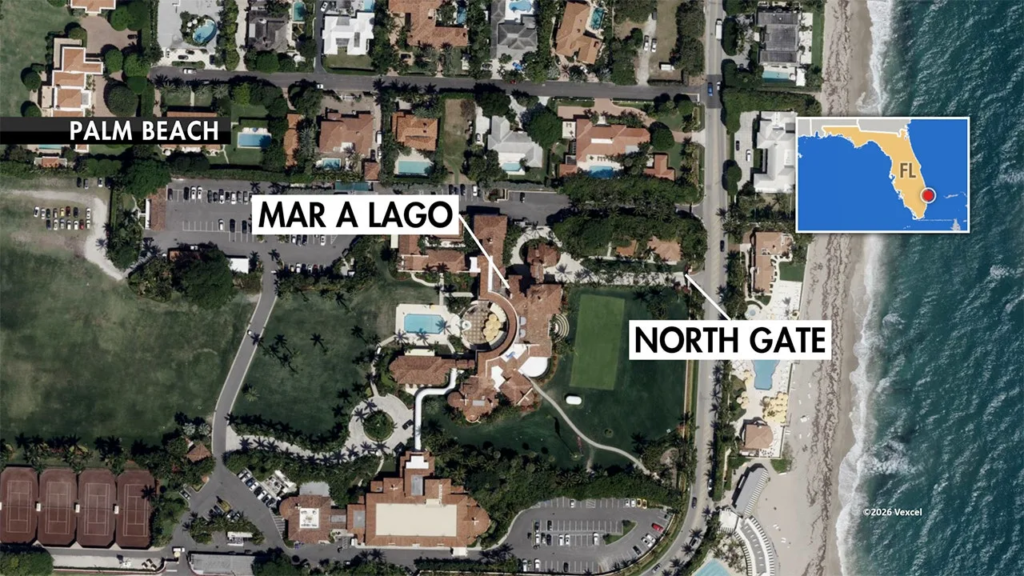
In this case, officials say those systems worked as intended by identifying an armed individual before he could approach occupied areas or cause harm. The rapid response and use of force reflect long-established protective protocols designed to eliminate immediate threats. Federal agencies routinely review such incidents to refine procedures and ensure that response strategies remain effective under evolving risk conditions.
The incident has also reignited public debate over political violence and security risks facing national leaders. Recent years have seen multiple high-profile threats, attempted attacks, and politically motivated acts of violence across the country. These events have intensified discussion about security preparedness, threat detection, and the broader social factors contributing to violent confrontations involving political figures.
In the aftermath of the shooting, federal and local authorities have emphasized the importance of ongoing coordination among law enforcement agencies. Investigative collaboration across jurisdictions, rapid information sharing, and continuous operational reviews are considered essential components of modern protective security. Officials say such measures are necessary to address increasingly complex threat environments and to respond quickly when individuals attempt to breach secured spaces.
As the investigation continues, authorities are expected to release additional findings regarding Martin’s movements, the condition of the weapon he carried, and any evidence clarifying his intent. For now, officials maintain that the actions of responding officers were consistent with established security procedures and that the response prevented a potentially more dangerous outcome.