
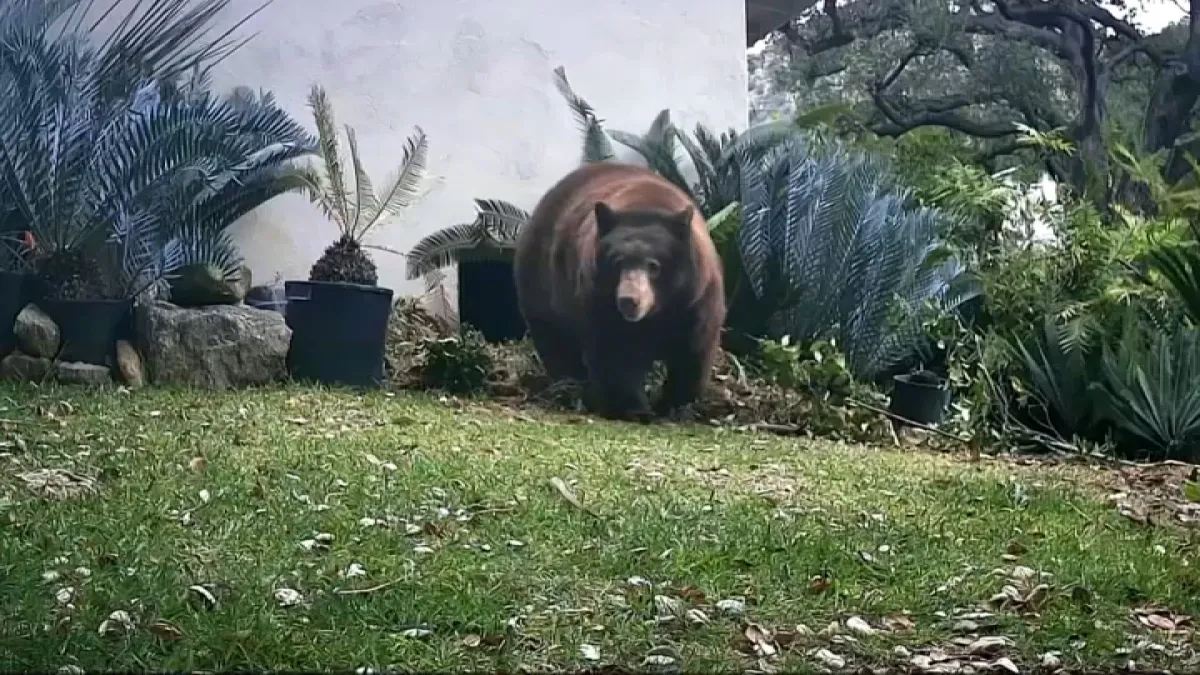
The decision to euthanize a bear in Monrovia, California, has sparked widespread public debate, highlighting the complex and often emotional intersection between wildlife management and community safety. What began as a frightening but relatively minor incident involving a woman walking her dog quickly evolved into a larger controversy involving prior attacks, scientific testing, and questions about how authorities handle human-wildlife conflicts.
While officials maintained that the action was necessary to protect residents, many in the community expressed frustration, arguing that alternative solutions were not fully explored. The incident unfolded on a Saturday morning when a woman encountered the bear during a routine walk. The animal swiped at her leg, leaving scratches behind her knee.
Although her injuries were reported to be minor and she was expected to recover fully, the encounter raised immediate concerns about public safety. Within a day, wildlife officials captured the bear along with her two cubs, setting in motion a chain of decisions that would ultimately lead to the bear’s euthanasia. The situation intensified when DNA testing confirmed that the same bear had been involved in another attack in the neighborhood the previous year, strengthening the case for decisive action.
Escalating Encounters and a Pattern of Behavior
The confirmation that the bear was linked to multiple incidents played a central role in the authorities’ decision-making process. According to officials, the animal had previously attacked an elderly man who was sitting on his enclosed porch in the same neighborhood. In that incident, the bear approached and swiped at the man, causing injuries before being driven away by a caretaker. The recurrence of aggressive behavior in a residential setting suggested a pattern that could not be ignored.
Wildlife officials typically assess such situations by examining the frequency and severity of encounters, as well as the likelihood of future incidents. In this case, the bear’s repeated proximity to humans and willingness to engage in aggressive behavior elevated it from a concern to a perceived threat. While bears are not uncommon in parts of California and often coexist peacefully with humans, repeated attacks shift the risk calculation significantly. Authorities must then weigh the potential danger against the feasibility of non-lethal interventions.
Relocation is often considered a viable option in wildlife management, but it is not always straightforward. Bears that have become accustomed to human environments may struggle to adapt if moved to remote areas. In some cases, relocated animals attempt to return to their original territory or continue problematic behaviors in new locations. These factors complicate decisions and can lead officials to conclude that euthanasia, though controversial, is the most reliable way to prevent further harm.
Read : Viral ‘Stop Banana green’ Trend that Chinese Employees are Using to Fight Work Stress
Despite these considerations, many residents questioned whether enough effort had been made to explore alternatives. The Monrovia City Council reportedly advocated for relocating the bear and her cubs to a national forest, reflecting a preference for a more humane outcome. However, local officials emphasized that such decisions ultimately fall under the jurisdiction of state wildlife authorities, limiting the city’s ability to influence the final outcome.
Community Reaction and Calls for Change
The euthanasia of the bear triggered a strong emotional response within the Monrovia community. More than 3,000 people signed a petition urging officials to spare the animal, demonstrating the depth of public sentiment. For many residents, the bear was not just a potential threat but also a familiar presence in the neighborhood, observed and documented over time through social media and local networks.
This sense of familiarity contributed to a perception that the bear’s behavior, while concerning, might have been manageable through alternative approaches. Some residents argued that better communication and community involvement could have led to a different outcome. They expressed frustration that decisions were made without sufficient input from those who had firsthand experience with the animal and its behavior.
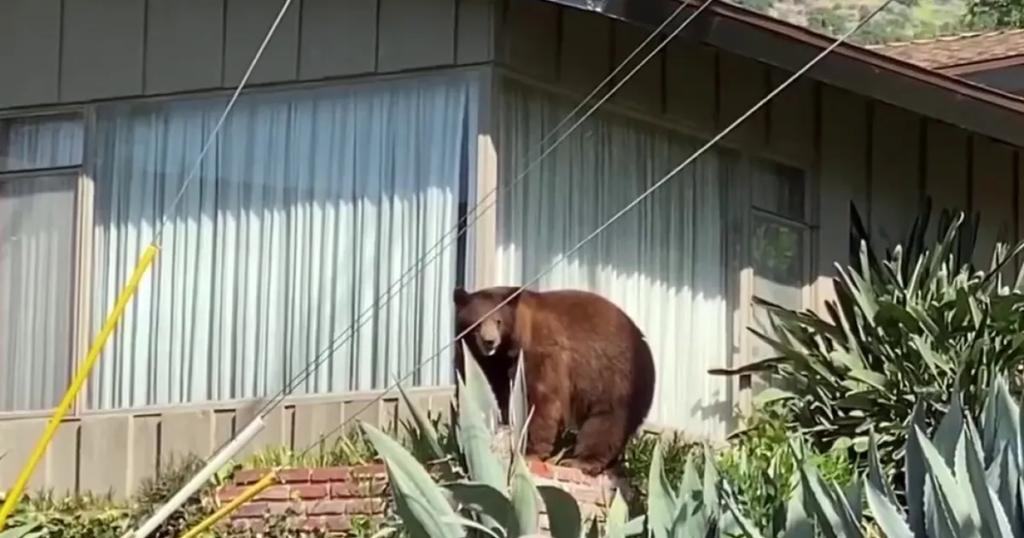
Criticism also focused on what some described as a reactive approach by wildlife authorities. Community members suggested that earlier intervention or more proactive strategies might have prevented the situation from escalating to the point where euthanasia was deemed necessary. These concerns point to a broader challenge in wildlife management: balancing timely action with thorough consultation and transparency.
The role of social media further amplified the community’s response. Local accounts that tracked bear sightings helped foster a sense of connection between residents and the animals sharing their environment. When the bear was euthanized, these platforms became spaces for expressing grief, anger, and calls for reform. The incident thus extended beyond a single event, becoming part of an ongoing conversation about how humans and wildlife coexist in increasingly overlapping habitats.
Balancing Public Safety and Wildlife Conservation
At the heart of the controversy lies a fundamental tension between ensuring human safety and preserving wildlife. Authorities emphasized that euthanasia is considered a last resort, used only when an animal poses an ongoing risk that cannot be mitigated through other means. In their assessment, the bear’s history of aggression and repeated interactions with humans met this threshold.
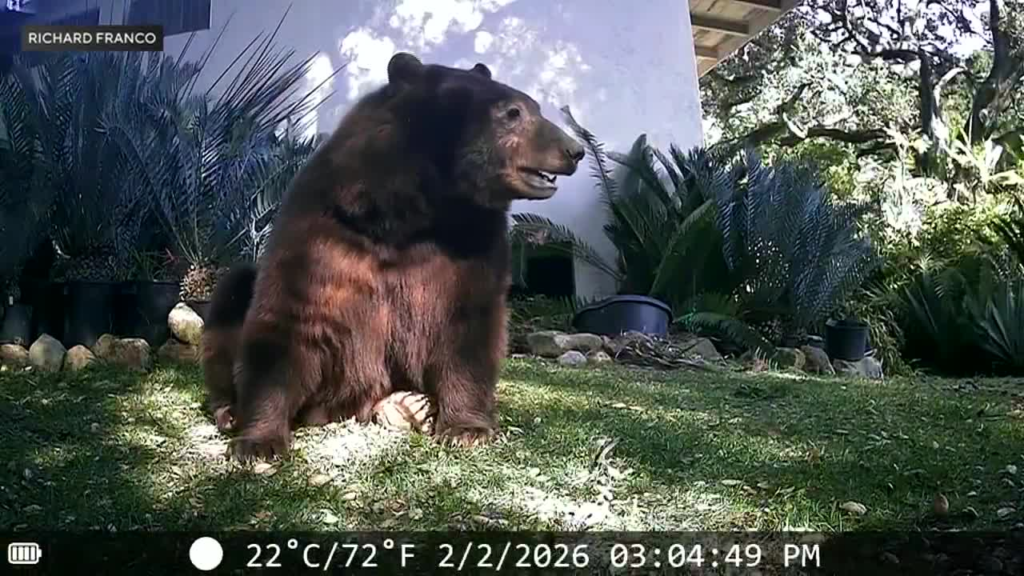
From a public safety perspective, the decision reflects a precautionary approach. Even though the most recent victim sustained only minor injuries, the potential for more serious harm in future encounters could not be discounted. Wildlife officials are tasked with preventing such outcomes, often under conditions of uncertainty and public scrutiny. In this context, erring on the side of caution can lead to decisions that are difficult but deemed necessary.
At the same time, the incident highlights the importance of long-term strategies for reducing human-wildlife conflict. As urban areas expand into natural habitats, encounters with animals like bears are likely to become more frequent. Preventative measures such as securing food sources, educating residents, and implementing deterrents can play a crucial role in minimizing risks. These approaches require coordination between authorities and communities, underscoring the need for effective communication and shared responsibility.
The fate of the bear’s cubs offers a partial counterpoint to the tragedy. Officials reported that the cubs were healthy and would be relocated to a facility before eventually being released into wildland areas. This outcome suggests an effort to preserve the next generation while addressing the immediate threat posed by the mother. However, it also raises questions about how young animals adapt after such interventions and what their future interactions with humans might look like.
Ultimately, the Monrovia case serves as a reminder of the difficult choices inherent in wildlife management. It illustrates how individual incidents can quickly become focal points for broader debates about ethics, policy, and coexistence. While there may be no perfect solution, the situation underscores the need for continued dialogue, improved strategies, and a commitment to balancing the needs of both people and the natural world.