

Donald Trump has made a decisive move in shaping the future of the US Air Force by awarding Boeing the contract to develop the Next Generation Air Dominance (NGAD) fighter jet, officially named the F-47. This new aircraft is expected to revolutionize air combat by incorporating advanced technologies and working alongside drones. The decision marks a significant moment in the aerospace industry, particularly for Boeing, as it secures one of the most lucrative defense contracts in history.
Boeing Secures a Major Win Over Lockheed Martin
The competition for the NGAD contract was fierce, with Boeing and Lockheed Martin battling for the prestigious opportunity to produce the next-generation fighter jet. Ultimately, Boeing emerged victorious, delivering a much-needed boost to the company.
Lockheed Martin, the defense giant responsible for the widely used F-22 Raptor and F-35 Lightning II, suffered a significant setback with this decision. Its shares dropped nearly 6% following the announcement, while Boeing’s stock saw a 5% increase.
The awarding of the contract is a testament to Boeing’s renewed capabilities in the defense sector. The company has faced numerous challenges in recent years, including cost overruns in major defense projects and issues in its commercial aircraft division.
Read : Columbia University Agrees to Ban Masks on Campus After $400M Funding Freeze by Trump
However, this contract provides an opportunity for Boeing to reassert itself as a leader in the fighter jet industry. The F-47 project is expected to bring in more than $20 billion initially, with the potential to generate hundreds of billions over the next several decades.
The Advanced Capabilities of the F-47 Fighter Jet
Although details about the F-47 remain classified, it is expected to incorporate cutting-edge stealth technology, advanced sensors, and next-generation propulsion systems. The aircraft will be designed to operate seamlessly with drones, forming a “family of systems” aimed at countering threats from nations such as China and Russia.
The emphasis on drone integration aligns with modern warfare strategies, where unmanned aerial systems play a critical role in intelligence gathering, surveillance, and combat missions.
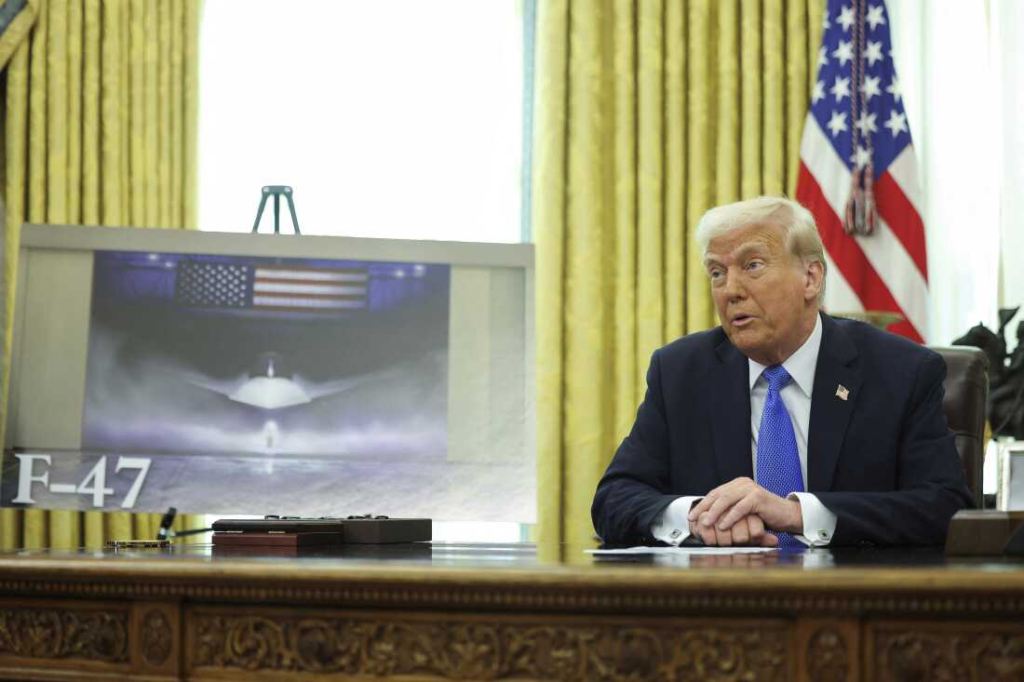
One of the defining features of the F-47 will likely be its ability to execute both manned and unmanned operations. This hybrid approach will allow the Air Force to conduct missions with greater flexibility, reducing risks for human pilots while maximizing efficiency on the battlefield.
Additionally, the F-47 is expected to boast superior electronic warfare capabilities, enabling it to disrupt enemy communications and radar systems effectively.
Read : Trump Challenges Biden to Golf Match with $1 Million Charity Bet
Boeing’s engineering teams in St. Louis, Missouri, will spearhead the development of the F-47. The project will create thousands of jobs, reinforcing the region’s status as a hub for advanced aerospace manufacturing.
The decision to award Boeing the contract signals confidence in the company’s ability to deliver a high-performing, reliable fighter jet that meets the evolving demands of modern air combat.
Implications for the US Military and Global Security
The introduction of the F-47 represents a significant milestone in the United States’ efforts to maintain air superiority in an increasingly contested global landscape. The aircraft’s advanced capabilities will serve as a deterrent against potential adversaries and ensure that the US Air Force remains at the forefront of aerial warfare technology.
China and Russia have been aggressively developing their own next-generation fighter jets, including China’s J-20 and Russia’s Su-57. The F-47 will be designed to outperform these aircraft, giving the US military a technological edge in any future conflicts.
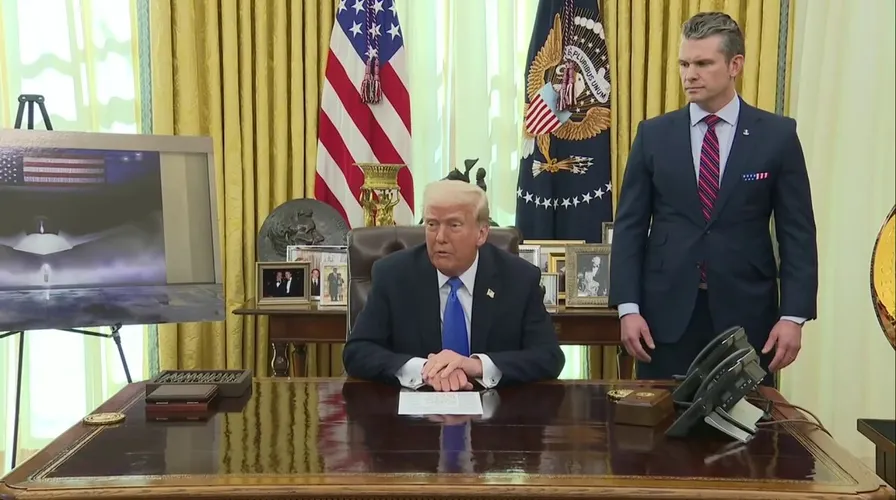
By integrating artificial intelligence, drone coordination, and advanced weaponry, the F-47 will redefine the role of manned fighters in the 21st century. Beyond military applications, the contract has broader geopolitical implications.
The deal strengthens Boeing’s position as a key defense contractor, securing long-term stability for the company and reinforcing America’s defense industrial base. The decision also sends a clear message to allies and adversaries alike that the US is committed to maintaining air superiority for decades to come.
While Lockheed Martin may still explore legal avenues to contest the contract decision, the high-profile nature of the announcement makes a successful challenge unlikely. The involvement of former President Donald Trump, who publicly endorsed Boeing’s selection, further solidifies the deal’s legitimacy and minimizes the risk of reversal.
The F-47 program will undoubtedly shape the future of air combat and solidify America’s dominance in the skies. With Boeing at the helm, the project has the potential to deliver a revolutionary aircraft that will serve as the backbone of the US Air Force for years to come. As development progresses, the world will be watching closely to see how this next-generation fighter jet transforms the battlefield.