
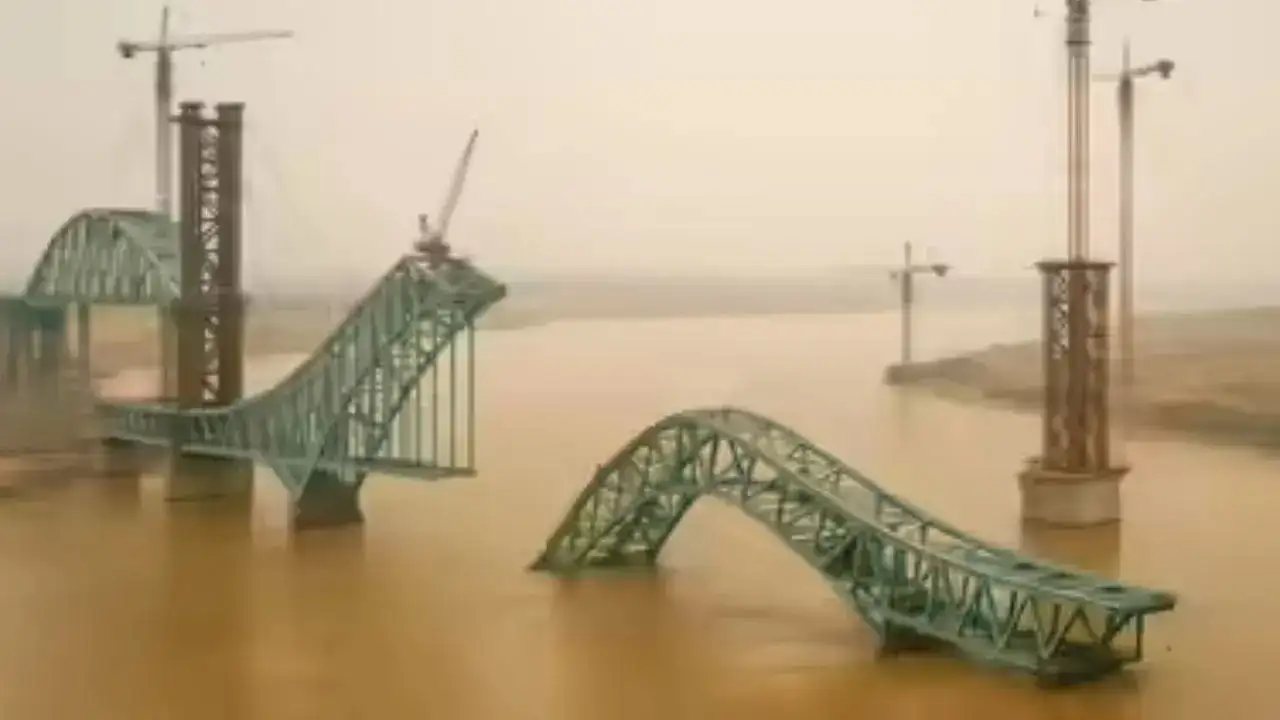
In the dead of night, under the vast skies of northwest China, a symbol of engineering ambition turned into a scene of unimaginable tragedy. On August 22, 2025, at approximately 3 a.m., a massive section of the Jianzha Yellow River Bridge—a key component of the Sichuan-Qinghai Railway—gave way, plunging into the turbulent waters of the Yellow River below.
This under-construction marvel, touted as the world’s longest double-track continuous steel truss arch railway bridge, became the site of a deadly collapse that claimed at least 12 lives and left four workers missing.
The incident, captured in harrowing footage aired by state media, has sent shockwaves through the nation and beyond, raising urgent questions about construction safety in one of the world’s most ambitious infrastructure landscapes. As rescue teams comb the river with boats, helicopters, and robots, the human cost of this “builddoom”—a term evoking the perilous rush of rapid development—comes into stark focus.
The Moment of Disaster
The collapse unfolded with terrifying suddenness during a routine yet critical phase of construction known as a tensioning operation. Sixteen workers were on the bridge deck, perched 55 meters (180 feet) above the Yellow River’s surface, when disaster struck. A steel cable—essential for stabilizing the 108-meter steel beam main arch rib—snapped without warning, causing the central arch section to buckle and fall.
Aerial photographs released by state media reveal a gaping void in the bridge’s curved aquamarine arch, with a twisted segment of the deck dangling precariously into the river, its metal framework bent like a broken spine. Video footage from the scene, broadcast by Chinese state television, captures the exact moment: the middle section of the arch gives way in a cascade of debris, sending sparks and structural elements tumbling into the dark waters below. The sound of screeching metal and crashing waves echoes through the night, a grim symphony of failure.
The Jianzha Yellow River Bridge, spanning 1.6 kilometers across the iconic river that cradles the cradle of Chinese civilization, was no ordinary project. Located at the border between Jianzha County in the Huangnan Tibetan Autonomous Prefecture and Hualong Hui Autonomous County in Haidong City, Qinghai Province, it represents China’s relentless push for high-speed rail connectivity in remote, rugged terrains.
Construction began with high expectations; the bridge was set to be China’s first steel truss arch railway bridge over the Yellow River, designed to handle double-track traffic and integrate seamlessly into the Sichuan-Qinghai Railway network. By June 2025, the cable towers had been capped, and closure was anticipated by August—timelines that now seem ominously rushed in hindsight.
Eyewitness accounts, though limited due to the early hour, describe a scene of chaos. The People’s Daily reported that 15 workers and a project manager were directly in the affected area when the cable failed. Initial death tolls varied in the frantic hours following the incident—first reported as six, then seven, before state TV confirmed 12 fatalities. The Yellow River, often called “China’s Sorrow” for its history of devastating floods, added to the peril; its swift currents swept away victims and debris, complicating immediate assessments.
Read : China Sliced Beipanjiang Mountain in Half to Build Road with World’s Highest Bridge
This was not just a structural failure but a human one, where the ambition to bridge vast distances clashed with the unforgiving forces of physics and fatigue. The bridge’s design, while innovative, relied heavily on precise tensioning of steel strands—a process that, if mishandled, can lead to catastrophic overloads. Experts note that such operations require meticulous calibration, and any flaw in materials or execution could precipitate exactly this kind of disaster.
#MOMENT the construction rope broken at the site of the Jianzha #YellowRiver #Bridge which is built as part of W. #China’s Sichuan-Qinghai Railway 🚃 , leaving four dead and 12 missing https://t.co/aOJvC1b53I pic.twitter.com/ADULgOPqFX
— ShanghaiEye🚀official (@ShanghaiEye) August 22, 2025
As dawn broke over Qinghai’s mountainous landscape, the full extent of the damage became apparent. The collapsed section, measuring hundreds of meters, left the bridge incomplete and unstable, halting all work on the site. State-run Xinhua News Agency described the event as a “rupture during the steel strand tensioning operation,” emphasizing the technical nature of the failure.
This incident joins a troubling pattern of construction mishaps in China, where rapid urbanization and infrastructure booms sometimes outpace safety protocols. Yet, in this case, the stakes were particularly high: the Sichuan-Qinghai Railway aims to link isolated regions, fostering economic growth in underdeveloped areas. The collapse not only delays this vital project but also casts a shadow over the engineering prowess China showcases globally.
Heroes in the Aftermath: Rescue Efforts
In the wake of the collapse, a massive rescue operation swung into action, showcasing the coordinated might of China’s emergency response systems. By mid-morning on August 22, over 800 personnel had been deployed to the site, equipped with 91 vehicles, 27 boats, one helicopter, and five specialized robots designed for underwater searches. The Qinghai Emergency Management Department activated protocols immediately, focusing on locating the four missing workers who were presumed to have fallen into the river’s depths.
Six nearby hospitals opened green channels for rapid treatment, though tragically, no survivors from the initial plunge have been reported beyond the confirmed fatalities. Rescue teams faced formidable challenges: the Yellow River’s murky waters, swollen from seasonal flows, reduced visibility and increased the risk of secondary accidents. Boats patrolled the riverbanks, while the helicopter provided aerial oversight, scanning for any signs of life or debris.
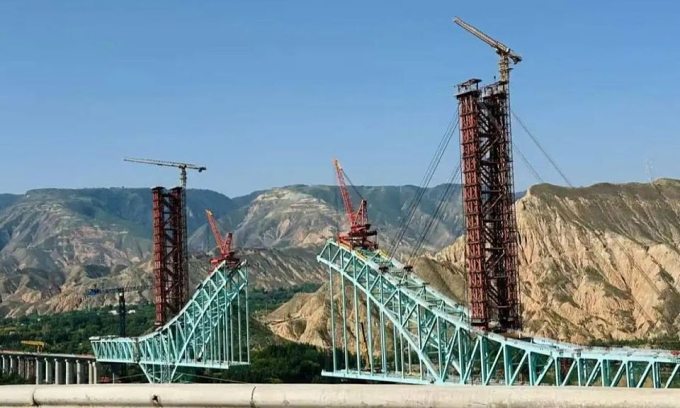
Robots, equipped with cameras and sensors, dove into the currents to probe areas too dangerous for human divers. “We are sparing no effort,” a spokesperson from the ministry stated, as reported by Global Times, underscoring the directive to verify personnel status and prevent further incidents. The human stories emerging from the rescue paint a picture of quiet heroism. Local villagers, awakened by the crash, rushed to the river’s edge to assist, providing blankets and hot tea to exhausted responders.
One rescuer, interviewed anonymously by state media, described the emotional toll: “We know these workers; they were building for our future. Finding them is our duty.” Families of the victims gathered at makeshift command centers, their anguish palpable amid the whir of machinery. The operation extended into August 23, with updates trickling in—by afternoon, the death toll stabilized at 12, but hope for the missing dimmed as hours passed.
This response highlights China’s capacity for swift mobilization, a legacy of past disasters like earthquakes and floods. Yet, it also exposes vulnerabilities: industrial accidents remain frequent, with a 2024 cave-in in Shenzhen claiming 13 lives still fresh in memory. The Jianzha incident’s rescue efforts, while commendable, underscore the need for preventive measures over reactive heroics. As boats continue to skim the Yellow River, the operation serves as a somber reminder that behind every infrastructure triumph are lives hanging in the balance.
Lessons from the Rubble: Causes and Implications
Preliminary investigations point to a single, devastating cause: the snapping of a steel cable during tensioning, a process that applies controlled stress to reinforce the structure. While official probes are underway—led by a ministry work team dispatched to the site—the failure raises alarms about material quality, workmanship, and oversight. China’s construction sector, fueled by state-driven projects, often operates under tight deadlines, potentially compromising safety checks.
Vague regulations and lax enforcement have been cited in past reports as contributing factors to similar tragedies. The broader implications ripple far beyond Qinghai. The Sichuan-Qinghai Railway, part of China’s Belt and Road Initiative echoes, aims to enhance connectivity in ethnic minority regions, boosting trade and tourism.
A delay here could cost millions in economic setbacks, not to mention eroded public trust in mega-projects. Social media reactions, from shock to calls for accountability, reflect growing scrutiny: posts on platforms like X highlight the “tofu-dreg” quality of some constructions, a slang term for shoddy work. One viral video, shared widely, shows the collapse in real-time, prompting discussions on worker protections.
To prevent future “builddooms,” experts advocate stricter standards: mandatory fatigue testing for cables, real-time monitoring tech, and independent audits. The ministry’s pledge to “draw lessons” is a start, but systemic reforms are essential. As China continues its infrastructure surge, balancing speed with safety will determine whether such bridges connect or collapse societies. The Yellow River tragedy, with its 12 lost souls, demands nothing less than a recommitment to human-centered development.