
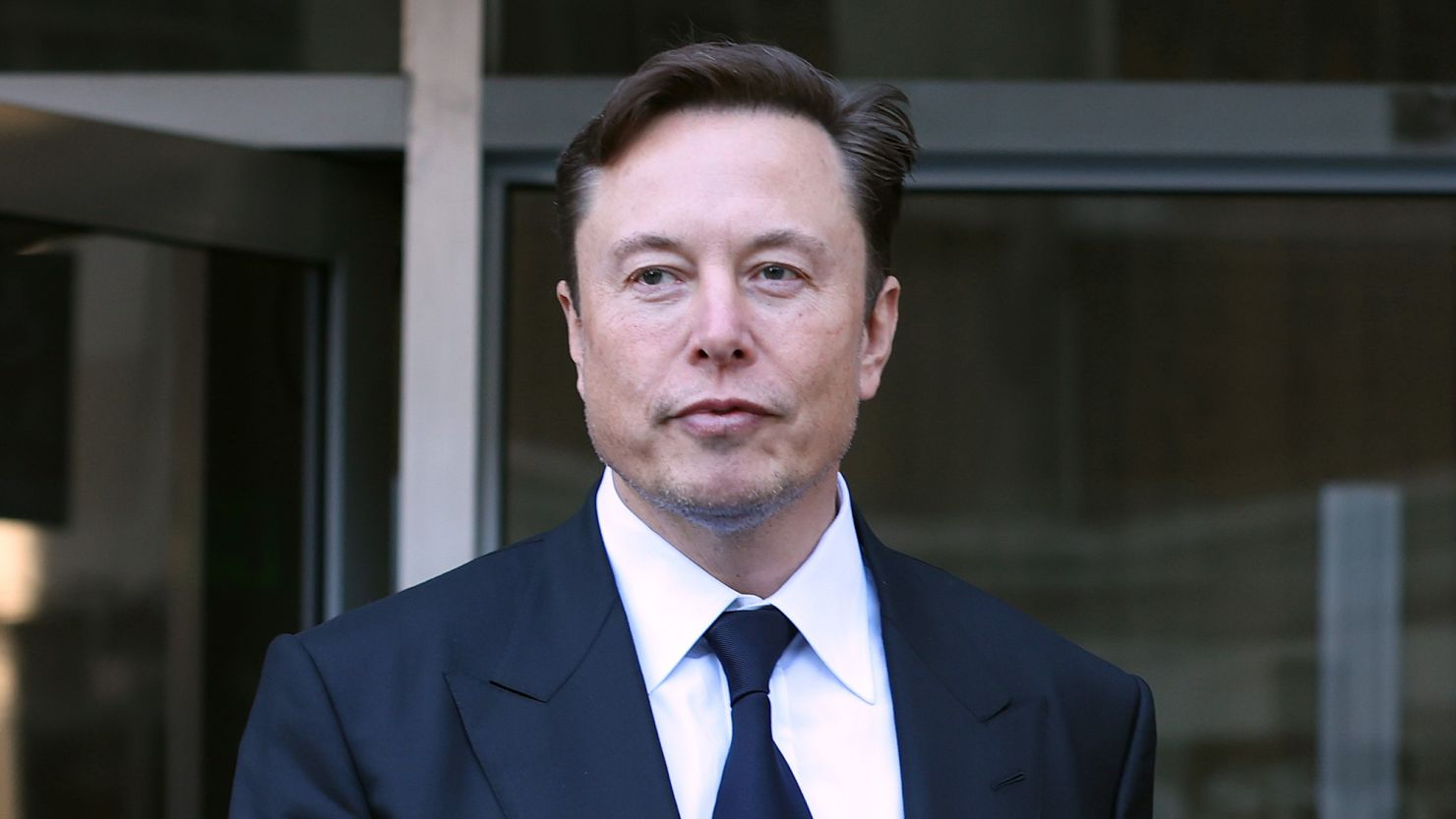
Elon Musk has launched one of the most consequential legal challenges in the modern technology industry, asking a US court to award him as much as $134 billion in damages from OpenAI and its principal commercial partner, Microsoft. The extraordinary figure reflects Musk’s claim that the companies derived massive financial benefits from his early involvement in OpenAI while allegedly abandoning the nonprofit mission that initially justified his support.
The dispute places questions of corporate governance, nonprofit conversion, investor rights, and the commercialization of artificial intelligence squarely before a jury, with potential implications that extend well beyond the parties involved. Filed ahead of an expected April trial in federal court in Oakland, California, Musk’s latest submission argues that OpenAI’s meteoric rise from a research-focused nonprofit into a dominant for-profit AI entity was built in significant part on his early financial backing, personal involvement, and reputational capital.
He contends that the resulting gains were “wrongful” because they flowed from a structure and purpose that, in his view, violated the founding principles under which OpenAI was established in 2015. OpenAI and Microsoft have forcefully rejected Musk’s claims, calling them legally unfounded and economically speculative. Both companies have moved to limit or exclude Musk’s damages evidence, setting the stage for a high-stakes courtroom battle that could reshape how courts view the monetization of nonprofit-born technology ventures in the AI era.
Elon Musk’s Claim: Early Backing, Massive Gains, and a Broken Mission
At the center of Musk’s lawsuit is the assertion that OpenAI’s current value, and Microsoft’s associated benefits, are inseparable from the role he played during the organization’s formative years. According to court filings, Elon Musk invested approximately $38 million into OpenAI, representing roughly 60 percent of its early seed funding. Beyond capital, he claims to have contributed extensive non-monetary value, including recruiting key researchers, connecting founders with influential industry figures, and lending credibility to a then-unproven AI research initiative.
Musk’s legal team argues that these contributions catalyzed OpenAI’s eventual transformation into a company valued at tens of billions of dollars. An expert retained by Musk, financial economist C. Paul Wazzan, estimates that OpenAI’s valuation and related economic benefits increased by between $65.5 billion and $109.4 billion as a direct result of Musk’s early involvement. Microsoft, which later became OpenAI’s most significant commercial partner through cloud infrastructure, licensing, and strategic investment, is alleged to have gained an additional $13.3 billion to $25.1 billion from that same foundation.
The lawsuit does not claim that Musk is entitled to profits merely because he was an early supporter. Instead, it frames the alleged damages as a form of disgorgement, arguing that OpenAI and Microsoft unjustly retained gains derived from conduct that Musk characterizes as fraudulent or misleading. Specifically, Elon Musk contends that OpenAI abandoned its original mission to develop artificial general intelligence for the benefit of humanity once it restructured into a capped-profit entity and entered into deep commercial arrangements with Microsoft.
In his filing, Musk likens his position to that of an early startup investor whose returns may vastly exceed initial contributions, but he goes further by asserting that the scale of OpenAI’s and Microsoft’s gains makes them subject to judicial recovery. He maintains that the law permits courts to order the return of profits obtained through improper means, regardless of the disparity between the original investment and the alleged damages.
Musk exited OpenAI in 2018, years before the release of ChatGPT and the explosion of public interest in generative AI. Since then, he has become an increasingly vocal critic of OpenAI’s leadership and governance, arguing that the company has evolved into a de facto subsidiary of Microsoft while retaining the public-facing language of a mission-driven nonprofit. His lawsuit seeks to hold both entities accountable for what he portrays as a fundamental betrayal of the principles that justified OpenAI’s creation.
OpenAI and Microsoft Push Back Against ‘Unverifiable’ Damages Theory
OpenAI and Microsoft have responded aggressively, not only disputing Musk’s narrative but also attacking the legal and economic foundations of his claims. In a separate filing submitted the same day as Musk’s damages request, the companies asked the court to sharply limit what Musk’s expert witness can present to jurors, arguing that the analysis underpinning the $134 billion figure is speculative, unverifiable, and unprecedented.
According to the defendants, Musk’s damages theory rests on an implausible assumption that his early support entitles him to a share of value created years later through independent research, engineering, and commercialization efforts. They argue that OpenAI’s growth cannot be causally attributed to Musk’s involvement in a manner that would justify transferring billions of dollars from a nonprofit-linked entity to a former donor who is now a direct competitor.
Microsoft, in particular, has rejected allegations that it “aided and abetted” any wrongdoing by OpenAI. The company maintains that its partnership was structured transparently and lawfully, reflecting standard commercial arrangements in the technology sector. Its lawyers have emphasized that there is no evidence Microsoft participated in, or even knew of, any alleged misrepresentation regarding OpenAI’s mission or governance.
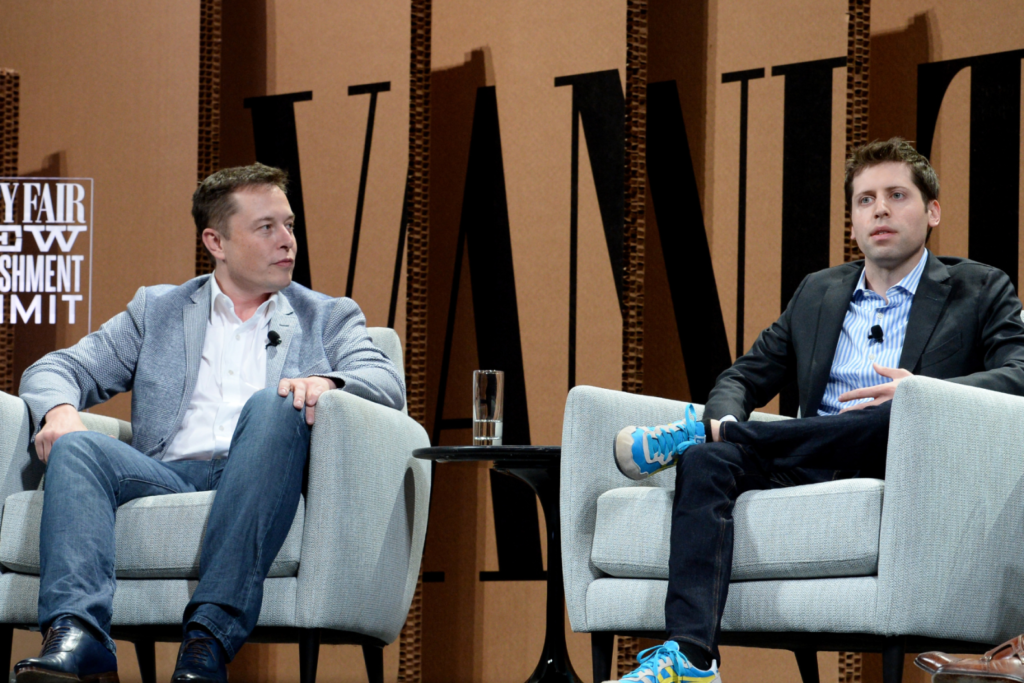
OpenAI, for its part, has characterized Musk’s lawsuit as part of a broader campaign of harassment. The company has previously stated that Musk himself supported the idea of restructuring OpenAI to attract capital and compete with other well-funded AI labs, including Google. In public statements and court filings, OpenAI has suggested that Musk’s objections only intensified after he left the organization and later founded rival AI startup xAI, which now develops the chatbot Grok.
The defendants also warn that allowing Musk’s damages model into evidence could confuse or mislead jurors by presenting speculative valuations as concrete losses. They argue that Wazzan’s methodology relies on hypothetical counterfactuals and assumptions about how OpenAI would have developed absent Musk’s involvement, a line of reasoning they say courts have traditionally viewed with skepticism.
Beyond the technical disputes, OpenAI and Microsoft have framed the case as an attempt to rewrite history. They contend that OpenAI’s success was driven by the work of hundreds of researchers and engineers over many years, supported by billions of dollars in infrastructure investment, not by the actions of any single individual. From their perspective, Musk’s claim represents an effort to retroactively assert control or extract value from an organization he voluntarily left long before its most significant breakthroughs.
What the Trial Could Mean for AI Governance and Nonprofit Tech Models
The case now heading to a jury has implications that extend far beyond Elon Musk, OpenAI, and Microsoft. At its core, the dispute raises fundamental questions about how nonprofit technology initiatives can evolve, attract capital, and enter commercial markets without exposing themselves to claims from early supporters who disagree with later strategic decisions.
If Musk succeeds, even partially, it could set a precedent that early donors or founders of nonprofit ventures may be entitled to disgorgement of profits if the organization later pivots toward for-profit activities. Such a ruling could have a chilling effect on nonprofit-backed innovation, particularly in capital-intensive fields like artificial intelligence, where long-term sustainability often depends on partnerships with major corporations.
Read : Former NBA Guard Patrick Beverley Arrested on Felony Assault Charge Involving Minor Sister
The possibility of punitive damages and injunctive relief further elevates the stakes. Musk’s filing notes that, should a jury find OpenAI or Microsoft liable, the court could impose additional remedies beyond monetary awards. While the filing does not specify what an injunction might entail, even the prospect of court-ordered changes to OpenAI’s structure or partnerships could reverberate across the AI industry.
For Microsoft, the case underscores the legal risks associated with deep integration into third-party AI developers. As the most influential commercial partner of OpenAI, Microsoft has tied key elements of its cloud and productivity strategy to the success of generative AI models. Any adverse ruling that disrupts that relationship could have significant operational and financial consequences.
The trial also highlights the increasingly contentious landscape of AI development, where former allies have become competitors and critics. Musk’s role as founder of xAI complicates the narrative, providing OpenAI and Microsoft with an argument that his lawsuit is motivated as much by competitive positioning as by principle. Musk, however, has framed his actions as a matter of public interest, asserting that unchecked concentration of AI power contradicts the original vision of OpenAI as a safeguard against precisely such outcomes.
Ultimately, the jury will be asked to weigh competing stories of innovation, intent, and accountability. Was OpenAI’s evolution a necessary adaptation to the realities of building advanced AI systems, or did it represent a departure from promises made to early supporters and the public? Were the gains realized by OpenAI and Microsoft the lawful fruits of technological progress, or were they, as Musk claims, wrongful gains built on a misrepresented mission?
As artificial intelligence continues to reshape economies and societies, the answers delivered in this courtroom could influence not only the fate of the companies involved but also the legal frameworks governing how transformative technologies are funded, controlled, and commercialized.
The next time I learn a blog, I hope that it doesnt disappoint me as a lot as this one. I mean, I do know it was my choice to learn, but I truly thought youd have something fascinating to say. All I hear is a bunch of whining about one thing that you may fix if you happen to werent too busy searching for attention.