
The annual year-end press conference of Russian President Vladimir Putin is traditionally a tightly choreographed political event, known for its length, its dense discussions of domestic policy and international affairs, and the occasional unscripted remark from the president. Broadcast live to millions of viewers inside Russia and abroad, the event is usually dominated by questions on geopolitics, the economy, and social policy.
In December 2025, however, the long-running format took an unexpected turn when a 23-year-old journalist transformed his brief moment on camera into a deeply personal public proposal, creating a scene that blended private emotion with a state occasion in a way rarely seen on such a platform. Kirill Bazhanov, a local television journalist, had waited among hundreds of reporters for a chance to speak.
When his turn finally came, he did not begin with policy or politics. Instead, standing before the president, government officials, and a global audience, he addressed someone watching from afar. His words, directed to his girlfriend Olga, instantly altered the tone of the room. What followed was an unusual interlude of applause, surprise, and commentary that briefly suspended the usual rhythm of the press conference and drew attention to the personal lives and economic concerns of young Russians.
An Unexpected Proposal on a Global Broadcast
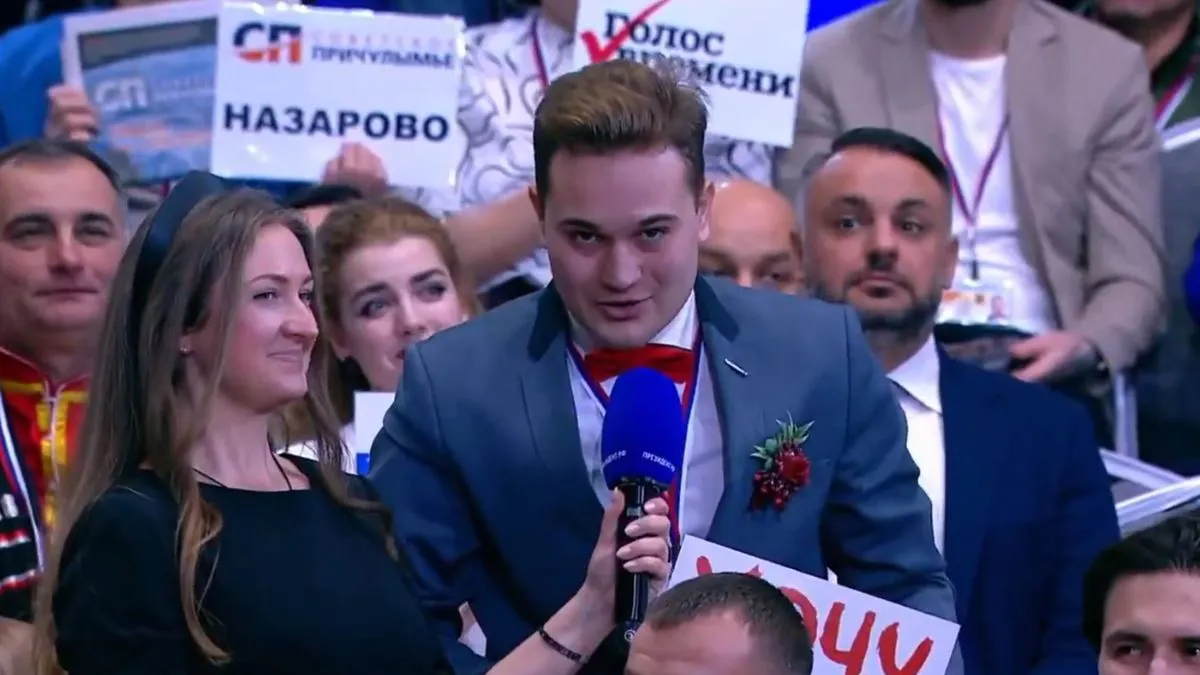
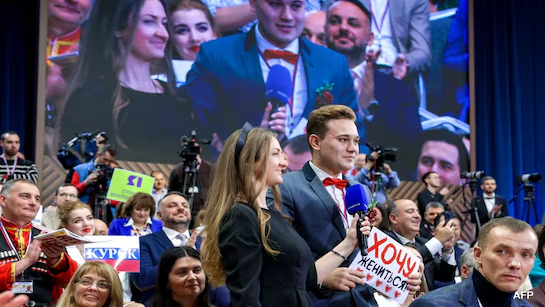
Kirill Bazhanov’s proposal unfolded live during the press conference, an event that often stretches for several hours and allows journalists from across Russia to pose questions directly to the president. Wearing a red bow tie and holding a placard reading “I want to get married,” Bazhanov had already set himself apart visually from the crowd. When he was given the microphone, he began by informing the audience that his girlfriend was watching the broadcast. After a brief pause, he delivered his proposal plainly and directly: “Olga, will you marry me? Please marry me… I propose to you.”
The reaction inside the hall was immediate. Applause and cheers erupted from journalists and attendees, an unusual response in a setting normally reserved for measured reactions and restrained commentary. The moment was striking not only because of its emotional content, but also because of its context. Putin’s press conferences are carefully managed, and journalists are expected to adhere to professional norms. Bazhanov’s decision to use his allotted time for a marriage proposal marked a deliberate departure from those expectations.
Despite the personal nature of the proposal, the atmosphere remained supportive rather than critical. The host allowed the moment to stand, and the broadcast continued without interruption. Bazhanov then transitioned to his intended professional question, raising concerns about the rising cost of living in Russia and the challenges faced by young families. His question reflected broader anxieties about economic pressures, particularly housing costs and mortgages, which have become a significant issue for younger generations attempting to establish stable family lives.
❤️ The Moment A Russian Journalist PROPOSES To His Girlfriend In Front Of Putin & Invites President To The Wedding – A Wholesome Break From The Serious Stuff pic.twitter.com/cUzr4aAcmR
— RT_India (@RT_India_news) December 19, 2025
Roughly an hour after the proposal, the programme host returned to the story with an update. She announced that the Russian news agency TASS was reporting that Olga had accepted Bazhanov’s proposal. The confirmation triggered another wave of applause in the hall. The host turned to Bazhanov and formally confirmed the news, stating that Olga would marry him. President Putin joined in the applause, lending a symbolic endorsement to the personal milestone that had unfolded during his press conference.
Putin’s Response and the Blending of Personal and Political Themes
Following the confirmation of Olga’s acceptance, Bazhanov took the opportunity to extend an invitation to the president, saying that he and his fiancée would be glad to see him at their wedding ceremony. Putin did not respond directly to the invitation, avoiding any commitment that might blur the line between state duties and private events. Instead, he reframed the moment within the broader context of social policy and economic responsibility.
Read : Satirical ‘Mount Rushmore’ Featuring Trump, Putin, Xi, and Kim Unveiled at Seacon Square Mall
Putin referred back to Bazhanov’s earlier question about the material conditions facing young families. He remarked that a man should be the breadwinner and acknowledged the financial pressures associated with starting a family. In a light-hearted comment, he suggested passing a hat around to collect enough money for the wedding. The remark was met with laughter and applause, reinforcing the informal tone that had briefly overtaken the press conference.
While Putin’s response was partly humorous, it also touched on serious themes that are central to Russian domestic policy. Demographic decline, housing affordability, and support for young families have been recurring topics in presidential addresses and policy initiatives. By linking Bazhanov’s proposal to these broader issues, Putin effectively folded the personal moment back into the political framework of the event.
The exchange highlighted how individual stories can resonate within larger national conversations. Bazhanov later explained that he and Olga had been together for eight years but had struggled to plan a family due to heavy mortgage costs and broader economic pressures. His proposal, therefore, was not only a romantic gesture but also an implicit commentary on the challenges faced by young couples in contemporary Russia. The fact that this commentary unfolded during a presidential press conference amplified its visibility and symbolic weight.
Public Reaction and the Broader Significance of the Moment
The proposal quickly attracted attention beyond the press conference hall. Clips circulated widely on social media, and international news outlets reported on the unusual scene. Many viewers responded positively, describing the moment as refreshing and humanizing in an otherwise formal political setting. Others debated whether such a personal gesture was appropriate at a state event, questioning the boundaries between professional journalism and private expression.
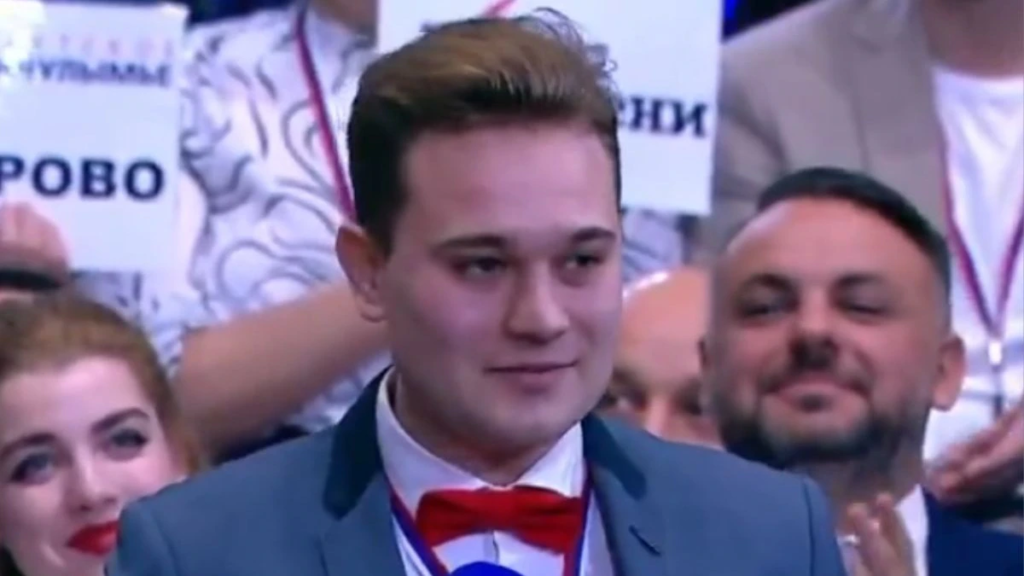
For Bazhanov, the decision to propose publicly carried both risks and rewards. On one hand, he used a rare professional opportunity for a personal purpose, something that could have drawn criticism or professional consequences. On the other hand, the overwhelmingly positive reaction suggested that the gesture resonated with both the audience in the hall and viewers at home. The applause, the supportive response from the host, and the president’s light-hearted remarks all contributed to framing the proposal as a moment of shared humanity rather than a breach of protocol.
The episode also illustrated the enduring appeal of personal narratives in political contexts. In a media environment saturated with policy debates and geopolitical analysis, a simple question of marriage captured attention precisely because of its universality. The concerns Bazhanov raised about affordability and stability echoed the experiences of many young people, not only in Russia but globally. His proposal became a focal point for discussing the intersection of personal aspirations and economic realities.
In the end, the press conference returned to its usual format, with questions on foreign policy, economic strategy, and social programs dominating the remaining hours. Yet the proposal lingered in public memory as one of the defining moments of the event. It served as a reminder that even in the most formal political settings, individual lives and emotions continue to shape the narratives that resonate most strongly with the public.