
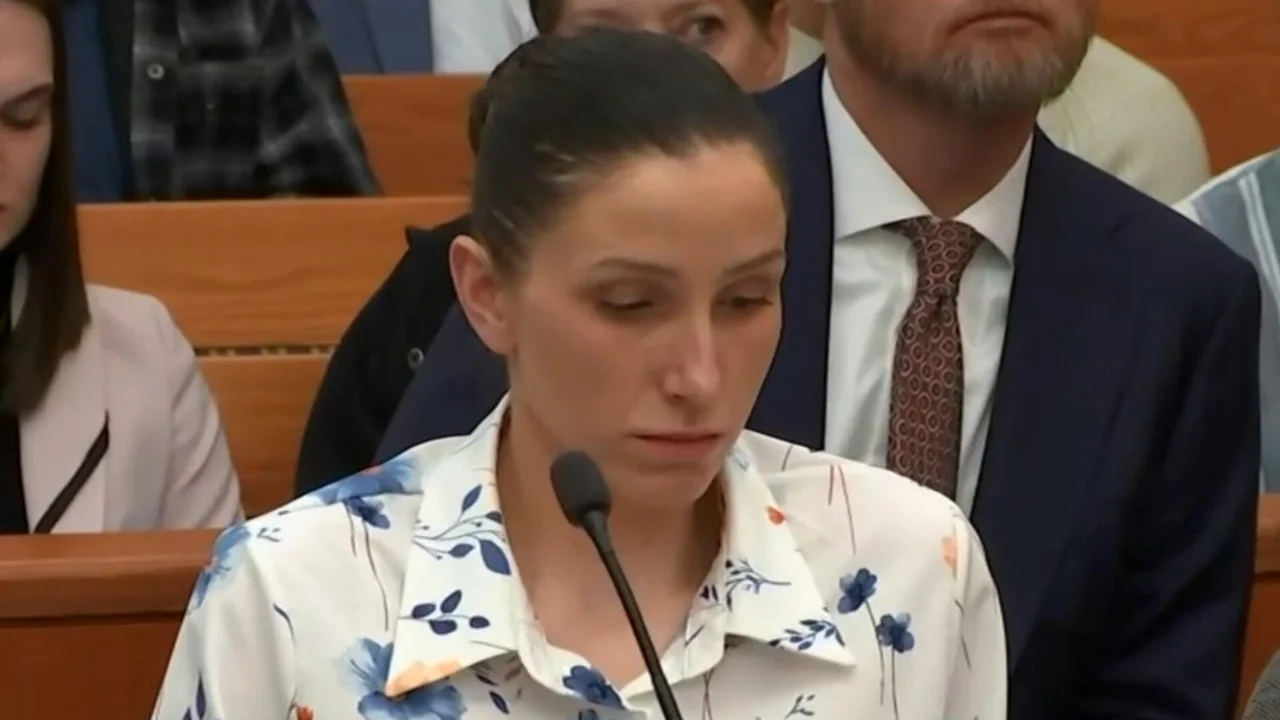
The case of Kouri Richins has drawn widespread attention for its disturbing combination of calculated intent, financial motives, and a public narrative that sharply contrasted with the reality revealed in court. A Utah jury found the 35-year-old mother guilty of murdering her husband, Eric Richins, by poisoning him with a fentanyl-laced drink in March 2022. The verdict came after a relatively short deliberation period, underscoring the weight and clarity of the evidence presented by prosecutors.
What made the case particularly striking was the juxtaposition between Richins’ public image as a grieving widow and children’s book author, and the prosecution’s portrayal of her as someone driven by financial strain and personal motives to commit a calculated crime.
The trial presented a detailed reconstruction of events leading up to Eric Richins’ death, including earlier alleged attempts to poison him, mounting financial pressures, and an extramarital relationship that prosecutors argued contributed to her motive. The conviction also included charges of attempted murder related to a prior poisoning incident, as well as fraud for attempting to collect insurance benefits after her husband’s death. Together, these elements painted a comprehensive picture of a case that combined premeditation, deception, and ultimately fatal consequences.
A Carefully Built Case of Motive and Premeditation
Prosecutors built their case by focusing on a combination of financial distress, personal relationships, and deliberate actions that suggested planning rather than impulsive behavior. Evidence presented in court indicated that Kouri Richins had accumulated significant debt in the years leading up to her husband’s death. At the same time, she had taken out life insurance policies on him, creating a potential financial incentive tied directly to his death.
The prosecution argued that this financial strain was a key factor driving her actions. According to testimony, Richins believed that she would inherit an estate valued at more than $4 million upon her husband’s death. This belief, combined with her mounting liabilities, was presented as a central motive. Prosecutors emphasized that she wanted to leave the marriage but did not want to lose access to her husband’s financial assets, framing the crime as a calculated attempt to secure both personal freedom and financial gain.
In addition to financial motives, the prosecution introduced evidence of an extramarital affair. They argued that Richins was planning a future with another man, further strengthening the narrative that she had reasons beyond financial distress to remove her husband from her life. This combination of personal and financial motivations formed the backbone of the prosecution’s argument.
The timeline of events was another critical component. Court documents revealed that between December 2021 and February 2022, Richins had been in contact with an individual who had previously been arrested on drug-related charges. She initially sought prescription painkillers such as hydrocodone but later requested something significantly stronger, explicitly asking for fentanyl. This progression suggested an escalation in intent, moving from less potent substances to a drug known for its extreme lethality.
Read : Johnson & Johnson Ordered to Pay $260 million to U.S. Cancer Patient Blaming Its Baby Powder
Prosecutors also presented evidence of a prior poisoning attempt. During a Valentine’s Day dinner in February 2022, Eric Richins reportedly fell seriously ill after consuming food prepared by his wife. According to court records, he later told a friend that he believed he had been poisoned. This incident became a key part of the attempted murder charge, with prosecutors arguing that it demonstrated both intent and a willingness to test the method before ultimately carrying out the fatal act.
The Night of the Murder and Key Evidence
The events of March 4, 2022, formed the central focus of the murder charge. According to testimony, Kouri Richins told authorities that she had prepared a vodka-based drink for her husband and served it to him in their bedroom. She claimed that after doing so, she left the room to attend to one of their children who was experiencing a night terror, eventually falling asleep with the child.
She later stated that when she returned to the bedroom, she found her husband unresponsive and “cold to the touch.” Emergency services were contacted, but Eric Richins was pronounced dead. At the time, the circumstances appeared unclear, but a subsequent medical examination revealed the cause of death to be a fentanyl overdose.
The medical examiner’s findings were critical to the case. Toxicology reports showed that Eric Richins had five times the lethal dosage of fentanyl in his system, a level that strongly indicated intentional poisoning rather than accidental exposure. This evidence aligned with the prosecution’s argument that the drug had been deliberately administered in the drink prepared by his wife.

Further strengthening the case was testimony from the individual who allegedly supplied the drugs. This witness told the court that they had provided Richins with fentanyl, directly linking her to the substance that caused her husband’s death. Combined with text message evidence showing her requests for increasingly potent drugs, this testimony created a clear chain connecting her actions to the fatal outcome.
The prosecution also highlighted the pattern of behavior leading up to the murder. The earlier poisoning attempt, the acquisition of fentanyl shortly before the fatal incident, and the circumstances of the final night all contributed to a narrative of deliberate and escalating actions. Investigators argued that this pattern demonstrated not only intent but also persistence, as the initial attempt had failed to achieve the desired outcome.
The defense, in contrast, chose not to call any witnesses and did not have Richins testify on her own behalf. This decision meant that the prosecution’s narrative went largely unchallenged in terms of alternative explanations for the evidence presented. While the defense maintained her plea of not guilty, the absence of a counter-narrative likely influenced how the jury interpreted the case.
Aftermath, Fraud Charges, and Public Reaction
In addition to the murder and attempted murder convictions, Kouri Richins was also found guilty of fraud related to insurance claims filed after her husband’s death. Prosecutors argued that she had attempted to collect benefits under false pretenses, further reinforcing the financial motive outlined during the trial. This aspect of the case highlighted not only the alleged planning behind the murder but also the steps taken afterward to capitalize on its outcome.
Read : Husband Charged in Death of 37-Year-Old Teacher and Volleyball Coach Ashley Flynn
One of the most widely discussed elements of the case was Richins’ publication of a children’s book shortly before her arrest. The book, written to help children cope with grief and loss, was dedicated to her late husband and presented her as a widow navigating tragedy with her family. In interviews conducted prior to her arrest, she spoke about the intention behind the book, expressing hope that it would provide comfort to others experiencing similar losses.

This public narrative stood in stark contrast to the evidence presented in court. Prosecutors used this contrast to underscore what they described as a deliberate attempt to shape public perception while concealing the truth about her husband’s death. The timing of the book’s publication, just months before her arrest, added another layer of complexity to how the case was viewed by the public.
The conviction carries severe legal consequences. The most serious charge, aggravated murder, carries a potential sentence of 25 years to life in prison. The additional convictions for attempted murder and fraud further compound the legal ramifications she faces. Sentencing will ultimately determine the full extent of her punishment, but the verdict itself marks a definitive conclusion to the question of guilt.
Public reaction to the case has been shaped by its unusual and unsettling details. The combination of a family tragedy, alleged financial desperation, and the use of a highly potent and dangerous substance like fentanyl has made the story particularly compelling. It has also raised broader questions about trust, the hidden dynamics within relationships, and the ways in which appearances can diverge dramatically from reality.
The case serves as a stark example of how complex motives and calculated actions can intersect with devastating consequences. Through detailed investigation and extensive testimony, prosecutors were able to piece together a narrative that convinced a jury beyond a reasonable doubt. The outcome underscores the role of forensic evidence, digital communication records, and witness testimony in establishing both intent and accountability in modern criminal cases.
As the legal process moves toward sentencing, the case of Kouri Richins remains a significant example of how a combination of financial pressures, personal relationships, and deliberate planning can culminate in a crime that not only ends a life but also leaves lasting impacts on a family and community.