
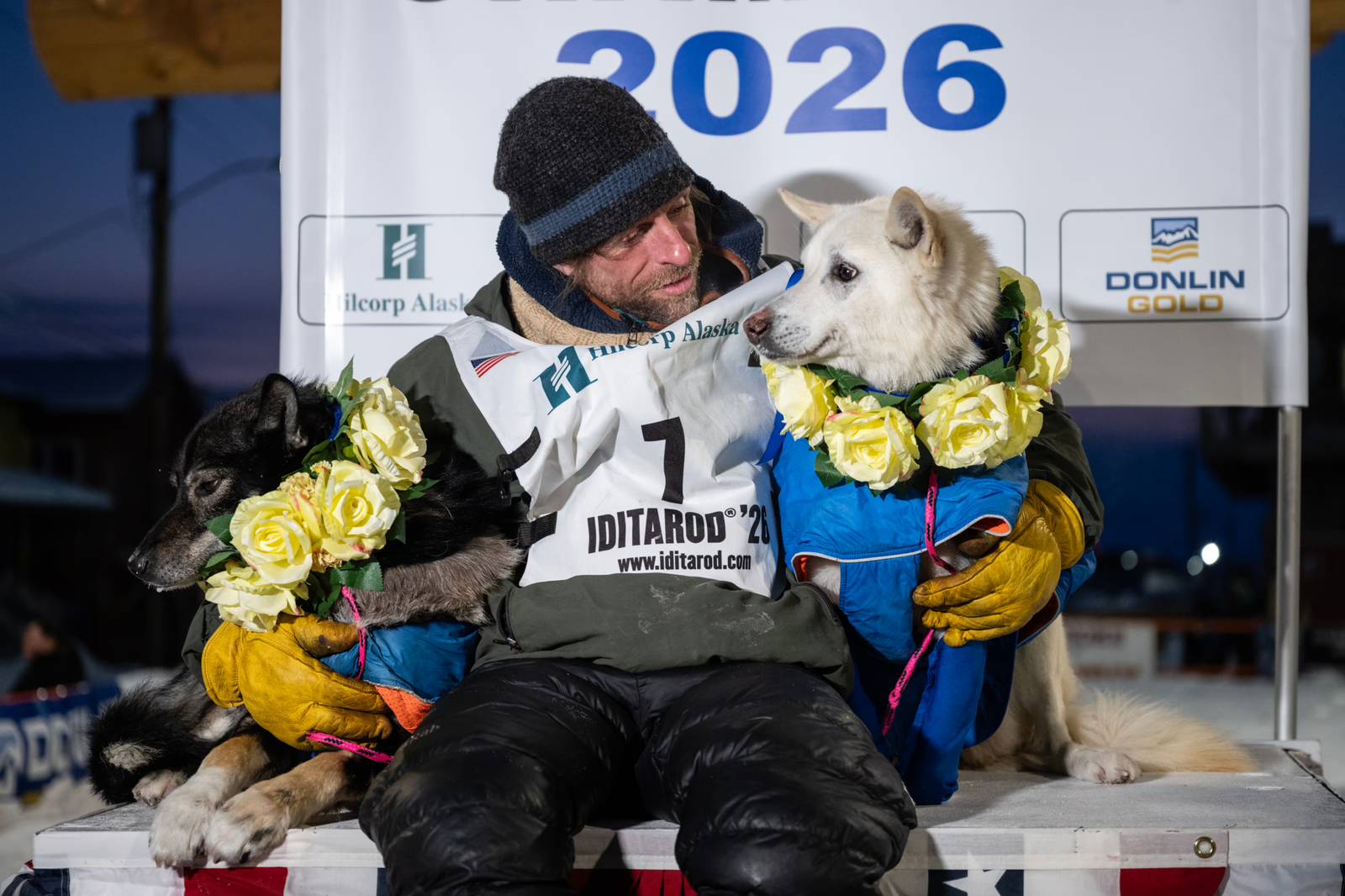
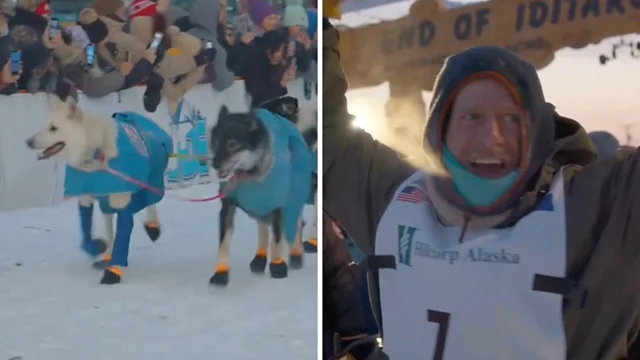
The vast, frozen wilderness of Alaska once again set the stage for one of the most grueling endurance races in the world, as veteran musher Jessie Holmes secured a remarkable back-to-back victory in the Iditarod Trail Sled Dog Race. Covering nearly 1,000 miles of unforgiving terrain, the race tested not only physical endurance but also mental resilience, strategy, and the deep bond between musher and dog team. Holmes crossed the finish line in Nome on a cold March night, greeted by a community that understands the magnitude of such an achievement.
His victory was not just a repeat win but a statement of consistency, dedication, and mastery over a race that has broken even the toughest competitors. Jessie Holmes’ journey through this year’s race was marked by discipline and focus, as he guided his team across mountain ranges, along the frozen Yukon River, and over unstable sea ice near the Bering Sea coast.
The race began in Willow following a ceremonial start in Anchorage, and from the very beginning, Holmes positioned himself as a strong contender. The trail demanded careful pacing, strategic rest periods, and an acute awareness of weather and trail conditions. Through it all, Holmes maintained a steady rhythm, relying on the strength and coordination of his dogs, including his trusted lead pair, Zeus and Polar.
A Grueling Race Across Alaska’s Harsh Terrain
The Iditarod is widely recognized as one of the most challenging endurance events on Earth, pushing participants to their absolute limits. This year’s race was no exception, with mushers navigating treacherous landscapes that included steep mountain passes, vast stretches of frozen rivers, and unpredictable coastal ice. Temperatures often dropped to extreme lows, and winds could shift suddenly, turning manageable conditions into dangerous obstacles within minutes.
For Jessie Holmes, every mile required calculated decisions, from when to push forward to when to rest his team. The race route itself is steeped in history, tracing paths once used during Alaska’s Gold Rush era and later serving as critical supply lines in remote regions. Modern mushers must honor that legacy while adapting to contemporary challenges, including fluctuating weather patterns and logistical constraints.
Jessie Holmes demonstrated a deep understanding of these dynamics, managing his team’s energy levels while maintaining competitive speed. His ability to read the trail and respond to changing conditions proved instrumental in securing his second consecutive title. One of the defining aspects of Jessie Holmes’ victory was his connection with his dogs.
Read : Peru Becomes the First South American Nation to Adopt UPI Technology
After crossing the finish line, he celebrated by feeding them ribeye steaks, a gesture that reflected both appreciation and respect for their role in the achievement. The bond between musher and dog team is central to success in the Iditarod, and Holmes’ relationship with his animals was evident throughout the race. His team’s endurance and cohesion allowed him to maintain a strong pace even during the most demanding segments of the trail.
From Reality Television to Iditarod Champion
Before becoming a dominant force in sled dog racing, Jessie Holmes gained recognition through his appearance on a reality television series that documented life in remote Alaska. His time on the show provided not only visibility but also financial support, which he used to invest in better dogs, equipment, and his long-term goal of building a life in the wilderness. Over the years, he transformed those opportunities into a sustainable mushing career, steadily improving his performance in the Iditarod.
Read : Disturbing! 5-Day-Old Baby Mauled to Death by Family Dog
Jessie Holmes first entered the race in 2018, earning rookie of the year honors with a seventh-place finish. Since then, he has consistently ranked among the top competitors, with multiple top-ten finishes and a steady climb toward the podium. His recent back-to-back victories place him among a select group of mushers who have achieved consecutive wins early in their careers. Historically, such achievements have often preceded even greater success, suggesting that Holmes may continue to be a leading figure in the sport for years to come.

Beyond racing, Jessie Holmes has built a life deeply connected to the Alaskan wilderness. A trained carpenter, he used his earnings to purchase land near Denali National Park and develop a remote homestead. Living far from urban centers, with the nearest neighbor miles away, he has embraced a lifestyle that mirrors the rugged independence required for mushing. This environment has not only shaped his character but also provided the ideal setting for training and caring for his dog team.
Jessie Holmes has often spoken about how he fell in love with dog sledding after being introduced to the sport by a neighbor. That initial spark grew into a lifelong passion, driving him to pursue excellence despite the challenges. His journey reflects a combination of determination, adaptability, and respect for the traditions of mushing, all of which contributed to his success in the Iditarod.
Challenges, Controversies, and the Future of the Race
While Jessie Holmes’ victory is a celebration of skill and perseverance, the Iditarod continues to face ongoing challenges and scrutiny. Participation numbers have declined in recent years, with this year’s field matching one of the smallest in the race’s history. Rising costs, particularly for dog care and supplies, have made it increasingly difficult for new mushers to enter the sport. At the same time, the retirement of experienced competitors has reduced the overall field, raising concerns about the race’s long-term sustainability.
Read : Arizona Rattlers Linebacker Patrick Jones Accused of Leaving Dog in Locked Hot Car
Financial support remains a critical factor in maintaining the race’s viability. This year’s prize purse saw a significant boost due to contributions from a Norwegian billionaire who also participated in a noncompetitive category. Additional funds were directed toward checkpoint communities, many of which rely on the race as an important economic and cultural event. These contributions highlight the interconnected nature of the Iditarod, where the race not only challenges mushers but also supports remote villages along the route.
The introduction of a noncompetitive “expedition” class reflects efforts to broaden participation and attract new interest. Participants in this category are allowed more flexibility, including external support and adjustable rest periods, making the experience more accessible while preserving the integrity of the main competition. However, balancing tradition with innovation remains a delicate task for organizers.
Animal welfare concerns continue to be a significant point of debate surrounding the Iditarod. Critics have long argued that the race places undue strain on sled dogs, citing historical data on dog fatalities. This year, one dog death was reported, with officials confirming that an investigation would be conducted. Supporters of the race emphasize the care and training that mushers provide to their teams, as well as the deep bond that exists between them. The discussion highlights the broader tension between preserving cultural traditions and addressing evolving ethical standards.
Despite these challenges, the Iditarod remains a symbol of endurance, resilience, and the human spirit’s ability to adapt to extreme environments. Jessie Holmes’ victory serves as a reminder of what is possible through dedication and partnership, not just between humans but also between humans and animals. His performance this year demonstrated not only technical skill but also an emotional connection to the race and the communities along the trail.
As Jessie Holmes celebrated his win in Nome, he reflected on the experience with gratitude, acknowledging the support of the communities and the beauty of the Alaskan landscape. For him, the race is more than a competition; it is a way of life that combines adventure, challenge, and a profound respect for nature. With two consecutive titles now to his name, Holmes has firmly established himself as one of the leading figures in modern mushing, setting the stage for what could become a historic career in the years ahead.