
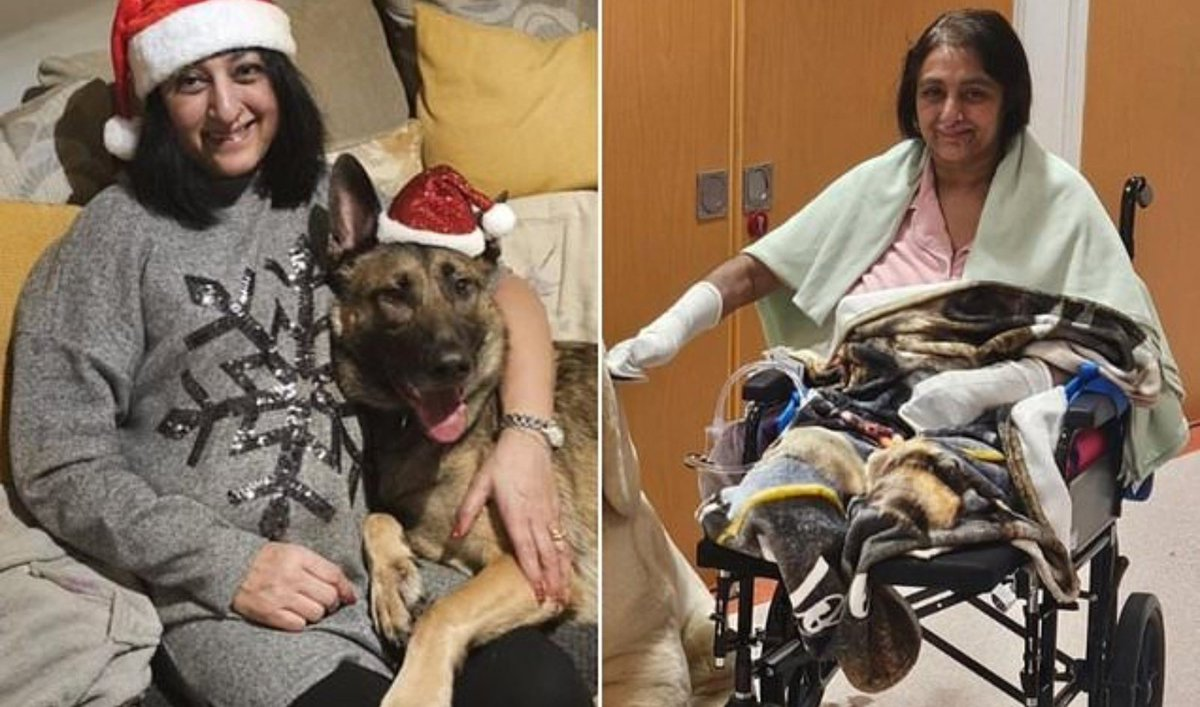
The story of Manjit Sangha is one of extraordinary survival, profound loss, and urgent warning. After spending 32 weeks in hospital, enduring multiple cardiac arrests and the amputation of both legs and both hands, the 56-year-old has finally returned home to begin the long process of rebuilding her life. Her medical ordeal began suddenly and escalated with alarming speed, transforming what appeared to be a minor health issue into a life-threatening emergency.
Doctors believe her sepsis may have developed after bacteria entered her bloodstream through a small cut or scratch — possibly after being licked by her dog. What followed was a cascade of medical complications that nearly claimed her life and permanently altered her body. When she was discharged from Ward 9 at Moseley Hall Hospital in Birmingham, she was welcomed home by her family in Penn, near the border between Wolverhampton and Staffordshire.
Her return marked the end of a grueling hospital stay filled with uncertainty, intensive treatment, and repeated medical emergencies. For months, doctors and family members feared she would not survive. Now, facing life with prosthetics and ongoing rehabilitation, she has chosen to speak publicly about her experience to raise awareness of sepsis — a condition that can strike rapidly, unpredictably, and with devastating consequences.
A Sudden Illness That Escalated Within Hours
Before her illness, Manjit Sangha lived an active and demanding life. She worked regularly, maintained a busy routine, and spent time with her family and pets. Her health crisis began in July last year when she returned home feeling slightly unwell. At first, nothing suggested a medical emergency. However, within less than 24 hours, her condition deteriorated dramatically. By the following morning, she had lost consciousness. Her hands and feet had turned ice-cold, her lips had taken on a purple hue, and she was struggling to breathe.
The speed of decline left her family in shock. Only days earlier, she had been carrying out normal daily activities. By Monday night, she was in a coma. Her husband described the experience as surreal and incomprehensible, with events unfolding so quickly that there was little time to process what was happening. What seemed like a routine illness had turned into a life-threatening medical emergency in a matter of hours.
She was admitted to intensive care at New Cross Hospital in Wolverhampton, where doctors fought to stabilise her condition. Her heart stopped six times during treatment. Each cardiac arrest required immediate intervention, and each resuscitation added to the severity of her condition. During the early stages of hospitalisation, she remained unconscious and has no memory of the first month of treatment.
The underlying cause of her rapid decline was sepsis — a medical condition that occurs when the body’s immune response to infection becomes dangerously uncontrolled. Instead of targeting harmful bacteria, the immune system begins attacking the body’s own tissues and organs. This reaction can lead to organ failure, circulatory collapse, and death if not treated rapidly. According to NHS guidance, sepsis is life-threatening and can be difficult to recognise in its early stages.
Read : Millions of Mosquitoes Released from Helicopters in Hawaii to Save Rare Birds from Extinction
Symptoms may include extreme shivering, slurred speech, breathlessness, mottled skin, and severe pain or discomfort. Doctors believe bacteria may have entered her bloodstream through a small wound, possibly after contact with her dog. While such transmission is rare, even minor skin breaks can become entry points for infection. The unpredictability of sepsis means that seemingly harmless circumstances can, in rare cases, lead to catastrophic outcomes.
The Devastating Physical Consequences of Sepsis
As her body struggled to cope with infection and systemic inflammation, circulation to her extremities became severely compromised. Blood flow to her hands and feet was reduced to the point where tissue damage became irreversible. Surgeons at Russells Hall Hospital in Dudley were forced to make the difficult decision to amputate both of her legs below the knee and both of her hands in order to prevent the infection from spreading further.
The amputations were only part of the physical toll. During her prolonged hospital stay, she also lost her spleen, developed pneumonia, and experienced gallstones that may require additional surgery in the future. Her body endured multiple invasive procedures and sustained stress from repeated medical crises. The early weeks of her treatment were marked by uncertainty, as medical teams worked to control infection while managing complications affecting multiple organ systems.
Read : 27-Year-Old Claudia Ruffin Loses Tip of Thumb After Routine Manicure Leads to Sepsis
When she eventually regained awareness, she faced the reality that her body had been permanently changed. Losing four limbs in a short period is a life-altering event that requires both physical and psychological adjustment. Recovery involves extensive rehabilitation, adaptation to assistive devices, and learning entirely new ways of performing everyday tasks.
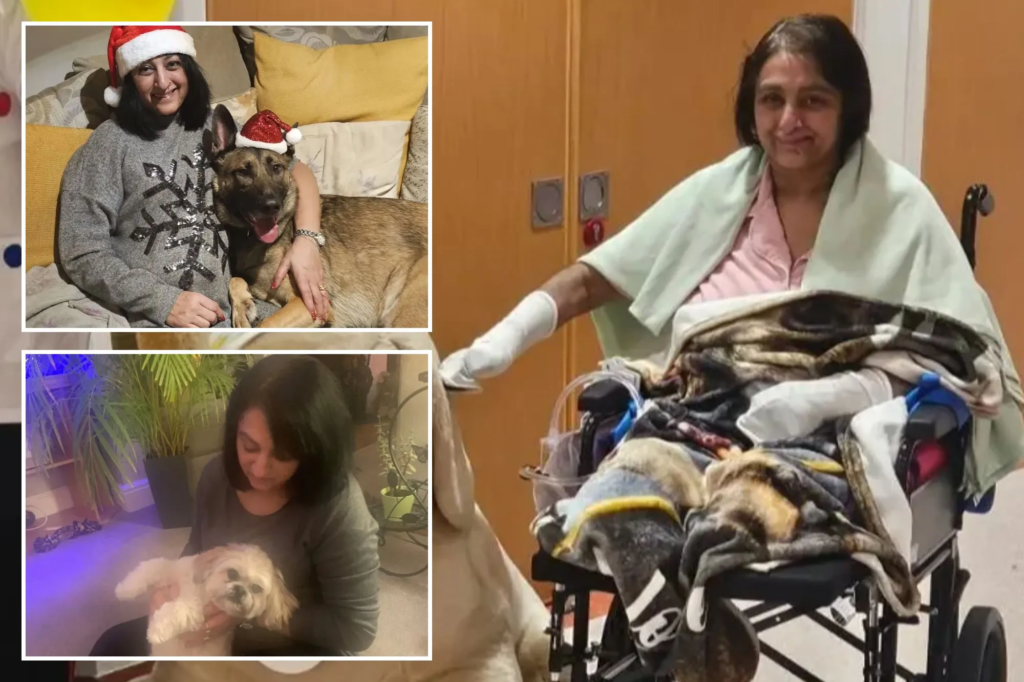
Despite the severity of her condition, she survived — something many believed unlikely during the most critical stages of treatment. Her husband remained by her side throughout the ordeal, taking extended time away from work to provide constant support. Their wedding anniversary and her birthday both passed while she remained in hospital, marking milestones not with celebration but with continued medical care and uncertainty about survival.
Her case highlights the profound physical impact sepsis can have when it progresses to advanced stages. According to the UK Sepsis Trust, tens of thousands of deaths each year are associated with the condition in the United Kingdom alone. Survivors often face long-term complications, including amputations, organ damage, and chronic health challenges.
Rehabilitation, Adaptation, and the Determination to Rebuild Life
After more than seven months in hospital, Manjit Sangha returned home to begin a new chapter defined by recovery and adaptation. Her daily life now includes rehabilitation exercises, medical monitoring, and preparation for prosthetic fitting. She and her family are working to secure advanced prosthetic technology, including robotic hands that could restore some functional independence. Such devices can be extremely costly, often reaching tens of thousands of pounds.
Read : Mother of Teen Martha Mills Who Died of Sepsis in 2021 Urges Martha’s Rule Rollout to Maternity Care
To help meet these expenses, fundraising efforts have been organised by friends, colleagues, and members of the local community. Contributions have come through online campaigns and workplace initiatives, including support from Screwfix, where both she and her husband have worked. Community support has played a significant role in helping the family manage the financial challenges associated with long-term recovery and specialised equipment.
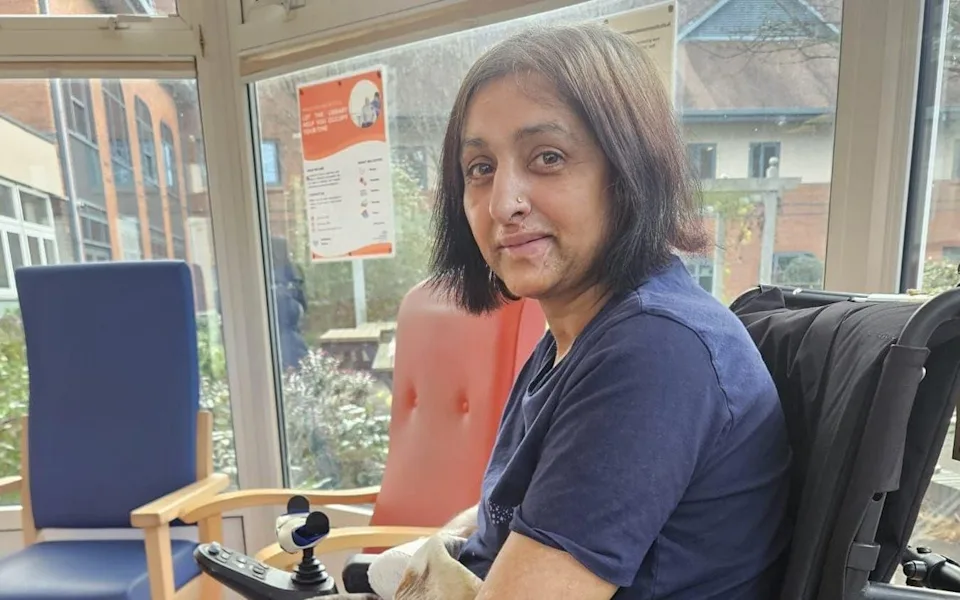
Her rehabilitation journey involves more than physical healing. Adjusting to life after quadruple amputation requires learning new mobility techniques, adapting home environments, and rebuilding confidence in daily functioning. Assistive technologies, physiotherapy, and occupational therapy are all essential components of her recovery plan. Each stage presents new challenges, from mastering wheelchair navigation to preparing for prosthetic training.
Despite the magnitude of these changes, she remains focused on regaining independence. Her goal is to walk again using prosthetic limbs and eventually return to work. Determination has become a central theme of her recovery, shaped by months of surviving conditions that repeatedly threatened her life.
Her experience has also given her a new sense of purpose. She now speaks openly about sepsis and the importance of recognising symptoms early. By sharing her story, she hopes to increase public awareness of a condition that often develops rapidly and without obvious warning. Early recognition and immediate medical treatment are critical to survival, and she believes that greater awareness could help prevent others from experiencing similar outcomes.
Living with the aftermath of sepsis involves ongoing medical care, emotional adjustment, and practical adaptation to new physical realities. Rehabilitation is expected to continue for an extended period, with progress measured in gradual improvements rather than rapid transformation. Her journey reflects both the resilience of the human body and the profound consequences that severe infection can produce.
As she continues her recovery at home, supported by family and community, her life now revolves around rebuilding strength, mobility, and independence while navigating the lasting impact of a medical emergency that unfolded in less than a single weekend.