

The University of Minnesota has brought an end to one of the most successful and defining coaching tenures in women’s college hockey, dismissing head coach Brad Frost after 19 seasons at the helm of the Golden Gophers program. The decision came shortly after the team’s NCAA quarterfinal loss to Northeastern, a result that underscored a broader pattern of falling short of championship expectations in recent years.
Despite a legacy filled with remarkable achievements, including multiple national titles and sustained regular-season dominance, the move reflects a growing emphasis within elite collegiate programs on maintaining consistent championship-level performance. Athletic director Mark Coyle described the decision as difficult but necessary, pointing to a comprehensive review of the program that concluded it was no longer competing at the highest level expected.
Frost’s departure marks the end of an era that saw Minnesota emerge as one of the premier forces in women’s hockey. His influence extended beyond wins and losses, shaping the careers of numerous elite players and contributing to the program’s national reputation. However, the changing competitive landscape and rising standards across the sport have made sustained excellence increasingly challenging, ultimately leading to a turning point for the university’s leadership.
A Legacy of Dominance and Achievement
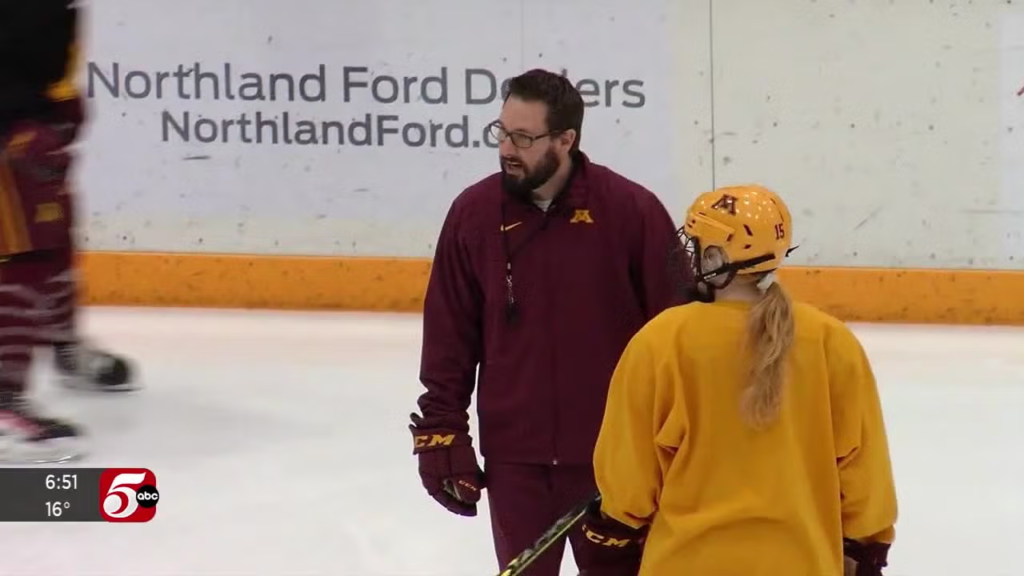
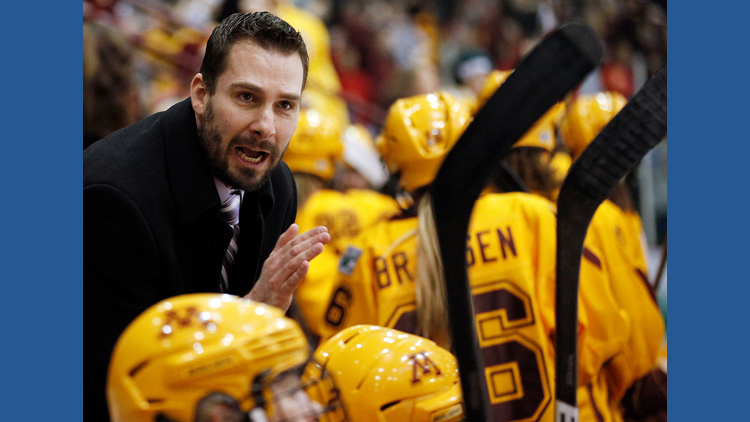
Brad Frost’s tenure at Minnesota stands as one of the most successful in the history of women’s college hockey. Taking over the program in 2007 from its inaugural head coach, he quickly established a culture of excellence that translated into consistent winning and national prominence. Over the course of nearly two decades, Frost compiled an extraordinary record of 554 wins, 133 losses, and 43 ties, a testament to both his coaching acumen and the program’s stability under his leadership.
The pinnacle of Frost’s success came during a dominant stretch in the early 2010s when the Golden Gophers captured four national championships in five years. Titles in 2012, 2013, 2015, and 2016 solidified Minnesota as the standard-bearer in women’s college hockey during that period. These championship teams were defined by their depth, skill, and disciplined style of play, reflecting Frost’s ability to recruit and develop elite talent while maintaining a cohesive team identity.
Frost’s impact extended beyond championships. The program consistently remained a contender, frequently advancing deep into the NCAA tournament and maintaining a strong presence in the Women’s Frozen Four. His teams were known for their offensive firepower and defensive structure, often dominating conference play and setting benchmarks for success within the sport. Even in seasons that did not culminate in titles, Minnesota remained a formidable opponent, rarely falling out of national relevance.
Equally significant was Frost’s role in developing players who would go on to achieve success at the highest levels of international competition. Several members of the U.S. women’s national team, including Olympic gold medalists, honed their skills under his guidance. His ability to prepare athletes for both collegiate and international competition further enhanced the program’s prestige and influence within the hockey community.
Despite these accomplishments, the latter years of Frost’s tenure saw a shift in competitive balance. While Minnesota continued to perform well, it no longer dominated the national landscape as it once had. The emergence of other powerhouse programs began to challenge the Gophers’ position at the top, gradually altering perceptions of the program’s standing.
Shifting Competitive Landscape in Women’s Hockey
The decision to part ways with Frost cannot be understood without considering the evolving dynamics of women’s college hockey. Over the past decade, the sport has experienced significant growth, with increased investment, improved recruiting, and rising competitiveness across multiple programs. Schools that once trailed behind traditional powerhouses have developed into formidable contenders, creating a more balanced and unpredictable national landscape.
In particular, programs such as Ohio State and Wisconsin have risen to prominence, consistently competing for and capturing national championships. Since 2018, these teams have accounted for every NCAA title, effectively redefining the hierarchy within the sport. Their sustained success has set new benchmarks for performance, raising expectations for programs like Minnesota that were once dominant.
For the Golden Gophers, this shift has translated into fewer deep tournament runs and an inability to reclaim the national championship status they once held. While the team continued to reach the Women’s Frozen Four on multiple occasions, it fell short of securing titles, highlighting the increasing difficulty of maintaining dominance in a more competitive environment.
Recruiting has also become more competitive, with top prospects having a wider array of elite programs to choose from. This has made it more challenging for any single program to consistently secure the best talent. Additionally, advancements in training, analytics, and player development across the sport have narrowed the gap between teams, further intensifying competition.
Within this context, expectations for Minnesota remained high. The program’s history of success created a standard that extended beyond simply competing; it demanded championship contention on a regular basis. As seasons passed without a return to the top, scrutiny increased, ultimately leading to a reassessment of the program’s direction.
The NCAA quarterfinal loss to Northeastern served as a catalyst for this decision. While a single game rarely defines a coaching tenure, it reflected broader concerns about the team’s ability to perform in critical moments against top competition. For a program with Minnesota’s legacy, early tournament exits represent a significant departure from its established identity.
The Decision and What Comes Next
Athletic director Mark Coyle’s announcement emphasized both respect for Frost’s contributions and a clear commitment to future success. Describing Frost as a great coach and an even better person, Coyle acknowledged the difficulty of the decision while underscoring the necessity of change. The review process considered both on-ice performance and broader program factors, ultimately concluding that a new direction was needed.
Read : Husband Charged in Death of 37-Year-Old Teacher and Volleyball Coach Ashley Flynn
Frost’s contract status may have also played a role in the timing of the decision. Entering the final year of an agreement extended in 2023, the university faced a natural point at which to evaluate the program’s trajectory. With Frost earning approximately $300,000 annually, the financial aspect, while not the primary factor, likely contributed to the overall assessment of value and future planning.
For the players, the transition presents both challenges and opportunities. Coaching changes can disrupt established routines and relationships, but they also offer a chance for renewal and the introduction of new strategies and perspectives. The presence of experienced and talented athletes within the program provides a strong foundation for the incoming coach to build upon.
The search for Frost’s successor will be closely watched, as Minnesota seeks to reestablish itself as a national powerhouse. The ideal candidate will need to balance respect for the program’s traditions with the ability to adapt to the modern demands of the sport. Recruiting prowess, tactical innovation, and the capacity to develop elite talent will be critical factors in determining the program’s future success.
At the same time, Frost’s legacy remains firmly intact. His contributions to Minnesota women’s hockey extend far beyond wins and championships. He helped shape the program into one of the most respected in the nation, influencing generations of players and setting standards that continue to define expectations. His tenure serves as a reminder of the impact a coach can have not only on a team but on an entire sport.
As Minnesota moves forward, the challenge will be to build upon that legacy while navigating an increasingly competitive landscape. The dismissal of Brad Frost marks the end of a significant chapter, but it also signals the beginning of a new era, one defined by the pursuit of renewed excellence and a return to the top of women’s college hockey.
Boostaro is a purpose-built wellness formula created for men who want to strengthen vitality, confidence, and everyday performance.
HeroUP is a premium mens wellness formula designed to support sustained energy, physical stamina, and everyday confidence.
ProDentim is a distinctive oral-care formula that pairs targeted probiotics with plant-based ingredients to encourage strong teeth, comfortable gums, and reliably fresh breath.
Mitolyn is a carefully developed, plant-based formula created to help support metabolic efficiency and encourage healthy, lasting weight management.
PurDentix is a revolutionary oral health supplement designed to support strong teeth and healthy gums. It tackles a wide range of dental concerns
AquaSculpt is a high-quality metabolic support supplement created to help the body utilize fat more efficiently while maintaining steady, reliable energy levels throughout the day.
The bodys natural process of skin cell renewal is essential for preserving a smooth, healthy, and youthful-looking complexion.
Gluco6 is a natural, plant-based supplement designed to help maintain healthy blood sugar levels.
Maintaining prostate health is crucial for men’s overall wellness, especially as they grow older. Conditions like reduced urine flow, interrupted sleep
Arialief is a carefully developed dietary supplement designed to naturally support individuals dealing with sciatic nerve discomfort while promoting overall nerve wellness.
InsuLeaf is a high-quality, naturally formulated supplement created to help maintain balanced blood glucose, support metabolic health, and boost overall vitality.
Nitric Boost Ultra is a daily wellness formula designed to enhance vitality and help support all-around performance.
Manergy is an advanced male vitality supplement created to help support healthy testosterone levels
NerveGenics is a naturally formulated nerve-health supplement created to promote nerve comfort, cellular energy support, antioxidant defense
ProstAfense is a premium, doctor-crafted supplement formulated to maintain optimal prostate function, enhance urinary performance, and support overall male wellness.
MounjaBoost is a next-generation, plant-based supplement created to support metabolic activity, encourage natural fat utilization
NerveCalm is a high-quality nutritional supplement crafted to promote nerve wellness, ease chronic discomfort, and boost everyday vitality.
Kerassentials is an entirely natural blend crafted with 4 potent core oils and enriched by 9 complementary oils and vital minerals.
Prostadine concerns can disrupt everyday rhythm with steady discomfort, fueling frustration and a constant hunt for dependable relief.
GL Pro is a natural dietary supplement formulated to help maintain steady, healthy blood sugar levels while easing persistent sugar cravings.
NativeGut is a precision-crafted nutritional blend designed to nurture your dog’s digestive tract.
Backbiome is a naturally crafted, research-backed daily supplement formulated to gently relieve back tension and soothe sciatic discomfort.
AquaSculpt is a high-quality metabolic support supplement created to help the body utilize fat more efficiently while maintaining steady, reliable energy levels throughout the day.
Prosta Peak is a high-quality prostate wellness supplement formulated with a comprehensive blend of 20+ natural ingredients and essential nutrients to support prostate health
Nitric Boost Ultra is a daily wellness formula designed to enhance vitality and help support all-around performance.
MounjaBoost is a next-generation, plant-based supplement created to support metabolic activity, encourage natural fat utilization
GL Pro is a natural dietary supplement formulated to help maintain steady, healthy blood sugar levels while easing persistent sugar cravings.
The bodys natural process of skin cell renewal is essential for preserving a smooth, healthy, and youthful-looking complexion.
NativeGut is a precision-crafted nutritional blend designed to nurture your dog’s digestive tract.
Backbiome is a naturally crafted, research-backed daily supplement formulated to gently relieve back tension and soothe sciatic discomfort.
ViriFlow is a dietary supplement formulated to help maintain prostate, bladder, and male reproductive health. Its blend of plant-based ingredients is designed to support urinary comfort and overall wellness as men age.
Visium Pro is an advanced vision support formula created to help maintain eye health, sharpen visual performance, and provide daily support against modern challenges such as screen exposure and visual fatigue.
Alright, 9kbossgamedownload – the ‘boss’ part is making me feel powerful already! Wonder if the games are actually boss-level good, time to download and find out… Download now at 9kbossgamedownload
Yo, 555pgame is legit! Slots are fire and payouts are quick. Definitely worth checking out if you’re looking for some action. 555pgame
Clubpkr, alright! If you’re a poker player, this is your spot. Good tables, decent competition. Grind time! clubpkr