
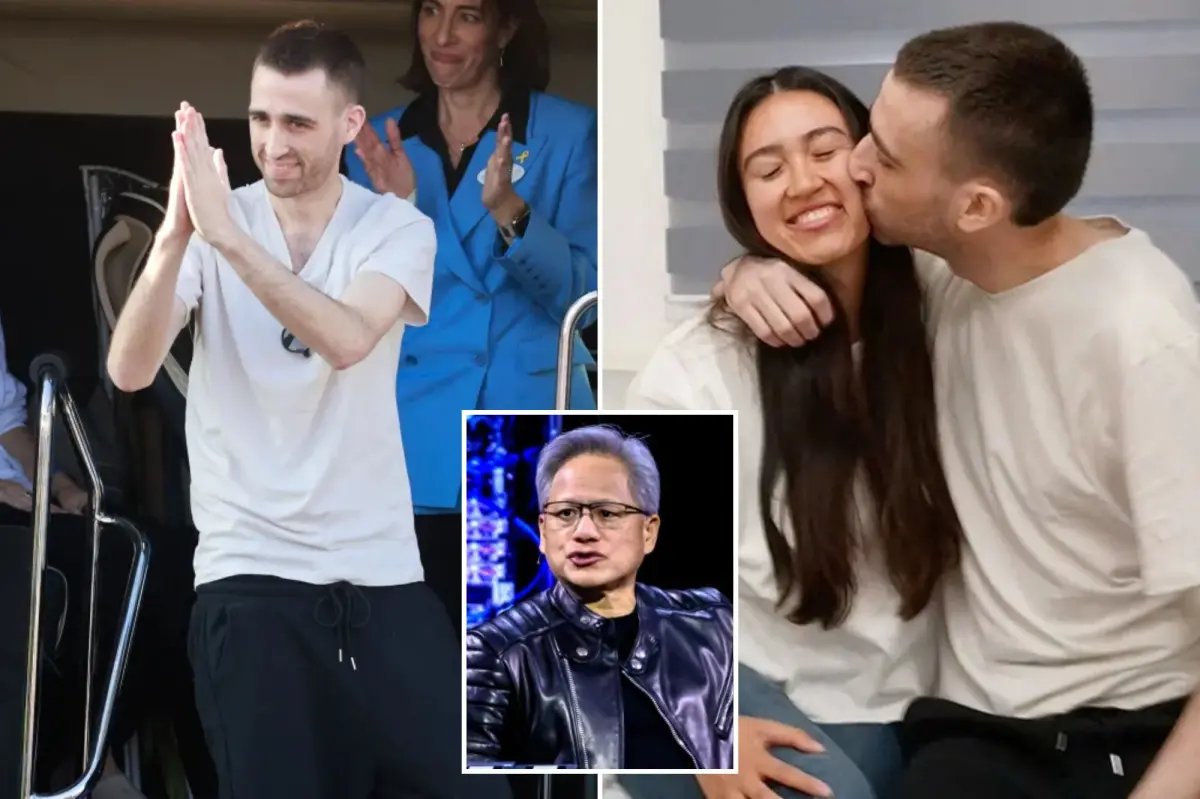
After 738 days of uncertainty, separation, and anguish, the world witnessed a powerful moment of humanity when NVIDIA engineer Avinatan Or finally returned home after being held captive by Hamas. His release, part of a broader truce agreement between Israel and Hamas allowing the exchange of 20 hostages, has sparked emotional reactions across the globe. What began as a day of terror on October 7, 2023, has culminated—two years later—in a long-awaited reunion filled with tears, embraces, and an overwhelming sense of relief.
The Day That Changed Everything: The October 7 Attacks
The story of Avinatan Or’s abduction began amid the chaos of the October 7, 2023, Hamas attacks on southern Israel. The assault, which involved coordinated armed incursions from the Gaza Strip into the Gaza envelope, shocked the international community and left lasting scars on Israeli society. Thousands of young people had gathered at the Nova Music Festival that morning, celebrating music, friendship, and peace—unaware that their lives were about to be shattered.
Avinatan, a 32-year-old Israeli engineer employed by NVIDIA, attended the festival with his girlfriend, Noa Argamani. As militants descended on the event, terror quickly replaced the sound of music. Videos that later surfaced online showed the chaos and horror of that day—people running for safety, gunfire echoing, and lives torn apart in moments. Among those abducted were Avinatan and Noa, whose capture was widely reported as one of the most distressing symbols of that tragic day.
In the weeks and months that followed, Israel’s military operations in Gaza intensified, while families of hostages lived in torment, clinging to fragments of information and hope. For Avinatan’s family, the silence was deafening. Their son, a brilliant mind working on advanced engineering projects at NVIDIA, had vanished into captivity. For 738 days, they lived with a single, haunting question: would they ever see him again?
Read : I Regret Not Taking SoftBank CEO Masayoshi Son’s Help to Buy Nvidia: Jensen Huang
As global attention on the Israel-Hamas conflict fluctuated, the plight of hostages remained a constant reminder of the human cost of geopolitical strife. Every name, every face represented not just an individual but an entire world waiting to be restored.
Two Years of Captivity: Endurance, Hope, and Global Support
Life in captivity for hostages like Avinatan is unimaginable to those on the outside. Reports from former captives described conditions of deprivation, isolation, and psychological distress. For Avinatan, every day meant survival under the shadow of uncertainty—no sense of time, no contact with loved ones, and no assurance of rescue.
Back home, his family and colleagues refused to let his name fade from public consciousness. NVIDIA employees, particularly those in Israel, organized silent vigils, awareness drives, and internal campaigns calling for his safe return. Messages of support poured in from across the global tech community. NVIDIA’s leadership, too, kept in close contact with the family, ensuring that they never felt alone in their wait.
When the Israel-Hamas truce agreement was announced, enabling a humanitarian exchange of hostages and prisoners, a wave of cautious optimism swept through the families of those still missing. Among them were the Ors, who dared to hope again after two years of despair. Then came the news—Avinatan was alive, and he was among those to be released.
His release to the Red Cross in Gaza marked the end of a harrowing chapter. From there, he was transported to the Israeli Defence Forces’ Re’im base, where medical teams and family members awaited. It was here that the emotional reunion with his longtime girlfriend, Noa Argamani, took place—a moment that quickly went viral on social media. The image of the two embracing after such an unfathomable separation captured the essence of human resilience and love that endured despite unimaginable odds.
The Israeli Defence Forces shared photographs of the reunion on X (formerly Twitter), describing the scene as a “symbol of hope.” Within hours, the post had been shared tens of thousands of times, accompanied by messages of support, joy, and relief from people around the world. For Israelis, it became a powerful symbol of endurance; for others, a reminder of how deeply personal the consequences of conflict can be.
NVIDIA’s Response: A Company United in Solidarity
In Silicon Valley and across NVIDIA’s global offices, news of Avinatan’s release reverberated with emotional intensity. It was not merely the story of an employee returning home—it was the story of a community that had held its breath for two years.
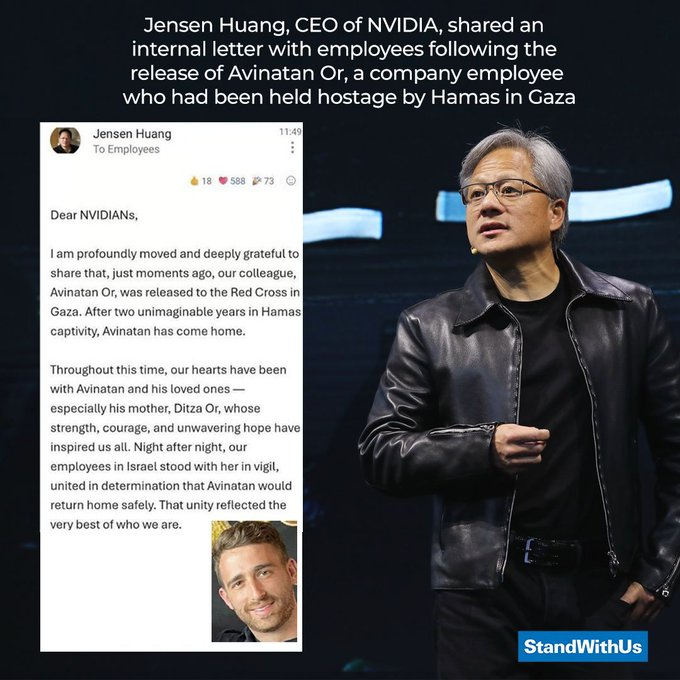
NVIDIA CEO Jensen Huang, known for his deeply personal leadership style, sent an internal message to all employees soon after confirmation of Avinatan’s release. “Dear NVIDIANS,” the email began, “I am profoundly moved and deeply grateful to share that, just moments ago, our colleague, Avinatan Or, was released to the Red Cross in Gaza. After two unimaginable years in Hamas captivity, Avinatan has come home.”
After two years, Avinathan reunites with Noa. pic.twitter.com/VqBURzET8Q
— נועה מגיד | Noa magid (@NoaMagid) October 13, 2025
Huang’s words reflected both relief and reverence for what Avinatan and his loved ones had endured. In the same message, Huang expressed gratitude to NVIDIA employees who had supported the Or family through every stage of the ordeal, noting how their unity exemplified the company’s shared humanity.
Colleagues described the moment as one of collective catharsis. In internal chat channels, employees from different countries—engineers, designers, managers—shared messages of joy, photos of candles lit in solidarity, and words of welcome for Avinatan. The emotional weight of the past two years had created a bond that transcended job titles and departments. NVIDIA’s leadership pledged ongoing support for Avinatan and his family as they begin the difficult process of healing and reintegration.
The company’s response also reflected a larger truth about the role of global corporations in times of crisis. In an era where multinational firms operate across borders and cultures, the story of one employee can galvanize compassion and awareness in ways that transcend national boundaries. NVIDIA’s handling of Avinatan’s ordeal—quiet, respectful, and unwaveringly human—set an example of empathy-driven corporate responsibility.
The Broader Implications: Humanity Amid Conflict
While Avinatan’s release is a cause for celebration, it also serves as a poignant reminder of the countless others still waiting to return home. The truce agreement between Israel and Hamas—though fragile—offered a brief respite from violence and a glimpse of what diplomacy and humanitarian negotiation can achieve when both sides prioritize life over politics.
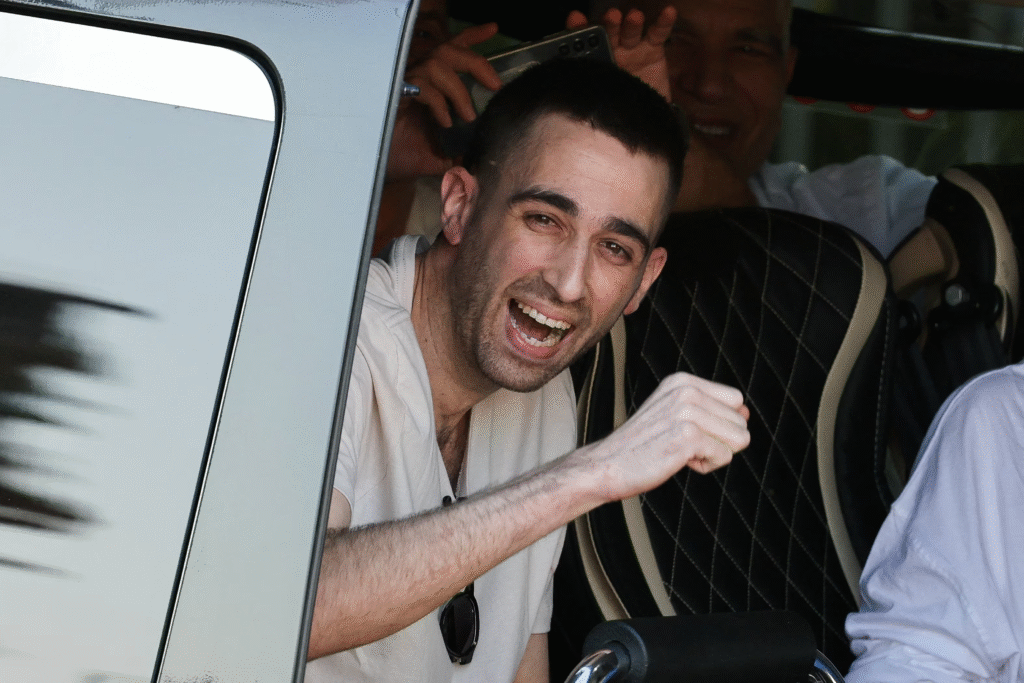
Avinatan’s story underscores how individuals caught in the web of geopolitical strife are far more than statistics or headlines—they are scientists, artists, friends, and loved ones whose lives ripple through entire communities. His reunion with Noa Argamani, too, stands as a testament to the human spirit’s capacity for love and endurance even in the darkest of circumstances.
For the global tech community, the episode has sparked conversations about the intersections between innovation and humanity. Engineers like Avinatan dedicate their lives to building the future—pushing the boundaries of what technology can achieve. His captivity, and eventual release, highlight that behind every breakthrough are people with stories, families, and vulnerabilities. As Israel and Hamas continue to navigate the tenuous path toward stability, the lessons of empathy, resilience, and shared humanity remain as urgent as ever. The joy surrounding Avinatan’s return does not erase the suffering that preceded it, but it offers a powerful counterpoint—a story of survival that refuses to be overshadowed by violence.
In the coming months, as Avinatan begins the process of recovery and re-entry into civilian life, he will undoubtedly carry the weight of his experience. But he will also carry the strength of countless people who never stopped believing in his return—his family, his colleagues at NVIDIA, and the many strangers who found hope in his story. His journey from captivity to freedom is more than just the chronicle of one man’s endurance; it is a reflection of the universal yearning for peace and the unbreakable bonds of love and solidarity that define what it means to be human.