
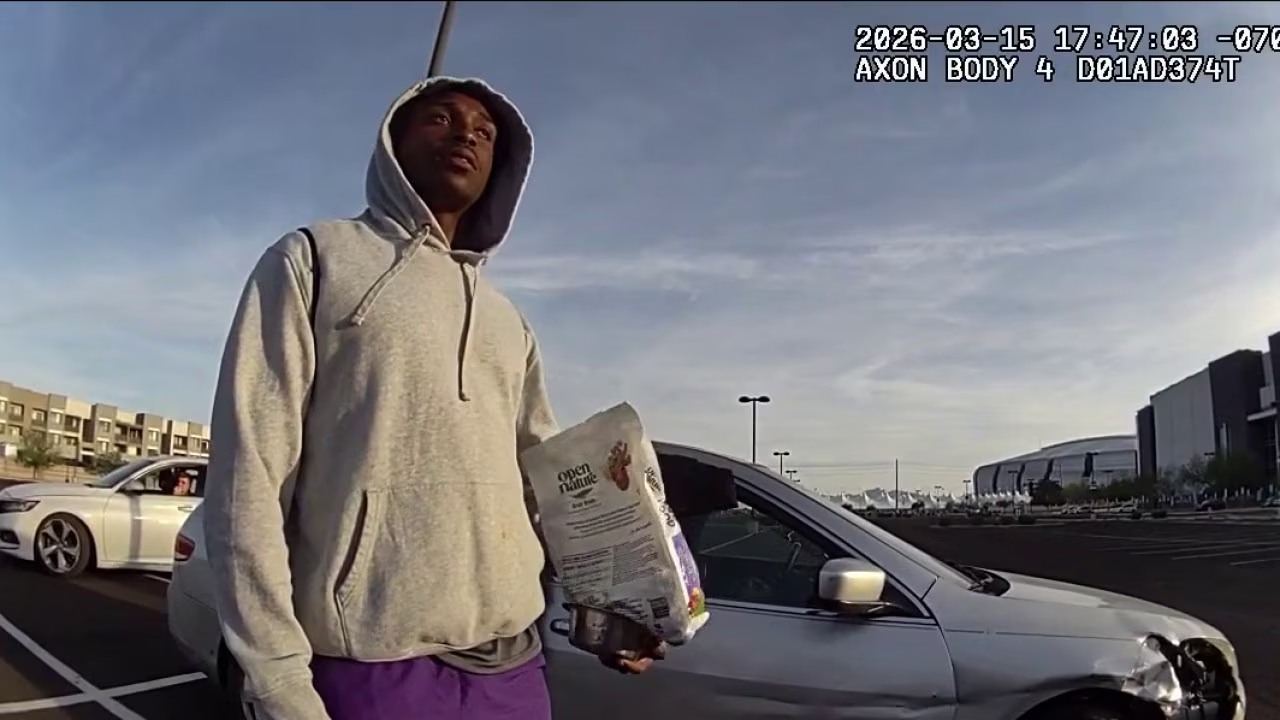
A troubling incident involving a professional football player Patrick Jones has drawn widespread attention after allegations surfaced that a dog was left inside a locked vehicle for several hours during a team practice session in Glendale, Arizona. The situation has raised serious concerns about animal welfare, responsibility, and the risks associated with leaving pets unattended in enclosed spaces, particularly in warm conditions. Authorities were alerted after a concerned witness reported the distressed animal, prompting a police response that ultimately led to potential criminal charges. While the full details are still unfolding, the case highlights the dangers pets face when left in vehicles and the legal consequences that may follow such actions.
Details of the Incident and Police Response
According to reports from local law enforcement, officers were dispatched to the parking lot of Desert Diamond Arena shortly before 5:30 p.m. on March 15 after receiving a call about a dog locked inside a car. The caller indicated that the animal had been inside the vehicle since approximately 3 p.m., and they remained nearby for several hours out of concern for its safety. During that time, the dog was reportedly seen panting heavily, a common sign of overheating or distress, especially in enclosed environments where ventilation is limited.
When officers arrived at the scene, they found the dog still inside the locked vehicle. The windows were only slightly open, providing minimal airflow, and there was no immediate sign of the owner. The witness told authorities that they had attempted to give the dog water, recognizing the potential danger of dehydration and heat exposure. Situations like this can quickly become life-threatening for animals, as temperatures inside cars can rise rapidly, even if the weather outside does not seem extreme.
The owner of the vehicle, later identified as 24-year-old linebacker Patrick Jones, returned to the parking lot hours after the initial sighting. Police reports indicate that he initially denied ownership of the vehicle before later admitting that it belonged to him. During the interaction, Patrick Jones reportedly removed the dog from the car and told officers they could take the animal because he was unable to care for it. This statement became a key element in the investigation, as it suggested not only negligence but also a lack of preparedness for pet ownership under his circumstances.
Legal Implications and Animal Welfare Concerns
Authorities have confirmed that animal cruelty charges are being filed in connection with the incident, although Patrick Jones was not arrested at the scene. The legal process will now determine whether the actions meet the threshold for criminal negligence under applicable laws. Animal cruelty statutes typically consider factors such as the duration of confinement, environmental conditions, and the physical state of the animal when assessing whether an offense has occurred.
Leaving a pet inside a locked vehicle for an extended period is widely recognized as dangerous behavior. Even with windows slightly open, the internal temperature of a car can rise significantly within minutes, creating an environment that can lead to heat exhaustion, organ failure, or even death. Dogs are particularly vulnerable because they regulate body temperature primarily through panting, which becomes ineffective in hot and poorly ventilated spaces.
Arizona Rattlers player faces animal cruelty charge after leaving his dog in a locked car for about seven hours without food or water
— Daily Loud (@DailyLoud) March 17, 2026
Patrick Deonte Jones, 24, is facing a misdemeanor animal cruelty charge for neglect or abandonment
pic.twitter.com/zdbBhLJVbm
The case also raises broader questions about accountability and awareness. While some individuals may underestimate the risks, public education campaigns have consistently emphasized the dangers of leaving pets unattended in vehicles. Many regions have even implemented laws that allow authorities or bystanders to intervene if an animal is believed to be in immediate danger. In this instance, the involvement of a vigilant witness likely played a crucial role in preventing a potentially fatal outcome.
Another important aspect of the case is the owner’s admission that he could not care for the dog. This statement may influence both legal proceedings and public perception, as it suggests a level of acknowledgment regarding the inability to provide proper care. Responsible pet ownership requires planning, particularly for individuals with demanding schedules or travel commitments. Failure to make appropriate arrangements can result in situations that jeopardize an animal’s well-being.
What Happens Next and Broader Lessons
The dog involved in the incident has been taken to an animal shelter, where it is expected to receive care and evaluation. However, officials have not yet released details regarding its current health condition. Veterinary assessments will likely determine whether the animal suffered any lasting effects from the ordeal, which could also factor into legal considerations.
As the case moves forward, attention will likely focus on both the legal outcome and the broader implications for public awareness. Incidents like this often serve as reminders of the importance of understanding the risks associated with leaving animals in confined spaces. They also underscore the role of community vigilance, as bystanders can make a significant difference by reporting situations that appear dangerous or neglectful.
For professional athletes and public figures, such cases can carry additional scrutiny due to their visibility and influence. Their actions often attract greater attention, which can amplify discussions about responsibility and conduct both on and off the field. While the legal process will determine the outcome of this specific case, the incident has already sparked conversation about the responsibilities that come with pet ownership, regardless of one’s profession or lifestyle.
Ultimately, the situation serves as a cautionary example of how quickly circumstances can escalate when animals are left in vulnerable conditions. Whether due to oversight, lack of planning, or misunderstanding of the risks, the consequences can be severe. Ensuring the safety and well-being of pets requires consistent attention, proper care arrangements, and an understanding of environmental hazards that may not always be immediately apparent.