
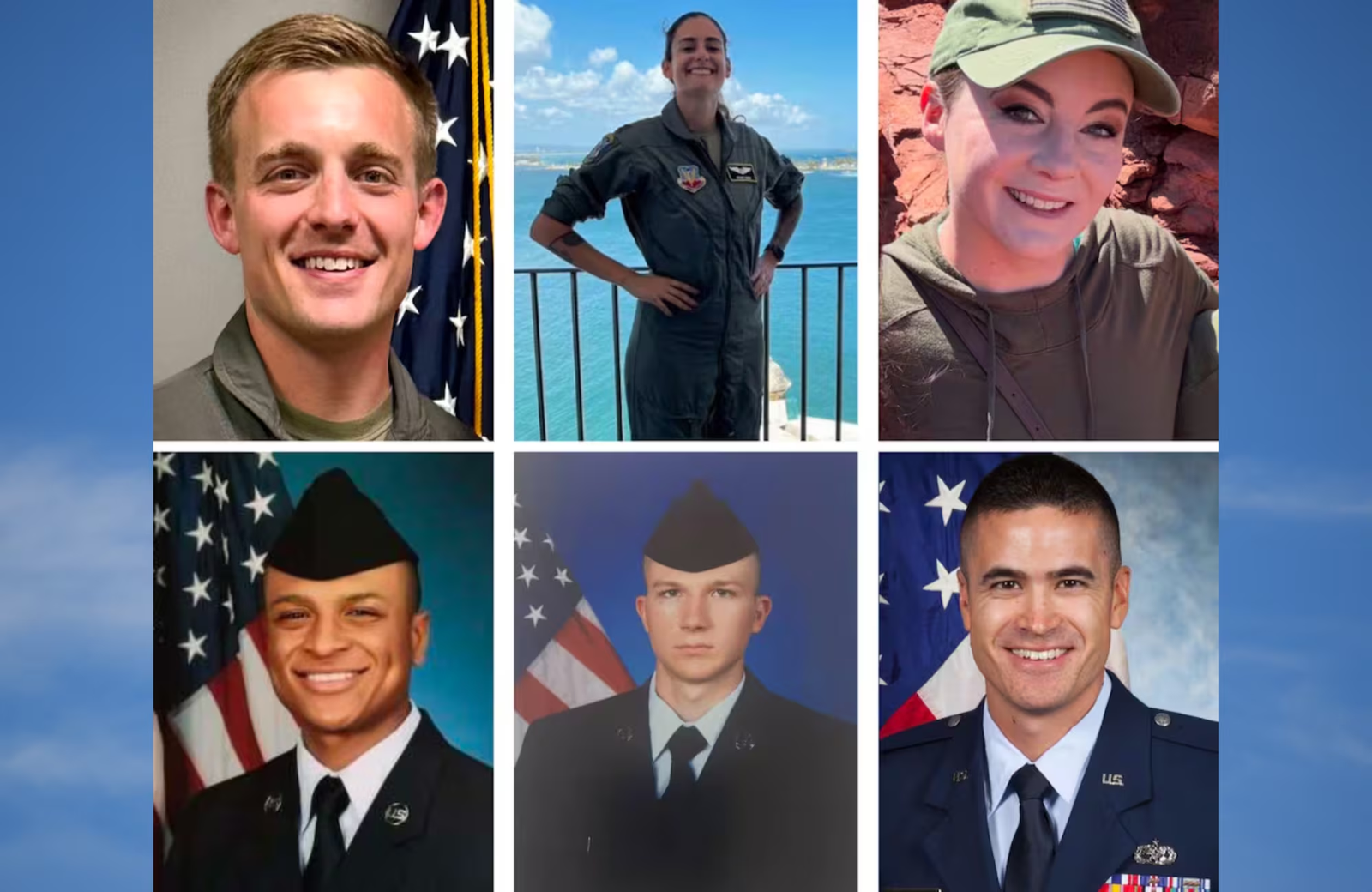
The United States military is mourning the loss of six airmen who died in a devastating aircraft crash in western Iraq, an incident that has shaken military communities across multiple states and prompted an outpouring of tributes from officials, colleagues, and families. The Pentagon publicly identified the airmen several days after the crash, revealing the names of individuals whose careers represented years of dedication to military service, aviation, and the demanding mission of aerial refueling.
The aircraft involved was a KC-135 Stratotanker, a critical component of long-range air operations that allows combat and support aircraft to refuel in midair during missions around the world. While the crash remains under investigation, military officials have confirmed that it was not caused by hostile fire. The loss has drawn attention not only to the dangerous nature of military aviation but also to the personal stories of the service members who were aboard the aircraft. Their backgrounds span multiple states, units, and career paths, yet they were united by a commitment to their mission and to supporting fellow service members in the skies above the Middle East.
The Airmen Behind the Mission
The six airmen killed in the crash were Maj. John A. Klinner, Capt. Ariana G. Savino, Tech. Sgt. Ashley B. Pruitt, Capt. Seth R. Koval, Capt. Curtis J. Angst, and Tech. Sgt. Tyler H. Simmons. Each served in roles connected to aerial refueling operations, a complex and high-risk mission that enables aircraft to remain airborne for extended periods and conduct operations across long distances. Three of the airmen were assigned to the 99th Air Refueling Squadron, a geographically separated unit linked to MacDill Air Force Base in Florida but based at Sumpter Smith Joint National Guard Base in Alabama. The other three were assigned to the 121st Air Refueling Wing at Rickenbacker Air National Guard Base in Ohio.
Maj. John “Alex” Klinner served as the chief of standardization and evaluation within the 99th Air Refueling Squadron. In that role, he oversaw the training and flight proficiency of more than thirty aircrew members, ensuring that pilots and crew maintained the strict operational standards required for aerial refueling missions. Klinner had served eight years in the Air Force and had deployed multiple times in support of operations across Europe and the Middle East. A graduate of Auburn University, he entered the Air Force through the Reserve Officer Training Corps program in 2017 and steadily advanced through the ranks as a pilot and leader. Those who knew him described him as a servant leader who quietly helped others and approached his duties with humility and dedication.
Capt. Ariana G. Savino, another member of the 99th Air Refueling Squadron, had recently achieved a major milestone in her career by earning her wings as a KC-135 pilot in 2025. Before becoming a pilot, she served as a combat systems officer after commissioning through the ROTC program at Central Washington University in 2017. At the time of the crash, Savino served as chief of current operations for her squadron, coordinating daily flight schedules and managing training missions. Friends and colleagues remembered her as an energetic mentor and a positive influence on younger airmen, particularly Latina youth who looked to her as an example of success in military aviation.
Tech. Sgt. Ashley B. Pruitt also served with the 99th Air Refueling Squadron as an instructor boom operator and assistant flight chief of operations. Boom operators play a crucial role during aerial refueling, guiding the refueling boom into position so that fuel can be transferred safely between aircraft at high altitudes and speeds. Pruitt was responsible not only for conducting these missions but also for training other boom operators and ensuring that they mastered the precise technical skills required for the job. After entering the Air Force in 2017, she rose through the enlisted ranks and took on leadership responsibilities within her unit. Her promotion to technical sergeant in May marked another step in a career defined by steady advancement and operational experience.
The remaining three airmen were assigned to the 121st Air Refueling Wing in Ohio. Capt. Seth R. Koval brought nearly two decades of service to the mission. He first enlisted as a machinist before later becoming a pilot, demonstrating a career path that reflected both technical expertise and dedication to aviation. In his role, Koval helped train pilots for a wide range of missions, including aerial refueling, aeromedical evacuation, and cargo transport. His professional achievements were recognized with several military decorations, including the Meritorious Service Medal and the Air Medal.
Read : Tenzing-Hillary Airport: The Most Dangerous Airport in the World
Capt. Curtis J. Angst followed a path that combined engineering and aviation. After earning a degree in aerospace engineering, he enlisted in the Ohio National Guard as a vehicle maintenance technician in 2015 before eventually completing pilot training. By 2024 he had achieved his pilot initial qualification, enabling him to conduct the global operations associated with aerial refueling and transport missions. His earlier deployment in support of Operation Spartan Shield marked one of several experiences that prepared him for the complex operational environment in the Middle East.
Tech. Sgt. Tyler H. Simmons served as a boom operator, a role that requires exceptional focus and technical precision. Before joining the military, Simmons played football in high school and worked in security. His passion for aviation ultimately led him to pursue a career in the Air Force, where he became part of the team responsible for conducting midair refueling operations. For Simmons, the position represented a dream job that combined aviation, service, and teamwork in demanding environments.
Families, Communities, and Personal Tributes
Beyond their professional roles, the six airmen were remembered by family members and communities who are now grappling with sudden loss. Their stories illustrate the personal dimensions behind military service, where careers often intersect with family life, friendships, and local communities that support those who serve.
Maj. Klinner’s family described him as a devoted husband and father who balanced his demanding career with deep commitment to his loved ones. He leaves behind his wife and three young children, including two-year-old twins who were only seven months old at the time of his death. Family members and supporters quickly organized fundraising efforts to help support the family as they navigate the challenges ahead. Those who knew him emphasized that he represented the qualities of leadership and compassion that define service within the military community.
Capt. Savino was remembered by friends as a person whose personality brought energy into every room she entered. Her mentors described her as a future senior leader who inspired those around her through both her professional accomplishments and her willingness to guide younger service members. For many aspiring aviators, particularly young women and minority students interested in aviation, Savino’s career symbolized the possibilities that military service can provide.
Tech. Sgt. Simmons’ family recalled his bright personality and the distinctive smile that earned him the description of having a “million-dollar smile.” As the only child of his parents, his death came as an especially painful loss for his family. His mother later recalled the moment when uniformed officers arrived at their door to deliver the news, a moment that many military families fear but hope never to experience. Despite initial hesitation about her son entering the military, she ultimately recognized how deeply he cared about aviation and serving his country.
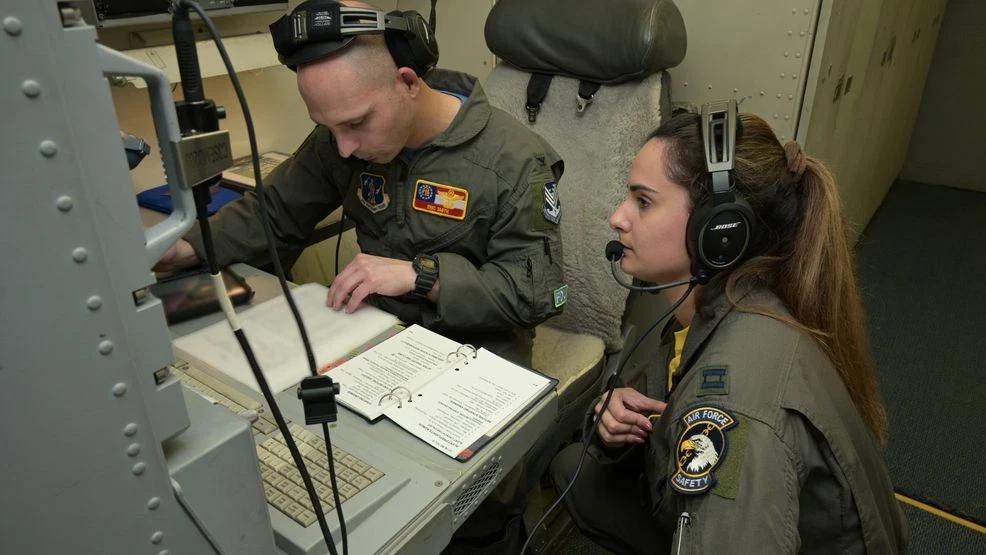
For Tech. Sgt. Pruitt, colleagues emphasized her leadership and dedication to training others. As an instructor boom operator, she was responsible for passing along the expertise required to conduct safe and effective aerial refueling missions. Those responsibilities placed her at the center of preparing the next generation of aircrew members, ensuring they could carry out the demanding work of operating tanker aircraft in challenging conditions.
Capt. Koval’s family spoke of a man who had dreamed since childhood of becoming a pilot. After years of service and training, he achieved that goal and continued to pursue excellence throughout his career. His wife described him as loving, generous, and selfless, someone who consistently put others before himself. His family now remembers him through the legacy he leaves behind, including the example he set for his young son.
Capt. Angst’s path to becoming a pilot reflected determination and technical expertise. Beginning his military career in maintenance roles before transitioning to aviation, he demonstrated a willingness to learn and adapt in pursuit of his goals. His service included operational deployments and recognition through several military awards that acknowledged his contributions to the mission.
Across multiple states, governors and local officials issued statements honoring the six airmen and expressing condolences to their families. Leaders described the fallen service members as heroes whose work helped protect national security while supporting fellow airmen around the world.
The Crash and the Ongoing Investigation
The aircraft involved in the crash was a KC-135 Stratotanker, a long-serving tanker aircraft used extensively by the United States Air Force to conduct aerial refueling operations. These missions involve transferring fuel from the tanker aircraft to another aircraft during flight, a maneuver that requires precise coordination between pilots and boom operators. The capability allows aircraft to extend their range, remain in the air longer, and carry out missions far from their home bases.
Read : Gunmen on Motorcycles Fired Eight Shots at the Iraqi Consulate in Istanbul with AK-47
At the time of the crash, the aircraft was operating as part of Operation Epic Fury, the name given to the current military campaign connected to tensions and conflict involving Iran. During these operations, tanker aircraft play a crucial role by enabling fighters, bombers, and surveillance aircraft to remain airborne during long missions across the Middle East.
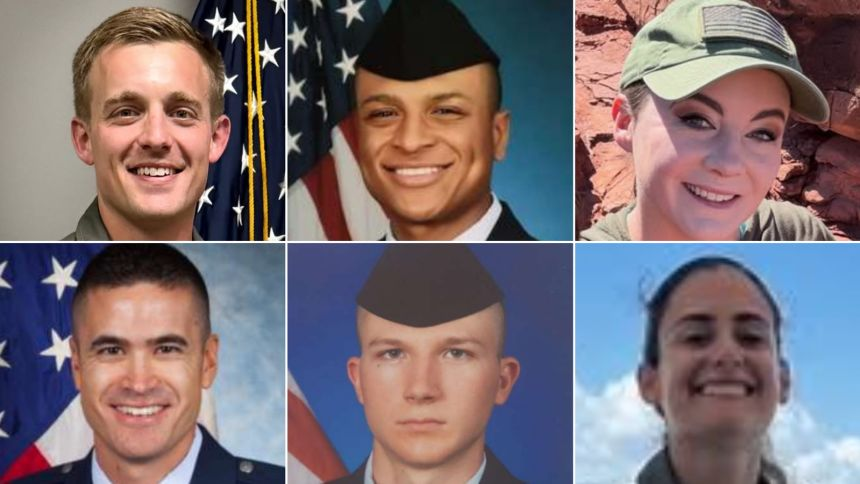
Initial military statements indicated that two aircraft were involved in an incident over western Iraq. While one aircraft landed safely, the KC-135 carrying the six airmen crashed. Officials later clarified that the crash was not caused by hostile fire or friendly fire, though investigators are continuing to examine the sequence of events that led to the accident.
Military aviation investigations typically involve a detailed review of flight data, aircraft systems, maintenance records, and environmental conditions. Investigators also examine communication records and operational procedures to determine whether mechanical issues, human factors, or other circumstances contributed to the crash. The goal of such investigations is not only to establish the cause but also to identify lessons that can improve safety for future operations.
The loss of the six airmen has also highlighted the inherent risks faced by service members who operate military aircraft in demanding environments. Aerial refueling missions often take place at night, in unpredictable weather, and during complex operational scenarios that require coordination between multiple aircraft. Even with advanced training and strict procedures, these missions carry significant challenges.
As the investigation continues, military officials have emphasized their commitment to honoring the memory of the airmen who were lost. Units connected to the fallen service members have expressed grief but also determination to carry forward the mission that the airmen dedicated their careers to supporting. For many in the Air Force community, remembering their service means acknowledging both the sacrifices made by the airmen themselves and the families who continue to bear the weight of those sacrifices.
**purdentix**
PurDentix is a revolutionary oral health supplement designed to support strong teeth and healthy gums. It tackles a wide range of dental concerns
**citrus burn**
CitrusBurn is a Mediterranean-inspired thermogenic formula created to support a naturally slower metabolism, encourage efficient fat utilization.
**aqua sculpt**
AquaSculpt is a high-quality metabolic support supplement created to help the body utilize fat more efficiently while maintaining steady, reliable energy levels throughout the day.
**prime biome**
The bodys natural process of skin cell renewal is essential for preserving a smooth, healthy, and youthful-looking complexion.