
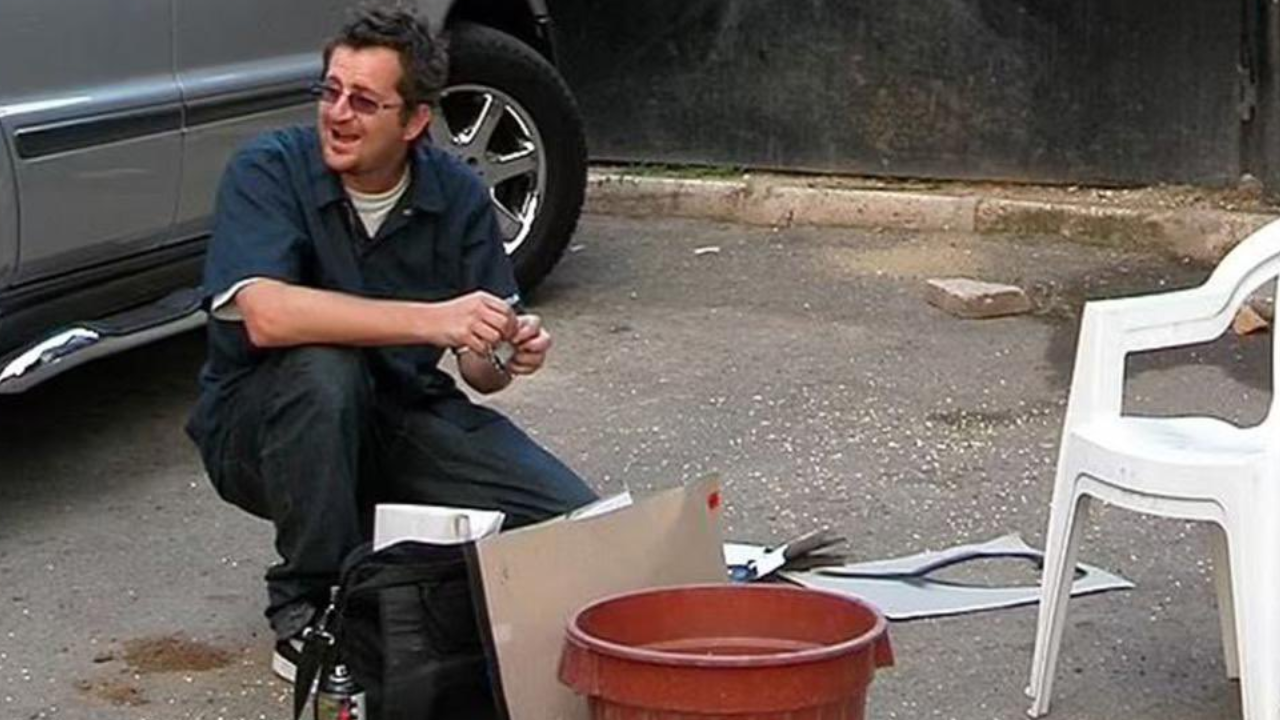
For decades, the true identity of the street artist known as Banksy has remained one of the art world’s most enduring mysteries. His striking graffiti, political satire, and unconventional public stunts have appeared on walls, buildings, and public spaces across multiple countries, transforming urban landscapes into unexpected galleries. While his artworks have been photographed, sold for millions, and widely discussed in museums and academic circles, the individual behind the pseudonym has largely stayed out of public view.
The secrecy surrounding the artist has become an important part of the Banksy phenomenon, contributing to both the intrigue of the artworks and the mythology surrounding the creator. A recent investigation has once again revived debate over the identity of the person behind the name. According to a report that gathered information from several sources, the artist widely believed to be Banksy is Robin Gunningham, a man originally from Bristol in the United Kingdom.
The report claims that Gunningham, now in his early fifties, adopted another name in order to avoid recognition while continuing to create and travel. Although the possibility that Gunningham could be Banksy has circulated for years, the latest investigation presents new details and evidence that supporters say strengthen the connection. The discussion about Banksy’s identity is not simply about curiosity regarding a famous figure.
His work has influenced modern street art, challenged traditional art markets, and sparked debates about politics, authority, and social justice. If the person behind the pseudonym were ever definitively confirmed, it would resolve a question that has fascinated journalists, art historians, and fans for more than two decades. At the same time, the continued uncertainty reflects the deliberate strategy of an artist who has carefully controlled how much of himself is revealed to the public.
The Investigation Linking Robin Gunningham to Banksy
The latest investigation attempting to identify Banksy relied on a combination of travel records, eyewitness accounts, previous reports, and documentary evidence gathered over many years. Researchers involved in the inquiry examined various moments in which the movements of Robin Gunningham appeared to align with the appearance of new Banksy artworks around the world. The idea that Gunningham could be the artist is not entirely new; his name has surfaced repeatedly in media reports and academic speculation since the early 2000s.
However, the most recent effort attempts to consolidate multiple pieces of evidence into a more detailed narrative about his possible role. Robin Gunningham is believed to have grown up in Bristol, a city that played an important role in the early development of Britain’s street art culture. During the 1990s, the city’s underground art scene expanded rapidly, blending graffiti with music, activism, and youth culture. Many early Banksy works were also located in Bristol, which led observers to suspect that the artist had strong ties to the area.
Over time, reporters and researchers began identifying individuals who might fit the profile of someone involved in that environment, and Gunningham eventually became one of the most frequently mentioned names. According to the investigation, Gunningham reportedly changed his name to David Jones in 2008. The reasoning behind this alleged decision was practical. The name David Jones is extremely common in Britain, making it easier for someone to move through everyday life without attracting attention.
If the claim is accurate, adopting such a widely used name could have helped conceal the identity of a person who was already becoming globally famous under a pseudonym. This strategy would have allowed the artist to continue traveling and working while maintaining the anonymity that had become central to the Banksy brand. The investigation also examined particular trips and events that might connect Gunningham to Banksy’s work.
Read : Who Was Luci4, the ‘BodyPartz’ Artist Found Dead at Friend’s Home?
One example mentioned in the report involved a visit to Ukraine, where the artist was said to have spent time meeting local residents and photographing areas affected by conflict. Banksy artworks later appeared in several Ukrainian locations, which strengthened speculation that the same individual was present during that period. Observers noted that the timing of the trip and the emergence of new street art pieces seemed to coincide in ways that raised further questions about the artist’s movements.
Read : Russia Formally Declares the US as an “Enemy” State
Researchers also looked at earlier media reports and documentation that had previously linked Gunningham to Banksy. In 2008, a newspaper investigation had already suggested that he could be the person behind the pseudonym. The newer report claims that additional evidence gathered since then provides stronger support for that conclusion. While none of the findings alone constitute absolute proof, supporters of the investigation argue that the combined evidence paints a consistent picture connecting Gunningham with the famous street artist.
Evidence and Past Theories About Banksy’s Identity
Over the years, numerous attempts have been made to uncover Banksy’s identity, producing a mixture of serious investigative reporting and speculative theories. The mystery has drawn attention partly because Banksy’s art often appears in public spaces without warning, sometimes in locations that would require careful planning or quick execution. Observers have therefore tried to identify patterns in the artist’s movements, travel, and personal connections in order to determine who might realistically be responsible for the work.
One piece of evidence mentioned in the recent investigation involves a police document from the year 2000 connected to graffiti activity in New York City. The report allegedly included a signed handwritten confession, which researchers say could be linked to the individual suspected of being Banksy. Although the details of the document have not been fully confirmed publicly, its existence has been cited as part of the broader body of evidence suggesting that a specific individual was responsible for certain graffiti actions during that period.
Another aspect of the investigation referenced a dispute involving Jamaican photographer Peter Dean Rickards. The disagreement reportedly involved issues connected to artwork and documentation, and it has been cited as another moment that may link Gunningham with Banksy’s activities. Such incidents are often examined by investigators because they provide potential glimpses into the otherwise secretive life of an artist who rarely appears in public.
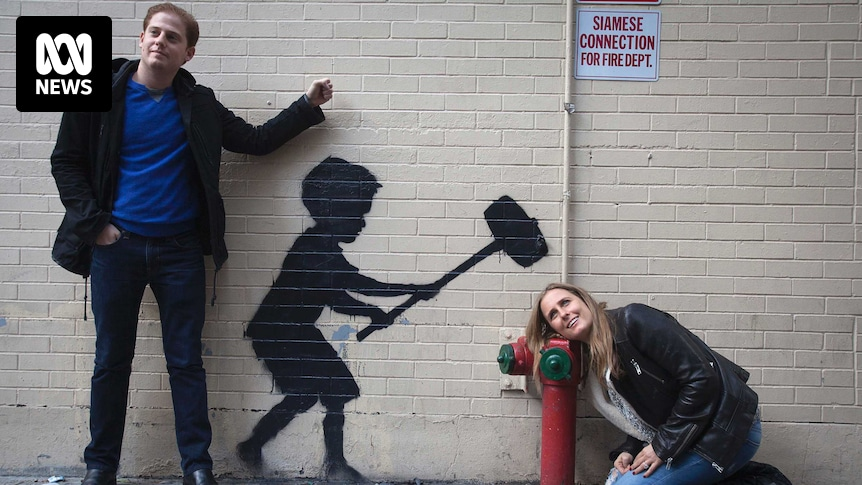
For many years, one of the most widely discussed alternative theories suggested that Banksy might actually be Robert Del Naja, the frontman of the music group Massive Attack. This idea gained attention because Del Naja himself had been involved in graffiti art before becoming a musician, and the band’s touring schedule sometimes coincided with the appearance of Banksy artworks in various cities. Supporters of the theory believed that these overlaps might indicate that the musician was secretly responsible for the street art phenomenon.
However, the new investigation rejected that claim. Researchers concluded that Del Naja’s movements did not consistently match the locations of Banksy’s artworks. In fact, the report suggested that Del Naja had traveled to Ukraine in 2022 together with Robin Gunningham, implying that the musician and the suspected artist were two separate individuals. This detail, according to the investigators, helps weaken the long-standing theory that Del Naja himself could be Banksy.
The persistence of multiple theories highlights the unusual nature of the mystery. Few artists in modern history have maintained such a high level of anonymity while simultaneously achieving international recognition. Every new report, leaked document, or eyewitness account tends to reignite the debate, encouraging both journalists and fans to examine old evidence from new angles. Even so, none of the claims has yet been universally accepted as definitive proof.
Why Banksy Has Chosen to Remain Anonymous
While the identity question attracts considerable attention, the reasons behind Banksy’s anonymity may be just as significant. From the earliest stages of his career, the artist adopted secrecy as part of his working method. Graffiti and unsanctioned street art often exist in a legal gray area or can be considered vandalism under certain laws. By hiding his identity, the artist reduces the risk of legal consequences and protects himself from potential prosecution related to the placement of artworks in public spaces.
Read : Cake Artist Emma Jayne Creates Life-Size Thriller Tribute to Michael Jackson on Halloween
Banksy’s legal representatives have also emphasized security concerns. According to statements made by the artist’s lawyer, the decision to remain anonymous is partly motivated by the behavior of individuals who have become intensely interested in uncovering his identity. Public figures who attract such attention sometimes face harassment or unwanted surveillance, and anonymity can provide a measure of personal protection. In this sense, secrecy becomes not only a creative choice but also a practical safeguard.
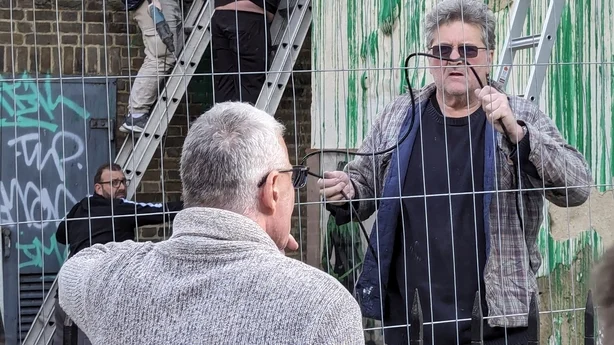
Beyond legal and safety considerations, anonymity also plays a role in the artistic message. Much of Banksy’s work focuses on themes related to political authority, social inequality, consumer culture, and freedom of expression. Presenting these ideas without attaching them to a recognizable public figure allows the art itself to remain the central focus. Instead of viewers concentrating on the biography of the artist, they encounter the message directly through the imagery and the location where the artwork appears.
Banksy’s reputation has grown steadily over the years through a series of memorable artworks and public moments. One of the most widely recognized images associated with the artist depicts a young girl reaching toward a red heart-shaped balloon. The artwork became one of the most beloved pieces of British art in a public opinion survey, demonstrating the widespread appeal of Banksy’s style and themes. Its simple imagery and emotional symbolism resonated with audiences far beyond the traditional boundaries of street art culture.
The same artwork also played a central role in one of the most unusual events in the history of the art market. In 2018, a framed version of the piece was sold at auction. Moments after the sale was finalized, a hidden mechanical device inside the frame activated and partially shredded the artwork. The unexpected stunt shocked those present in the auction room and quickly became a global news story. Banksy later confirmed that the mechanism had been installed intentionally as part of a planned performance that challenged the commercialization of art.
After the shredding incident, the altered artwork received a new title and continued to attract intense interest from collectors and observers. Several years later, the piece was sold again at auction for more than twenty-five million dollars, illustrating the extraordinary value that Banksy’s works have achieved despite their unconventional origins on public walls and city streets. The event reinforced the artist’s reputation for combining visual art with dramatic gestures that question the structures of the art market itself.
Whether Robin Gunningham is ultimately confirmed as the person behind the Banksy name remains uncertain. The investigation adds another chapter to a long-running story that has fascinated both the public and the art community. What is clear, however, is that the mystery surrounding the artist has become inseparable from the cultural impact of the work itself, shaping how audiences interpret each new appearance of Banksy’s distinctive street art around the world.