
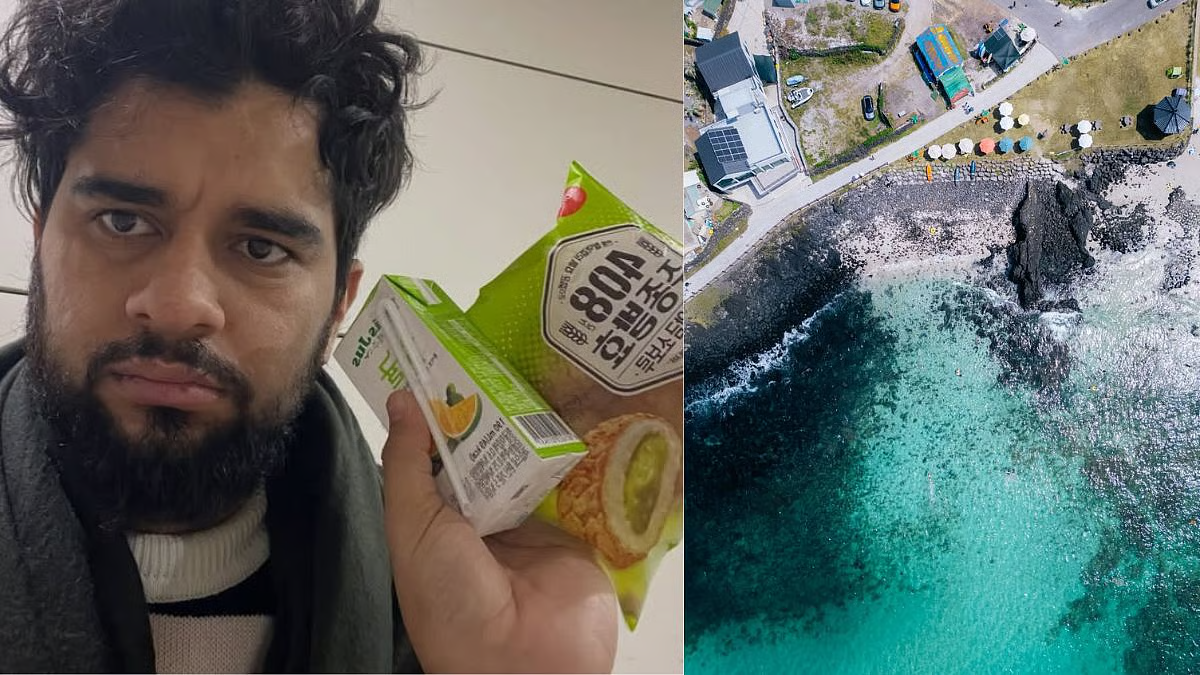
In late December last year, what was meant to be a festive international holiday turned into an ordeal that has since sparked debate among Indian travellers and travel communities online. Indian travel vlogger Sachin Awasthi and his wife travelled to Jeju Island under South Korea’s visa waiver programme, expecting a smooth entry for a short vacation. Instead, they were denied entry, held overnight in a holding facility, and eventually deported.
Months later, a detailed YouTube video posted by Awasthi about the experience has renewed attention to the functioning of the Jeju visa-free scheme and prompted the Embassy of India in Seoul to issue a fresh advisory for Indian nationals. The incident has not only raised questions about immigration scrutiny under visa waiver programmes but also highlighted the importance of documentation, financial proof, and clarity of travel intent.
Sachin Awasthi’s Background and the Jeju Incident
Sachin Awasthi is an Indian travel content creator known for documenting his international trips and sharing practical travel experiences with his audience. Like many travel vloggers, his content typically focuses on destinations, budgeting, itineraries, and on-ground realities for Indian travellers. His travel history, as he has stated, includes multiple international visits, and he claimed to have carried standard travel documentation for his Jeju trip, including confirmed return tickets, hotel bookings, insurance, and proof of funds.
According to Awasthi’s account, the difficulty began even before landing in South Korea. While transiting through Bangkok, airline staff allegedly asked him to show a specific amount of physical cash before allowing him to board the flight to Jeju. He claimed that he was told to arrange cash immediately if he wished to board. After complying with the demand, he and his wife proceeded to Jeju Island.
Upon arrival at immigration at Jeju International Airport, the couple’s passports were examined, fingerprints were taken, and they were escorted to a waiting area. Awasthi stated that he was interviewed through a phone interpreter and asked questions about the purpose of his stay. Eventually, he received a rejection notice citing “purpose of stay not clear.” Despite carrying return tickets, confirmed hotel reservations, travel insurance, and what he described as a strong travel record, he was informed that immigration authorities doubted his intentions.
He later described the episode as “the worst 24 hours of my life,” although he also acknowledged that denying entry is within a country’s sovereign rights. His primary grievance, as expressed publicly, was not the refusal itself but the manner in which he claimed they were treated. According to him, the couple was kept in a detention facility that he described as jail-like, with limited movement, basic food, and no access to sunlight. He said they remained there until arrangements were made for their return.
Indians are facing deeply humiliating treatment in foreign countries, without any transparent justification.
— Abhishek Anand (@TweetAbhishekA) February 22, 2026
Sachin Awasthi and his wife traveled to South Korea’s Jeju Island with complete and valid travel documents. Despite this, were allegedly held in what has been described… pic.twitter.com/NgipCGlr7t
He also alleged that purchasing a next-day return ticket cost significantly more than usual, claiming the fare was at least ten times the normal price. On the onward journey via China, he further claimed that communication was restricted and that even sleeping and restroom use were monitored. In his public statements, Awasthi said he was sharing the experience not for sympathy but to inform fellow travellers of what could happen under visa-free travel arrangements.
Korean immigration authorities have not publicly commented on his specific case. Under international aviation rules, airlines are responsible for returning passengers if they are denied entry at their destination.
The Embassy Advisory and What It Means for Travellers
In the days following renewed attention to Awasthi’s video, the Embassy of India in Seoul issued an advisory addressing Indian nationals travelling to Jeju Island under its visa waiver programme. The advisory clarified that the Embassy periodically receives reports of inconveniences, denial of entry, or repatriation of Indian travellers arriving in Jeju under the visa-free facility.
At the outset, the Embassy underlined a key principle: entry under the Jeju visa waiver scheme is strictly for short-term tourism, and final admission is determined solely by immigration authorities at Jeju International Airport in accordance with Korean law. Importantly, the advisory stressed that visa-free travel does not guarantee entry. Admission remains subject to scrutiny and the satisfaction of immigration officials.
The Embassy outlined a detailed checklist of documents that travellers must carry in printed form rather than relying solely on digital copies. These include a confirmed return air ticket, hotel reservations covering the entire duration of stay, a detailed day-wise travel itinerary, proof of sufficient funds such as recent bank statements or international cards, a passport valid for at least six months, travel insurance, and contact details of accommodation.

The advisory specifically warned that travellers who are unable to clearly explain their travel plan could face the risk of entry denial. Financial preparedness was emphasised as well. Travellers should be able to demonstrate adequate funds for accommodation, food, transport, and other expenses. Immigration authorities may question visitors about their plans and financial capability, and responses are expected to be consistent with short-term tourism objectives.
The statement also explained that immigration officers may conduct interviews upon arrival. Visitors are advised to remain calm, answer truthfully, and cooperate fully. If an officer is not satisfied with the responses or documentation, entry may be refused. In such cases, the passenger will be returned on the next available flight operated by the same airline. Depending on flight schedules, temporary stay in a holding facility may be required.
Another significant clarification in the advisory was that the Jeju visa waiver does not permit travel to mainland South Korea. Attempting to leave Jeju for the mainland without a valid visa is illegal and may result in future travel bans. This distinction is crucial because Jeju operates under a limited visa-free regime intended to promote tourism directly to the island.
The Embassy also clarified its own role. While it cannot overturn immigration decisions taken by Korean authorities, it can seek assistance to ensure reasonable support for Indian nationals held in facilities pending repatriation. Contact details for the Consular Wing and an emergency helpline were provided for those facing immigration issues.
Understanding Jeju’s Visa Waiver Scheme and Broader Implications
Jeju Island, officially known as Jeju Special Self-Governing Province, is a semi-autonomous province of South Korea established to promote tourism and function as a “Free International City.” As part of its tourism strategy, Jeju offers a limited visa waiver scheme for certain nationalities arriving directly on international flights. The scheme is designed to facilitate short-term tourism while maintaining border control standards.
However, like visa-free regimes worldwide, the policy does not eliminate immigration checks. Even when a visa is not required in advance, border officers retain the authority to assess the credibility of a traveller’s stated purpose and financial ability. If doubts arise regarding intent, overstaying risk, or documentation, entry can be denied.
Read : Pilot Vlogger Anh-Thu Nguyen Dies in Indiana Plane Crash During Solo World Flight
Sachin Awasthi’s case has drawn attention precisely because it highlights the gap between public perception and immigration practice. Many travellers interpret “visa-free” as a simplified or guaranteed entry process. In reality, it merely removes the requirement to obtain a visa prior to travel. The final decision always rests with immigration officials at the port of entry.
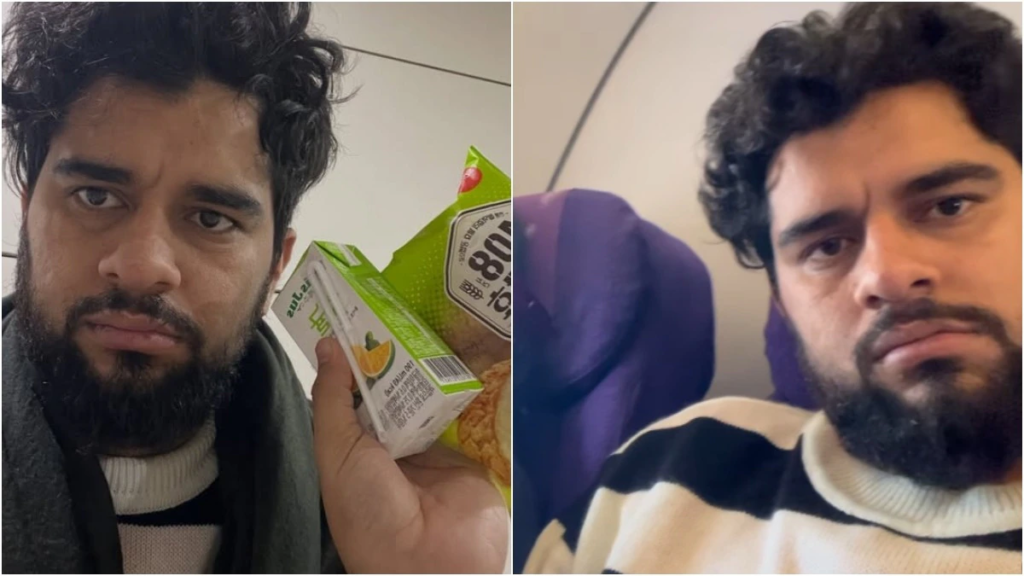
International aviation norms further complicate such situations. When a passenger is denied entry, the airline that transported the individual is typically responsible for returning them to their point of origin or onward destination. During the interim period before departure, passengers may be placed in holding facilities within the airport. While these facilities are administrative rather than criminal detention centres, travellers often describe them as restrictive and uncomfortable.
The renewed discussion following Awasthi’s video reflects a broader trend of Indian outbound tourism increasing rapidly in recent years. As more Indians explore destinations with visa waiver or visa-on-arrival schemes, awareness of documentation requirements becomes increasingly important. Immigration authorities worldwide assess factors such as clarity of itinerary, proof of funds, prior travel history, and consistency of answers during interviews.
The Embassy’s advisory serves as a reminder that preparation must go beyond bookings and tickets. A detailed day-wise plan, printed confirmations, sufficient demonstrable funds, and the ability to clearly articulate one’s travel purpose can significantly influence the outcome of an entry interview. While denial of entry remains relatively rare compared to the volume of travellers, the possibility exists under all visa-free regimes.
For Sachin Awasthi, the experience has become a defining public episode, placing him at the centre of a wider conversation about travel preparedness and immigration discretion. His account has resonated with viewers who see in it both a cautionary tale and a prompt to better understand the realities of international travel. The incident underscores that while countries promote tourism through visa waivers, border control authority remains absolute, and travellers must be ready to satisfy scrutiny at every step of their journey.