

The rapid rise of artificial intelligence has transformed how people create and interact with digital content, but recent developments have revealed a darker side of this technology. A lawsuit filed by three teenage girls against Elon Musk’s AI company, xAI, has brought urgent attention to the risks associated with AI image generation tools like Grok. The case alleges that the tool was used to create altered, explicit images of the girls using their real photos, which were then shared online without their consent. This incident highlights a growing problem where advanced technology is being misused in ways that can deeply harm individuals, especially minors.
As AI tools become more accessible, many users treat them as harmless or entertaining, often without fully understanding the potential consequences. However, this case shows that even a single misuse can lead to serious emotional, legal, and social repercussions. The issue is no longer limited to isolated incidents but is becoming part of a broader pattern that demands attention from both the public and those developing these technologies.
What Happened in the Lawsuit
The lawsuit was filed by three teenage girls from Tennessee, two of whom are minors, who claim that AI-generated images of them were created and circulated without their knowledge. According to the complaint, these images were produced by altering real photos of the victims, including pictures taken during everyday activities such as school events. The manipulated images appeared highly realistic, making them especially damaging and difficult to distinguish from genuine content.
One of the girls reportedly discovered the situation after receiving a message on social media warning her that such images were being shared in online groups. Upon further investigation, she found multiple altered images and videos depicting her in explicit scenarios. The realization caused significant distress, as the content had already begun circulating across platforms like Discord and Telegram, making it difficult to contain or remove.
Law enforcement later became involved, leading to the arrest of a suspect who allegedly possessed illegal material generated using AI tools linked to Grok. Investigators found that the images were not only shared but also used within online communities that exchange harmful content. The lawsuit claims that although the images were generated through a third-party application, the technology behind it relied on xAI’s systems, raising questions about the company’s responsibility.
Read : Elon Musk Warns to Ban Apple Devices at His Firms if It Integrates ChatGPT
The case is particularly significant because it is among the first where minors have taken legal action over AI-generated harmful content. It reflects a growing awareness among victims and families about the need to hold technology providers accountable when their tools are misused in such serious ways.
Why This Case Highlights a Bigger AI Problem
This incident is not an isolated case but part of a much larger issue involving the misuse of generative AI tools. As these technologies become more advanced, they are capable of producing highly realistic images and videos from minimal input. This makes it easier for individuals to manipulate real photos and create convincing but false content that can spread quickly across the internet.
One of the most concerning aspects is the speed and scale at which such content can be generated and distributed. A single user can create multiple altered images in a short time, and once these are shared online, they can be copied and redistributed endlessly. Even if the original content is removed, it often continues to exist in different parts of the internet, making it nearly impossible to fully erase.
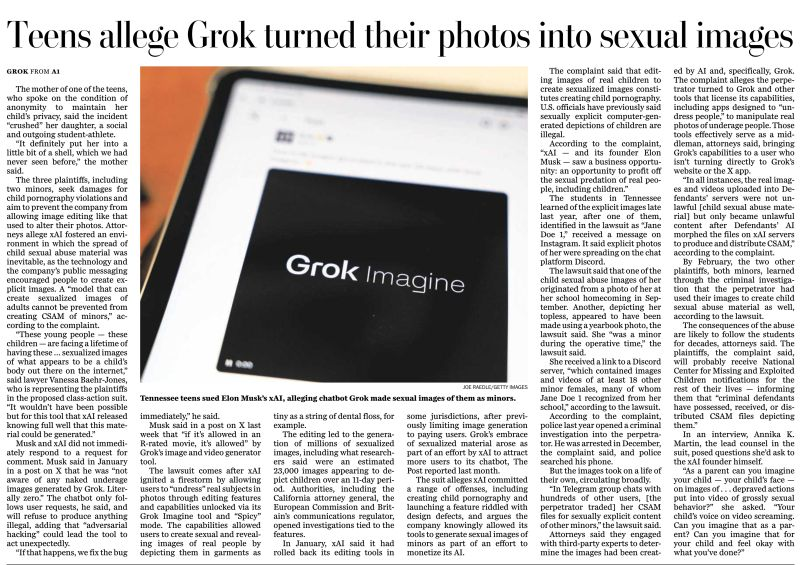
The case also raises serious concerns about safeguards within AI systems. Critics argue that companies developing these tools have not implemented strong enough protections to prevent misuse. When technology is released without adequate controls, it can be exploited in ways that cause significant harm, especially to vulnerable individuals such as minors.
Additionally, the legal system is still catching up with these new challenges. Existing laws were not designed to handle the complexities of AI-generated content, particularly when multiple parties are involved, such as developers, third-party platforms, and individual users. This creates uncertainty about who should be held accountable and how justice can be delivered effectively.
Why People Must Be Careful Using AI Tools
This case serves as a powerful reminder that AI tools are not just creative instruments but technologies that carry serious responsibility. Users must understand that manipulating images of real people without consent is not harmless and can lead to severe consequences, both legally and ethically. What may seem like a joke or experiment can quickly turn into a form of digital harm with lasting impact on someone’s life.
For individuals, especially young people, it is important to be cautious about sharing personal photos online. Once an image is publicly available, it can potentially be misused by others with access to AI tools. Being mindful of privacy settings and limiting exposure can help reduce the risk, although it cannot eliminate it entirely.
At the same time, technology companies must take stronger action to prevent misuse of their platforms. This includes developing better detection systems, restricting harmful capabilities, and ensuring that their tools cannot easily be used to create damaging content. Responsibility should not fall solely on users when the technology itself enables such actions.
The lawsuit against xAI is likely to have lasting implications for the future of artificial intelligence. It brings attention to the urgent need for better regulation, stronger safeguards, and increased awareness about the risks of AI misuse. As technology continues to evolve, it is essential for both users and developers to recognize the potential dangers and act responsibly to prevent further harm.