

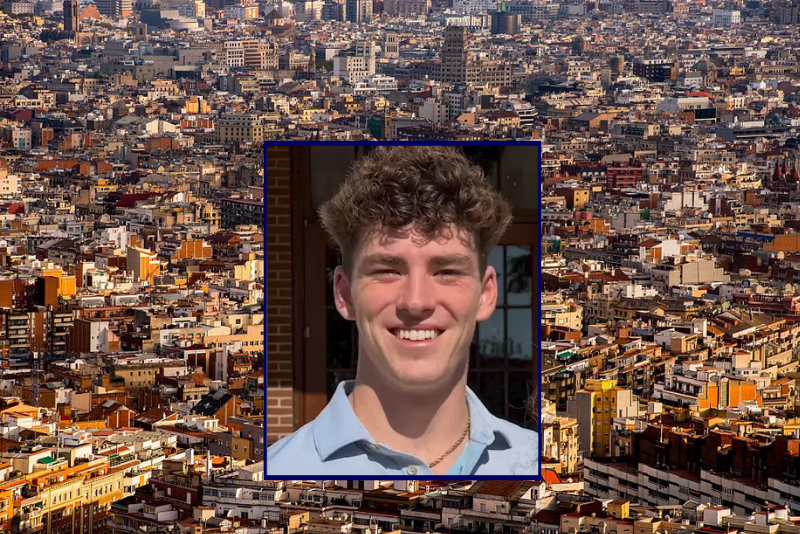
The disappearance of a young college student while traveling abroad has sparked concern across two continents, drawing attention to the uncertainties and risks that can arise even during what is meant to be a carefree break. James “Jimmy” Gracey, a 20-year-old junior at the University of Alabama, vanished while visiting friends in Barcelona during his spring break.
What began as a routine night out in one of Europe’s most vibrant coastal cities has now turned into an ongoing search effort involving family, friends, and local authorities. As details continue to emerge, the case has raised urgent questions about the timeline of events, the circumstances surrounding his disappearance, and the broader challenges faced when someone goes missing in a foreign country.
Last Known Movements and Timeline of Events
Jimmy Gracey had traveled to Europe to spend his spring break visiting friends who were studying abroad, a common and often eagerly anticipated experience for many American college students. According to information shared by his family, he had spent part of his trip in Amsterdam before arriving in Barcelona on Monday. The Spanish city, known for its nightlife and coastal attractions, was meant to be the final stop of his trip.
On the night of his disappearance, Gracey went out with friends to Shôko, a well-known beachfront nightclub located in the Port Olímpic area of Barcelona. This district is a popular nightlife hub, attracting both locals and international visitors. The evening appeared to unfold normally until the early hours of the morning. He was last seen by a friend at approximately 3:00 a.m. on Tuesday outside the nightclub.
At some point after that, Gracey became separated from his group and did not return to the Airbnb accommodation where he had been staying. This absence quickly raised alarm among those traveling with him. The situation became even more concerning when it was revealed that local authorities had possession of his phone, though details about how it was recovered have not been publicly clarified.
Police in Catalonia confirmed that they received a call reporting a possible disappearance earlier that morning, around 1:00 a.m., and subsequently opened an investigation. The timeline has presented some inconsistencies or gaps that investigators are likely working to clarify, including the exact sequence of events between Gracey’s last confirmed sighting and the reporting of his disappearance.
Read : Unheard Tales of the Amalfi Coast: Secrets of Italy’s Enchanted Shoreline
Descriptions provided by family members indicate that Gracey was wearing a white shirt, dark pants, and a chain with a gold rhinestone cross at the time he was last seen. He is described as approximately 6 feet 1 inch tall and weighing around 175 pounds. These details have been shared widely in an effort to aid identification and generate leads.
Family’s Plea and Ongoing Search Efforts
As news of Gracey’s disappearance spread, his family took to social media in a desperate effort to gather information and reach anyone who might have seen him. His mother posted a message in a Facebook group for students in Barcelona, appealing directly to the public for help. The message underscored both the urgency of the situation and the emotional toll on those waiting for answers.
The family’s outreach reflects a common pattern in missing person cases, particularly when they occur abroad. Without immediate access to familiar systems of support, families often rely heavily on online communities, local networks, and media coverage to amplify awareness. In this case, the involvement of student groups and international communities has been crucial in spreading information quickly.
Read : University of Alabama Student Alireza Doroudi Arrested by ICE
Local authorities have confirmed that an investigation is underway, though early stages of such cases often involve piecing together fragmented information. Officers are likely reviewing surveillance footage from the nightclub and surrounding areas, interviewing witnesses, and analyzing any available digital data to reconstruct Gracey’s movements.

The involvement of his university has also been noted, with officials stating that they are in contact with the family and offering support. While the trip was personal and not affiliated with the institution, universities often play a role in providing resources and assistance during crises involving their students.
Search efforts in cases like this can be complex, especially in a busy urban environment like Barcelona. The Port Olímpic area, with its proximity to the beach and marina, presents additional variables that investigators must consider. From crowded nightlife venues to waterfront access, each element adds layers of complexity to the search.
The fact that Gracey’s phone was recovered is a potentially significant development, though without further details it remains unclear what insights it may provide. Phones can offer valuable clues through location data, messages, and activity logs, but the usefulness of such information depends on the condition of the device and the circumstances under which it was found.
Broader Concerns Around Student Travel Abroad
Gracey’s disappearance has also brought renewed attention to the safety considerations associated with international travel, particularly for young people exploring unfamiliar environments. Spring break trips and study abroad visits are often seen as opportunities for cultural exploration and social experiences, but they can also involve risks that are sometimes underestimated. Nightlife settings, while popular among travelers, can present challenges including disorientation, separation from companions, and unfamiliar local conditions.
Being in a foreign country can make it more difficult to navigate these situations, especially when language barriers or differences in emergency response systems come into play. One of the key factors in such cases is the importance of staying connected and maintaining awareness of one’s surroundings. Traveling in groups, establishing clear plans for returning to accommodations, and ensuring that someone is always aware of each person’s whereabouts are basic precautions that can reduce risk. However, even with such measures in place, unexpected situations can still arise.
The role of local authorities is another critical aspect. When a person goes missing abroad, coordination between different agencies, including local police, foreign consulates, and sometimes international organizations, can be required. This coordination can take time, particularly in the early stages of an investigation. For families back home, the experience can be especially challenging due to distance and limited access to real-time information. They often depend on updates from authorities and the efforts of local contacts, while also trying to manage the emotional strain of uncertainty.
Gracey’s case highlights the importance of awareness and preparedness for those traveling internationally. While millions of people travel safely each year, incidents like this serve as a reminder of the need for vigilance and planning. It also underscores the value of community response, as both local residents and global networks play a role in supporting search efforts and sharing information.
As the investigation continues, the focus remains on locating Jimmy Gracey and understanding what happened in the hours following his last known sighting. Each piece of information, no matter how small, could contribute to building a clearer picture of events. For now, the case stands as a stark example of how quickly a routine night can turn into a situation of deep concern, leaving many hoping for answers and a safe resolution.