
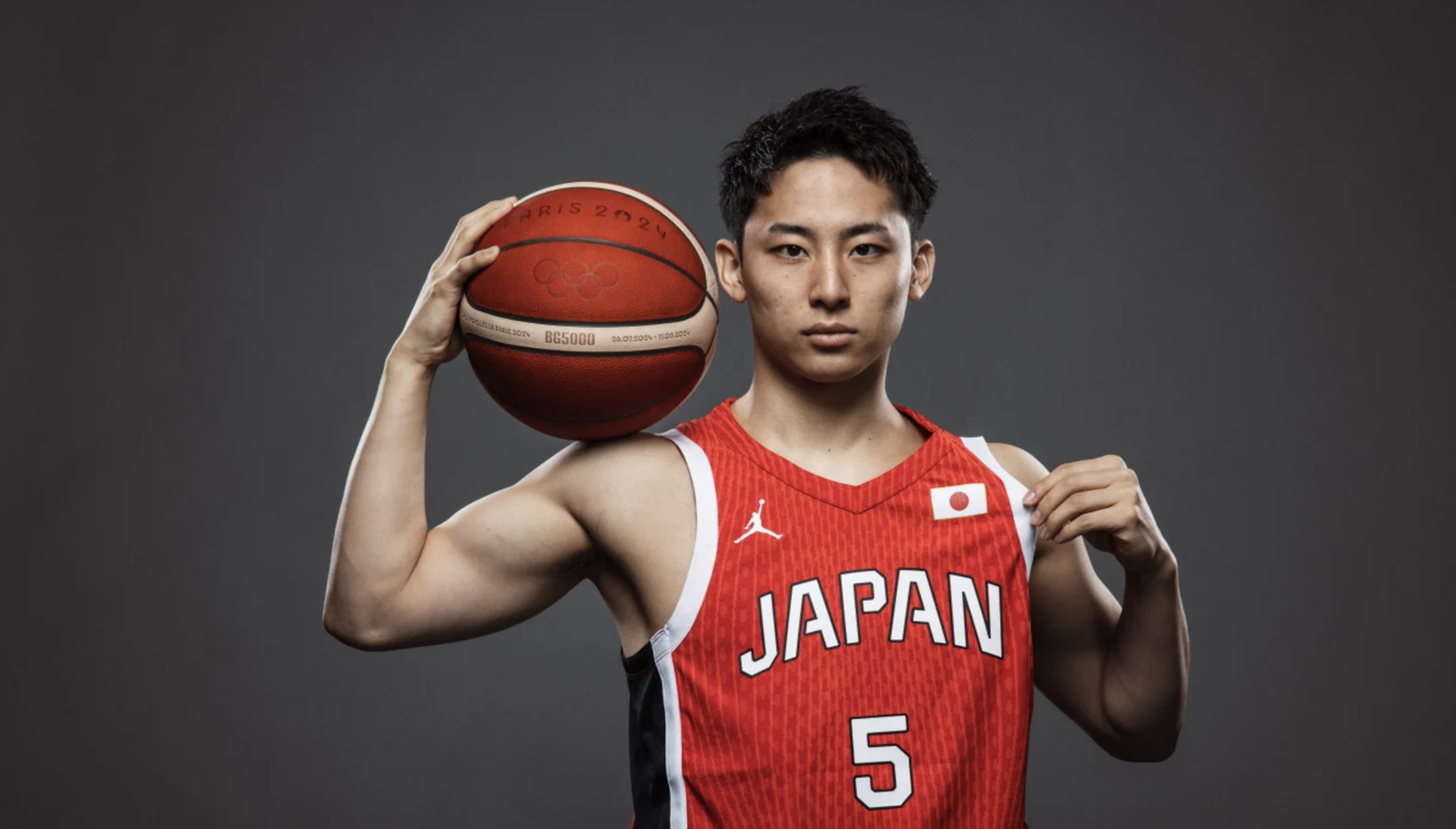
Yuki Kawamura’s NBA debut with the Chicago Bulls on January 31 was not simply another first appearance by a young guard trying to find his footing at the highest level of basketball. It became a moment that captured global attention, blending improbability, persistence, and technical skill into a single sequence that resonated far beyond the box score.
At 5-foot-7, Yuki Kawamura entered the league as the shortest active player in the NBA and the shortest in Chicago Bulls history, a distinction that inevitably invites skepticism in a sport dominated by size and athletic reach. Yet during a tightly contested game against the Miami Heat, he delivered one of the most unexpected highlights of the season by winning a jump ball against a 6-foot-5 opponent, Heat guard Kasparas Jakučionis.
The play crystallized Kawamura’s appeal: a player whose career has been shaped by overcoming physical limitations through anticipation, speed, and relentless effort. Yuki Kawamura’s performance in that game extended well beyond a single possession. In just 11 minutes of play, he contributed six points, three rebounds, two assists, and two steals, helping Chicago secure a 125–118 road victory at the Kaseya Center.
The stat line itself was efficient, but the symbolism of his presence on the floor was just as significant. For Kawamura, the night represented the culmination of years of work, setbacks, and recovery, as well as the beginning of a new chapter with a franchise he has long admired. His path to that moment reflects both the evolving nature of the NBA and the enduring value of players who bring energy, discipline, and intelligence to every possession.
From Japan to the NBA: Kawamura’s Unlikely Journey
Yuki Kawamura was born in Japan and developed his game in a basketball culture that, while passionate, rarely produces NBA players, particularly guards of his stature. From an early age, Kawamura stood out not for size or physical dominance but for his court vision, ball-handling, and competitive intensity. These attributes allowed him to excel against larger opponents and earn recognition within Japanese professional basketball, where his speed and decision-making became defining traits.
His success at the domestic level eventually opened doors internationally, including opportunities to compete against higher-level talent and to showcase his abilities in front of NBA scouts. Kawamura’s game was built on fundamentals: quick reads in pick-and-roll situations, precise passing angles, and an ability to pressure ball handlers defensively despite giving up significant height and wingspan. These skills aligned with the modern NBA’s increasing emphasis on pace, spacing, and guard play, even as his physical profile remained an outlier.
Yuki Kawamura’s initial NBA opportunity came with the Memphis Grizzlies, where he gained exposure to the league’s speed and physicality. While his time there did not lead to a long-term roster spot, it provided invaluable experience and reinforced his belief that he could compete at this level. His next significant step came in 2025, when he joined the Chicago Bulls’ Summer League team.
That stint allowed him to build relationships within the organization and demonstrate his fit within the Bulls’ system, particularly as a high-energy guard capable of changing tempo off the bench. However, his progress was interrupted by a serious health concern. During the preseason, Yuki Kawamura was waived after being diagnosed with a blood clot in his lower right leg, an issue that can be career-threatening if not addressed carefully.
Yuki Kawamura forces the jumpball.
— NBA (@NBA) February 1, 2026
Yuki Kawamura wins the jumpball!
"HE WON THE TIP, HE WON THE TIP!"
Hilarious moment in South Beach 🤣 pic.twitter.com/dE4MzAeRWx
The setback introduced uncertainty at a critical moment in his career, forcing him to prioritize recovery over competition. With the support of the Bulls’ medical staff, he underwent treatment and rehabilitation, eventually returning to full health. The experience tested his patience and resilience, but it also underscored the level of professionalism he brought to his work, a factor that would later influence Chicago’s decision to bring him back on a two-way contract in early January.
The Jump Ball That Made Headlines
The defining image of Kawamura’s debut came midway through the game against Miami, when he forced a jump ball against Kasparas Jakučionis, a 6-foot-5 guard nearly a foot taller. The sequence began with Yuki Kawamura applying intense on-ball pressure, refusing to concede space despite the size mismatch. As Jakučionis attempted to protect the ball, he lost balance and fell, allowing Kawamura to secure possession and force the jump ball situation.
What followed defied conventional expectations. Jump balls are typically the domain of taller players, where reach and vertical leap dictate the outcome. Yuki Kawamura entered the circle at a clear disadvantage, giving up approximately ten inches in height. Yet when the referee tossed the ball, Kawamura timed his leap precisely. Jakučionis appeared to make contact with the ball slightly early, grazing it with his fingers before it reached its apex. Kawamura, anticipating that mistiming, struck the ball cleanly and directed it to a teammate, securing possession for Chicago.
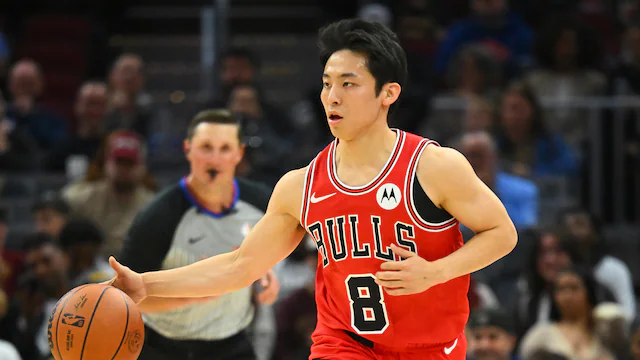
The moment drew immediate reactions from commentators and fans alike. Announcers marveled at the sight of the shortest active player in the league winning a jump ball, while social media quickly amplified the clip as a symbol of effort overcoming physical odds. For Kawamura, the play carried personal significance. He later described it as his first jump ball win since he started playing basketball, an admission that highlighted both the rarity of the opportunity and the satisfaction of seizing it on the NBA stage.
The jump ball was not an isolated display of hustle. Throughout his minutes, Kawamura consistently disrupted Miami’s rhythm, poking at passing lanes, initiating quick offensive actions, and maintaining composure in late-game situations. His ability to stay locked in during clutch time reflected a mental readiness that belied his limited NBA experience. Rather than appearing overwhelmed by the moment, he embraced it, channeling his energy into precise execution.
Impact, Recovery, and a Future with the Bulls
Kawamura’s debut performance and the circumstances surrounding it resonated within the Bulls organization. Head coach Billy Donovan emphasized the seriousness of the health scare Kawamura had endured and praised his dedication throughout the recovery process. From the team’s perspective, Kawamura’s return to full health and subsequent signing represented not just a medical success but a reward for sustained effort and professionalism.
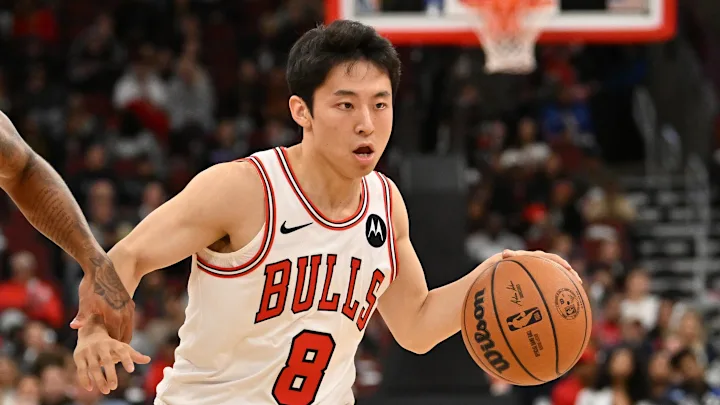
On the court, Kawamura’s role with the Bulls is defined by efficiency and intensity rather than volume. His 11 minutes against Miami demonstrated how he can contribute in short bursts, providing defensive pressure, ball movement, and a spark of energy that can shift momentum. For a team navigating the demands of a long season, such contributions are valuable, particularly from a player on a two-way contract who remains motivated to prove his place in the league.
Beyond immediate impact, Kawamura’s presence carries broader implications. As the shortest player in Bulls history, he challenges traditional assumptions about the physical thresholds required to succeed in the NBA. While his path is unlikely to be replicated easily, his example reinforces the idea that basketball intelligence, preparation, and competitiveness can create opportunities even in a league defined by size and athleticism. His background as a lifelong Bulls fan adds an emotional dimension to his tenure, aligning personal aspiration with professional opportunity.
Looking ahead, Kawamura’s future will depend on consistency, health, and his ability to adapt as opposing teams gain familiarity with his game. The NBA is unforgiving, particularly for players who operate on the margins of conventional profiles. Yet Kawamura’s journey to this point suggests he is well-equipped to navigate those challenges. His debut was not a culmination but an introduction, offering a glimpse of what he can bring when preparation meets opportunity.
In a single night, Yuki Kawamura transformed from a little-known two-way guard into a symbol of persistence and precision. The jump ball he won against a much taller opponent will remain a memorable highlight, but it is the discipline behind that moment, forged through years of work and recovery, that defines who he is as a player.