
A troubling incident at Pride Elementary School in Deltona, Florida, has drawn attention to the serious consequences that even very young students can face when threats of violence appear in a school setting. Authorities in Volusia County reported that a 10-year-old student was arrested after allegedly writing a message on a classroom whiteboard about bringing a gun to school and leaving behind a written “kill list” inside a desk.
The discovery quickly prompted a law enforcement response and raised concerns among school staff, parents, and the broader community about safety, student behavior, and the challenges schools face in addressing threats of violence. The Volusia County Sheriff’s Office confirmed that the child was taken into custody and charged with making a written threat to kill, a felony offense under Florida law.
Officials stated that the threat was taken seriously as soon as it was discovered, triggering an investigation and immediate action by deputies. Although the student later reportedly told authorities that he did not actually intend to harm anyone, law enforcement emphasized that such threats cannot be dismissed, particularly in an era where schools across the United States remain vigilant about the possibility of violence.
The incident highlights the difficult balance schools and law enforcement must maintain between protecting students and responding appropriately when young children become involved in serious allegations. While the child’s age has prompted debate about discipline and accountability, officials maintained that the safety of students and staff must remain the priority when threats are discovered.
Discovery of the Threat and Immediate Response
According to the Volusia County Sheriff’s Office, the situation unfolded when school staff discovered alarming messages written on a classroom whiteboard at Pride Elementary. The message allegedly referenced bringing a gun to school, prompting immediate concern among teachers and administrators. During a further search of the classroom, officials said a piece of paper was found inside a desk containing what appeared to be a “list of people who I’m gunna kill,” written in a child’s handwriting.
Once the notes were discovered, school officials quickly alerted law enforcement. Deputies responded to the school and began an investigation into the source of the message and the list. Authorities were able to identify a 10-year-old student believed to be responsible for writing both the whiteboard message and the list found in the desk.
Investigators spoke with the child during the course of the inquiry. According to the sheriff’s office, the student told deputies that he did not actually intend to carry out the threat. Despite this statement, officials emphasized that any written threat involving violence or firearms must be treated as credible until proven otherwise. As a result, deputies moved forward with arresting the student on a felony charge of making a written threat to kill.
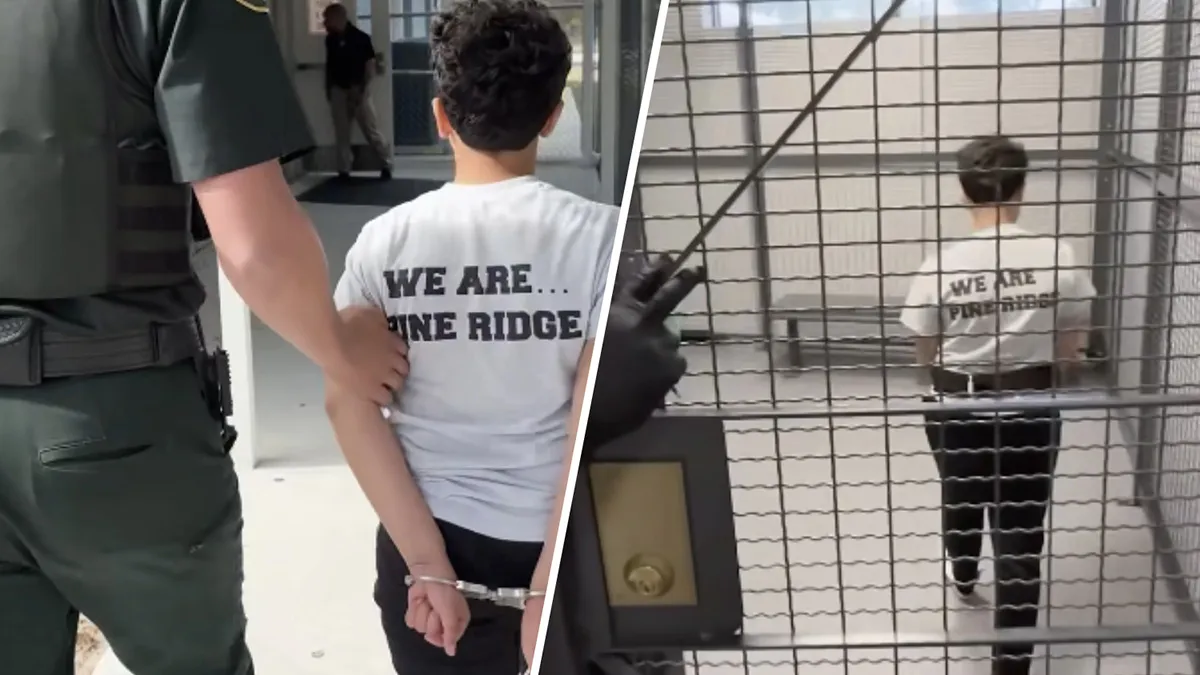
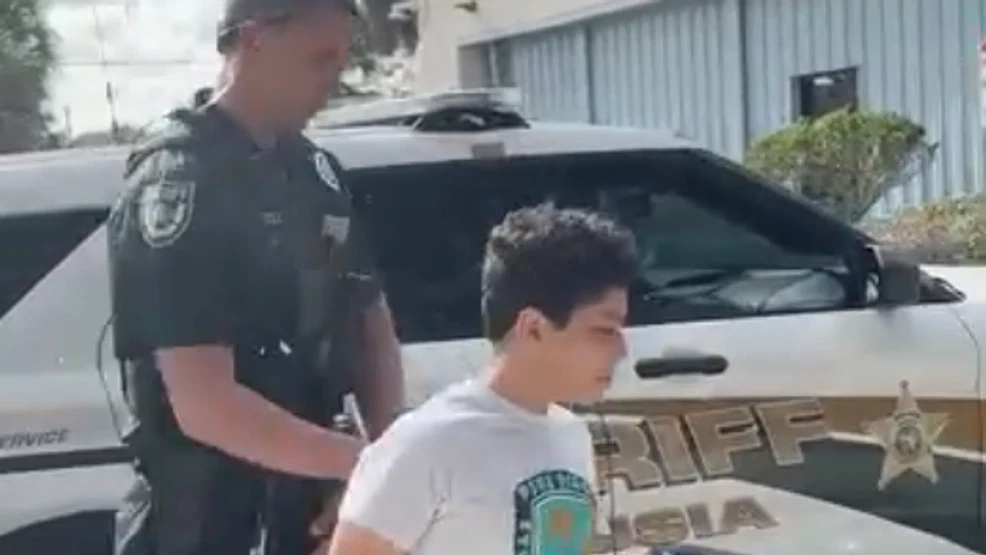
Video footage released by the sheriff’s office later showed the child in handcuffs being escorted from a patrol vehicle and taken into a juvenile detention facility. The release of the footage sparked significant discussion online and in the community, with some people questioning the necessity of such a response for a child so young, while others supported the strict enforcement of laws designed to deter threats against schools.
10-Year-Old Boy Arrested After Writing ‘He’d Bring a Gun to School’ on Classroom Whiteboard + ‘List of People Who I’m Gunna K*ll’ Note at Pride Elementary
— TodayCivix (@TodayCiviX) March 7, 2026
📍Deltona, FL
He says he didn’t mean it!
Sheriff: “Talk to your kids” before juvenile justice. pic.twitter.com/f0Dcwcd6EN
Authorities also confirmed that the parents of the three students named on the list were notified about the situation. Officials said they wanted to ensure that those families were aware of the potential threat and the steps taken by law enforcement to address it.
Law Enforcement’s Approach and Legal Consequences
The Volusia County Sheriff’s Office emphasized that threats against schools are treated with the utmost seriousness, regardless of the age of the person making them. Under Florida law, making a written threat to kill or conduct a mass shooting is considered a felony offense. Law enforcement officials have repeatedly stated that the strict enforcement of this law is intended to deter individuals from making threats that could cause fear or disrupt school environments.
In a statement shared on social media, the sheriff’s office acknowledged that the child’s parent indicated the student did not have access to any firearms. However, authorities said this fact did not change the seriousness of the alleged actions. The sheriff’s office stressed that the consequences were necessary to reinforce the message that threats involving violence or weapons are unacceptable.
Officials also used the incident to remind parents about the importance of speaking with their children about the potential consequences of making threats, even if they are intended as jokes or expressions of frustration. According to the sheriff’s office, children may not fully understand how seriously such statements are taken, but once they are discovered, law enforcement is obligated to investigate and respond.
Cases involving juvenile suspects often proceed differently from adult criminal cases, with courts considering factors such as the child’s age, intent, and prior behavior. Juvenile justice systems typically focus on rehabilitation as well as accountability, meaning outcomes may include counseling, supervision, or other interventions aimed at preventing future incidents.
Nevertheless, the charge itself carries significant legal weight, and the arrest illustrates how law enforcement agencies across the country have adopted zero-tolerance approaches to threats against schools. Authorities argue that swift action is necessary to maintain safety and discourage others from making similar threats.
Community Reaction and Ongoing Conversations About School Safety
The arrest of such a young student has sparked widespread discussion about how schools, families, and law enforcement should respond when children become involved in threats of violence. Some community members expressed support for the sheriff’s office, arguing that firm action is necessary to send a clear message that threats will not be tolerated under any circumstances.
Read : Who Is Rumeysa Ozturk, Tufts University Student Who Earned PhD One Year After ICE Detention?
Others, however, questioned whether arresting a 10-year-old was the most appropriate response. Critics argued that incidents involving children of that age may reflect emotional struggles, misunderstandings, or attention-seeking behavior rather than genuine intent to cause harm. These voices called for greater emphasis on counseling, behavioral intervention, and mental health support rather than criminal charges.
The situation also renewed conversations about the pressures facing schools as they work to maintain safe environments. Over the past several years, schools across the United States have increasingly adopted strict reporting and response policies for threats of violence. Teachers and administrators are often trained to immediately report any concerning behavior to law enforcement rather than attempting to resolve the issue internally.
Supporters of these policies argue that swift reporting has prevented potential tragedies in some cases by identifying serious threats early. However, the policies can also lead to situations where young students face severe consequences for actions that might once have been addressed through school discipline alone.
The sheriff’s office emphasized that parents play a critical role in preventing incidents like this. Officials encouraged families to talk openly with their children about the dangers and consequences of making threats involving violence. They also urged parents to monitor what their children write, say, or post online, as seemingly casual remarks can quickly escalate into serious legal matters when discovered by school authorities.
While the investigation into the incident at Pride Elementary has concluded with the student’s arrest, the broader conversation about how to respond to such cases continues. Educators, law enforcement officials, and families are increasingly confronted with complex questions about safety, discipline, and the appropriate ways to guide young children who may not fully grasp the gravity of their actions.
For the families involved and the school community in Deltona, the incident served as a stark reminder of how quickly a situation involving a simple note or message can escalate into a major law enforcement matter. As schools continue to prioritize safety and vigilance, events like this underscore the importance of early conversations about responsibility, respect for others, and the serious consequences that can follow threats of violence.