
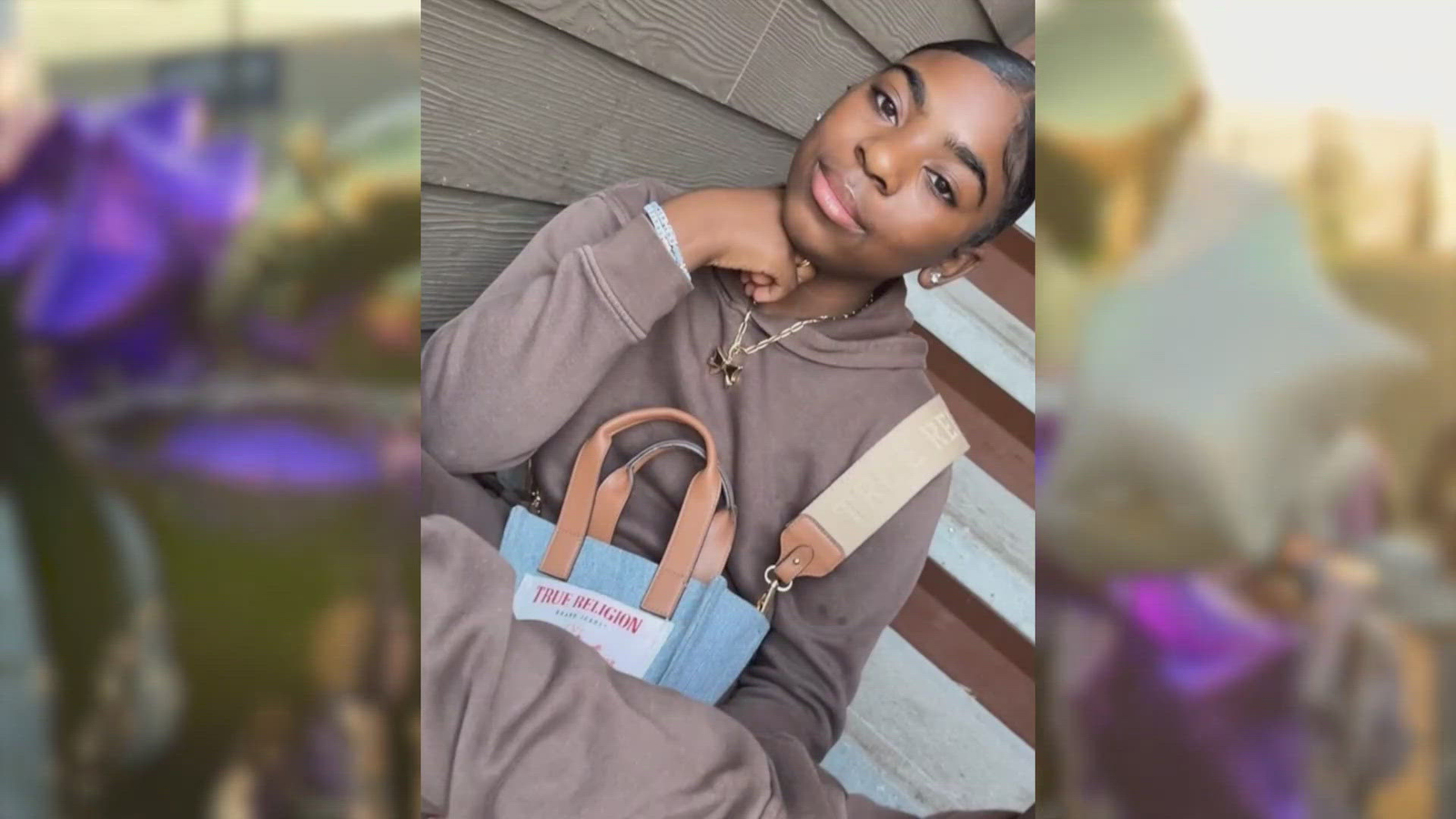
A fatal stabbing involving two children has left a Houston community reeling and raised difficult legal and social questions about youth violence, accountability, and the circumstances that lead to such tragedies. Thirteen-year-old Riley DeArmas was killed during a large brawl outside an apartment complex in Houston, Texas, an incident that police say involved as many as 20 to 30 people.
A 10-year-old boy was detained in connection with the stabbing and has claimed he acted in self-defense, according to investigators. The case remains under active investigation as authorities determine whether criminal charges will be filed against a child who, under Texas law, is just at the minimum age of criminal responsibility. Riley’s death has drawn widespread attention not only because of the violence involved, but also because of the ages of those at the center of the case.
Family members have described Riley as a joyful and gentle child who would have turned 14 next month, while police continue to examine how a chaotic group confrontation escalated into a fatal encounter. As the investigation proceeds, the case underscores the complex intersection of juvenile justice, community safety, and the profound impact of violent incidents on families and neighborhoods.
The Incident and the Ongoing Police Investigation
Houston police say officers were called to the scene around 8 p.m. last Wednesday following reports of a stabbing outside an apartment complex on Grow Lane. When officers arrived, they found a juvenile female suffering from a stab wound. Houston Fire Department paramedics transported her to a nearby hospital, where she was pronounced dead. Investigators later determined that the stabbing occurred during a large altercation involving multiple individuals.
At a press conference, Houston Police Lt. Larry Crowson said the incident stemmed from a confrontation between two groups, with an estimated 20 to 30 people present. The size and intensity of the brawl have complicated the investigation, as detectives work to piece together accounts from witnesses and determine the sequence of events that led to the stabbing. According to police, the 10-year-old boy accused in the case told investigators that he acted in self-defense during the altercation.
The boy was detained by authorities following the incident but was later released pending further investigation. Lt. Crowson explained that homicide investigators are consulting with the Harris County District Attorney’s Office to determine how to proceed. Under Texas law, 10 is the minimum age of criminal responsibility, meaning charges could be filed, but that decision rests with prosecutors after police complete their work.
Read : 19-year-old Nedas Revuckas Accused of Stabbing Pregnant Woman to Death
Riley DeArmas has not yet been formally identified as the victim by the Harris County Institute of Forensic Sciences, but her family has publicly confirmed that she was the girl killed in the stabbing. Investigators have not released details about the specific interactions between Riley and the boy accused of the stabbing, nor have they clarified what evidence supports or challenges the self-defense claim. Authorities have emphasized that the investigation remains active and that all available information will be reviewed before a charging decision is made.
Read : AI Video of ‘Spaghetti Dance’ Goes Viral on Instagram: Watch Here
Police have asked anyone with information about the incident to contact the Houston Police Department’s Homicide Division or Crime Stoppers. As detectives continue to interview witnesses and review evidence, the case remains a focus of attention for both law enforcement and the broader community.
Family Reactions and Community Mourning
As investigators work to establish the facts of the case, Riley DeArmas’s family has spoken publicly to remember her life and to challenge suggestions that she played a violent role in the altercation. Riley’s mother, Ashley DeArmas, rejected the idea that her daughter’s death could be justified as self-defense, describing Riley as a nonviolent and loving child.
“She was not a violent person. She would never harm anyone intentionally,” Ashley DeArmas told a local CBS affiliate. She also addressed what she described as a circulating narrative that portrayed Riley as an aggressor, saying it did not reflect who her daughter was. Riley would have turned 14 next month, a milestone her family had been preparing to celebrate. Instead, relatives and friends gathered to mourn her death.
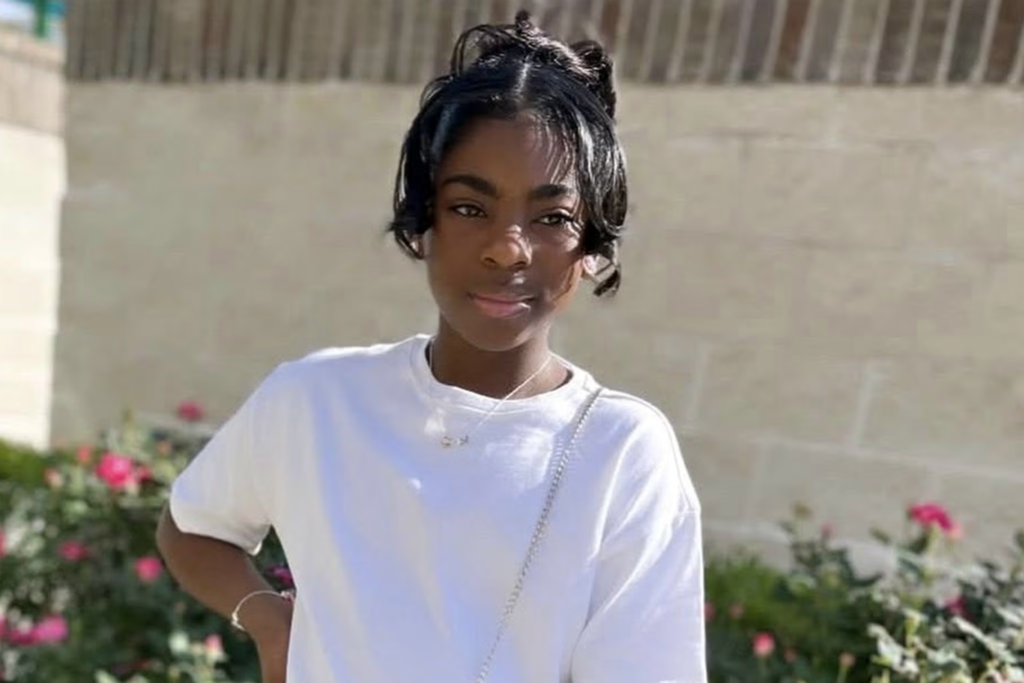
On Saturday evening, nearly 100 people attended a vigil in her honor, releasing balloons into the sky as a tribute to her memory. Many of the balloons were purple, Riley’s favorite color, chosen to reflect her personality and the joy she brought to those around her. At the gathering, emotions ran high as family members and friends embraced and shared memories. Riley’s mother spoke about the painful contrast between the celebration she had anticipated and the reality she now faced.
She described the balloons as a symbol of what should have been a birthday celebration rather than a memorial. Riley’s aunt, Megan DeArmas, also spoke at the vigil, expressing grief over the loss of a life she said was cut short far too soon. The family has described Riley as joyful, free-spirited, and happy, emphasizing that she was deeply loved and that her death has left a lasting void.
The community response has reflected both sorrow and shock. Vigils and memorials have become spaces for collective mourning, while also highlighting concerns about safety and the circumstances that allowed a large group confrontation involving children to escalate into deadly violence. For many residents, Riley’s death has prompted broader reflection on the environment in which young people are growing up and the challenges families face in keeping children safe.
Legal Questions Surrounding Juvenile Responsibility
Beyond the immediate grief and investigation, the case has drawn attention to the legal framework governing juvenile responsibility in Texas. The boy accused in the stabbing is 10 years old, which is the minimum age at which a child can be held criminally responsible under state law. This threshold places the decision squarely in the hands of prosecutors, who must weigh the evidence, the circumstances of the incident, and the age and developmental capacity of the child involved.
Read : 19-Year-Old Brandon Rodas Charged After Stabbing Student With Arrow at Madison High School
Lt. Crowson acknowledged the sensitivity of the situation, noting that while charges could be filed, the decision ultimately belongs to the district attorney. The Harris County District Attorney’s Office has said it will make a determination once police have completed their investigation and presented the full case for review.
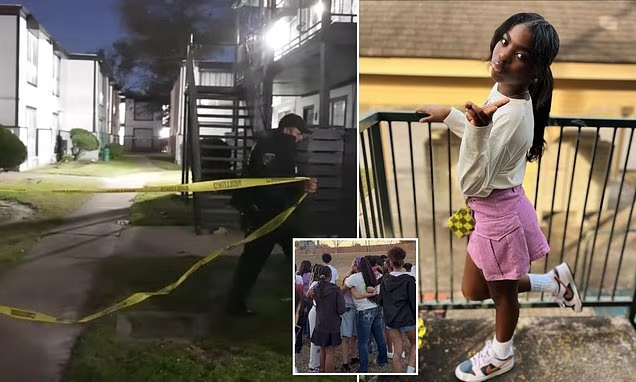
Cases involving children this young are relatively rare and often raise complex questions about intent, self-defense, and appropriate accountability. Prosecutors must consider whether the legal standards for self-defense are met and how those standards apply to a child’s actions during a chaotic group altercation. They must also consider the broader goals of the juvenile justice system, which traditionally emphasizes rehabilitation over punishment.
The self-defense claim adds another layer of complexity. Under Texas law, self-defense is justified if a person reasonably believes force is immediately necessary to protect against another’s use or attempted use of unlawful force. Determining what is “reasonable” in the context of a large brawl involving minors requires careful examination of witness statements, physical evidence, and the actions of everyone involved.
At the same time, Riley’s family has made clear that they dispute any implication that she posed a threat that would justify deadly force. Their statements underscore the emotional and factual disputes that often arise in cases where legal claims intersect with personal loss.
As the investigation continues, the case remains unresolved, with significant implications for those directly affected and for the broader conversation about youth violence and accountability. The outcome will depend on the findings of law enforcement and the judgment of prosecutors tasked with navigating a tragedy that has already left an indelible mark on a family and a community.