
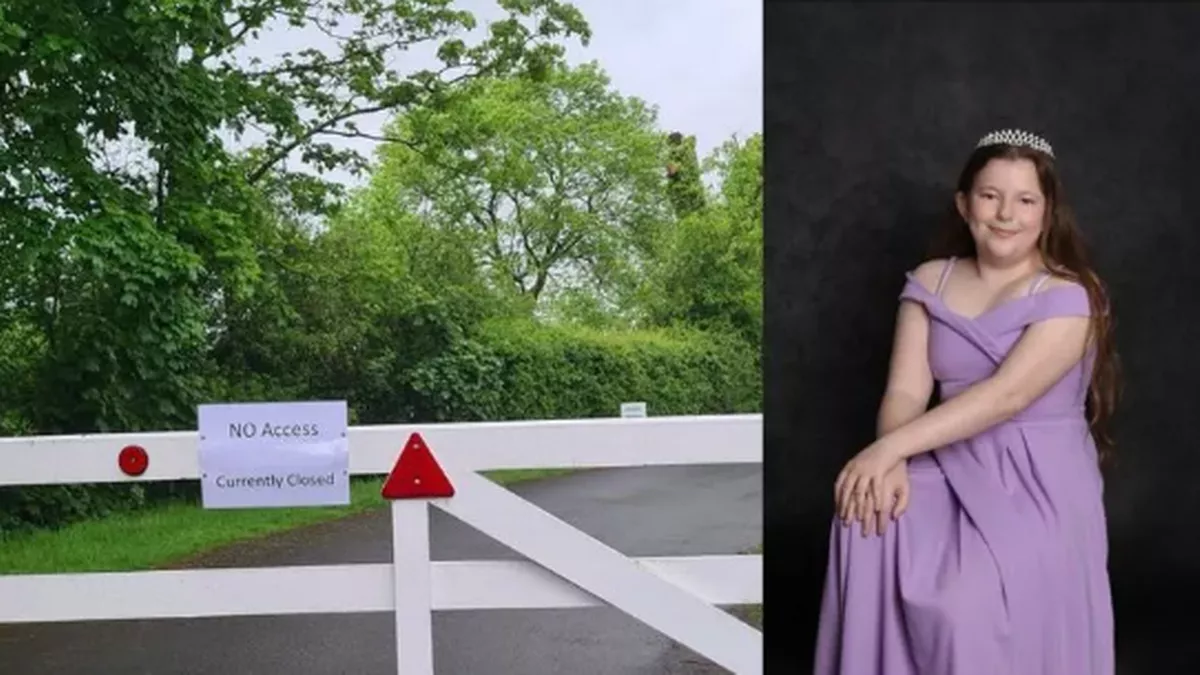
The tragic loss of 10-year-old Leah Harrison, a Year 6 pupil from Darlington, has left a deep mark on the hearts of many. What was meant to be a joyful and enriching outdoor adventure during a school residential trip turned into an unimaginable tragedy.
Leah’s life was cut short on May 22, 2024, when she was swept away by a sudden mudslide while crossing a stream at Carlton Bank near Carlton-in-Cleveland, on the edge of the North York Moors. The heartbreaking incident has raised serious questions about the unpredictability of nature and the measures in place during outdoor educational activities.
A Day Meant for Adventure Turns to Tragedy
Leah Harrison was taking part in a three-day school trip with classmates from Mount Pleasant Primary School. The group had been staying at the Carlton Adventure centre, a facility operated by Hartlepool Borough Council.
On that fateful day, Leah was involved in an instructor-led walk when disaster struck. As she was crossing a stream, a mudslide came down from a bank, sweeping her off her feet and dragging her approximately 20 feet downstream.
Witnesses, including the school’s headteacher Joanne Blackham, described how the mudslide “came out of nowhere.” Ms Blackham testified during the inquest that there had been no prior signs of danger—no unusual noise, no visible movement—just a routine activity under typical rainy weather conditions.
Leah Harrison was suddenly hit by a surge of mud, quickly submerged and trapped face-down in thick sludge. Despite efforts to free her, initial rescue attempts were unsuccessful. Emergency services rushed Leah to James Cook University Hospital, but the injuries she sustained were too severe.
Read : West Potomac High School Student Arrested For Stabbing Fellow Student
The young girl, whose only wish was to enjoy her school trip with friends, was declared dead at the hospital. The suddenness and severity of the mudslide shocked the entire school community and prompted a detailed investigation into the circumstances of the event.
Weather Conditions and Risk Assessments Under Scrutiny
The inquest into Leah’s death has shone a light on the procedures and risk management associated with school-led outdoor activities. On the day of the incident, weather conditions were described as “misty and drizzly” by Paul Godwin, a senior activities officer at the Carlton Adventure centre. He stated that similar conditions had been experienced “countless times” during previous school trips without incident, and that nothing seemed out of the ordinary.
Read : Jordan : A Home to Petra, Dead Sea, Wadi Rum And Jerash
However, the presence of a Met Office yellow weather warning at the time suggested there was a need for increased caution. Mr Godwin acknowledged that such warnings typically mean activities can proceed but advised staying away from low-lying areas—precisely the type of terrain where the mudslide occurred.
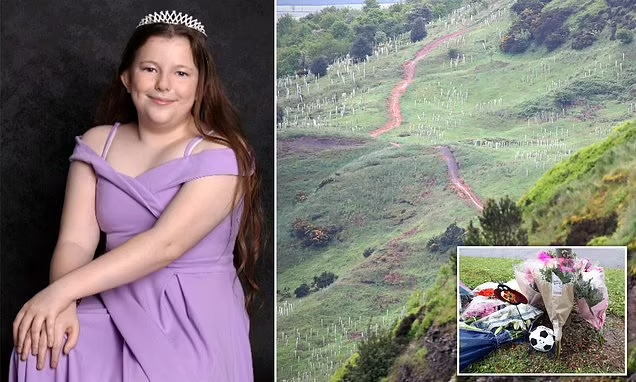
Despite this, there was no clear indication or precedent to suggest that a mudslide of such magnitude could occur at Carlton Bank. The incident was described as unforeseeable, with both school staff and centre officials insisting that all safety measures were in place and previously reliable paths were used.
The inquest also examined whether sufficient planning and consideration had been given to the weather forecast and the suitability of the terrain. Though the weather may have appeared manageable, the unforeseen saturation of the soil and the topography of the area may have created perfect conditions for a sudden mudslide.
This has raised broader concerns about how schools and outdoor education providers can better predict and mitigate such risks, especially in a climate where extreme weather events are becoming increasingly common.
A Family’s Unbearable Loss and a Life Remembered
Leah’s untimely death has not only devastated her family but also left her school and wider community in mourning. In a moving statement read at the inquest, Leah’s mother, Michelle Harrison, spoke of her daughter’s joy, courage, and zest for life. Leah was a spirited young girl who loved football and dreamed of one day playing for England.
Her mother described her as “kind, loving, caring, considerate,” and recalled the bittersweet memory of dropping her off for the trip with a kiss and a cuddle.
The decision to let Leah attend the trip was not an easy one. She had been suffering from tonsillitis just days before, and her mother was initially hesitant. But seeing her daughter’s excitement and growing energy, she ultimately allowed her to go, wanting Leah to enjoy the experience with her friends. That farewell moment—filled with love and hope—was the last time she would see her daughter alive.
Leah’s school has also paid tribute to her. Headteacher Joanne Blackham remembered how quickly Leah Harrison stood out to her on the first day of the trip for her resilience and character.
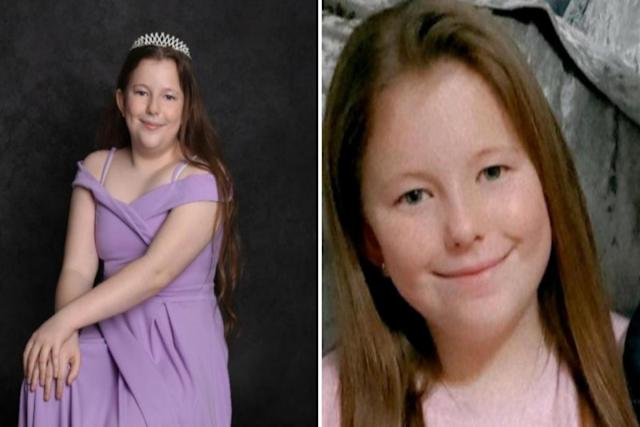
She said Leah was thriving at Carlton, throwing herself into every activity and clearly enjoying the outdoor challenges. The sense of loss among her classmates and teachers is palpable, with many left grappling with the senselessness of the tragedy.
The inquest heard from a pathologist, Dr Jennifer Bolton, who confirmed that Leah Harrison died of traumatic asphyxiation. The mud, combined with her waterproof coat being pressed against her mouth and nose, made it impossible for her to breathe. Though she did not inhale mud, the conditions made rescue nearly impossible in those critical moments.
As the inquest continues, it seeks to answer the difficult questions around planning, decision-making, and possible warning signs that could help prevent such accidents in the future. The loss of Leah Harrison serves as a stark reminder of how quickly nature can turn, even in familiar and seemingly safe environments.
For her family and all who knew her, the pain remains deep, and the answers, even when they come, will never fill the void left behind. In a world where outdoor education is increasingly valued for the experiences and growth it provides children, this incident calls for renewed vigilance.
While many will agree that the tragedy was unpredictable, it also highlights the urgent need to refine risk assessments, especially when children are involved. Weather forecasts, terrain checks, and emergency response protocols must all be revisited with fresh eyes and greater caution.
For Leah’s family, no inquiry or safety review will ever bring back their daughter. But perhaps, through her story, steps can be taken to ensure no other child loses their life in such a devastating way. As tributes pour in and the community grieves, Leah’s memory lives on—in her smile, in her bravery, and in the hearts of all who had the privilege to know her.