
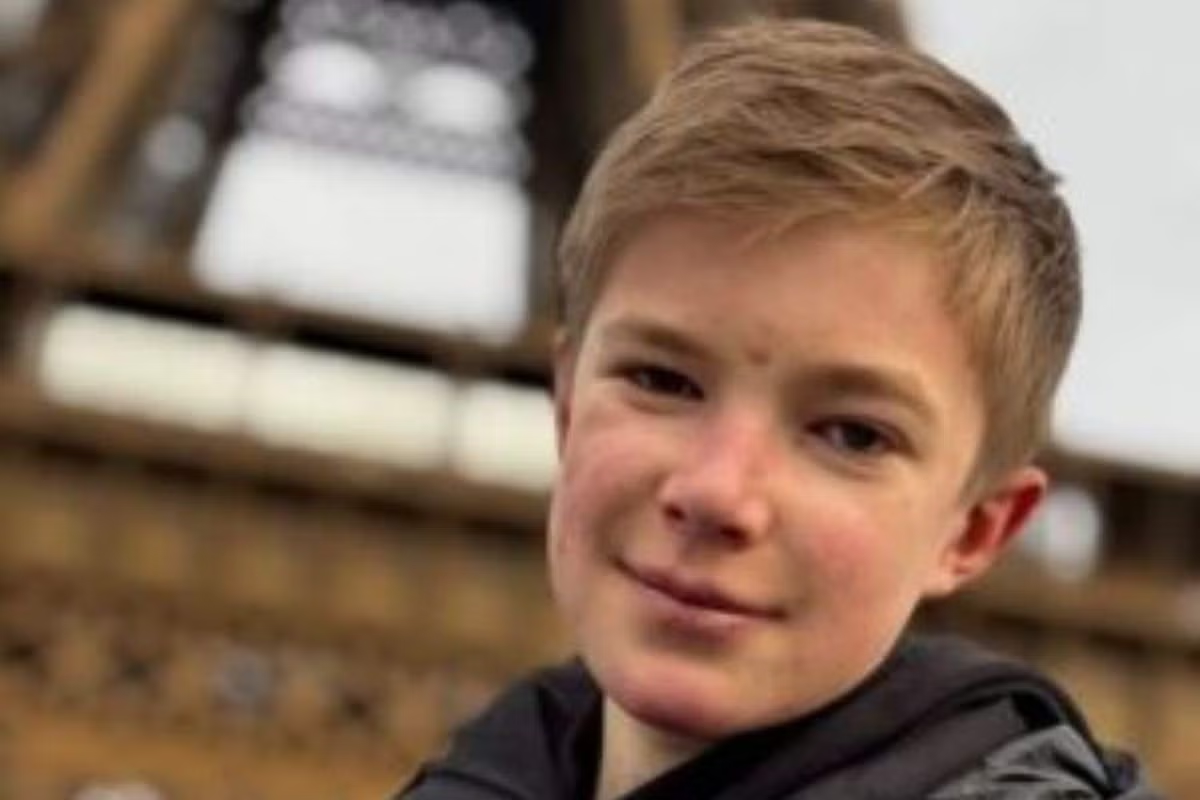
Gabrielius Misurenkovas, a spirited 12-year-old, has recently experienced a life-changing breakthrough that allows him to enjoy activities many children take for granted, such as playing football and riding his bike. Gabrielius has lived with recessive dystrophic epidermolysis bullosa (RDEB) since birth, a rare and painful genetic condition that leaves the skin extremely fragile. Through a pioneering clinical trial involving stem cell treatment, Gabrielius is now able to partake in activities that were previously impossible for him. His story is a testament to medical innovation, resilience, and hope for other children affected by RDEB.
Understanding Recessive Dystrophic Epidermolysis Bullosa (RDEB)
Recessive dystrophic epidermolysis bullosa (RDEB) is a severe genetic skin disorder that affects roughly 150 children in the UK. The condition is caused by mutations in the COL7A1 gene, which leads to a lack of type VII collagen—a protein essential for anchoring the layers of the skin together. Without this structural support, even minor friction or trauma can cause the skin to blister, tear, and form deep wounds.
For children like Gabrielius, the physical pain is compounded by daily restrictions. Simple activities, such as rubbing the eyes, walking, or being hugged, can result in painful skin damage. Managing RDEB requires meticulous care, including dressing changes multiple times a day and applying ointments to protect the skin and prevent infection.
Gabrielius’s mother, Jolita Cekaviciene, recalls the first two years of his life as incredibly challenging. Even minor contact could trigger blistering, and it was impossible for Gabrielius to express the intensity or location of his pain.
Read : 12-Year-Old Girl Eats Viral Smoky Paan: What Happened Next Will Give You a Death Scare
Over time, the condition can lead to serious complications, including the development of a rare skin cancer called squamous cell carcinoma, which is the most common cause of death among young adults with RDEB. The constant vigilance required for care and the physical limitations imposed by the disease make daily life a significant challenge for affected children and their families.
Gabrielius Misurenkovas’s Journey and Daily Challenges
Gabrielius’s diagnosis came shortly after birth, when medics noticed a wound on his skin. By two weeks old, he was officially diagnosed with RDEB and referred to Great Ormond Street Hospital (GOSH) for specialized care. As a young child, Gabrielius needed his bandages changed three times a day, and more frequently if injuries occurred. His daily life was dominated by wound management, pain relief, and careful monitoring to avoid skin damage.
Despite these challenges, Gabrielius has always been curious and active, showing interest in sports and learning. He can speak three languages and is a devoted fan of footballer Lionel Messi. However, his condition severely limited his participation in the activities he loved. Even playing outside posed a risk, as running on grass or bumping into objects could cause painful blisters and wounds.
The emotional toll on both Gabrielius and his family was significant. Ms. Cekaviciene describes the first years as “really hard,” emphasizing the constant need to watch her son to prevent injury. Sleep was frequently interrupted due to the discomfort caused by his wounds, and daily routines revolved around managing his fragile skin. The family’s hope for a breakthrough treatment remained strong, and when Gabrielius was offered the opportunity to join a clinical trial, they saw it as a chance to improve his quality of life.
Innovative Clinical Trial Offers New Hope
Gabrielius became one of 30 children to participate in an innovative clinical trial conducted at GOSH and Birmingham Children’s Hospital. The trial investigated whether regular infusions of mesenchymal stromal cells (MSC) could improve symptoms for children with RDEB. These stem cells are believed to promote wound healing, reduce inflammation, and stimulate tissue regeneration, offering a potential solution where conventional treatments only manage symptoms.
The treatment, known as CORDStrom and manufactured by INmuneBio, was delivered intravenously over 10 to 15 minutes. Children in the trial received two infusions every four months, with the company providing the treatment free of charge for a year to allow researchers to continue studying long-term effects. Funding for the trial came from NHS England, the National Institute for Health and Care Research, and the charity Cure EB.
Since joining the trial, Gabrielius has experienced remarkable improvements. His wounds heal faster, his skin is less inflamed and itchy, and the frequency of dressing changes has decreased. This has had a positive impact on his sleep and overall comfort. Ms. Cekaviciene highlighted the change in Gabrielius’s ability to participate in physical activities, noting that he can now ride his bike on grass and play football with a soft ball—activities that were previously impossible.
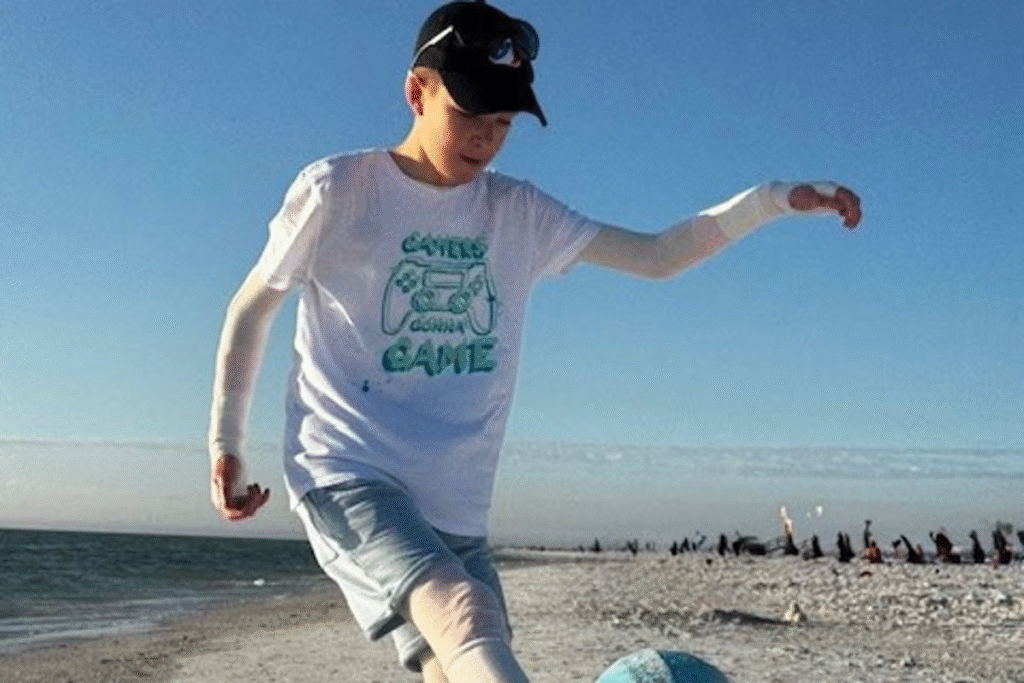
Beyond the physical benefits, the treatment has provided Gabrielius with a sense of independence and joy. Engaging in sports with friends, exploring outdoor spaces, and enjoying recreational activities without constant fear of injury has brought a new level of normalcy to his life. The family remains cautious, understanding that he still needs to avoid falls or bumps, but the newfound freedom is transformative for both Gabrielius and his caregivers.
The success of the trial has implications beyond Gabrielius’s individual experience. For families affected by RDEB, new treatment options could significantly improve quality of life and reduce the daily burden of care. The trial also represents an important step toward potential regulatory approval of CORDStrom for wider use in the UK and internationally. If approved, this treatment could provide a much-needed therapeutic option for children who previously had no effective intervention.
Gabrielius’s story illustrates the importance of ongoing medical research and the potential of regenerative therapies to address rare and debilitating conditions. It underscores the role of collaboration between hospitals, research institutions, and biotech companies in advancing treatment options for rare diseases. Furthermore, it demonstrates the transformative effect that innovative therapies can have on the lives of young patients, offering hope, independence, and the ability to engage in everyday activities that most children take for granted.
For Gabrielius, the experience has also fostered a sense of empowerment. Being able to participate in sports and socialize with peers without constant risk of injury has positively impacted his emotional well-being. The trial’s outcomes are encouraging for other children with RDEB and their families, showing that progress is possible even in the context of rare genetic disorders.