
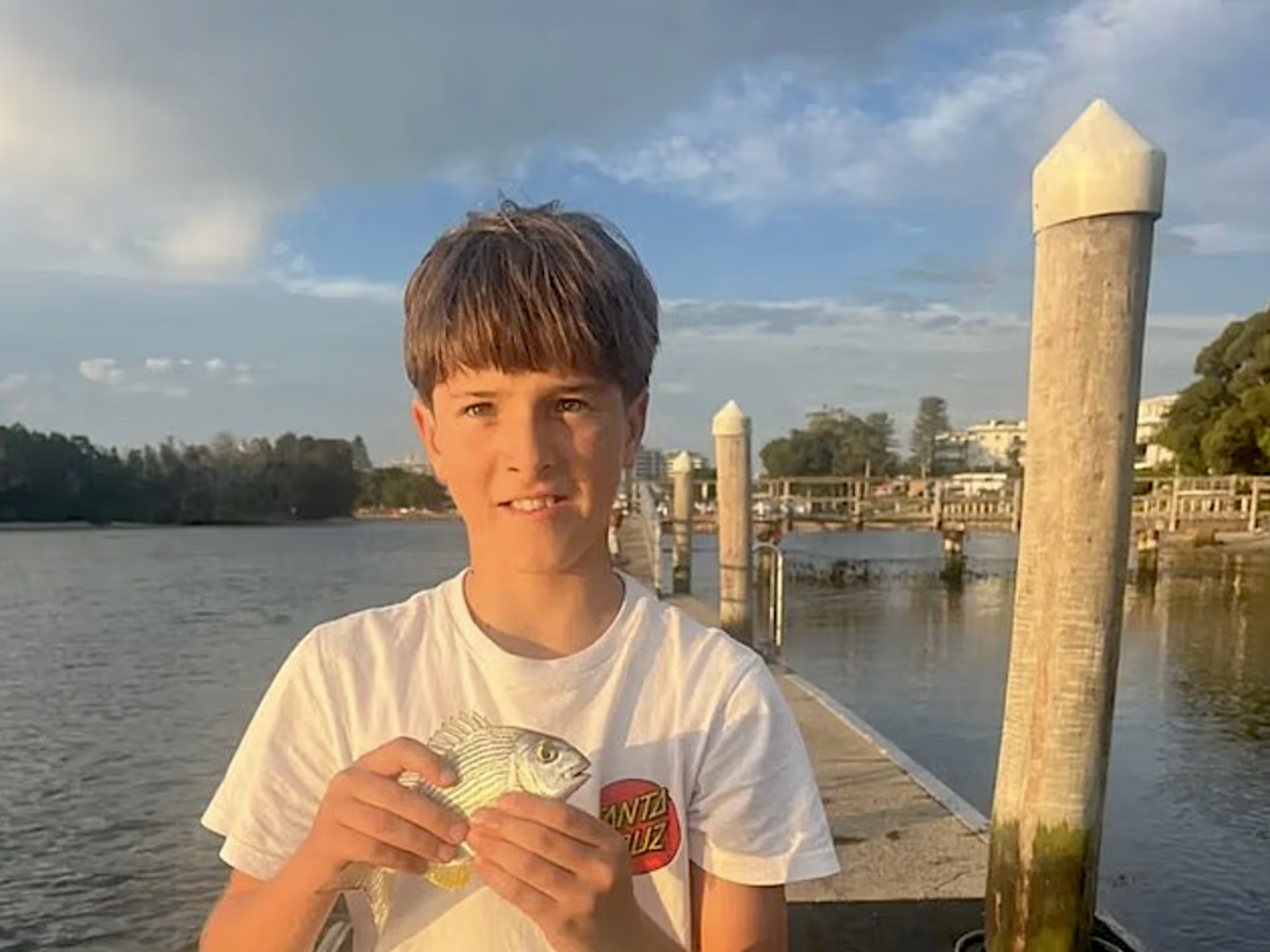
The Sydney community and much of Australia are grappling with devastating news following a shark attack that has left a 12-year-old boy brain-dead and facing what family members have described as the “worst possible outcome.” Nico Antic was mauled on Sunday while swimming in Sydney Harbour, an incident that not only shattered a family but also marked the beginning of a deeply unsettling series of shark attacks in the region over a 48-hour period.
What began as an ordinary afternoon for a group of children in the harbour quickly turned into a nightmare that has drawn national attention and reignited difficult conversations about safety, risk, and the unpredictable nature of marine wildlife in one of the world’s most iconic urban waterways. According to accounts provided by witnesses and later confirmed by media reports, Nico was swimming with friends in the eastern suburb of Vaucluse when the attack occurred.
The area, known for its rocky outcrops and popular jump spots, is frequently used by local children and teenagers, particularly during warm weather. On this occasion, Nico had launched himself from a jump rock into the water, unaware of the danger lurking beneath the surface. Moments later, amid murky harbour waters, he was attacked by what authorities believe was a bull shark, a species known for its ability to thrive in both saltwater and freshwater environments and for occasionally venturing into harbours and river systems.
The attack unfolded rapidly. One of Nico’s friends, realizing something was wrong, jumped into the water without hesitation and managed to drag him back to shore. That act of courage almost certainly saved Nico’s life in the immediate sense, allowing emergency responders to intervene.
Paramedics and first responders worked urgently at the scene before transporting him to hospital, where he was placed in intensive care. Despite extensive medical efforts, the injuries proved catastrophic. In the days that followed, the family was confronted with an outcome no parent can ever be prepared to face.
Family members later told reporters that Nico remains alive in hospital but is brain-dead and will never regain consciousness. The confirmation, delivered through an exclusive report, brought a grim clarity to what had been days of anxious waiting and guarded hope. Friends, neighbours, and strangers alike have expressed shock and sorrow, with tributes and messages of support flooding social media as the scale of the tragedy became clear.
The Attack in Sydney Harbour and the Immediate Aftermath
Nico Antic’s attack occurred in Sydney Harbour, a body of water often associated with leisure, tourism, and everyday recreation rather than serious shark incidents. While sharks are known to inhabit Australian waters, attacks within busy urban harbours are rare, making the incident all the more shocking. Authorities have indicated that the suspected shark involved was a bull shark, a species that has previously been linked to attacks in enclosed or semi-enclosed waterways due to its tolerance for low salinity and murky conditions.
Read : Body of 55-Year-Old Triathlete Erica Fox Mauled to Death by Shark Recovered in Northern California
Witnesses described scenes of panic and confusion as Nico was pulled from the water. His injuries were severe, and first responders moved quickly to stabilize him. Emergency services have since praised the actions of the children at the scene, particularly the friend who entered the water to rescue Nico despite the obvious danger. That decision, made in seconds, has been widely acknowledged as an act of extraordinary bravery.
The youngest victim of Sydney's horror string of shark attacks suffered injuries so catastrophic, a family friend says his parents are bracing for the worst possible outcome.
— 7NEWS Sydney (@7NewsSydney) January 21, 2026
Nico Antic was mauled by a bull shark off Vaucluse, the first of four attacks in a shocking 48 hours… pic.twitter.com/df8l1Rq4zM
Following the attack, parts of the harbour were temporarily closed as authorities assessed the risk and monitored shark activity. Marine experts were consulted, and patrols were increased in the surrounding areas. Despite these measures, the incident sent shockwaves through the local community, particularly among families who frequent the harbour for swimming, kayaking, and other water activities.
As news of Nico’s condition emerged, attention turned to supporting his family through what has been described as an unimaginable ordeal. A GoFundMe account was established by a close family friend, Victor Piñeiro, to help the Antic family manage the emotional and financial strain associated with long-term medical care and related expenses. In a statement accompanying the fundraiser, Piñeiro wrote that Nico had sustained devastating injuries and that, despite all efforts, the situation had led to the worst possible outcome.
The wording reflected both the gravity of the injuries and the heartbreak being experienced by those closest to him. Within a short period, the crowdfunding campaign attracted widespread attention and generosity. At the time of publication, donations had surpassed $171,000, a reflection of the public’s desire to offer tangible support in the face of a tragedy that has resonated far beyond Sydney. Messages left by donors frequently expressed sympathy, solidarity, and admiration for the courage shown by Nico and his friends during the attack.
A Family’s Grief and the Community Response
The confirmation that Nico is brain-dead has placed his family in an agonizing position, one marked by profound grief and difficult decisions. While he remains alive in hospital, family members have been told he will never wake up, a reality that has cast a heavy shadow over all those who know him. Friends have described Nico as a lively and adventurous child, deeply loved by his family and peers. For many, the suddenness of the loss has been particularly hard to process.
The response from the community has been swift and deeply emotional. Local residents in Vaucluse and surrounding suburbs have spoken of a shared sense of disbelief, noting how frequently children swim and jump from the same rocks where the attack occurred. Vigils, messages, and informal gatherings have taken place as people search for ways to express their sympathy and support.
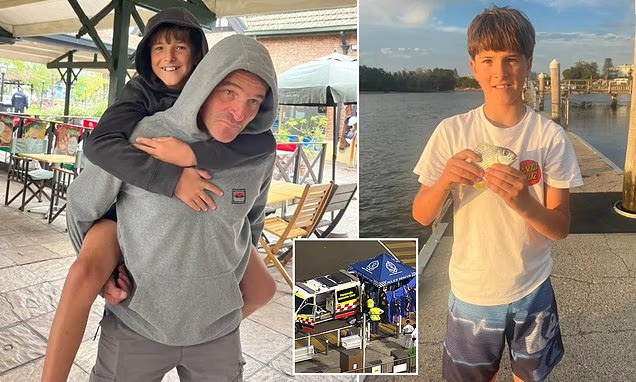
Public figures have also weighed in, reflecting the broader impact of the incident. Western Australia professional surfer Jack Robinson commented publicly on the news, describing the situation as “messed up” and “so sad,” accompanied by a prayer emoji. While brief, his reaction echoed the sentiments of many within Australia’s surfing and coastal communities, where shark encounters are an ever-present but often abstract risk.
Read : 25-Year-Old Livia Mühlheim Mauled to Death by Bull Shark in Front of Her Boyfriend
Media coverage has been extensive, not only because of Nico’s age but also because his attack marked the beginning of a cluster of shark incidents in Sydney over a very short period. For many observers, the timing and location of the attacks have raised concerns and questions about environmental factors, shark behavior, and the challenges of managing risk in heavily populated coastal areas.
The focus, however, has largely remained on Nico and his family. The GoFundMe campaign has served not only as a means of financial support but also as a space for collective mourning. Contributors from across Australia and beyond have left messages sharing their heartbreak and offering words of comfort, underscoring how deeply the story has resonated.
A Series of Shark Attacks and Broader Implications
Nico Antic’s mauling was the first in what became a series of four shark attacks reported in the Sydney area within a 48-hour period, an unusual and alarming pattern. Just one day later, another incident occurred near Manly Beach at North Steyne, where 27-year-old surfer Andre de Ruyter was attacked while in the water. Unlike Nico’s case, de Ruyter survived and has since been reported to be in stable condition.
In an update shared with the Manly Observer, de Ruyter’s mother expressed gratitude to first responders and medical staff, noting that her son had been placed in stable condition and was receiving attentive care. She described him as a compassionate and talented individual with a deep love for surfing, offering a personal glimpse into the human impact of the incident beyond the headlines.
The clustering of attacks prompted increased scrutiny from authorities and marine experts. Shark sightings were investigated, and additional safety measures were considered, including aerial patrols and public advisories. While experts cautioned against drawing definitive conclusions from a small number of incidents, the sequence nonetheless unsettled residents and visitors alike, particularly given Sydney Harbour’s reputation as a relatively safe environment for recreational swimming.
For many, the contrast between the outcomes of the two attacks has been stark. De Ruyter’s stabilization has been met with relief, while Nico’s condition has underscored the devastating potential of such encounters, especially when children are involved. The juxtaposition has intensified public attention and reinforced the emotional weight of Nico’s story.
As authorities continue to assess the situation, discussions about shark behavior, environmental changes, and human interaction with marine ecosystems are likely to persist. Yet amid these broader conversations, the central narrative remains the profound loss experienced by one family and the ripple effects felt throughout a community.
Nico Antic’s story has become a symbol of that loss, a reminder of how quickly ordinary moments can turn tragic. The ongoing support for his family, both financial and emotional, reflects a collective response to a tragedy that has left many searching for words.