
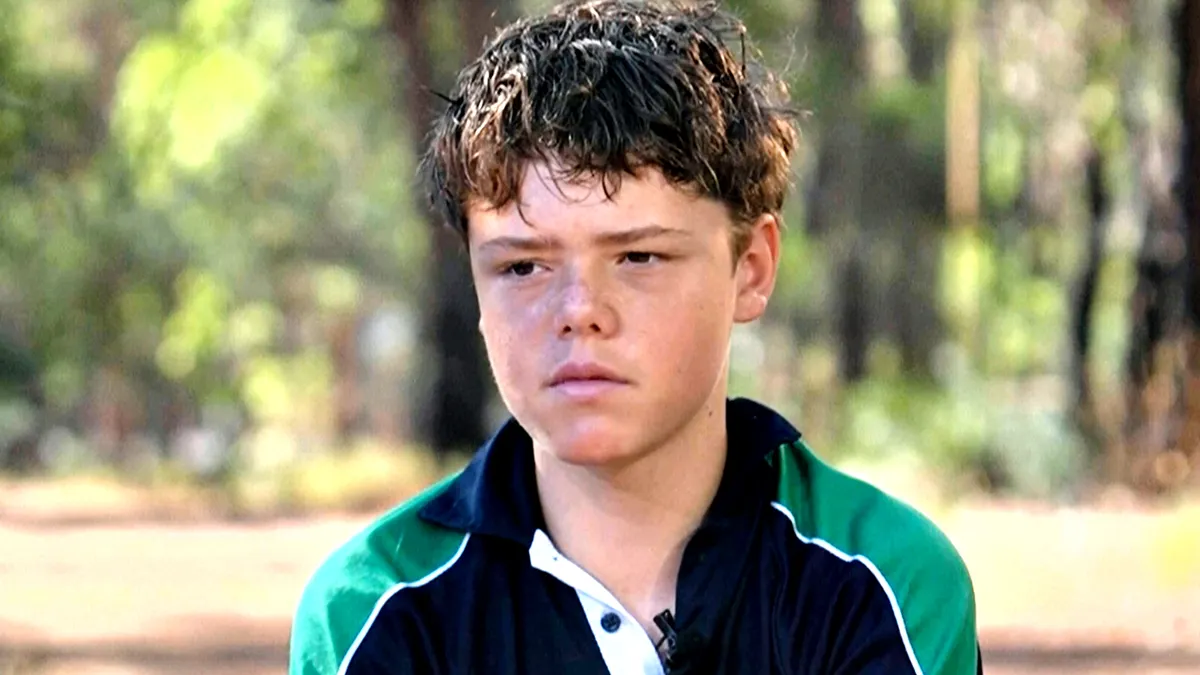
In an age when acts of courage are often framed through spectacle or hyperbole, the story of 13-year-old Austin Appelbee stands out for its stark reality and quiet determination. On a Friday afternoon off the coast of Western Australia, a family holiday turned into a life-threatening ordeal when strong winds carried Austin’s mother and siblings far out to sea on inflatable paddleboards and a kayak.
With daylight fading and conditions deteriorating, the responsibility for rescue fell on the youngest member of the family. What followed was an extraordinary combination of endurance, instinct, and mental resolve: a four-kilometre swim through rough waters, followed by a two-kilometre run to raise the alarm. Experts have since described the feat as exceeding what is normally believed possible, yet the circumstances, physiology, and psychology behind Austin’s actions offer insight into how such moments can unfold.
A Family Pushed Offshore and a Critical Decision
Austin Appelbee and his family were holidaying in Quindalup, a coastal town around 200 kilometres south of Perth, when strong winds swept their paddleboards and kayak away from shore in Geographe Bay. The drifting craft quickly placed the group in danger, as the wind and currents continued to carry them farther out to sea. Recognising the escalating risk, Austin’s mother, Joanne Appelbee, made a decisive and agonising call: her son would attempt to reach shore and seek help.
According to Joanne, she believed Austin Appelbee was the strongest swimmer among them and therefore the one most likely to succeed. It was a decision rooted not in optimism, but in necessity. Austin initially set off in a kayak, hoping to make faster progress, but rough conditions soon caused the vessel to take on water. Forced to abandon it, he began swimming, facing a long, uncertain journey back to land.
Over the next four hours, Austin Appelbee swam approximately four kilometres through increasingly challenging conditions. About two hours into the effort, he removed his lifejacket, which had become cumbersome and was impeding his movement. He later recalled feeling extremely out of breath, yet oddly disconnected from the sensation of fatigue. Switching between breaststroke, freestyle, and survival backstroke, he focused on staying afloat and moving steadily forward.
By the time he reached shore, the light was fading. Still, the ordeal was not over. Austin ran a further two kilometres to his family’s accommodation, located inland, where he used his mother’s phone to contact emergency services. Speaking calmly despite the severity of the situation, he requested helicopters, planes, and boats, explaining that his family was stranded at sea. Shortly after making the call, the accumulated exhaustion took hold. Austin Appelbee collapsed and was taken to hospital, where he required crutches to support his sore and weakened legs. His family, meanwhile, was eventually rescued around 14 kilometres offshore, underscoring the seriousness of the danger they had faced.
The Science Behind an Apparently Impossible Feat
In the aftermath of the rescue, experts in exercise physiology and biomechanics have sought to explain how a 13-year-old could endure hours of swimming in rough seas, followed by a run, without stopping. Professor David Bishop, a muscle exercise physiologist at Victoria University, has pointed to the role of the fight-or-flight response. In high-stress situations, the human body can temporarily override perceived physical limits, allowing individuals to perform far beyond what they might ordinarily consider possible.
This response is driven by the release of hormones such as adrenaline and noradrenaline, which increase heart rate, mobilise energy stores, and sharpen focus. Professor Anthony Blazevich of Edith Cowan University explains that these hormones rapidly increase blood sugar levels, providing muscles with immediate fuel. Such mechanisms are well suited to short, intense bursts of activity, but can also sustain effort for longer periods when combined with strategic pacing and recovery.
Read : 13-Year-Old Drew Nickerson Mauled to Death by 3 Dogs While Riding His Bike
Austin Appelbee’s use of survival backstroke was likely crucial. Unlike more demanding strokes, survival backstroke allows swimmers to float and breathe easily, conserving energy while maintaining forward progress. In saltwater, where buoyancy is higher, this technique can provide brief periods of recovery without stopping entirely. These intermittent moments of reduced exertion may have enabled Austin to avoid complete exhaustion during the four-hour swim.
What a kid. Absolute bravery.
— Benonwine (@benonwine) February 4, 2026
A 13-year-old Australian boy swam four hours through freezing, dangerous ocean to save his mum and younger siblings after they were swept miles out to sea.
No life jacket. Massive waves. Alone.
Austin Appelbee says he prayed the entire time and… pic.twitter.com/u4dVKBl9eH
The concept sometimes referred to as “hysterical strength” has been used to describe similar instances in which people display extraordinary physical capabilities during emergencies. Historical examples include individuals lifting vehicles or heavy machinery to free trapped loved ones. While the term itself is imprecise and debated, the underlying phenomenon is supported by research. As early as 1961, studies demonstrated that people could exert greater force immediately after being startled or frightened, suggesting that fear can temporarily unlock latent physical capacity.
Mental resilience also plays a decisive role in endurance. Research by exercise scientists such as Professor Samuele Maria Marcora has shown that mental fatigue can significantly impair physical performance, while positive mental strategies can enhance it. Techniques like self-talk, goal setting, and imagery help athletes push through discomfort by reframing effort and sustaining motivation.
Austin Appelbee’s own reflections align with this understanding. During the swim, he focused on the certainty that he had to succeed, thinking about his friends and his family rather than the distance remaining. This psychological framing likely helped him persist when his body was under extreme strain.
Professor Bishop has emphasised that such mental strength cannot operate in isolation. Austin had a foundation of swimming fitness developed over years of lessons beginning at age four. While he had previously found swimming 350 metres without a break tiring, that baseline competence meant his body was capable of the movements required. In an emergency, his strong mental drive was able to push that physical base far beyond its usual limits.
Youth, Recovery, and Parallels with Other Survival Stories
One of the more striking aspects of Austin Appelbee’s story is his age. Conventional assumptions often suggest that endurance and resilience increase with physical maturity, yet research indicates that children can perform remarkably well in certain endurance contexts. Professor Blazevich’s work comparing 10-year-old boys with adult men in high-intensity cycling tests found that children often recovered more quickly between efforts, sometimes outperforming untrained adults. This rapid recovery resembles the physiological profile of elite endurance athletes.
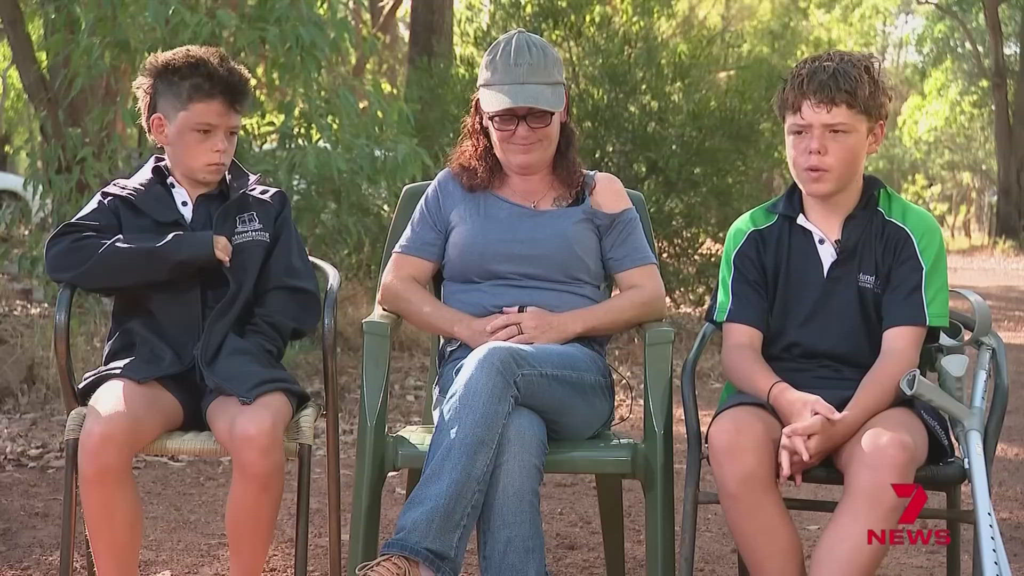
Children’s muscles tend to fatigue less during repeated, intermittent activity, which may explain why they can run, stop, and resume play for hours. While adults generally possess larger hearts and lungs, offering advantages in sustained maximal output, children benefit from efficient recovery and a nervous system that tolerates repeated exertion well. In Austin’s case, this capacity for recovery may have helped him sustain movement over several hours, particularly when alternating swimming styles.
Austin Appelbee’s feat also joins a small but compelling collection of survival stories involving unintended endurance at sea. In 2013, South African man Brett Archibald survived more than 28 hours treading water in the Indian Ocean after falling overboard. In 2015, Syrian refugee Yusra Mardini, then a teenager, swam for over three hours in the Aegean Sea, helping to tow a disabled migrant boat to safety. More recently, in 2024, a Chinese woman survived two nights in the ocean after being swept out to sea near Japan, supported only by a rubber ring.
These cases share common elements: extreme motivation, improvisation, and a refusal to surrender to circumstances. They also highlight the unpredictable capacity of the human body and mind when survival is at stake. Austin Appelbee’s experience differs in that he was not only preserving his own life, but actively undertaking a rescue mission for others, adding a profound emotional driver to his actions.
Ultimately, the story of Austin Appelbee is not simply one of physical endurance, but of composure under pressure and decisive action in a moment of crisis. While experts can explain the hormonal surges, recovery patterns, and psychological mechanisms involved, these factors do not diminish the scale of what he achieved. A 13-year-old confronting rough seas, darkness, and exhaustion chose to keep moving, stroke after stroke, step after step, until help was secured. In doing so, he demonstrated how preparation, instinct, and resolve can converge in extraordinary ways when circumstances demand it.
I really appreciate this post. I have been looking everywhere for this! Thank goodness I found it on Bing. You’ve made my day! Thank you again!
I’ve been exploring for a little for any high quality articles or blog posts on this sort of area . Exploring in Yahoo I at last stumbled upon this site. Reading this info So i’m happy to convey that I’ve an incredibly good uncanny feeling I discovered exactly what I needed. I most certainly will make sure to do not forget this site and give it a look regularly.