
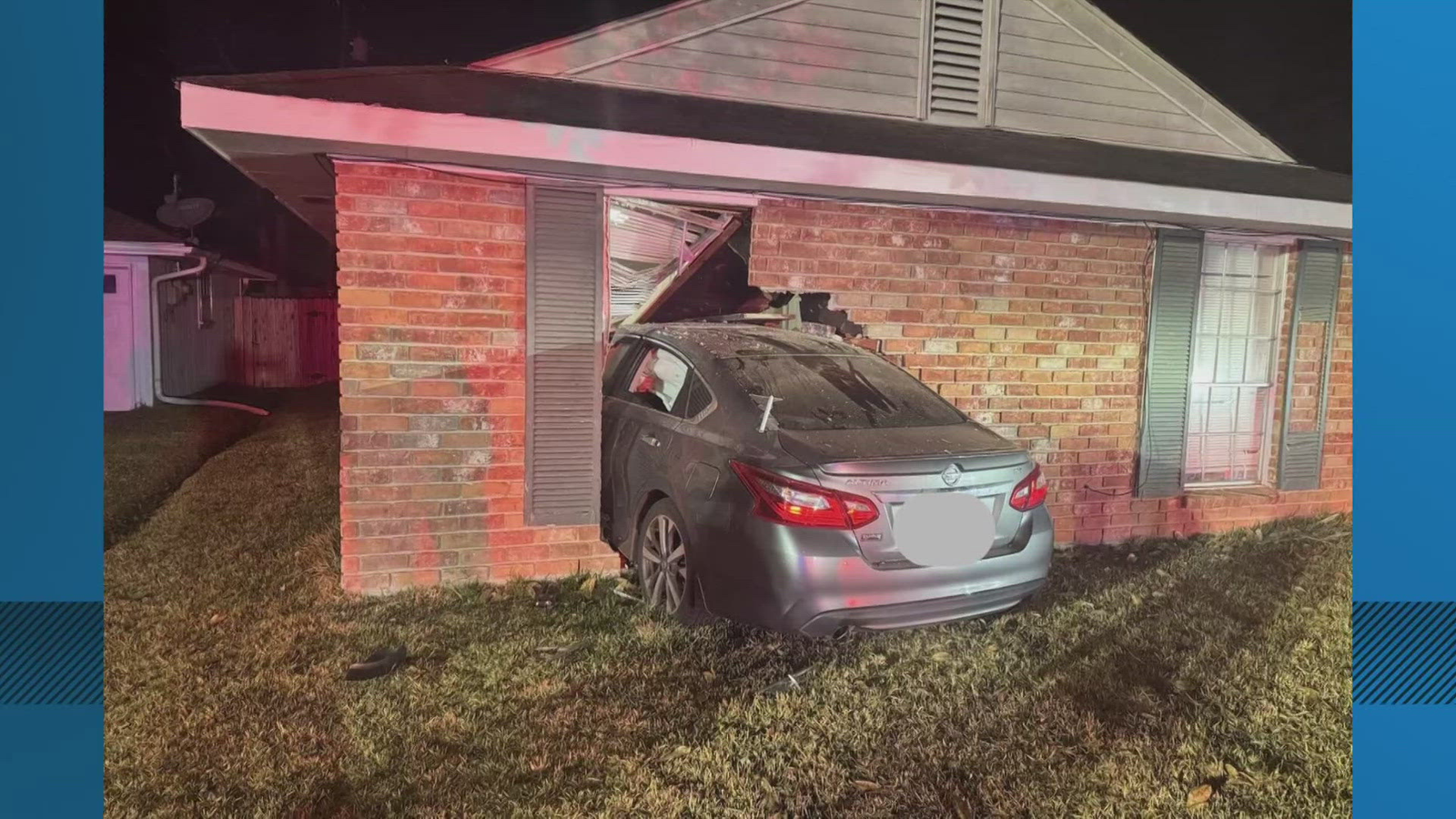
A quiet residential street in Slidell was abruptly disrupted late Thursday night when a suspected drunk driver lost control of his vehicle and crashed directly into a family home, sending a car through the wall of a bedroom where a 13-year-old boy was sleeping. The violent collision caused significant structural damage and left the young resident with minor injuries, but authorities say the outcome could have been far worse.
According to police, the position of the boy’s bed had recently been changed, a simple adjustment that may have prevented a much more serious tragedy. The driver was arrested at the scene and now faces multiple charges related to impaired driving and reckless conduct. The incident occurred shortly before 11 p.m. in the 100 block of Dewald Drive, a residential area typically defined by calm surroundings and routine evening quiet.
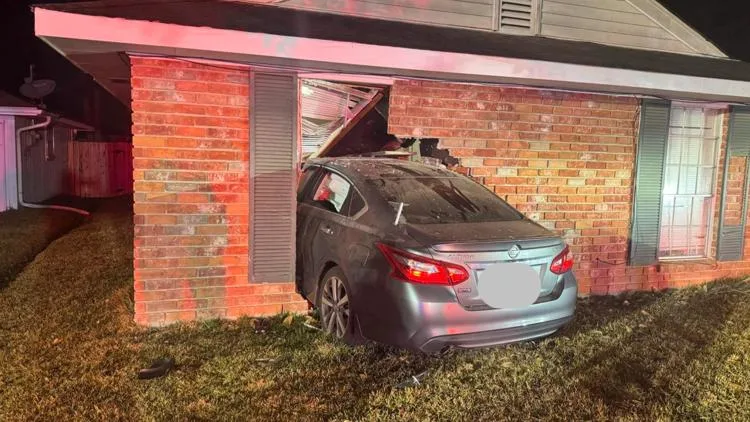
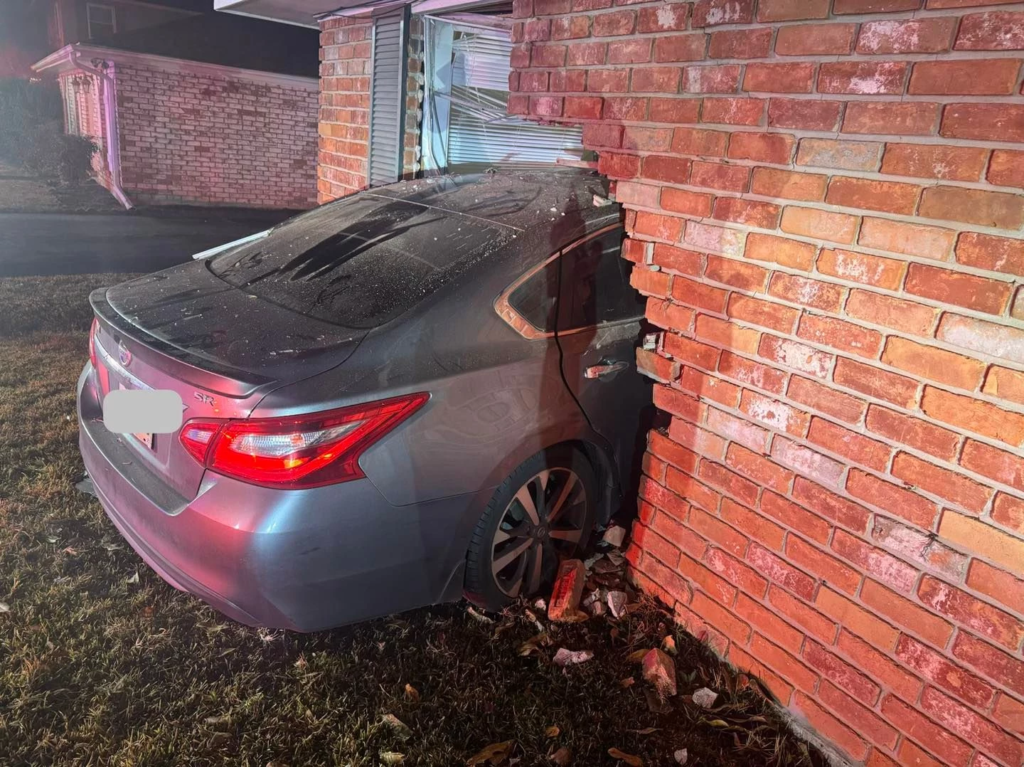
Instead, the night was shattered by the sound of a vehicle crashing into a home with enough force to send it fully into a bedroom. Emergency responders arriving at the scene found a gray Nissan Altima embedded deep inside the structure, transforming a place of rest into a chaotic crash site. Police quickly determined that the driver showed signs of intoxication and took him into custody. For the family involved, the event was both frightening and narrowly survivable, highlighting the unpredictable consequences of impaired driving in residential neighborhoods.
The Night Of The Crash
Late evening in residential neighborhoods often brings a sense of routine and stillness. Families settle into their homes, children prepare for school the next day, and most activity slows to a minimum. That sense of normalcy was abruptly interrupted when a vehicle left the roadway and barreled into the side of a home on Dewald Drive. Officers responding to the scene found the Nissan Altima lodged completely inside a bedroom, its momentum having carried it through the exterior wall and into the interior living space.
Inside that room was a 13-year-old boy who had been sleeping at the time of the crash. Despite the sudden and forceful intrusion, he escaped with only minor injuries. Authorities later noted that the boy had recently rearranged his bedroom and moved his bed to a different location. Investigators indicated that the change likely spared him from direct impact with the vehicle or debris from the collapsing wall. The difference of a few feet inside the room may have been the key factor that prevented severe or life-threatening harm.
Emergency responders assessed the boy’s condition and confirmed that his injuries were not serious. Still, the emotional shock of the incident was significant. A bedroom, typically one of the most private and secure areas within a home, had suddenly become the point of entry for a fast-moving vehicle. The crash left visible structural damage, scattered debris, and clear signs of the force involved in the impact.
Neighbors in the surrounding area were drawn outside by the noise of the collision and the arrival of emergency vehicles. The sight of a car inside a home is rare and alarming, and the extent of the intrusion underscored how quickly control can be lost when a vehicle leaves the roadway. Investigators began documenting the scene, examining skid marks, structural damage, and the position of the vehicle to determine how the crash unfolded.
Read : World’s First Carbon Fiber Passenger Train Unveiled in China
While the boy’s physical injuries were minor, the incident illustrated how vulnerable residential structures can be when struck by vehicles traveling at speed. Walls, insulation, and interior furnishings are not designed to withstand such impacts, and the potential for severe injury or worse is substantial when people are present in the affected rooms. In this case, timing, positioning, and circumstance combined to reduce what might otherwise have been catastrophic consequences.
The Arrest And Criminal Charges
Police identified the driver as 20-year-old Alec Dillon of Slidell. Officers reported that he appeared visibly intoxicated at the scene, leading to his immediate arrest. According to law enforcement, his condition and the circumstances of the crash provided grounds for multiple charges related to impaired and reckless driving.
Dillon was booked on allegations that include second-offense driving while intoxicated, reckless operation of a motor vehicle, vehicular negligent injuring, driving under suspension, and possession of an open container. Each of these charges reflects a specific aspect of the incident, from the suspected impairment of the driver to the physical harm caused and the legal status of his driving privileges at the time.
A second-offense driving while intoxicated charge indicates prior involvement in a similar offense, which typically carries more severe legal consequences than a first-time violation. Law enforcement officials often treat repeat offenses with heightened concern because they suggest a pattern of behavior that has already been addressed through prior enforcement or penalties.
The reckless operation charge relates to the manner in which the vehicle was handled, while vehicular negligent injuring reflects the physical harm suffered by the boy in the bedroom. Driving under suspension indicates that the driver was not legally permitted to operate a vehicle at the time of the crash. The open container allegation further suggests the presence of alcohol in the vehicle itself.
Police procedures in such cases typically involve field observations, documentation of the crash scene, and formal processing of the suspect. Officers assess visible signs of impairment, collect evidence, and secure statements where appropriate. The arrest at the scene indicates that authorities considered the circumstances sufficiently clear to proceed immediately with booking.
The combination of charges reflects not only the crash itself but also the broader legal framework governing impaired driving and public safety. When a vehicle leaves the roadway and enters a residential structure, the consequences extend beyond property damage to include personal injury risk and community impact. The legal process that follows seeks to address both the immediate harm and the underlying behavior that contributed to the event.
Residential Safety And Impaired Driving Risks
Incidents in which vehicles crash into homes are uncommon but not unheard of, and they often share common contributing factors such as excessive speed, impaired driving, loss of control, or failure to maintain proper roadway position. Residential areas typically feature lower speed limits and narrower streets, but even moderate speeds can produce substantial structural damage when a vehicle leaves the pavement and strikes a building.
Read : 29-Year-Old Cheshire Police Officer Alice Mayo Killed in Off-Duty Crash
Homes are designed primarily for weather resistance and everyday use, not for protection against high-speed vehicle impacts. When a car breaches an exterior wall, the force can carry through framing, insulation, and interior furnishings with little resistance. Occupants inside affected rooms face risks from both direct contact with the vehicle and secondary hazards such as collapsing materials, broken glass, and airborne debris.
Impaired driving remains one of the most significant contributing factors in serious roadway incidents. Alcohol consumption can affect reaction time, coordination, judgment, and perception, all of which are essential for safe vehicle operation. Even small lapses in control can have severe consequences, particularly in environments where homes and pedestrians are located close to the roadway.
The setting of this crash highlights how residential areas, often perceived as safe and predictable, can still be vulnerable to sudden disruptions caused by traffic incidents. Unlike highways, where barriers and distance separate vehicles from structures, neighborhood streets often place homes just a short distance from passing traffic. A single moment of loss of control can therefore carry immediate consequences for nearby residents.
For families, events like this underscore the unpredictable nature of external risks that can affect even private living spaces. Bedrooms, living rooms, and other interior areas are generally considered secure, yet they can be directly exposed when a vehicle penetrates a structure. The outcome in this case, where the young resident suffered only minor injuries, reflects a combination of timing, positioning, and circumstance that may not always align so favorably.
Authorities continue to emphasize enforcement of impaired driving laws and monitoring of repeat offenders as part of broader public safety efforts. Crash investigations often examine not only the immediate cause of an incident but also the surrounding conditions that allowed it to occur. Residential crashes involving impaired drivers tend to draw particular attention because they extend the consequences of roadway misconduct into private spaces.
As the legal process moves forward, the physical damage to the home and the emotional impact on the family remain part of the lasting effects of the incident. Repair work, insurance assessments, and potential structural evaluations typically follow such crashes, ensuring that the building can be safely occupied again. Meanwhile, the event stands as a documented example of how quickly routine circumstances can change when a vehicle leaves the roadway and enters a place where people expect to be safe.
References:
Anabolic supplement
References:
https://notes.medien.rwth-aachen.de/c5q6aOuaRDCvbuLS-L-DFg/
References:
Online casino usa
References:
https://myspace.com/saucepillow3
References:
Best steroid source
References:
https://www.servus-nachbar.at/Neuigkeiten/index.php/;focus=W4YPRD_com_cm4all_wdn_Flatpress_7491266&frame=W4YPRD_com_cm4all_wdn_Flatpress_7491266?x=entry:entry250623-150340%3Bcomments:1
References:
Is there a legal steroid
References:
http://www.vrecl.net/blog/index.php/;focus=STRATP_com_cm4all_wdn_Flatpress_40774912&path=?x=entry:entry230716-194918%3Bcomments:1