
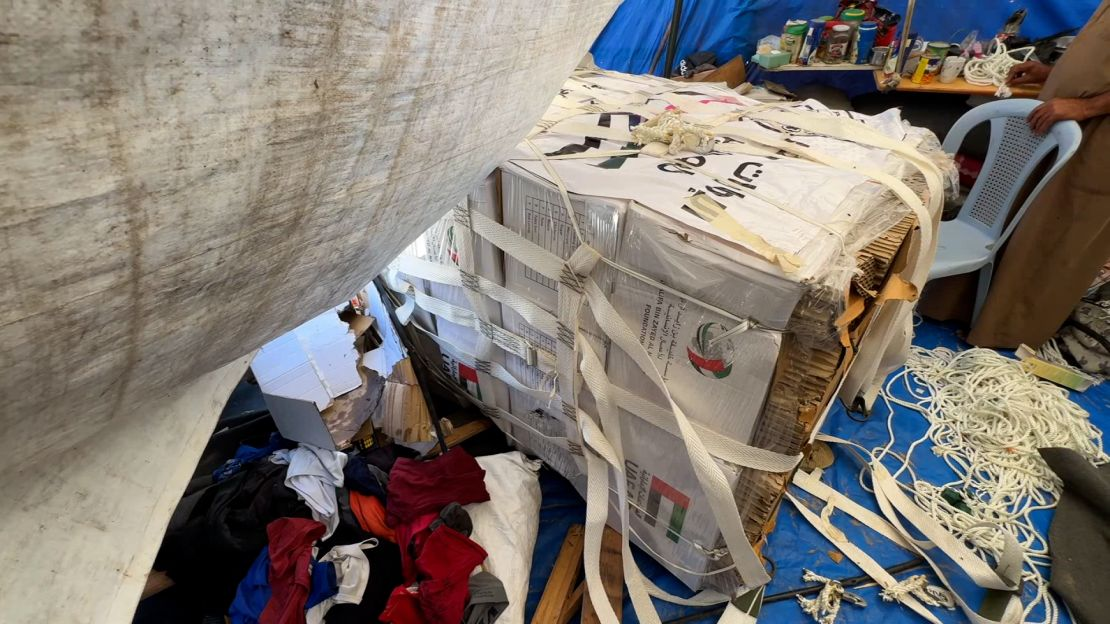
The death of 15-year-old Muhannad Zakaria Eid has brought renewed attention to the dire humanitarian crisis in Gaza, where war, famine, and dangerous aid delivery methods have left civilians—particularly children—in extreme peril.
The tragedy occurred when a pallet of humanitarian aid, dropped from the air, struck and killed the boy as he tried to collect food near the Netzarim Corridor in central Gaza. His death is one among a growing toll of Palestinians who have lost their lives not only to violence but also to hunger, desperation, and unsafe relief operations.
The Fatal Aid Drop and the Human Cost
Witnesses and footage from the scene show that Muhannad was attempting to retrieve aid packages when one fell directly on him, causing fatal injuries. Verified video from Al Jazeera captures the moments after the accident, showing residents surrounding his bloodied body, trying desperately to save him. His brother later recounted to Reuters that despite the dire famine gripping Gaza, this attempt to secure aid for his family ended in tragedy.
Muhannad’s father was later seen carrying his son’s body through al-Awda Hospital in Nuseirat. The family’s grief was intensified by the sense of injustice—they had hoped aid drops would save lives, not end them. “They cannot enter the aid through the crossing but they drop them over us and kill our children,” his brother said bitterly, highlighting the danger of air deliveries.
🇵🇸⚡️15-year-old Muhannad Zakaria Eid was killed when a falling aid pallet struck him during multinational airdrops by Israel, UAE, Jordan, Egypt, Spain, France, Germany, Italy, Greece, and Netherlands. pic.twitter.com/pknd0Cnx4e
— Michael Cook (@Michael91387113) August 10, 2025
The Gaza Government Media Office has reported that since the war began in October 2023, at least 23 Palestinians have died and another 124 have been injured due to accidents and mishaps involving aid airdrops. The United Nations has repeatedly criticized these operations as dangerous, costly, and inefficient, urging Israel to instead allow aid through land crossings, which would be safer and more consistent.
Starvation and Restrictions Intensifying the Crisis
The death of Muhannad comes against the backdrop of a worsening famine in Gaza. In the past 24 hours alone, five more Palestinians—including two children—died from malnutrition. This brings the total number of starvation-related deaths since the start of the war to at least 217, including 100 children. Most of these deaths have occurred in recent weeks, as Israel continues to heavily restrict aid deliveries despite partially lifting its total blockade in late May.
Hospitals are struggling to deal with the consequences of widespread hunger. Mohammed Abu Salmiya, director of al-Shifa Hospital in northern Gaza, has warned that malnutrition is particularly lethal for children and the elderly. Starved children, he explained, develop weakened immune systems, making them more vulnerable to disease and death.
The World Food Programme (WFP) has called for Israel to allow at least 100 aid trucks into Gaza daily, yet only 60 WFP drivers have been cleared by the Israeli military so far. The 100 trucks requested are still far below the 600 daily shipments that other UN agencies say are necessary to meet even the basic needs of Gaza’s population. According to WFP, hundreds of approved aid shipments have been turned back in recent weeks, often due to sudden restrictions imposed by Israeli authorities or dangerous conditions on delivery routes.
Read : Gaza’s Youngest Influencer Yaqeen Hammad Killed In Israeli Strike
The United Nations Relief and Works Agency for Palestine Refugees (UNRWA) has also been blocked from delivering aid for over five months, cutting off essential supplies like food and medicine to thousands of families. This prolonged deprivation is being described by humanitarian officials as a deliberate tactic to pressure civilians through hunger.
Escalating Violence and International Condemnation
Even as famine worsens, violence continues unabated. On the same day that Muhannad was killed, at least 47 Palestinians died in Israeli attacks across Gaza. Dozens of these victims were reportedly waiting for aid when they were targeted. Six people were killed near the Netzarim Corridor—where the fatal aid drop occurred—while others died in airstrikes and shelling in southern Gaza, including Khan Younis.
The Gaza death toll from Israel’s war has now surpassed 61,000, with more than 152,000 injured. These figures stand alongside the 1,139 deaths in Israel from Hamas-led attacks on October 7, 2023, and the more than 200 hostages taken during that incursion.

International outrage is growing—not just over the high civilian death toll, but also over Israel’s recently approved plan to seize Gaza City. Critics warn this move could forcibly displace hundreds of thousands of Palestinians into southern Gaza, which is already overcrowded and under siege. Diplomats from Australia, Germany, Italy, New Zealand, and the UK have jointly warned that such actions would worsen the humanitarian catastrophe and violate international law.
Turkish Foreign Minister Hakan Fidan has called for a united Muslim response to block Israel’s plans, describing them as part of a “genocidal” strategy to permanently expel Palestinians from their homeland. Speaking alongside Egypt’s foreign minister, Fidan urged nations to reject any justification for supporting Israel’s policies, which he said aim to achieve expansion under the guise of security.
The United Nations Security Council has convened an emergency meeting to discuss Israel’s new military and territorial objectives, but so far, calls for an immediate ceasefire and the lifting of restrictions on humanitarian aid have gone unheeded.
No Safe Haven for Gaza’s Civilians
Residents of Gaza City have responded to Israel’s announced plans with defiance, insisting they will not abandon their homes despite the risk of an intensified ground assault. “They say go south, go to al-Mawasi, but there is nowhere safe anymore—north, south, east, or west. No one and nowhere is safe,” said Umm Imran, a resident interviewed by Al Jazeera.
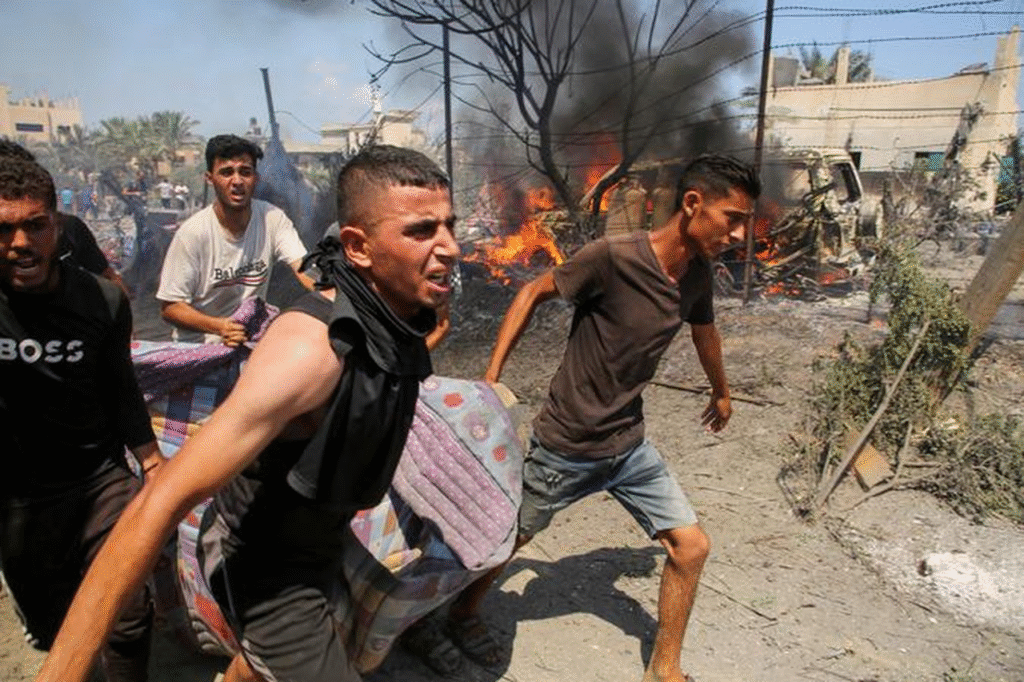
The reality for civilians is stark: food is scarce, movement is dangerous, and even attempts to collect humanitarian aid can result in death. The case of Muhannad Zakaria Eid is a chilling reminder that in Gaza, survival itself has become a gamble. The boy’s death illustrates the compounded dangers of war and famine—where the very aid meant to save lives can become another source of tragedy.
Israel’s restrictions on aid access, combined with its military campaign, have effectively created a cycle of desperation. Civilians are forced into perilous situations to secure basic necessities, only to face the constant risk of being killed by violence, hunger, or accidents like the one that claimed Muhannad’s life.
Despite the mounting international criticism, there is little sign that the current conditions will change quickly. Aid agencies continue to lobby for secure land corridors, yet the Israeli military maintains tight control over all points of entry. As the crisis deepens, the likelihood of further tragedies like Muhannad’s grows.
For Gaza’s people, the question is not just how to survive the war, but whether the world will act in time to prevent the total collapse of life in the enclave. Every day that passes without a ceasefire, safe aid delivery, and unrestricted humanitarian access pushes the population closer to the brink.