
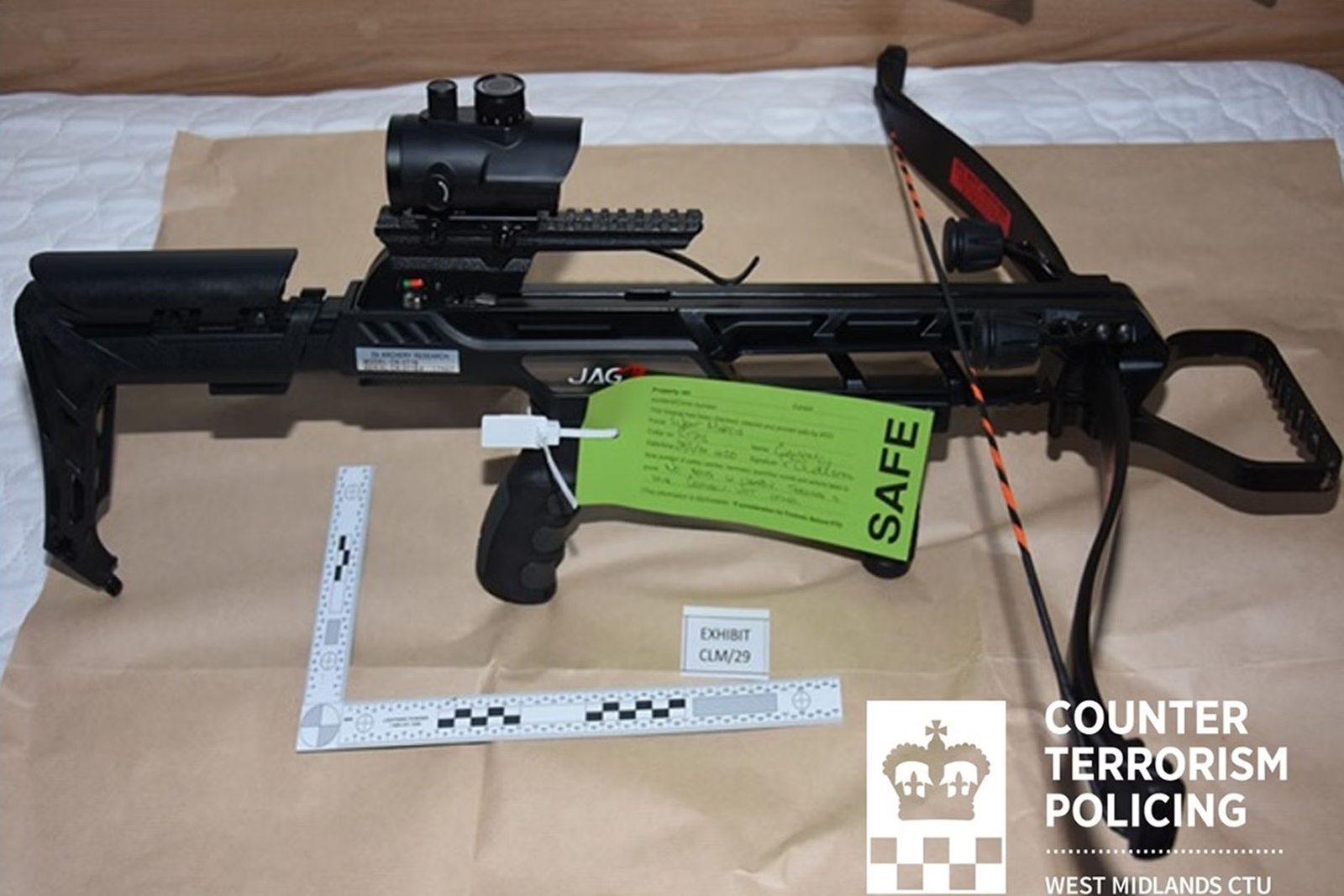
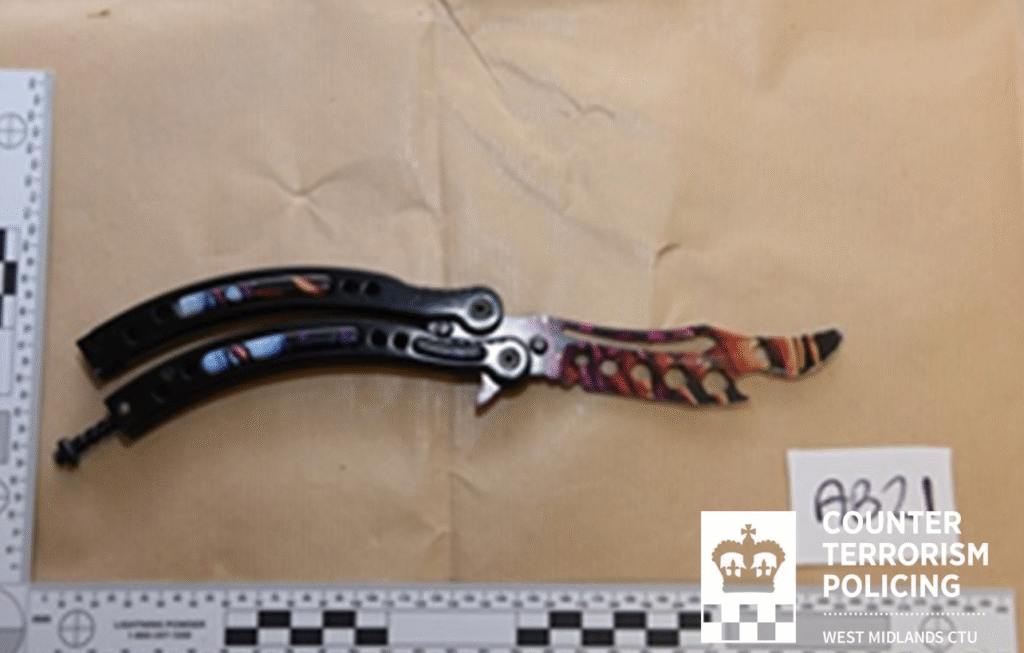
In a chilling case that has shocked the community of Market Drayton, Shropshire, a 15-year-old boy who described himself as a “Nazi” has been detained for amassing a deadly arsenal of weapons and discussing plans to “shoot up” his school. The teenager, whose identity is protected due to his age, appeared at the Old Bailey in London on August 29, 2025, where he was sentenced to 18 months in custody, followed by a year on licence, after pleading guilty to multiple charges.
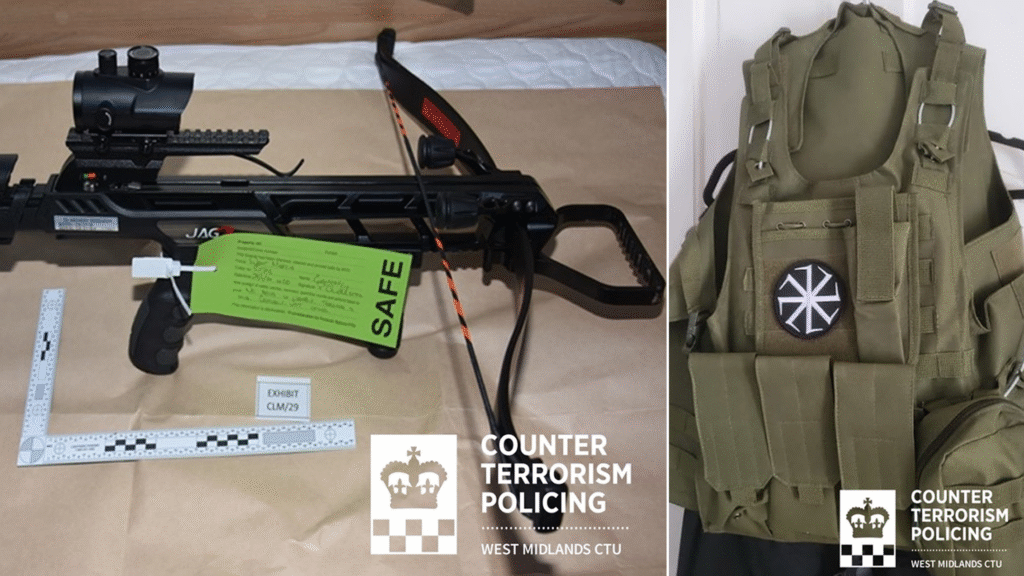
These included possession of a butterfly knife, a stun gun, a baton, and a crossbow, as well as possessing terrorist information related to manifestos of individuals who committed acts of terror. The court revealed a disturbing picture of a young individual consumed by extremist ideologies and a fascination with mass violence, raising urgent questions about radicalization, mental health, and parental oversight.
15-Year-Old Self-Proclaimed ‘Nazi’
The case came to light in early November 2024, when West Mercia Police visited the teenager’s home for an unrelated matter. The boy, who lived in an annexe of his parents’ property in a rural area near Market Drayton, was described as “unkempt” by officers. During this initial visit, police uncovered a shocking array of weapons, including three crossbows with bolts, six air weapons, a red samurai sword, six knives, and a stun gun housed in a tactical vest adorned with far-right symbols.
An examination of the teenager’s electronic devices revealed videos and images showing him practicing with the samurai sword and firing a crossbow into a coconut, indicating a hands-on familiarity with his weapons. Further investigation exposed the boy’s deep dive into extremist content. He had accessed manifestos of individuals who carried out terrorist attacks and expressed a desire to emulate their actions.
His devices also contained evidence of his obsession with school shootings and far-right mass killers, a fixation that reportedly began when he was just 13 years old. In one chilling instance, just two days after the initial police raid, the teenager searched online for whether a 50-pound draw weight crossbow could kill a human. Alarmingly, within days of this search, his mother purchased him a crossbow pistol with the same draw weight, which was later seized during a follow-up police visit two weeks later.
Read : Three Teenagers Charged with Murder of 49-Year-Old Alexander Cashford
The teenager’s online activity was equally disturbing. He engaged in chats where he discussed using a modified air pistol to “shoot up” his school and expressed a desire to carry out a mass shooting, even stating in a WhatsApp conversation that “voices” were urging him to kill.
Read : Maldives Announces Ban on Entry of Israelis as Anger Rises Over War in Gaza
He referenced April 20—Adolf Hitler’s birthday—as his intended “death day,” claiming he would “kill lots of people” using a taser, knife, and other weapons. He also wrote notes outlining plans to attack his own school and two others, one in Shropshire and another on the Isle of Wight, the latter linked to an online contact named “Nikki,” with whom he claimed to be in love. These revelations painted a picture of a deeply troubled individual whose fantasies of violence were escalating rapidly.
Legal Proceedings and Sentencing
At the Old Bailey, the court heard from prosecutor James Bruce, who detailed the teenager’s ideological motivations, describing them as “racial and ideological” and “steeped in far-right ideology.” The boy had attempted to make “cricket bombs” without success and, while on bail, downloaded manuals on how to create napalm and a self-loading pistol. These actions suggested a persistent intent to acquire the means for violence, despite police intervention. The teenager’s guilty pleas included charges for possessing prohibited weapons and terrorist materials, reflecting the severity of his actions.
Judge Rebecca Trowler KC, who presided over the sentencing, acknowledged the teenager’s autism diagnosis and his vulnerability but emphasized the seriousness of his intentions. She stated that the boy “plainly had terrorist motivations, both racial and ideological,” and that there was a “real risk” he could have carried out an attack causing actual harm.
However, she noted that the risk was not “very likely,” which influenced the length of the sentence. In addition to the 18-month custodial term and 12 months on licence, the judge imposed a three-year Criminal Behaviour Order (CBO) to monitor his activities post-release and a 12-month parenting order to provide his parents with training and advice.
The defense, represented by barrister Dominic Thomas, argued that the teenager’s plans were “fantasy” and a form of “warped self-care” to cope with bullying at school and isolation during the pandemic. Thomas highlighted the boy’s autism and the lack of support his parents had received despite years of seeking help. However, Judge Trowler rejected the notion that the teenager’s actions were purely fantastical, citing his own notes, messages, and expressed opinions as evidence of a genuine threat.
Broader Implications: Radicalization and Prevention
This case underscores the growing concern over youth radicalization in the digital age. The teenager’s descent into extremist ideologies was facilitated by unrestricted access to violent and terrorist content online. Chief Superintendent Mo Lansdale of West Mercia Police described the level of violence the boy was viewing as “shocking” and “not what you’d expect a 15-year-old child to be accessing.” She noted that his autism and social isolation likely contributed to his retreat into an online world where he consumed graphic material, including Islamic State beheading videos and discussions of school shootings.
However, Lansdale emphasized that his autism could not fully explain his ideologies or his expressed desire to kill. The case also highlights failures in oversight and intervention. After the initial police raid, the teenager was released on bail with conditions prohibiting unsupervised internet access and weapon purchases.
He was also supposed to move from the annexe back into his parents’ main house and was referred to the Prevent deradicalization program and mental health services. Yet, when police conducted a bail check on January 22, 2025, they found him still living in the annexe, using a new internet device purchased by his mother, and engaging in chats about crossbows and violent acts. This breach of bail conditions led to his remand to Feltham Young Offenders Institution, where officers later discovered a homemade weapon in his possession in March 2025.
The role of the teenager’s parents raises further questions. The purchase of a crossbow by his mother after the initial seizure of weapons suggests a lack of understanding or acknowledgment of the severity of his behavior. The parenting order issued by the court aims to address this, but it also points to a broader need for education and support for families dealing with at-risk youth. The teenager’s case was referred to the Prevent program, which seeks to counter radicalization, but its effectiveness in this instance appears limited, as he continued to access extremist material while under supervision.
This incident also prompts reflection on societal factors contributing to such cases. The teenager’s isolation, exacerbated by the pandemic and his autism, likely made him more susceptible to online radicalization. His fixation on far-right ideologies and school shootings reflects a dangerous convergence of mental health challenges and exposure to extremist content. Schools, law enforcement, and communities must work together to identify early warning signs, such as social withdrawal or fascination with weapons, and intervene before fantasies turn into actionable plans.
The sentencing of this 15-year-old serves as a stark reminder of the complexities surrounding youth radicalization. While his autism and personal struggles were factors, they do not excuse the gravity of his actions or the potential threat he posed. The court’s decision to impose both custodial and rehabilitative measures aims to balance punishment with the opportunity for reform.
However, the case leaves lingering questions about how to prevent similar incidents in the future. Strengthening online content moderation, enhancing mental health support, and fostering greater awareness among parents and educators are critical steps toward addressing the root causes of such behavior. As society grapples with these challenges, the hope is that early intervention and comprehensive support systems can steer vulnerable youth away from the path of violence and extremism.