

In a story that’s equal parts heartbreaking and eyebrow-raising, a 16-year-old boy from southeastern China named Huang experienced a fleeting victory in his quest for a few extra centimeters of height. After shelling out the equivalent of over $2,300 for six months of so-called “body-lengthening therapy,” the teenager saw his stature inch up by 1.4 centimeters—from a modest 165 cm to 166.4 cm. But just two weeks after wrapping up the sessions, poof! He was right back where he started.
This tale of temporary triumph turned rapid reversal has ignited conversations about the desperation of adolescence, the shadowy world of unproven treatments, and the harsh realities of human growth. As parents and experts weigh in, Huang’s experience serves as a stark reminder that not all shortcuts to self-improvement are created equal. The incident unfolded in Xiamen, a bustling coastal city in Fujian province, where Huang’s family sought out the therapy in hopes of giving their son a leg up—literally—in a society where height can feel like a social currency.
Starting in February, Huang attended sessions every one to two weeks, enduring what his father described as leg stretches combined with medical equipment designed to “activate” his knees. The routine was grueling, but the promise of lasting growth kept them going. By August, the clinic declared success: that precious 1.4 cm gain. For a 16-year-old navigating the awkward throes of late puberty, it must have felt like a miracle. Huang, already self-conscious about his height, could finally stand a tad taller among peers, perhaps even catching a glimpse of confidence in the mirror.
But the joy was short-lived. Mere days after the final session, Huang’s father noticed something amiss during a routine measurement at home. The centimeter had vanished, and by the two-week mark, Huang was measuring exactly 165 cm again. “We were devastated,” the father later shared in his complaint to the clinic. He pointed out that even during the treatment, minor dips occurred whenever they missed an appointment, which the staff dismissed as incomplete therapy.
Read : Norma: Man’s Affair with His Mother-in-Law Becomes Viral Film in Indonesia
Now, with the program fully done, the reversal felt like a cruel joke. The family, who had invested not just money but emotional energy into this endeavor, felt duped. Huang himself, though not quoted directly, must be grappling with a mix of embarrassment and betrayal—after all, at 16, every millimeter matters in the theater of teenage social dynamics.
Read : Top Ten Countries With Tallest People
This isn’t just a personal setback; it’s a snapshot of a larger phenomenon gripping parts of Asia, where height anxiety runs deep. In China, where rapid urbanization and competitive education systems amplify insecurities, clinics peddling growth elixirs and therapies have mushroomed. Parents, often echoing their own unfulfilled aspirations, fork over thousands in yuan for promises of taller, more “successful” offspring. Huang’s case, reported widely in local media, underscores the vulnerability of families chasing these dreams. The therapy itself sounds innocuous—stretching and some gadgetry—but without transparent science backing it, it’s hard not to see it as a cash grab dressed in wellness jargon.
The Dubious Science Behind Body-Lengthening Therapy
Diving deeper into the mechanics of this therapy reveals a landscape fraught with pseudoscience and scant evidence. What exactly is “body-lengthening therapy”? From descriptions in Huang’s story, it involves manual leg stretches and the use of unspecified medical devices to supposedly stimulate knee joints and promote bone elongation. Proponents claim it “activates” dormant growth potential, perhaps by improving posture or blood flow to growth plates. But experts are quick to debunk it as little more than glorified yoga with a price tag.
Orthopedic specialists and endocrinologists, when consulted on similar cases, emphasize that true height growth in teens like Huang is governed by genetics, nutrition, and hormones—factors no amount of stretching can override once puberty wanes. At 16, Huang is on the cusp of growth plate closure, the bony epiphyses that fuse and halt vertical expansion. Studies on idiopathic short stature, a condition affecting many short teens, show that even legitimate interventions like recombinant human growth hormone (rhGH) yield modest results—typically 3 to 4 cm over years, not weeks—and only under strict medical supervision.
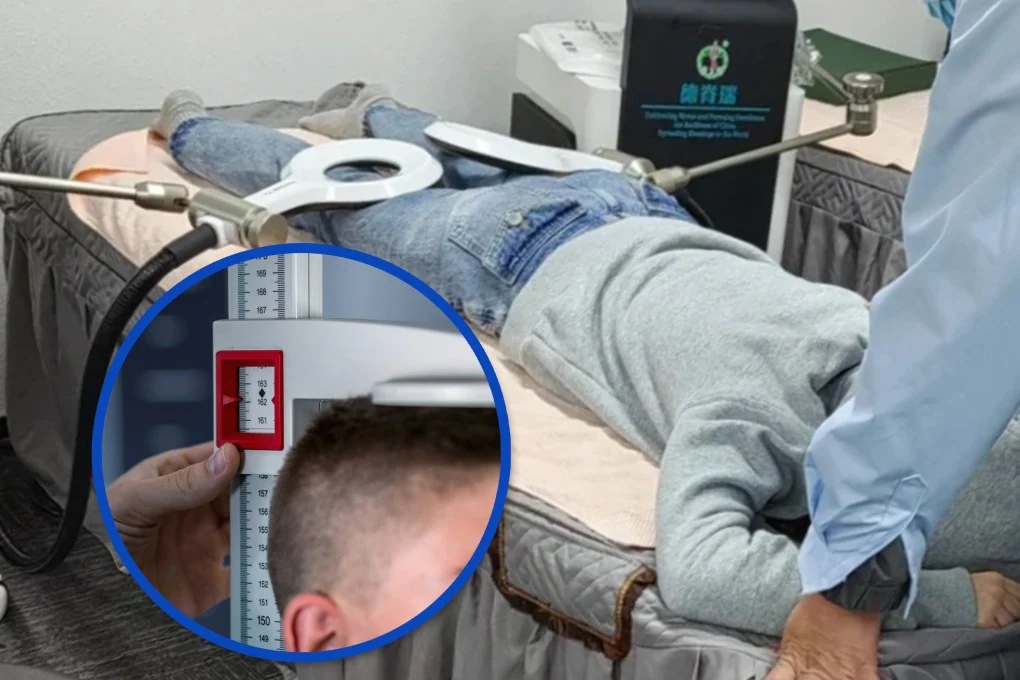
Huang’s 1.4 cm “boost” likely stemmed from temporary spinal decompression or improved measurement posture during active treatment, evaporating once the mechanical stimulus stopped. The clinic’s response to the reversal only fueled skepticism. When Huang’s father complained, staff allegedly shrugged it off by saying the boy was “too old to be corrected,” implying age as the culprit rather than the therapy’s flaws. This post-hoc excuse reeks of deflection, especially since they greenlit the treatment initially without such caveats.
Costing 16,700 yuan—roughly the average monthly salary in urban China—this wasn’t pocket change; it was a significant financial hit for a middle-class family. Broader investigations into such clinics reveal a pattern: aggressive marketing via social media, vague claims of “scientific activation,” and refunds only after public outcry. In Huang’s instance, the institution offered a full payback, but the damage was done—both to the family’s wallet and trust in health services.
Moreover, this therapy skirts the edges of medical ethics. Without peer-reviewed trials or regulatory oversight, it’s operating in a gray zone. Chinese health authorities have cracked down on fake growth products before, from dubious supplements to invasive limb-lengthening surgeries borrowed from cosmetic procedures. Huang’s non-invasive version might seem harmless, but the psychological toll is real: false hope can exacerbate body image issues, leading to anxiety or depression in vulnerable teens. As one pediatrician noted in related commentary, “Height isn’t destiny, but peddling miracles preys on parental fears.” The fade in just two weeks isn’t a fluke; it’s physics and biology reasserting themselves, unyielding to wishful stretching.
A Nation Grappling with Height Obsession
Huang’s story isn’t isolated—it’s symptomatic of a cultural fixation on stature that’s as old as folklore but amplified by modern pressures. In China, where Confucian ideals prize physical prowess as a marker of vitality, short height carries stigma. Surveys show that over 70% of Chinese parents worry about their child’s growth, with boys facing particular scrutiny in job markets and marriage prospects. Dating apps even filter by height, and military enlistment has minimum bars. No wonder families like Huang’s turn to quick fixes.
This obsession extends beyond China. Across East Asia, “height clinics” thrive, blending traditional Chinese medicine with Western gimmicks. Acupuncture for growth? Herbal tonics promising elongation? They’re all part of a billion-yuan industry preying on insecurities. Social media exacerbates it, with influencers flaunting “before and after” shots that conveniently omit the reversals. Huang’s case went viral on platforms like Weibo, sparking a flood of empathy and outrage. Netizens shared their own tales: one user recounted a similar therapy costing 10,000 yuan that yielded zero gains; another mocked the clinic’s “activation” as “activating my bank account.”

Yet, amid the bummer, there’s a silver lining in the discourse. Public backlash has prompted calls for stricter regulations. Health watchdogs in Fujian are reportedly reviewing the clinic, and experts advocate for education on realistic growth expectations. Nutrition—rich in calcium, vitamin D, and protein—remains the gold standard, alongside sleep and exercise. For teens like Huang, counseling on body positivity could be more transformative than any device. As one commenter put it, “Height fades, but character grows forever.”
Huang’s two-week tall tale wraps with a refund in hand, but the real payout is awareness. For families eyeing growth therapies, the takeaway is clear: demand evidence, not promises. Consult endocrinologists, not ads. And for society? It’s time to dismantle height hierarchies that bully the vertically challenged. At 165 cm, Huang is average for his age in many places—perhaps even poised for a late spurt if genetics allow.
This saga reminds us that growth, literal and figurative, defies hacks. It’s messy, uneven, and deeply personal. Huang’s family emerges wiser, if poorer, and the boy? He’ll stand tall in ways no therapy can measure—resilience, perhaps, or a killer sense of humor about his “yo-yo stature.” In the end, the bummer isn’t the lost centimeter; it’s the illusion that we can engineer perfection. True boost comes from within, fading-proof and free.