
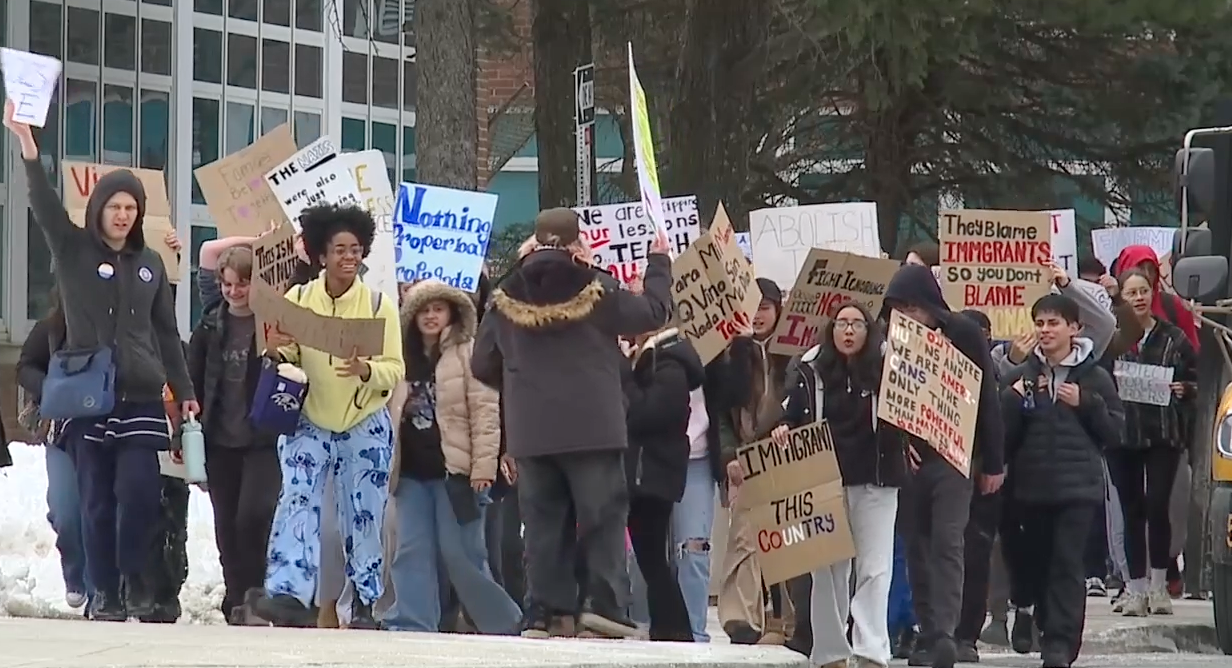
A 16-year-old student at the George Washington Carver Center for Arts and Technology in Baltimore County was arrested on Friday during a student walkout protesting U.S. Immigration and Customs Enforcement (ICE), an incident that has drawn renewed attention to the boundaries between student activism, school policy, and public safety. The arrest occurred after the student allegedly engaged in conduct that school officials described as disruptive and dangerous following the conclusion of the walkout.
While school administrators emphasized their support for peaceful assembly, they also stressed that participation in demonstrations must adhere to safety guidelines and established rules. The walkout at Carver was part of a broader wave of student-led demonstrations across Baltimore County and Baltimore City, where students temporarily left their classrooms to voice opposition to ICE practices in Maryland.
These protests reflect a wider national trend of youth activism on immigration and related civil rights issues, often intersecting with school disciplinary frameworks and law enforcement involvement. In this instance, Baltimore County Public Schools (BCPS) officials and the school principal underscored that while students have the right to organize and assemble peacefully, those rights do not exempt participants from compliance with school codes of conduct or local laws.
Details of the Walkout and Arrest at George Washington Carver Center
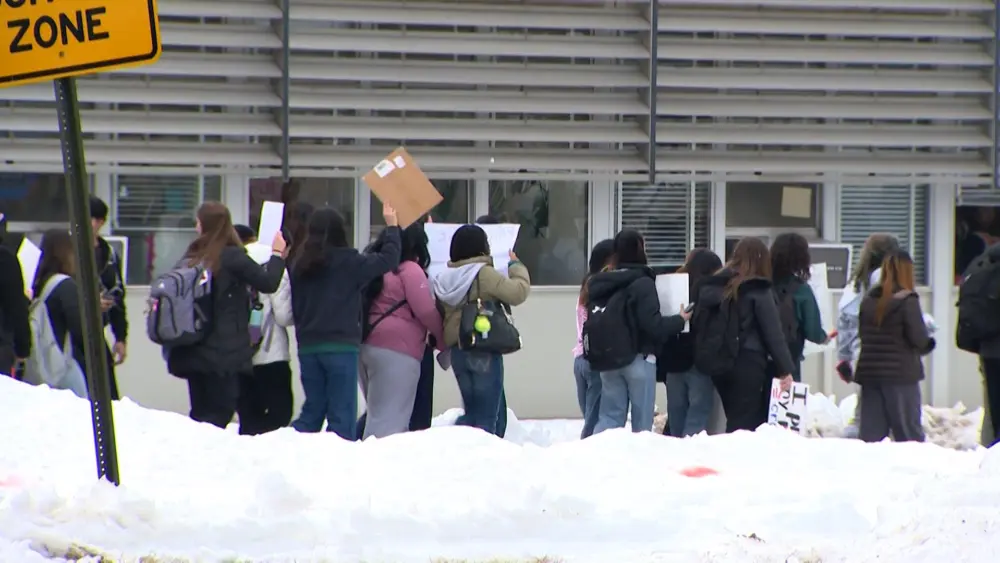
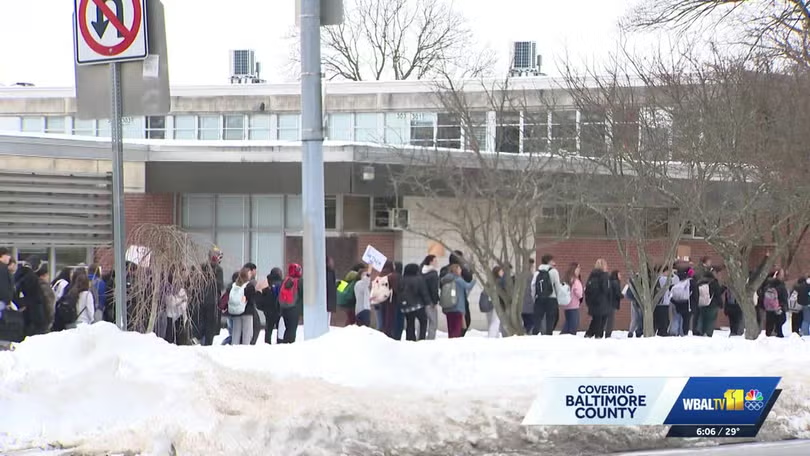
According to Carver Center Principal Erin O’Toole-Trivas, the student-led walkout began at approximately 10:20 a.m. and lasted around 45 minutes. The demonstration was not a school-sanctioned event, but school staff and school resource officers were present to supervise the activity and ensure student safety. Administrators had established parameters intended to allow students to express their views while minimizing disruption to the school environment and maintaining order.
Most participating students complied with the agreed-upon guidelines and returned to the building once the walkout concluded. However, O’Toole-Trivas stated that a small group failed to do so. One student, identified as 16 years old, reportedly left campus grounds and obstructed traffic, prompting intervention by Baltimore County police. The student was subsequently arrested on a charge related to disorderly conduct.
In a letter sent to parents, O’Toole-Trivas explained that the arrest stemmed from behavior that went beyond the scope of peaceful protest and created safety concerns. She noted that leaving campus without authorization and interfering with traffic posed risks not only to the student involved but also to others in the area. The principal emphasized that any students found to have violated the BCPS Code of Conduct would face consequences consistent with district policy and the student handbook.
Baltimore County Public Schools had issued a statement earlier in the day acknowledging students’ rights to organize and assemble peacefully. The statement clarified that the district’s primary concerns are student safety and minimizing disruptions to the educational process. It also noted that students choosing to participate in walkouts or demonstrations are expected to follow guidance and rules provided by school leadership. The Carver Center incident illustrates how deviations from those expectations can lead to disciplinary action or, in some cases, involvement by law enforcement.
Student Activism and School Policy Across Baltimore
The walkout at George Washington Carver Center was not an isolated event. Several other Baltimore County schools experienced similar demonstrations on Friday, as students coordinated protests against ICE practices they view as harmful to immigrant communities. These actions followed a walkout held a day earlier at a Baltimore City school, where students also left class to voice opposition to immigration enforcement operations.
The Baltimore City protest was organized by Students Organizing a Multicultural Open Society (SOMOS), a student group advocating for immigrant rights and broader social justice issues. During that demonstration, students carried signs, chanted slogans, and called on Maryland lawmakers to pass legislation that would limit the scope of ICE activities within the state. While the event was not officially sponsored by the school district, city school officials said they worked with police to prioritize safety and manage the situation without incident.
These protests highlight the growing role of students as political actors, particularly on issues that directly affect their families and communities. Immigration enforcement has been a focal point for youth activism nationwide, with students often citing concerns about family separation, racial profiling, and the presence of federal immigration agents in local jurisdictions. In Maryland, debates over cooperation between local authorities and ICE have fueled legislative proposals and public demonstrations alike.
At the same time, school districts face the challenge of balancing students’ constitutional rights with their responsibility to maintain order and safety. Walkouts, by their nature, disrupt the normal school day, and administrators must decide how to respond in ways that respect free expression while enforcing attendance policies and codes of conduct. The involvement of law enforcement, particularly when an arrest occurs, can intensify scrutiny and raise questions about proportionality and the appropriate role of police in school-related protests.
Broader Implications and Ongoing Debate
The arrest of a 16-year-old student during the Carver Center walkout has sparked discussion among parents, educators, and advocates about how schools should handle political demonstrations. Supporters of the student argue that walkouts are a form of civic engagement and that harsh consequences may discourage young people from participating in democratic processes. Critics counter that schools must draw clear lines when protests endanger safety or violate established rules.
Read : Who Is Chad Michael Watts, Texas Man Arrested After Fight with Students Outside Johnson High School?
From the district’s perspective, officials have reiterated that peaceful assembly is permitted but not without limits. The BCPS statement underscores that student safety is paramount and that actions such as leaving campus or obstructing traffic cross into areas where intervention is necessary. The district’s policies are designed to provide a framework for handling such situations consistently, though individual incidents inevitably involve judgment calls by administrators and officers on the scene.
The Carver Center incident also reflects broader concerns about the criminalization of student behavior. Nationally, advocates have raised alarms about the so-called “school-to-prison pipeline,” where disciplinary issues escalate into arrests and long-term legal consequences for young people. While school resource officers are intended to enhance safety, their presence during protests can blur the line between school discipline and criminal enforcement, particularly when demonstrations move beyond campus boundaries.
As student activism continues to evolve, schools may face increasing pressure to clarify protocols for walkouts and demonstrations. Some districts have experimented with designated protest areas, scheduled forums, or alternative forms of expression that allow students to voice their concerns without disrupting instruction or creating safety hazards. Whether such approaches can reduce conflict remains an open question.
In Maryland, the debate over ICE practices is unlikely to subside soon. Legislative efforts to limit cooperation with federal immigration authorities continue to be a point of contention, and student-led protests suggest that younger generations are closely watching and actively engaging with these issues. The events at George Washington Carver Center for Arts and Technology serve as a reminder that schools are not insulated from broader social and political currents, and that how they respond can have lasting implications for students and communities alike.
The arrest on Friday does not mark the end of the conversation but rather underscores the complexity of balancing rights, responsibilities, and safety in educational settings. As investigations and disciplinary reviews proceed, the incident will likely inform future discussions about student protest, school policy, and the role of law enforcement in managing civic expression among youth.
Some genuinely interesting points you have written.Helped me a lot, just what I was looking for : D.