
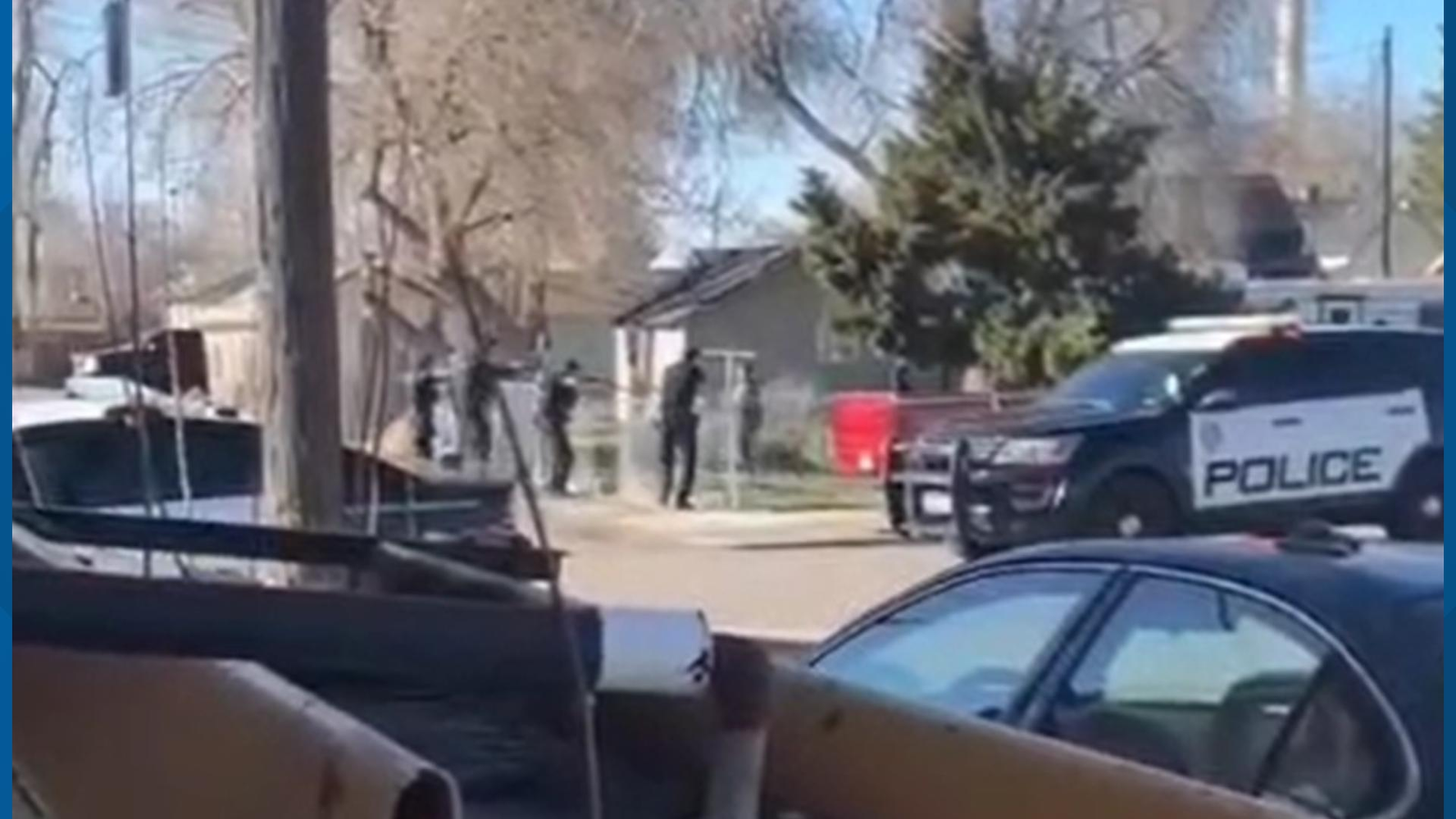
A tragic police shooting in Pocatello, Idaho, has ignited public outrage and concern after a 17-year-old Autistic Teen Shot Nine Times by Police officers during a mental health episode. The incident, which unfolded in the teen’s front yard, has sparked protests and prompted an investigation by the East Idaho Critical Incident Task Force.
As the teen continues to fight for his life in a hospital, questions mount about police protocol, use of force, and how law enforcement responds to mental health crises—particularly involving minors and individuals with disabilities.
The Shooting Incident and Immediate Aftermath
The tragic chain of events began on Saturday evening when neighbors called 911, hoping police would de-escalate a domestic disturbance at a residence in Pocatello, a city just south of Yellowstone National Park.
According to local reports, the autistic teenager was visibly distressed and reportedly had a knife in his hand while interacting with a woman who neighbors identified as his mother. Eyewitnesses shared cellphone footage of the incident, showing the teen on the ground waving the knife, but not appearing to threaten anyone directly.
Police arrived on the scene around 5:25 pm, just minutes after receiving reports of a physical disturbance involving two males and a female. Four officers are seen on video rushing up to a low chain-link fence outside the home. They quickly draw their firearms and begin shouting commands to the teen, instructing him to “get on the ground.”
Within seconds, as the teen begins to rise, the officers open fire in rapid succession. The entire encounter—between the officers’ arrival and the volley of gunshots—lasted no more than 20 seconds.
In a statement released after the incident, the Pocatello Police Department claimed that officers were responding to a report of a male subject who was intoxicated and armed with a knife. They stated that the teen was involved in a shooting with officers and that life-saving measures were immediately initiated before he was transported to Portneuf Medical Center.
Read : Mother and Grandmother Arrested After 15-Year-Old Son Runs Naked in Cost Less Supermarket for Help
The teen’s family later confirmed that he was in critical condition and had undergone a leg amputation due to the extent of his injuries. While he remains alive, his prognosis is uncertain, and the emotional and physical damage inflicted on both him and his family is immeasurable.
Protests and Community Outcry
The shooting has sparked a wave of anger and disbelief among the local community and beyond. On Sunday, just one day after the incident, more than two dozen protesters gathered outside the Pocatello Police Department.
They carried signs, voiced frustrations, and demanded accountability for what they viewed as an unnecessary and disproportionate use of force against a child with a known disability.
One protester held a sign that read, “Why were your guns drawn?”—a sentiment echoed by many who watched the footage and questioned why officers responded with lethal force so quickly.
Read : Chinese Teen Diagnosed with ‘Love Brain’ after Calling Boyfriend Hundreds of Times Daily
Dylan Harrison, one of the demonstrators, called the incident “horrifying,” stating that police should have recognized the teen was experiencing a mental health crisis and responded with compassion, not bullets.
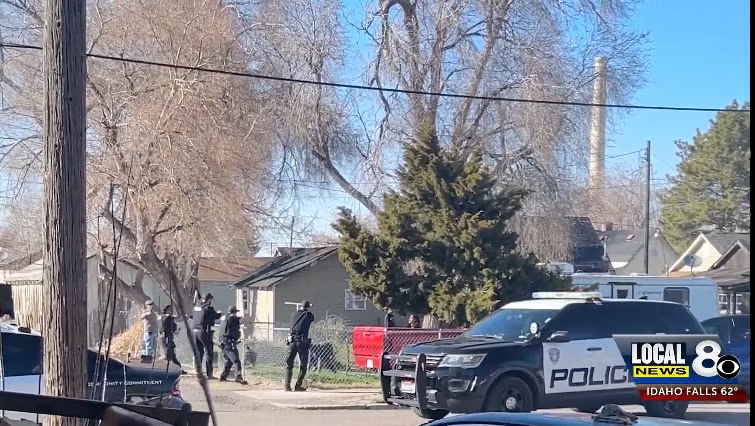
“This was a child who was clearly in distress,” Harrison said. “Within 30 seconds of arriving, Pocatello police opened fire. They were called to help, and they nearly killed him. That is not protection—that is brutality.”
A neighbor who witnessed the event also voiced concerns. Brad Andres, who lives nearby, described the situation as “not really dangerous.” He said the teen was not chasing anyone and that others could have easily moved out of reach of his knife. He characterized the boy’s behavior as a “bad mental health day” rather than a threat requiring lethal intervention.
The teen’s aunt also spoke to reporters, describing her nephew as physically impaired and barely able to walk. She insisted he was not approaching or threatening the officers, adding further doubt to the justification for the shooting. Her voice joined a chorus of community members who believe the officers involved acted with unnecessary aggression instead of employing strategies to calm the situation.
A Broader Debate on Policing and Mental Health
This case has reignited the national debate over how law enforcement officers handle mental health emergencies, especially involving young people with developmental or cognitive disabilities.
Advocates for mental health awareness argue that police are often ill-equipped to de-escalate such situations and instead default to force, even when non-lethal options may be available.
Law enforcement’s role in responding to mental health crises has come under intense scrutiny in recent years, with numerous high-profile cases where individuals in distress were harmed or killed by police. Experts argue that these interactions are frequently escalated by a lack of training in recognizing and managing neurodivergent behavior.
Autistic individuals, in particular, may not respond to verbal commands or physical cues in conventional ways, which can lead to tragic misunderstandings when officers are not adequately trained.
In the Pocatello case, critics argue that the officers failed to take the boy’s condition into account before responding with deadly force. The rapid escalation—shouting commands and then opening fire within seconds—suggests a lack of patience, restraint, and knowledge about autism or how mental health crises manifest in adolescents.
Furthermore, the fact that multiple shots were fired, resulting in nine bullet wounds and the loss of a leg, raises serious concerns about proportionality and the officers’ judgment.
There is also frustration that police, who were called to help, may have placed the very person they were meant to protect in critical condition. This sentiment is reflected in Harrison’s comments, when he stated, “I can’t imagine anyone in the community trusting police after this.”
In response to the growing backlash, the East Idaho Critical Incident Task Force has launched an investigation into the shooting. The findings will determine whether the officers followed department protocol and whether criminal charges or disciplinary actions are warranted.
However, for many in the community, the damage to trust and public confidence may already be irreparable. The case also underscores the urgent need for alternative response models, such as mental health crisis teams, who can accompany or replace police in certain situations.
These professionals are trained in de-escalation and are better equipped to manage individuals experiencing psychological distress. Several cities across the U.S. have begun implementing such programs with promising results, but widespread adoption remains inconsistent.
A Community Seeking Justice and Change
As the teen continues to fight for his life, his family and community are left grappling with the trauma of what happened. They are demanding answers and calling for accountability—not only for the officers involved but for the system that allowed this tragedy to occur.
For the boy’s loved ones, the consequences are deeply personal: a child with autism, vulnerable and in need of help, now faces a lifetime of recovery, both physical and emotional.
The protests in Pocatello may be small in size, but their message is powerful. The people are demanding a new standard for how mental health crises are handled. They are pleading for a shift in policing culture, one that prioritizes empathy, understanding, and the preservation of life above all else.
This case is more than just another headline—it is a reflection of the broader issues facing American society: the intersection of disability and law enforcement, the urgent need for mental health reform, and the demand for accountability in institutions that wield the power to kill.
Whether or not justice will be served remains to be seen, but one thing is certain: a 17-year-old autistic boy lies in a hospital bed, not because he was a danger to others, but because the help he desperately needed arrived with guns drawn.