
In a stark reminder of the perils of illegal organ trafficking, Wang Shangkun, a 17-year-old from Changde in China’s Hunan province, made a fateful decision in early 2011. Desperate to own the latest Apple gadgets amid a wave of consumer frenzy, he sold one of his kidneys on the black market for 20,000 yuan—approximately $3,200 at the time. The money funded his purchase of an iPhone 4 and an iPad 2, devices that symbolized status and modernity for many young people in China.
What followed was a cascade of medical complications that left him permanently disabled, highlighting the ruthless underground trade in human organs and the vulnerability of minors in a high-pressure society. Wang’s case exploded into public view months after the surgery, sparking outrage and leading to arrests. Now, over a decade later, his story continues to underscore the human cost of unchecked consumerism and illegal medical practices. At 31 years old in 2025, Wang Shangkun remains bedridden, reliant on dialysis for survival, his dreams shattered by a single, irreversible choice.
The Black Market Deal: A Teen’s Gamble for Tech Glory
Wang Shangkun’s descent into the organ trade began in the spring of 2011, a period when Apple’s iPhone 4 and newly released iPad 2 dominated conversations among Chinese youth. Living in a modest family home in Changde, Wang was an ordinary high school student, but the allure of these devices—priced at around 5,000 to 6,000 yuan each—proved overwhelming. Unable to afford them through legitimate means, he turned to online forums where whispers of quick cash through organ donation circulated.
Contacting a broker via QQ, China’s popular instant messaging service, Wang learned he could sell his kidney for 20,000 yuan. The broker, part of a network that included medical insiders, assured him the procedure was safe and routine. “One kidney is enough for a healthy life,” Wang later recalled being told, a common but misleading pitch in illegal transplants. At 17, below the legal age of consent for such operations in China, Wang forged his mother’s signature on consent forms, hiding his plan from his family.
In late March 2011, Wang traveled alone to Chenzhou, a city in southern Hunan, for the surgery at a small clinic run by Dr. He Wei, a 29-year-old surgeon stripped of his license years earlier for unrelated misconduct. The operation occurred on April 1, 2011, under rudimentary conditions. He Wei, assisted by two nurses and two others in the ring, removed Wang’s left kidney in a procedure lasting about three hours. Wang received 20,000 yuan in cash post-surgery, enough to buy the iPhone 4 for 4,999 yuan and the iPad 2 for 3,988 yuan, with some left over.
Returning home days later, Wang presented the gadgets to his parents as gifts from a part-time job, but his pallor and fatigue raised suspicions. A family doctor visit revealed stitches on his abdomen, forcing Wang to confess. His parents rushed him to a hospital in Changsha, where scans confirmed the kidney removal. The discovery ignited a media storm in May 2011, with state outlets like Xinhua and Southern Metropolis Daily exposing the scandal. Wang’s mother, Li Yan, described the shock: “He was just a child chasing trends, but this price is too high.”
Read : “Elon Is Going to Be the Biggest Loser”: Entrepreneur’s Advice to Musk Choosing China Over India
The case exposed a thriving black market in China, where demand from wealthy transplant patients outstripped legal donations. Brokers exploited economic disparities, targeting rural teens with promises of easy money. In Wang’s instance, the deal was facilitated through encrypted chats, evading authorities until the family’s alarm. Health officials later noted that illegal kidney sales fetched 20,000 to 50,000 yuan for donors, while recipients paid up to 100,000 yuan, with middlemen skimming profits.
Surgical Fallout: Infection and the Onset of Organ Failure
The immediate aftermath of Wang’s surgery was a nightmare of medical neglect. Discharged after just two days with minimal follow-up, Wang ignored instructions to avoid strenuous activity, eager to showcase his new devices. By mid-April, fever and abdominal pain signaled a severe infection at the incision site. Pus drained from the wound, and blood tests showed skyrocketing creatinine levels, indicating his remaining right kidney was under strain.
Rushed to the Second Xiangya Hospital in Changsha, Wang underwent emergency treatment for peritonitis and sepsis. Doctors stabilized him temporarily, but the damage was profound: the surgical trauma and poor post-op care had compromised his solitary kidney’s function. Within weeks, he experienced chronic fatigue, hypertension, and swelling in his legs—hallmarks of renal insufficiency. “The operation was botched from the start,” a nephrologist involved in his care stated anonymously. “No proper imaging, no sterile protocols, and the surgeon lacked expertise.”
By summer 2011, Wang’s glomerular filtration rate had plummeted below 30 percent, classifying him in stage four kidney disease. He dropped out of school, unable to concentrate or attend classes. Family finances strained under mounting medical bills, exceeding 50,000 yuan in the first year alone. Li Yan quit her job as a factory worker to care for him full-time, while Wang’s father, a construction laborer, took extra shifts.
Investigations revealed the clinic’s horrors: He Wei had performed at least five similar illegal transplants that year, using falsified records to pose as a legitimate facility. The two nurses, aged 19 and 22, were trainees with no certification, and the other accomplices handled logistics and payments. Police raids in June 2011 uncovered ledgers detailing 15 to 20 deals, implicating a wider network.
Wang’s health declined steadily. By late 2011, dialysis became a weekly necessity, a four-hour ordeal filtering toxins from his blood. The iPhone and iPad, once treasures, gathered dust; Wang sold them to cover costs, fetching only half their value. Psychological toll mounted too—depression and isolation plagued the teen, who once dreamed of university but now faced lifelong dependency.
Justice Served, Legacy Endures: A Disabled Life and Systemic Warnings
Legal proceedings against the perpetrators unfolded in 2012, delivering partial accountability. In April, He Wei and four accomplices—two nurses, a broker, and an anesthetist—were arrested on charges of intentional injury, a crime carrying up to 10 years in prison. A Changsha court trial in August saw nine individuals, including additional brokers, face justice. He Wei received a five-and-a-half-year sentence, the nurses three years each, and others varying terms from probation to four years. Fines totaled 100,000 yuan, with 50,000 yuan awarded to Wang as compensation.
Wang’s family pursued civil claims, securing another 106,000 yuan from the clinic’s operators in 2013, but it barely dented expenses exceeding 1 million yuan by 2015. “Money can’t buy back health,” Li Yan told reporters post-trial. The case prompted tighter regulations: China’s Ministry of Health mandated stricter donor verifications and cracked down on online organ ads, leading to hundreds of arrests nationwide.
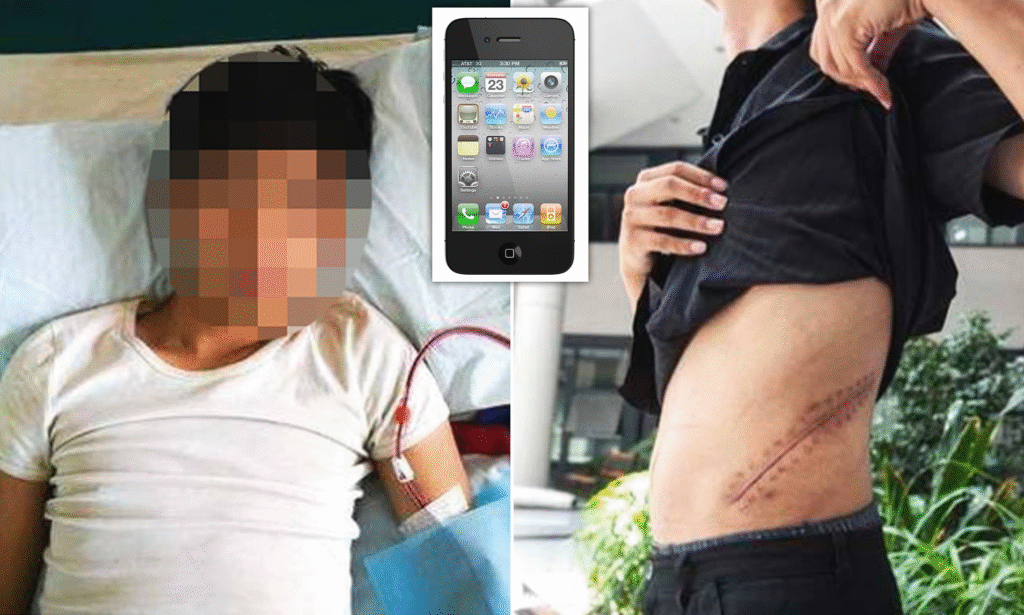
Yet Wang’s suffering persisted. By 2019, at age 25, full kidney failure confined him to bed. His remaining organ, scarred from overcompensation and recurrent infections, ceased functioning entirely. Now on thrice-weekly hemodialysis at a local facility, Wang endures nausea, bone pain, and anemia as side effects. Weighing under 50 kilograms, he requires assistance for basic tasks, his once-athletic frame withered.
In 2025, Wang lives with his parents in a subsidized apartment, qualifying for minimal state aid under China’s chronic illness program. Dialysis costs 800 yuan per session, partially covered, but transplant waits stretch years due to donor shortages. He expresses regret in rare interviews: “I thought gadgets would make me happy, but they stole my future.” Advocacy groups cite his story in campaigns against youth consumerism, linking it to broader issues like income inequality—Hunan’s rural per capita income hovered at 6,000 yuan annually in 2011, versus urban gadget prices.
Wang’s ordeal has influenced policy: 2015 amendments to China’s Criminal Law escalated penalties for organ trafficking to life imprisonment in severe cases. International bodies, including the WHO, referenced it in reports on global black markets, estimating 10 percent of transplants worldwide as illegal. Domestically, awareness campaigns in schools now address peer pressure and financial literacy.
As Wang Shangkun navigates his 30s, his case endures as a cautionary chronicle. It exposes not just individual folly but systemic failures—lax oversight, economic desperation, and a culture prizing possessions over well-being. For families like Wang’s, recovery remains elusive, a daily battle against a decision born of youthful impulse in an unforgiving world.