
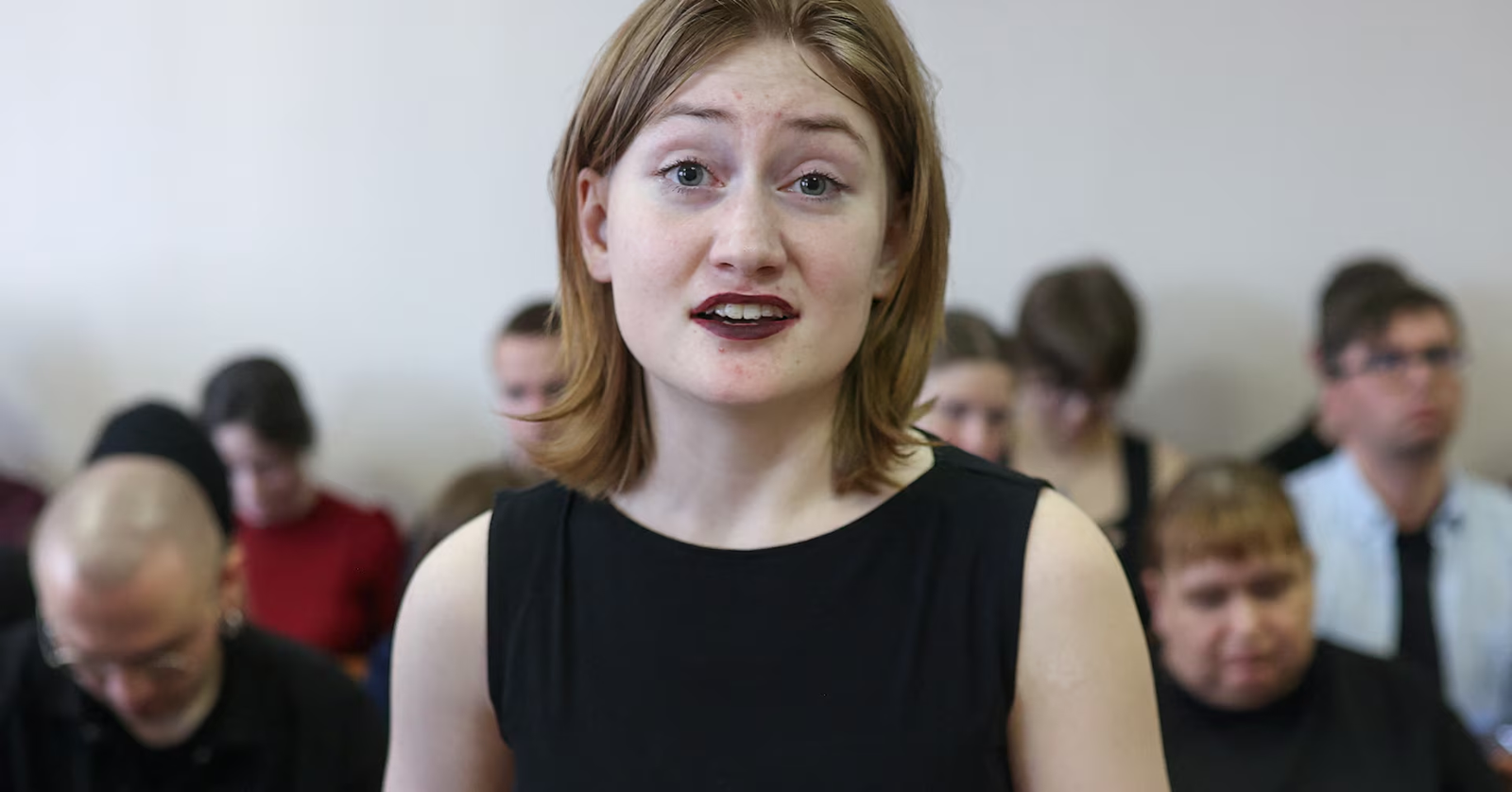
In a politically charged Russia, where dissent against the state is increasingly met with severe consequences, the case of 19-year-old Darya Kozyreva has drawn international condemnation. Kozyreva, an anti-war activist from St. Petersburg, was sentenced to nearly three years in a penal colony for a poetic act of defiance against the war in Ukraine.
Her sentence has become a stark reminder of how the Russian government seeks to suppress any form of protest, especially when it comes to the war that has devastated Ukraine and strained Russia’s relationship with the world.
The case highlights the dangers faced by those who dare to challenge the state’s narrative, particularly the younger generation who are increasingly speaking out against the ongoing conflict.
The Poetic Protest: The Story Behind Darya Kozyreva’s Arrest
The incident that led to Darya Kozyreva’s arrest occurred on February 24, 2024, when she pasted a quote from Ukrainian poet Taras Shevchenko’s iconic work My Testament onto a monument dedicated to him in St. Petersburg.
The poem, known for its revolutionary sentiment, reads: “Oh bury me, then rise ye up / And break your heavy chains / And water with the tyrants’ blood / The freedom you have gained.” These lines, calling for the overthrow of tyranny and the fight for freedom, have become a symbol of resistance, particularly in the context of the Russian invasion of Ukraine.
By quoting Shevchenko, Darya Kozyreva expressed her opposition to the war in a poetic manner, believing it to be an act of peaceful protest. However, in Putin’s Russia, such acts of dissent are seen as subversive.
The authorities swiftly moved to charge her with “discrediting” the Russian army, a charge that has been used repeatedly to suppress anti-war sentiment since the beginning of the war in Ukraine.
For Darya Kozyreva, this was not her first brush with the law. Just a year earlier, she had been detained for a similar act of protest, writing, “Murderers, you bombed it. Judases,” on an installation in St.
Read : Russian Scientist at Harvard Detained at Boston Logan International Airport
Petersburg that was dedicated to the twinning of the city with Ukraine’s Mariupol. This earlier incident led to a fine for “discrediting” the Russian army, as well as her expulsion from university.
Despite the apparent poetic nature of her protest, Kozyreva found herself facing the full force of the Russian state. Her actions were framed as an affront to national pride, and authorities made it clear that they would not tolerate any challenge to their official narrative regarding the war. The case of Kozyreva is emblematic of a wider crackdown on free speech in Russia, particularly concerning the war in Ukraine.
A Case of Political Persecution: The Escalation of Charges
In August 2024, the Russian government escalated its persecution of Darya Kozyreva by bringing additional charges against her following an interview she gave to Radio Free Europe. During the interview, Kozyreva described Russia’s war in Ukraine as “monstrous” and “criminal,” making clear her opposition to the invasion.
These comments were seized upon by Russian authorities, who sought to paint her as a dangerous dissenter. The additional charges of “discrediting” the Russian army in this context seemed to stem not from her poetic protest alone but from her outspoken stance on the war and her refusal to remain silent.
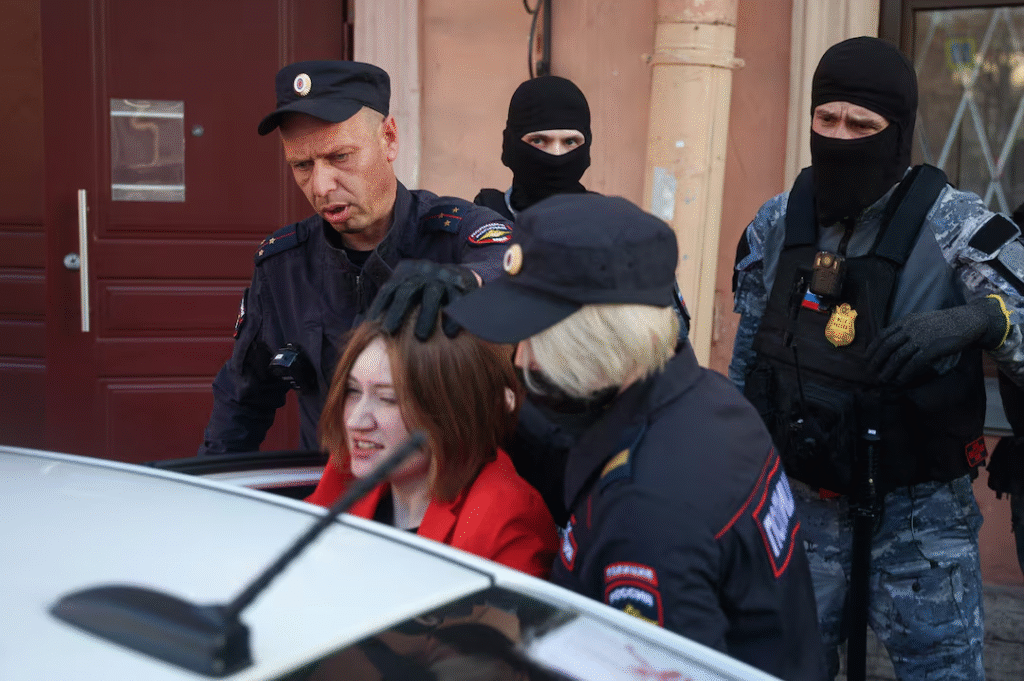
Kozyreva, like many young Russians, had grown disillusioned with the official narrative surrounding the war. Her words were a challenge to the state, a direct rebuke of the government’s justification for its actions in Ukraine.
In a country where the media is largely controlled by the state, and where opposition voices are increasingly silenced, Kozyreva’s willingness to speak out, even at the risk of imprisonment, was seen as a threat to the regime. The charges against her were part of a broader strategy by the Russian government to stifle dissent and prevent the spread of anti-war sentiment.
During her court hearings, Darya Kozyreva maintained that her actions had been nothing more than a peaceful expression of her views. She had merely recited a verse from a well-known Ukrainian poet, she argued. Yet, in a country where even the smallest acts of rebellion are met with swift punishment, her defense fell on deaf ears.
Prosecutors had initially sought a six-year sentence for Kozyreva, but she was ultimately sentenced to two years and eight months in a penal colony. The sentence sent a clear message to other would-be protesters: challenging the state, even through poetry, would not be tolerated.
The Wider Context: Russia’s War on Dissent
The case of Darya Kozyreva is not an isolated one. Since the start of Russia’s invasion of Ukraine in 2022, the government has cracked down on dissent with unprecedented ferocity. The law criminalizing “discrediting” the Russian military has been used to target anyone who speaks out against the war, from journalists and activists to ordinary citizens.
In fact, between 2022 and 2024, over 20,000 people were detained for anti-war views, with more than 9,000 cases related to “discrediting the army” reported by human rights organizations. In addition, more than 1,500 people are currently imprisoned on political grounds, with the number continuing to rise as the war drags on.
The Russian government has also targeted young people in particular, using their age as an additional reason to punish them for speaking out. Since the invasion of Ukraine, at least 35 minors have faced criminal charges for politically motivated actions.
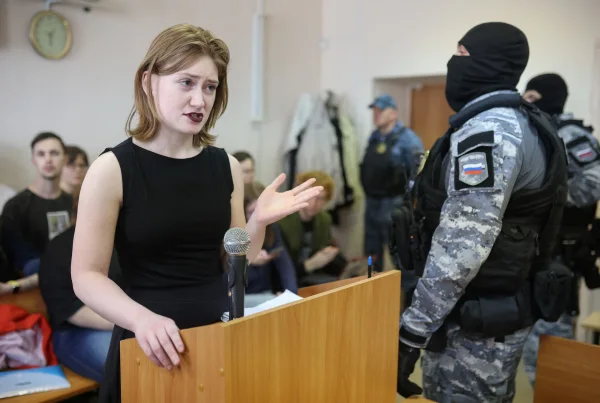
The case of Kozyreva, who was just 19 at the time of her arrest, is one of many examples of how Russia’s war on dissent extends to the younger generation. These young activists, many of whom grew up in the shadow of Vladimir Putin’s rule, have found their voices at a time when the country’s political climate has become increasingly oppressive.
For them, the war in Ukraine represents a betrayal of the ideals they had been taught to cherish, and they are determined to stand up for what they believe is right, even in the face of harsh punishment.
Kozyreva’s story is also a reflection of the broader geopolitical tension between Russia and Ukraine. The Russian government has long sought to suppress Ukrainian identity, often portraying Ukraine as an artificial state and its culture as subordinate to Russia’s.
By quoting a Ukrainian poet in protest, Kozyreva not only challenged the war but also made a statement about the sovereignty and dignity of the Ukrainian people. Her act of defiance was a reminder that, despite the Russian government’s efforts to erase Ukraine’s identity, Ukrainians—and those who stand with them—will not be silenced.
International Reactions: Condemnation and Calls for Action
The international community has not remained silent in the face of Kozyreva’s imprisonment. Human rights organizations, including Memorial and Amnesty International, have condemned the charges against her as politically motivated and an affront to free speech.
Memorial, a respected Russian human rights group, described Kozyreva as a political prisoner and called the charges against her “absurd.” Amnesty International’s Russia Director, Natalia Zviagina, called the sentence “another chilling reminder of how far the Russian authorities will go to silence peaceful opposition to their war in Ukraine.”
These organizations, along with various foreign governments, have called for Kozyreva’s immediate release, citing her sentence as a violation of fundamental human rights.
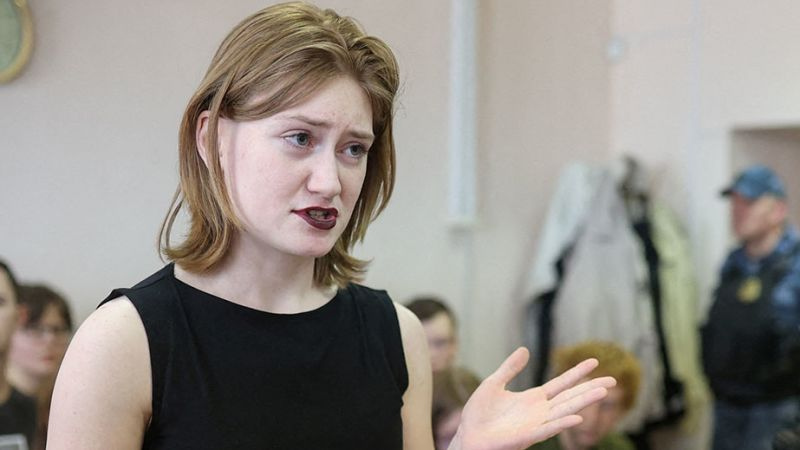
They have also demanded the release of all political prisoners currently detained in Russia for anti-war activities. In response to the verdict, Kozyreva’s lawyer indicated that an appeal would likely be filed, though the outcome of such an appeal in the current political climate remains uncertain.
Kozyreva’s case has resonated beyond the borders of Russia, serving as a powerful symbol of the struggle for freedom of expression in a time of war. Her story has been picked up by international media outlets, and she has become a symbol of the defiance of a younger generation determined to speak out against the war.
As the war in Ukraine continues and the Russian government intensifies its crackdown on dissent, the international community must continue to support activists like Darya Kozyreva, whose acts of courage remind the world of the importance of standing up for what is right, no matter the cost.
The conviction of Darya Kozyreva serves as a stark reminder of the price paid by those who dare to oppose the Russian government’s actions in Ukraine. Her act of defiance, which was little more than quoting a poem, has cost her nearly three years in a penal colony, a punishment that will undoubtedly have lasting effects on her life.
Yet, her courage serves as an inspiration to others, both inside and outside of Russia, who continue to fight for a world where dissent is not punished, but celebrated. The case of Darya Kozyreva is a testament to the power of the spoken word and the enduring power of poetry in times of conflict.