
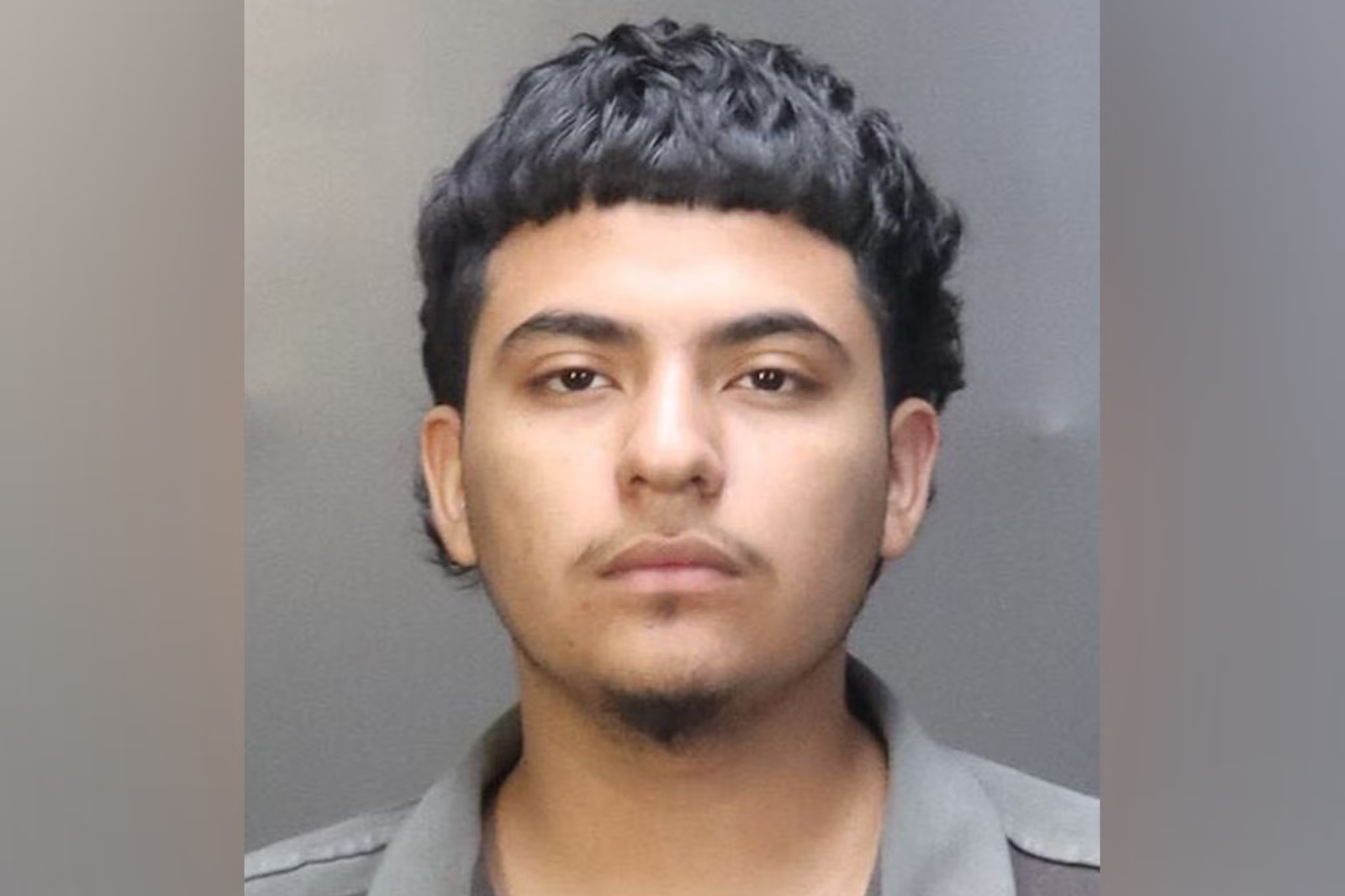
A 19-year-old Texas man is facing a serious felony charge after authorities accused him of attempting to orchestrate a violent confrontation against his baby’s mother’s new boyfriend. According to arrest warrants, Hugo Carlin’s plan involved arming himself with an AR-15-style rifle and enlisting the help of several acquaintances, but the alleged plot quickly unraveled when a routine traffic stop revealed a vehicle loaded with weapons and a string of incriminating text messages.
Hugo Carlin, arrested on November 12 in Waco, is now being held on a $250,000 bond, and the case has raised sharp concerns about escalating youth-involved firearm violence, the role of peer groups in fueling criminal intentions, and the ease with which high-powered weapons were accessible to all three individuals accused. Arrest records show that Carlin had allegedly been sending violent text messages throughout the day of the planned confrontation, some referencing imminent harm and others requesting assistance in the form of transportation and gas money.
The details outlined in the warrants portray a young group of men mobilizing around an emotionally charged dispute, equipped with rifles, handguns, and armor-piercing-style ammunition. Investigators say that Hugo Carlin’s friends knowingly assisted him in traveling to confront the intended victim, making them criminally liable for their involvement. The incident ultimately came to light only because a Waco police officer initiated a traffic stop for basic violations, unknowingly interrupting the alleged murder plot before it could unfold.
Weapons Found During the Traffic Stop
The investigation began on September 15, when a Waco officer pulled over a vehicle in which Hugo Carlin was riding. According to police, multiple individuals were in the car, and three passengers — including Carlin — were found with weapons resting in their laps. Authorities recovered five firearms from the backseat alone, highlighting the highly armed nature of the group and raising immediate concerns about their intentions.
Hugo Carlin was reportedly carrying a semi-automatic rifle described by officers as containing an extremely high-capacity magazine filled with ammunition considered especially dangerous. Another passenger, identified as 21-year-old Misael Jimenez, was carrying an AR-15 equipped with a 30-round magazine loaded with green-tip ammunition. According to police, the ammunition is designed to maintain trajectory even when passing through barriers such as metal and glass, making it particularly risky in civilian settings.
A juvenile who was also in the backseat had two handguns tucked into his waistband, one of which was later determined to be stolen. This combination of high-powered rifles, loaded magazines, and stolen firearms offered investigators the first clear indication that the group may have been preparing for a violent encounter. The only unarmed individual in the car was seated in the front passenger seat, and authorities later noted that this person provided key information supporting the broader investigation.
Read :19-Year-Old Ohio Influencer Noah Thomas Charged After Jumping Into Pittsburgh Zoo Elephant Enclosure
The vehicle was ultimately impounded, largely due to its lack of insurance, but police seized six cellphones during the stop. Those devices, investigators later learned, contained text conversations that provided deeper insight into the group’s movements, intentions, and communications throughout the day. The stop, which initially appeared routine, proved to be the critical moment that allowed authorities to uncover what they now allege was a coordinated plan to commit murder or aggravated assault.
Text Messages Reveal Carlin’s Intentions
The seized cellphones revealed a series of text messages that authorities say were sent by Carlin in the hours leading up to the traffic stop. According to the arrest warrants, Hugo Carlin had been discussing a plan to confront his baby’s mother’s new boyfriend and made repeated references to committing violence. One of the texts read: “Ima smoke this N****,” which police say indicated not only intention but premeditation.
Investigators found additional messages in which Hugo Carlin solicited assistance from friends, requesting transportation and gas money. These messages included statements such as “I need gas money bro,” “I’m FR N****,” and “I’m not playing,” suggesting a growing urgency and resolve in his communication. According to police, these messages aligned with the statements provided by multiple passengers in the vehicle, all of whom indicated that Carlin had been discussing the planned confrontation throughout the day.

The driver, identified as 22-year-old Elian Guadalupe Araujo, reportedly picked up Hugo Carlin and other passengers with the knowledge that Carlin intended to engage in violence. Investigators wrote that Araujo’s decision to drive Carlin to the location of the intended target constituted assistance in the commission of murder or aggravated assault. Similarly, Jimenez and the juvenile were also believed to have knowingly entered the vehicle with firearms in order to support Carlin’s plan.
The text message exchanges played a crucial role in shaping the charges against each individual. Police emphasized that these communications established context, motive, and collaboration among the group members. The evidence also illustrated the extent to which digital communication has become intertwined with criminal planning, particularly among younger individuals who rely heavily on messaging apps and phone-based coordination.
Arrests and Charges for All Involved
After reviewing the evidence from the traffic stop and the recovered phones, investigators moved forward with arrests. On November 12, Hugo Carlin, Jimenez, and Araujo were taken into custody and booked into the McLennan County Jail. Carlin was charged with criminal solicitation–murder, a first-degree felony, and his bond was set at $250,000.
Jimenez and Araujo were each charged with criminal conspiracy to commit aggravated assault. Their bonds were also set at $250,000. Police determined that both had willingly assisted Hugo Carlin by accompanying him in a vehicle while armed with fully loaded firearms. Their presence, investigators say, demonstrated clear complicity in the planned violent offense.
Two other individuals who were in the vehicle during the traffic stop were not charged. Authorities did not publicly specify why these individuals were exempt from charges, but the arrest warrants suggest that investigators believed they did not knowingly participate in or support the alleged plan. Law enforcement did, however, emphasize that the group had been communicating extensively earlier in the day, though not all participants appeared to have active roles in the plot.

With the arrests completed, investigators documented the collaborative actions taken by the suspects and the sequence of events that occurred leading up to the traffic stop. The case underscores the severity with which law enforcement approaches threats of violence involving high-powered firearms, particularly when multiple individuals appear to be acting in coordination.
The legal proceedings now moving forward will determine the long-term consequences for Hugo Carlin and his alleged accomplices. Authorities continue to underscore that the quick intervention by a patrol officer likely prevented a violent encounter that could have resulted in severe injury or death. The combination of heavily armed individuals, explicit text messages detailing plans for retaliation, and a group dynamic that encouraged confrontation created a scenario that investigators now describe as an immediate public hazard.
As the case progresses, Hugo Carlin and the others face serious charges that reflect the gravity of the alleged plot and the threats involved. Their arrests serve as a reminder of the significant risks associated with impulsive acts of violence, especially when enhanced by access to firearms and peer reinforcement. The incident stands as an example of law enforcement discovering major threats through routine policing, revealing how quickly dangerous plans can escalate — and how critical early intervention can be in averting tragedy.
Để tạo thêm động lực cho hội viên tham gia cá cược thì nhà cái đã thiết lập vô 188V chương trình ưu đãi đặc sắc. Thương hiệu không ngần ngại đầu tư một khoản tiền rất lớn để tổ chức nhiều sự kiện tri ân nổi bật dành cho mọi đối tượng. Một trong những món quà tặng đặc biệt nhất là hoàn tiền khi thua cược. TONY03-04
xn88 được các chuyên gia SEO đánh giá là nền tảng cá cược có tốc độ tải trang nhanh nhất thị trường hiện nay. TONY03-04