
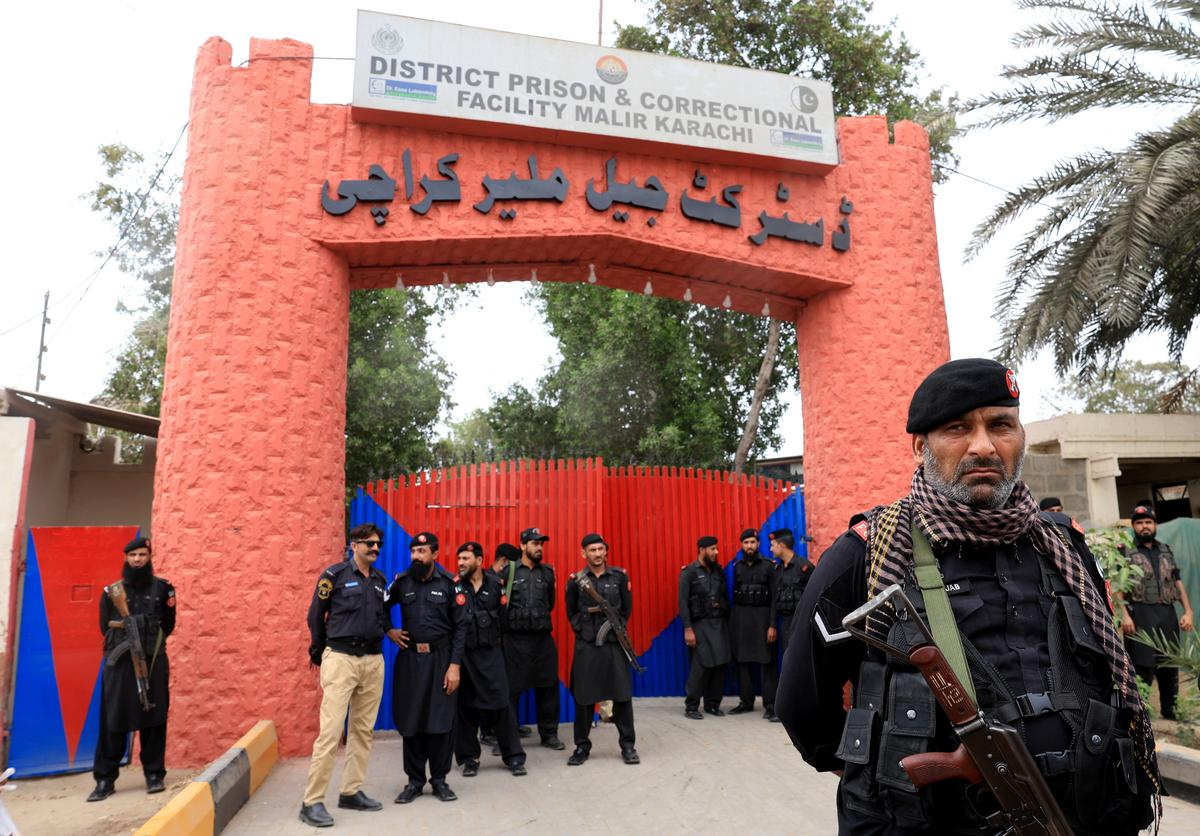
In a dramatic and unsettling turn of events, over 200 inmates broke free from Karachi’s Malir Jail during an earthquake-triggered evacuation. The chaos and confusion that accompanied the natural disaster became a cover for one of the most significant jailbreaks in Pakistan’s recent history. This incident not only underscores the vulnerabilities within the country’s prison infrastructure but also reflects how moments of disaster can be exploited when preventive systems fail.
Panic in the Epicenter: Earthquake Triggers Mayhem
Eastern Karachi experienced mild but frequent seismic activity in the days leading up to the escape. Since Sunday, the region had been rattled by 16 minor tremors. The two that struck late on Monday night—measuring 2.6 and 2.8 on the Richter scale—were shallow quakes located northeast of Malir at a depth of 40 kilometers. Despite their low magnitude, they proved sufficient to sow panic inside Malir Jail.
As the tremors hit, prison officials began a precautionary evacuation of inmates from Circles 4 and 5, where more than 600 prisoners were housed. Fearing structural damage and collapse, authorities ushered the inmates out of their barracks. What was meant to be a life-saving measure quickly unraveled into complete chaos. Amid the shouting, pushing, and confusion, security protocols broke down, giving several inmates a golden opportunity to escape.
Read : TikTok Astrologer John Moe The Arrested for False Earthquake Prediction in Myanmar
According to Jail Superintendent Arshad Shah, the situation turned unmanageable in minutes. Over 216 inmates took advantage of the disorder and slipped through the cracks—some allegedly by forcing the main gate open, while others may have broken through a wall already weakened by repeated tremors. Videos circulating on social media showed gunfire, inmates fleeing into the dark streets, and prison guards struggling to regain control.
Security Breakdown and Institutional Lapses
The jailbreak has raised serious questions about the adequacy of disaster protocols within Pakistan’s correctional facilities. Superintendent Shah admitted that more than 600 prisoners were outside their cells when the quake struck. With limited manpower and overwhelming numbers, prison authorities found themselves unable to contain the situation.
Sindh’s Home Minister, Zia-ul-Hasan Lanjar, described the incident as one of the most serious jailbreaks in recent memory. He confirmed that between 700 to 1,000 inmates had gathered near the jail’s main gate during the evacuation. The crowd swelled to a tipping point, allowing around 100 inmates to overpower the guards and break through. The initial police account had suggested that the escapees breached the outer wall, which may have been structurally compromised by seismic activity.
Pakistan: The escaped prisoner from Karachi’s Malir Jail said, “Everyone said ‘run’ out of fear of the earthquake, so we fled too.”#MalirJail #Karachi pic.twitter.com/Yojc5XXOSf
— Faraz Pervaiz (@FarazPervaiz3) June 3, 2025
Authorities suspect negligence on part of the prison staff. In response, a high-level committee has been formed to investigate the matter. This panel will include members from the police force and other investigative agencies. The aim is to determine whether standard operating procedures were followed during the evacuation and to hold those responsible accountable for the security lapse.
Inspector General of Sindh, Ghulam Nabi Memon, visited the jail and emphasized that many of the inmates were charged with drug-related crimes. Some were also suffering from mental health issues, which may have contributed to their erratic behavior during the chaos. Memon’s statement has brought attention to the often-overlooked issue of mental health within Pakistan’s prison system—a problem that adds yet another layer of complexity to the ongoing crisis.
Aftermath and Ongoing Manhunt
As of the latest reports, over 135 inmates remain at large. Law enforcement agencies have launched an extensive manhunt to track down the fugitives. Recaptured inmates have provided valuable insight into how the escape unfolded. One such inmate, Siraj—arrested earlier in a weapons case—told reporters that the panic during the earthquake led prisoners to break gates and flee en masse.
“Everyone was scared. When the quake hit, people panicked and broke the gates. I ran off too,” he confessed. His candid admission reveals how spontaneous fear can dismantle even the most fortified systems when those in charge are unprepared.
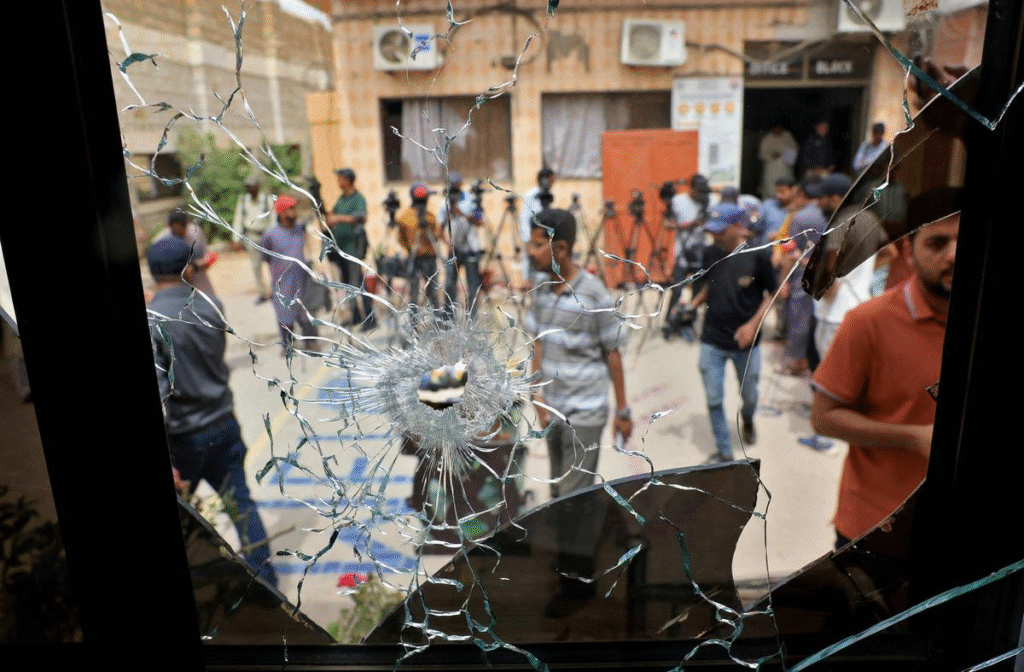
Tragically, the incident was not without loss of life. One inmate died during the chaos, and several others, including three Frontier Corps personnel and one jail staffer, sustained injuries. The deceased inmate’s identity has not yet been publicly disclosed, and it is unclear whether the death was due to violence, a stampede, or a structural accident during the escape.
Public reaction to the jailbreak has been intense, with many questioning the competence of prison officials. Critics have pointed to the jail’s poor infrastructure and lack of trained emergency personnel as factors that contributed to the disaster. On the other hand, some voices have urged empathy, noting that many of the inmates were psychologically unwell and may have acted out of sheer terror rather than criminal intent.
Videos from the night of the escape, widely shared on social media, show the gravity of the situation. Gunfire can be heard in the distance, likely from prison guards attempting to regain control. Flashlights and sirens pierce the darkness as inmates scatter in all directions. These visuals have only added to the growing pressure on authorities to provide answers and reestablish public trust.
The escape of over 200 inmates from Karachi’s Malir Jail during an earthquake evacuation has exposed glaring weaknesses in Pakistan’s prison management and emergency preparedness. While natural disasters are unpredictable by nature, the lack of effective planning and coordination turned a manageable situation into a full-blown crisis.
The incident has left many questions unanswered: How could such a large number of inmates be outside their cells simultaneously? Why were there not more stringent security checks during the evacuation? Was the outer wall truly compromised by tremors, or did human error play a larger role?
For now, the authorities are scrambling to recapture the fugitives and conduct a thorough investigation. But unless meaningful reforms are implemented, the Malir Jail jailbreak may just be a precursor to future catastrophes. In a country where natural disasters are frequent and infrastructure often fragile, ensuring security and safety during crises is not just a policy requirement—it is a moral imperative.