
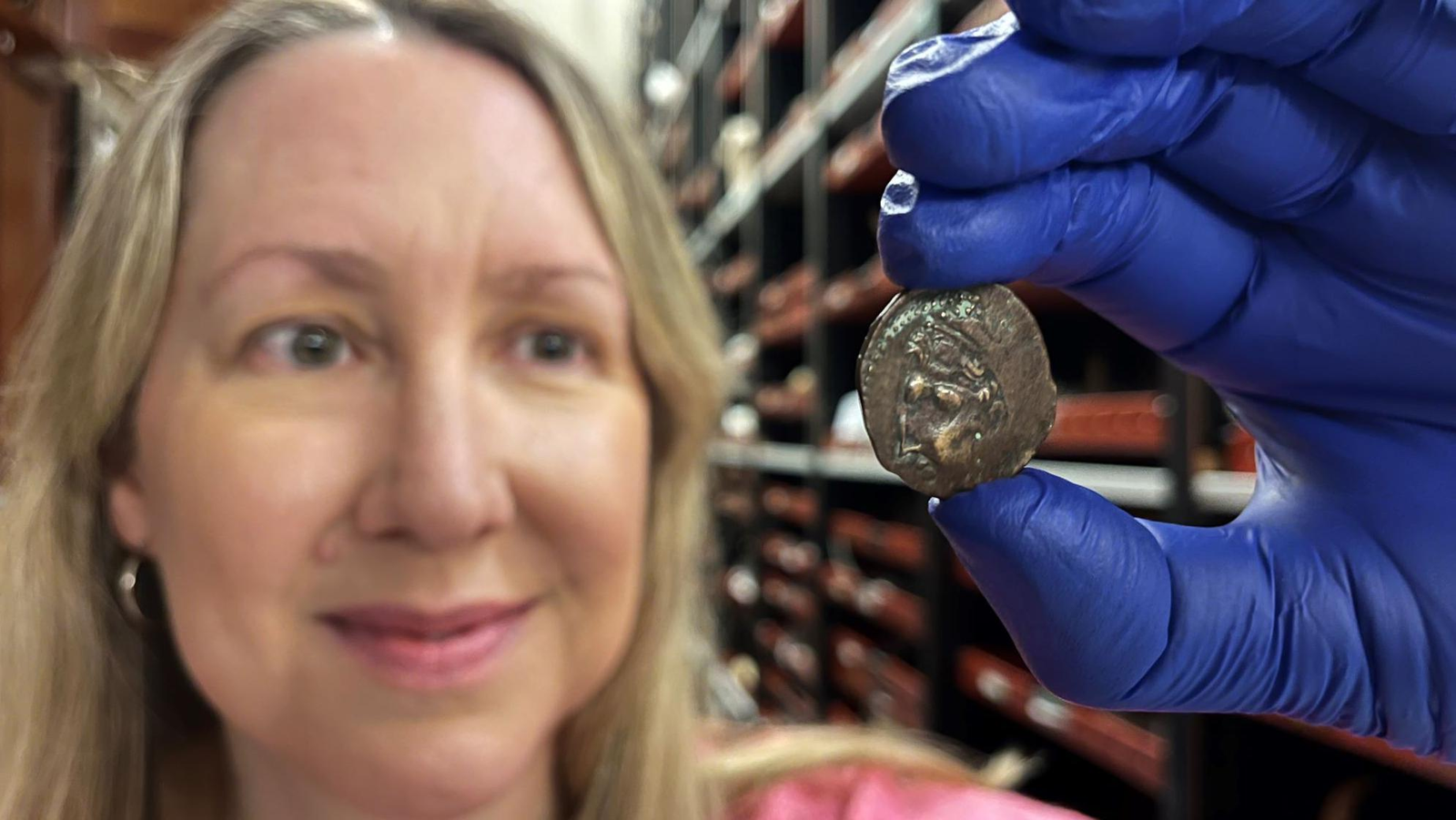
In an extraordinary example of how history can appear in the most unexpected places, a coin once casually used to pay for bus ride in England has been revealed to be more than two millennia old. The small artifact, which circulated unnoticed among ordinary coins during the mid-20th century, was later discovered to originate from an ancient Mediterranean civilization. What began as an everyday transaction eventually became a fascinating story connecting modern public transport in northern England with the trading networks of the ancient world.
The coin’s journey came to light after Peter Edwards, a 77-year-old man from Leeds, donated the artifact to the city’s museums. The coin had been given to him decades earlier by his grandfather, who worked with the city’s transport system. At the time, neither of them realized that the piece of metal carried with it a history stretching back over two thousand years. Only years later did research reveal that the coin had been produced by Carthaginians in the Spanish city of Cadiz during the first century BC.
Today the coin has become part of the historical collection at the Leeds Discovery Centre, where experts and visitors alike can examine it as a tangible reminder of how artifacts from ancient civilizations can survive and travel across continents and centuries before resurfacing in modern times.
From Bus Fare to Museum Artifact
The coin’s unusual journey began in the 1950s, a period when cash payments were the standard way to pay for public transport in Britain. Bus and tram drivers would collect coins from passengers throughout the day before turning in their takings at the end of their shifts. Among the individuals responsible for handling this money was James Edwards, who served as a chief cashier for Leeds City Transport.
Part of James Edwards’ responsibilities involved counting the money collected by drivers. During this process, he occasionally came across coins that were clearly not British currency. These could include foreign coins, unusual pieces, or tokens that had somehow entered circulation. Rather than returning them to the system, he often set them aside.
At home, these coins became small curiosities for his grandson, Peter Edwards. Whenever Peter visited his grandfather, he would receive a handful of unusual coins that had been separated from the day’s transport receipts. For a young boy, these pieces of metal from different places were fascinating objects, each hinting at distant lands and unfamiliar cultures.
Neither grandfather nor grandson considered themselves serious coin collectors, yet the coins sparked curiosity and imagination. They represented a connection to the wider world during a time when international travel was still relatively uncommon for many families in post-war Britain. The ancient coin that would later capture attention was simply one among many such curiosities. At the time, it was impossible to know that it had once circulated in the ancient Mediterranean world more than two thousand years earlier.
To the people who handled it in the 1950s, it was just another unfamiliar coin that had somehow made its way into the cash box of a bus driver. This small moment in the routine process of counting transport fares unintentionally preserved a piece of ancient history. Instead of being lost, discarded, or melted down, the coin remained in the Edwards family for decades, quietly waiting to reveal its origins.
Tracing the Coin’s Ancient Origins
Years later, curiosity led Peter Edwards to investigate the coin’s background more closely. Research eventually revealed that it was not simply a foreign coin but an artifact from the ancient world. Experts identified it as a Carthaginian coin produced in the Spanish city of Cadiz during the first century BC. Carthage was a powerful civilization connected to the Phoenician culture, a network of maritime traders and settlers who established communities across the Mediterranean. Their influence stretched from North Africa to parts of southern Europe, including the Iberian Peninsula.
Cadiz, one of the oldest continuously inhabited cities in Western Europe, served as an important trading port within this network. The coin itself reflects the cultural exchanges that characterized Mediterranean trade during the ancient period. One side of the coin bears the image of the god Melqart, a prominent deity in the Phoenician and Carthaginian pantheon. Melqart was associated with strength, protection, and the prosperity of cities and trade.
Interestingly, the image of Melqart on the coin resembles the Greek hero Herakles, complete with the distinctive lionskin headdress often depicted in Greek art. This similarity was not accidental. During the period in which the coin was produced, Mediterranean societies frequently borrowed artistic styles and symbols from one another. Phoenician and Carthaginian coin makers sometimes incorporated Greek imagery to make their currency more recognizable and appealing to traders who traveled widely across the region.
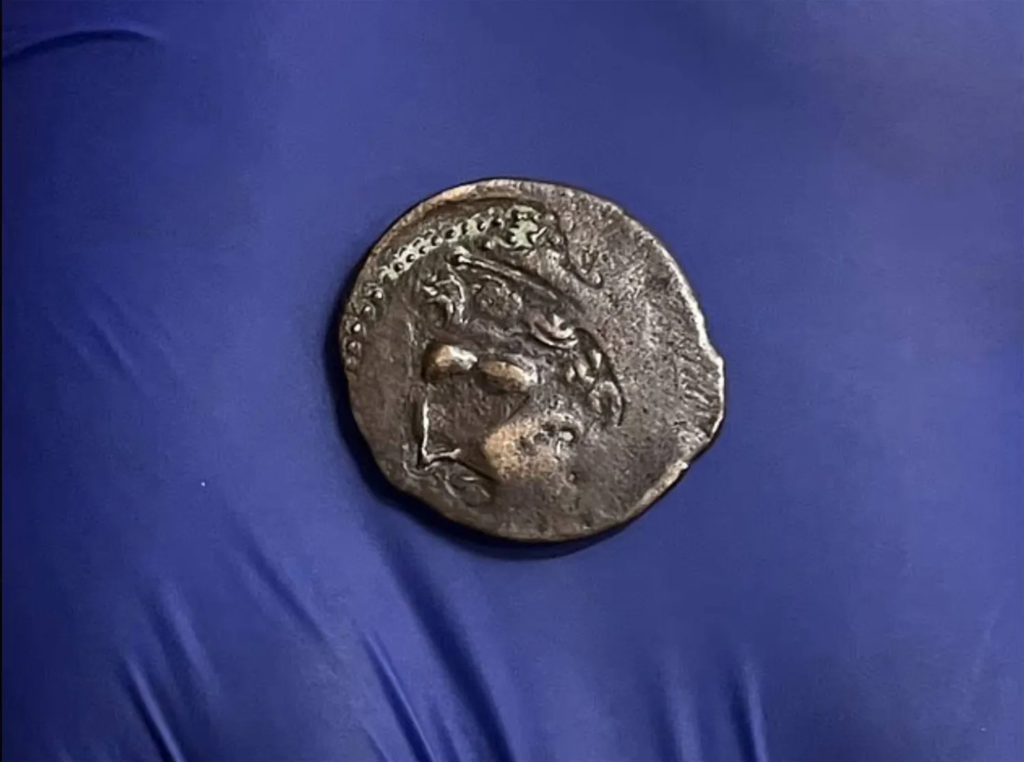
As a result, the coin represents a blend of cultural influences, combining Phoenician religious symbolism with visual elements familiar to Greek merchants. Such coins were part of the complex commercial networks that connected ancient ports and trading hubs. They would have circulated among merchants exchanging goods such as metals, textiles, ceramics, and agricultural products across the Mediterranean Sea. The fact that one of these coins eventually appeared in England centuries later highlights the unpredictable journeys artifacts can take over time.
While it is impossible to determine the exact path this particular coin followed, historians believe it may have been brought to Britain much later, possibly by travelers or soldiers. Peter Edwards speculated that the coin might have arrived in Leeds during the years following the Second World War. During that period, many soldiers returned home with foreign currency and souvenirs collected during their service abroad. A coin such as this could easily have been mixed with everyday change before eventually being used as bus fare.
A Mystery Preserved for Future Generations
Recognizing the coin’s historical importance, Peter Edwards decided that the artifact should be preserved and studied by experts. Rather than keeping it as a personal curiosity, he chose to donate it to Leeds Museums and Galleries so that it could become part of the city’s public collection. His decision ensured that the coin would be properly documented and protected. Today it is housed at the Leeds Discovery Centre, a facility that stores and manages thousands of objects representing different aspects of the region’s history and global connections.
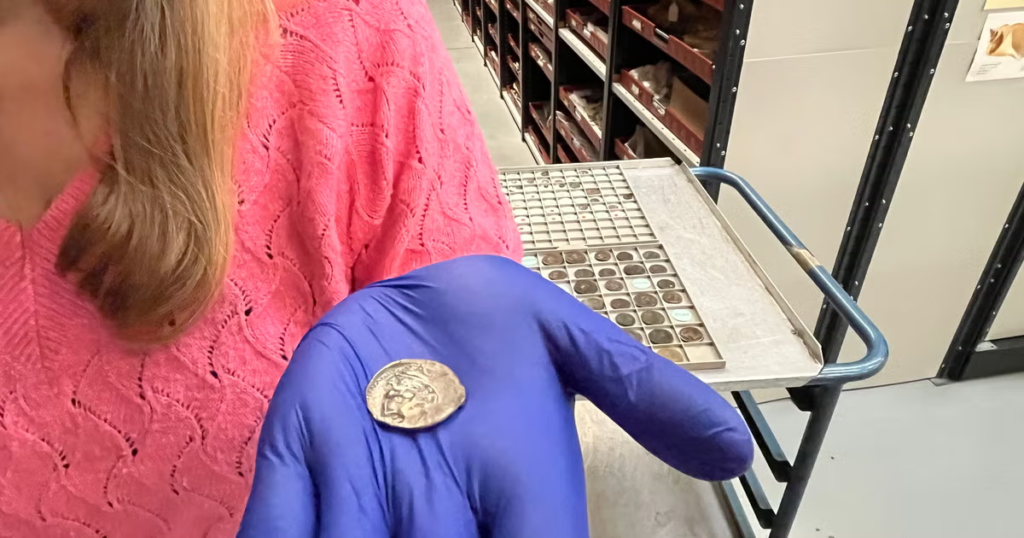
For museum specialists, the coin represents far more than an ancient piece of currency. It also tells a modern story about how historical artifacts can appear in everyday contexts. The fact that a coin minted more than two thousand years ago was once used casually as bus fare demonstrates how easily significant objects can remain unnoticed. Curators have expressed fascination with the unlikely chain of events that allowed the coin to survive and reach the museum. From an ancient trading port in southern Spain to a transport system in northern England, the artifact traveled across both geography and time.
The coin now joins other historic currencies and artifacts in the museum’s collection, where researchers can examine it alongside related objects from different cultures and periods. Such items provide valuable insights into ancient economic systems, artistic traditions, and cross-cultural influences. For visitors, the coin offers a compelling reminder that history is not always confined to textbooks or archaeological sites. Sometimes it surfaces in the most ordinary circumstances, hidden among everyday objects until someone takes a closer look.
Peter Edwards reflected that the coin had always fascinated him, even before its origins were known. The mysterious symbols and unfamiliar design made it stand out among the other coins his grandfather gave him as a child. Discovering its true age and origin deepened that fascination and inspired him to share it with the wider public. Although the coin’s full journey remains unknown, its story continues to spark curiosity. The question of how it traveled from an ancient Carthaginian settlement to modern-day Leeds may never be answered definitively.
Yet the mystery itself adds another layer of intrigue to an artifact that has already crossed more than two thousand years of history. Now preserved within a museum collection, the coin serves as a small but powerful link between ancient Mediterranean civilizations and contemporary audiences. Its presence reminds us that objects created thousands of years ago can still find their way into the modern world, carrying with them stories that connect past and present in unexpected ways.