

The quiet of Milton, Massachusetts was shattered on June 1 when a passerby discovered the body of 21-year-old Adriana Suazo in a wooded area near a home on Central Avenue. The discovery, made at approximately 11:45 a.m., marked the latest in a disturbing pattern of unexplained deaths across the New England region.
With no immediate signs of trauma, authorities have turned to the Chief Medical Examiner for a clearer understanding of what caused the young woman’s untimely death. Suazo’s death is now being investigated as the 13th in a string of mysterious fatalities that have gripped Massachusetts, Connecticut, Rhode Island, and Maine since March.
Suazo, a Boston native described by her family as full of life, leaves behind a grieving community and many unanswered questions. Her presence in Milton at the time of her death remains unexplained, and her family has publicly expressed confusion and heartbreak over the circumstances.
According to one of her sisters, Adriana Suazo had last communicated with family on May 29 — three days before she was found dead. Her disappearance and subsequent death add fuel to the growing speculation that these cases might be connected, potentially pointing toward a serial offender operating in the region.
The Growing Pattern of Mysterious Deaths
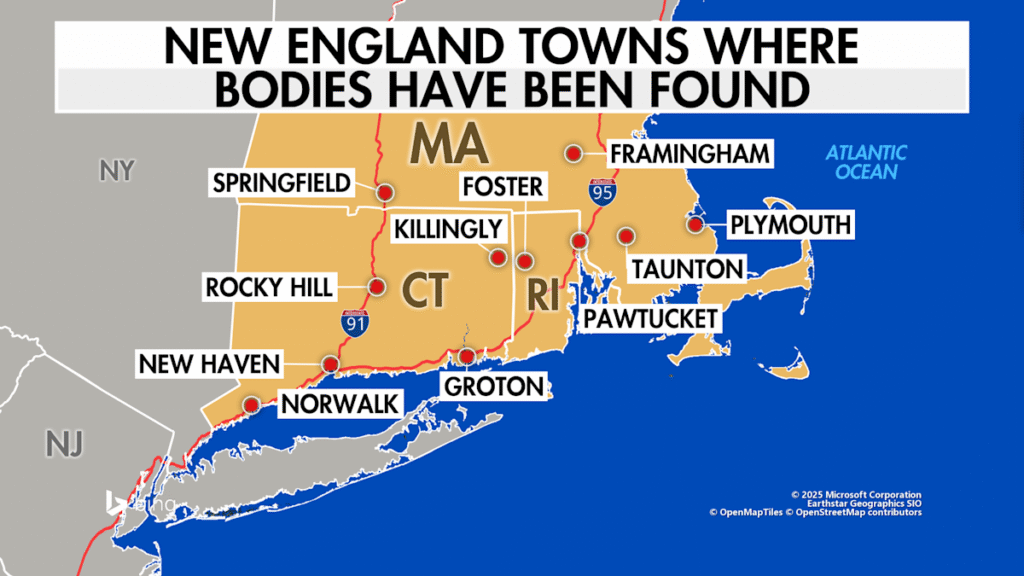
What makes Suazo’s death particularly unsettling is its apparent placement within a broader series of similarly unexplained fatalities. Since March, at least 13 bodies have been discovered across New England, many of them in remote or wooded areas.
Victims like Paige Fannon, found in the Norwalk River on March 6; Denise Leary, discovered in New Haven on March 21; and Michele Romano, located five days later, all shared eerily similar fates — vanished without explanation and found dead in secluded locations. The consistent elements across these deaths, such as isolation and lack of clear trauma, have alarmed residents and online communities alike.
In April, the situation escalated further when six sets of human remains were located in close proximity across Massachusetts, Connecticut, and Rhode Island. These cases raised red flags and sparked concerns that a serial killer might be operating under the radar, choosing victims from different age groups and backgrounds but leaving behind little forensic evidence.
As in Suazo’s case, law enforcement officials have refrained from labeling the situation as the work of a serial killer, instead emphasizing that the investigations are ongoing and complex. Despite this, the public perception has grown more alarmed with each new body recovered.
Read : 21-Year-Old Student Who Opened Fire at BORG Dreierschützengasse Dies by Suicide in School Bathroom
Local authorities, while acknowledging the disturbing frequency of the deaths, continue to deny any confirmed connection between the incidents. The Connecticut State Police, responding to concerns in April, stated that “there is no information at this time suggesting any connection to similar remains discoveries actively under investigation.”
Read : 400-Year-Old Ancient Rock Slab Found in Spain with Alphabet Inscribed on It
However, for many residents and concerned citizens, this explanation does little to ease fears. The string of cases has prompted calls for increased transparency, better communication from authorities, and more resources dedicated to the investigations.
The Life and Loss of Adriana Suazo
In the aftermath of her death, Adriana Suazo has been remembered not as a case file, but as a vibrant young woman whose life was cut tragically short. A GoFundMe page created by her sister, Mel Loves, offers a glimpse into who Adriana was — a “firecracker, full of life, laughter, and fierce love.”
The family’s grief is compounded by the abruptness of her loss, and the lack of clarity surrounding what happened. “Losing her so suddenly has shattered our world,” her sister wrote. The fundraiser, created to help cover funeral expenses, has drawn support from dozens who empathize with the family’s pain.
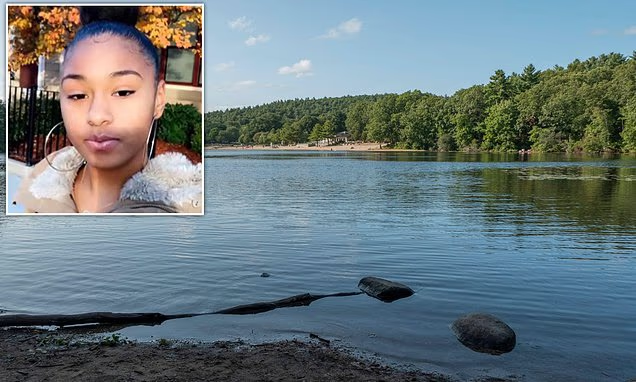
Adriana Suazo’s death has become a symbol of the growing unease in New England. Her youth and the mysterious circumstances around her passing make it all the more heartbreaking. As investigators continue to work on the case, her family has urged anyone who might have seen or spoken to Adriana Suazo in the days leading up to her death to come forward. The Massachusetts State Police Tip Line remains open, and any piece of information could be crucial in unraveling the truth.
Public concern has intensified as each case goes unsolved, and there is an increasing call for a regional task force or inter-agency collaboration to address what many see as a pattern that transcends state borders. Social media has become a hub of speculation and amateur sleuthing, with many comparing the emerging narrative to past serial killer cases that were only solved after prolonged periods of inaction or miscommunication.
An Urgent Need for Answers
The number of deaths, their geographic clustering, and the similarities in how the victims are found have led to renewed public pressure on law enforcement. While police maintain that there is no clear evidence tying the deaths to a single suspect or motive, the sheer volume and nature of the cases suggest otherwise to many.
Some criminal justice experts have noted that serial killers do not always fit stereotypical molds — and that victims in such cases often come from vulnerable populations, including women, those experiencing homelessness, or individuals with limited social connections.
So far, there has been no formal announcement of a task force or federal involvement, though many believe that a broader, unified approach could help identify patterns that individual departments may overlook. Critics argue that dismissing the possibility of a serial killer outright — especially in light of so many unsolved deaths — risks missing an opportunity to stop further tragedies.
In Adriana Suazo’s case, the mystery only deepens the longer it takes to determine how and why she died. Toxicology reports, interviews with potential witnesses, and reviews of any surveillance footage from the area may eventually provide more clarity. But until then, her family and a frightened public are left with more questions than answers. Suazo was more than just a statistic in an ongoing investigation — she was a daughter, a sister, and a young woman with her whole life ahead of her.
Community on Edge
Across New England, the mood is tense. Small towns that once prided themselves on safety and close-knit neighborhoods are now questioning the presence of an unseen threat. In towns like Milton, the discovery of a body no longer feels like an isolated incident — it is seen as part of a broader pattern that law enforcement has yet to explain or resolve.
Fear has begun to shape daily behavior, with more residents avoiding wooded paths, checking in with loved ones more frequently, and turning to community watch groups for a sense of security.
Local officials have called for patience and calm, but that message competes with the emotional impact of 13 unexplained deaths. For families like Adriana Suazo’s, that wait feels unbearable. Every day without answers deepens their loss and erodes the community’s trust in its protectors. While authorities insist there is no known threat to the public, for many residents, that assurance rings hollow.
The need for transparency, urgency, and compassion in these investigations cannot be overstated. Each victim deserves more than to be remembered only in headlines or as part of a disturbing tally. They were individuals with families, dreams, and lives cut short under murky circumstances. Justice, if it comes, will depend on the collective will of law enforcement, the media, and a public that refuses to let their stories fade into silence.
As the investigation into Adriana Suazo’s death continues, the questions persist: Is New England facing a serial predator, or is this a tragic convergence of unrelated incidents? Until authorities can confidently provide answers, speculation will continue — and so too will the fear that one of the safest corners of the United States may be harboring a dark and deadly secret.