
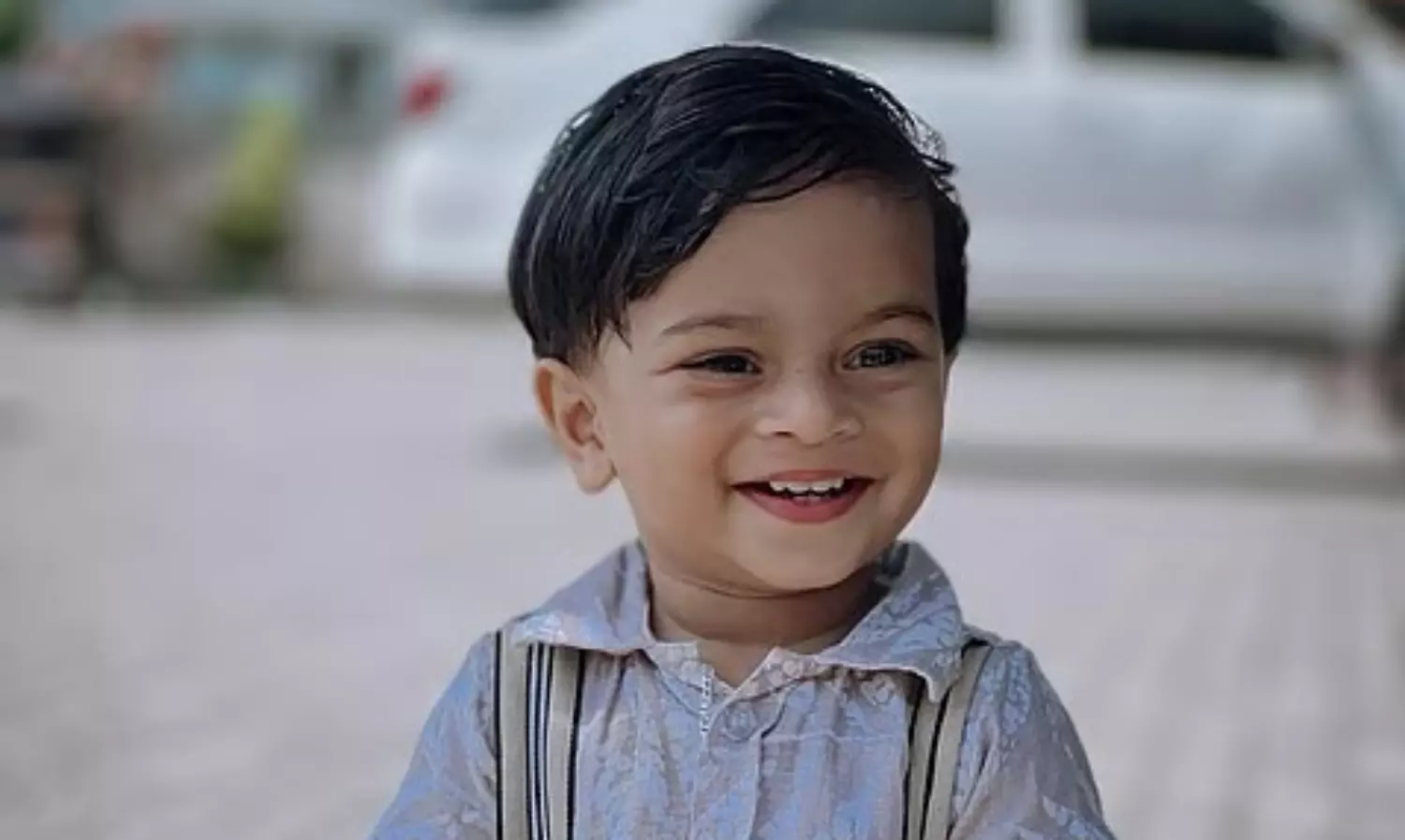
The death of a child is among the most devastating experiences any family can endure, yet the response of one Indian expatriate couple in the United Arab Emirates has drawn attention for its quiet dignity and profound acceptance. After their 22-month-old son, Alan Rumi, died following a tragic accident in a residential parking area in Sharjah, the grieving parents made an extraordinary decision.
Rather than pursuing legal action against the driver involved, they chose to forgive him. Their choice was not shaped by indifference to loss, but by a deeply personal understanding of the circumstances surrounding the accident. They described the incident not as an act of negligence alone, but as a moment of shared human vulnerability in which attention faltered and tragedy unfolded in seconds. The accident occurred in Muwaileh, a busy residential district where families live in close proximity and parking areas remain active throughout the day.
The child had accompanied his mother outside to dispose of household waste. His father was at work in Dubai at the time. What began as an ordinary domestic moment quickly transformed into a life-altering tragedy. As his mother focused on discarding rubbish, the toddler moved away from her. At the same time, a neighbour was reversing his vehicle to leave the parking area. Within moments, the child ran into the vehicle’s path. Despite immediate efforts to help him, including rushing him to a nearby hospital, the injuries proved fatal.
In the aftermath, the parents were confronted with decisions that many families in similar circumstances would find overwhelming. Legal accountability, criminal proceedings, and formal investigation often follow fatal road incidents. Yet this family chose another path.
They submitted a written statement to authorities clarifying that they did not wish to pursue legal charges against the driver, who was also an Indian expatriate. Their decision was grounded not only in grief, but in their belief that punishment would not restore what had been lost. They described the incident as a heartbreaking accident rather than a deliberate or reckless act. Their words, spoken publicly, reflected an attempt to move forward while acknowledging the irreversible reality of their loss.
A Tragic Accident in a Familiar Space
Residential parking areas are typically regarded as safe extensions of the home environment, places where routine tasks are performed without heightened awareness of danger. For families with young children, these spaces often become informal play zones or areas where brief errands are completed. It was in such an environment that the fatal incident occurred. The boy had accompanied his mother for a simple task that likely took place many times before without incident. The ordinary nature of the setting makes the tragedy more difficult to comprehend, underscoring how everyday environments can become dangerous in moments of distraction.
According to the child’s father, the sequence of events unfolded rapidly. As his mother called out to him, the boy turned and saw her running toward him. Interpreting her movement as playful pursuit, he reportedly laughed and ran faster, moving directly into the reversing vehicle’s path. The driver, preparing to leave to pick up his wife, did not see the child in time to prevent impact. Such situations are tragically common in confined parking areas where visibility is limited and movement can be unpredictable, especially when young children are involved.
The driver’s response immediately after the collision was swift. Rather than waiting for emergency services, he transported the injured child and his mother to a nearby private hospital. Medical staff attempted treatment, but due to the severity of internal injuries, the child was later transferred to a government hospital, where he died. These efforts highlight the desperate urgency that follows sudden accidents, when every minute feels critical and decisions are made under intense emotional pressure.
Read : 13-Year-Old Sleeping Teen Injured as Drunk Driver Alec Dillon Plows Car Into Bedroom
Authorities conducted an investigation, and the case was referred to the Public Prosecution following standard procedure. The driver was briefly held in custody, and his passport was retained as a guarantee while legal processes moved forward. Despite the formal mechanisms of law taking their course, the absence of a complaint from the child’s parents fundamentally shaped the situation. Their written statement communicated both their forgiveness and their acceptance of the event as an unintended tragedy.
Read : World’s Oldest Deep Sea Ship Discovered Off Israeli Coast
The incident also serves as a stark reminder of how quickly children can move beyond adult supervision. Toddlers possess limited understanding of risk and often respond instinctively to stimuli such as movement, sound, or perceived play. In confined spaces where vehicles are maneuvering, even a momentary lapse in attention can result in catastrophic consequences. The environment of familiarity can create a false sense of safety, reducing vigilance at precisely the moment it is needed most.
A Decision Rooted in Grief and Forgiveness
In the days following the accident, the parents spoke openly about their decision not to pursue legal action. Their reasoning reflected a deeply personal philosophy shaped by grief, empathy, and an understanding of human fallibility. The father described the event as an unfortunate convergence of circumstances in which attention failed on multiple sides. He emphasized that no punishment could restore their son’s life, and that prolonging suffering through legal confrontation would not bring healing.
Forgiveness in such circumstances is neither simple nor universally understood. It requires confronting both loss and the possibility of blame while choosing a path that does not seek retribution. For this family, the driver was not viewed as an adversary but as another person affected by the same tragic moment. The father acknowledged that the driver reached out to him afterward to express concern and support. Such contact underscores the emotional weight carried not only by victims’ families but also by those involved in accidental harm.
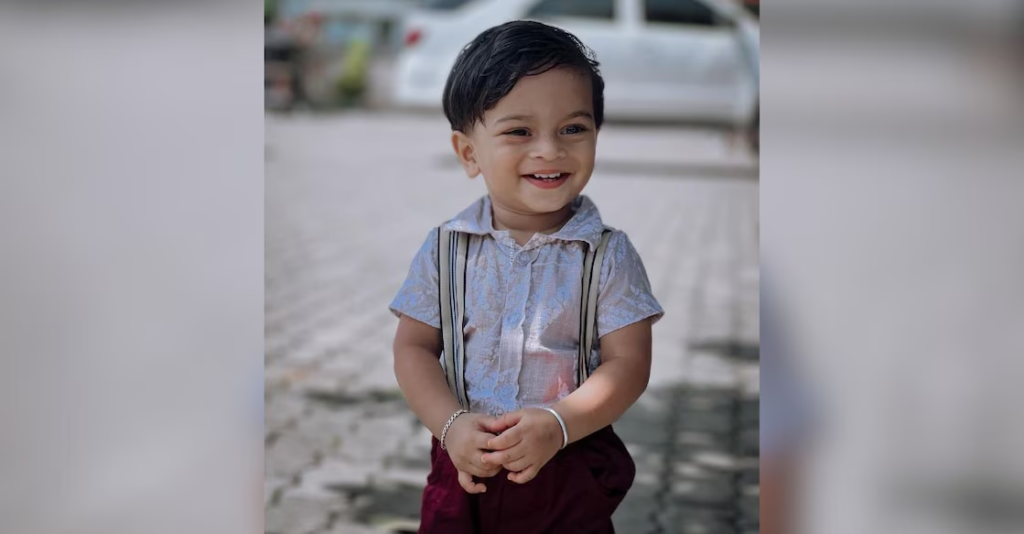
Their public statements revealed a conscious effort to frame the tragedy within a broader understanding of shared responsibility and human vulnerability. Rather than isolating blame, they described the event as a collective lapse that resulted in irreversible consequences. This perspective does not diminish the severity of the loss, but it reframes how responsibility is interpreted in situations shaped by suddenness and unpredictability.
Before leaving the United Arab Emirates, the parents completed formal procedures with authorities, ensuring that their wishes were clearly documented. Their return to India marked the beginning of a new phase of mourning, one removed from the physical setting where the accident occurred. The emotional transition from immediate crisis to long-term grief often requires distance, reflection, and time, all of which now shape their lives in the aftermath.
The driver’s legal status remained under review pending completion of administrative processes. Although the parents’ decision influenced proceedings, formal investigations continued as required under local law. This dual process illustrates the distinction between personal forgiveness and institutional responsibility. Even when individuals choose reconciliation, authorities must still examine circumstances to ensure procedural accountability.
Remembering Alan Rumi and a Life Briefly Lived
Beyond the legal and emotional dimensions of the accident lies the memory of the child himself. His parents had chosen his name long before his birth, selecting it with intention and meaning. The name reflected ideals of identity, memory, and cultural significance. They wanted their son to grow with a sense of individuality that stood apart from conventional naming traditions. The care with which they selected his name reveals the depth of hope and anticipation that preceded his arrival into the world.
Read : Liz O’Brien’s Dog Brutally Kicked by Amazon Delivery Driver Caught on Camera
Family members described him as the center of their lives, a source of joy whose presence defined their daily routines. His brief life was filled with the ordinary experiences of early childhood—play, laughter, curiosity, and the constant attention of parents building their future around him. The suddenness of his death transformed these memories into fragments of a life that ended far too soon.

He was buried in Dubai the day after the accident, and the family departed for India the same day. The rapid sequence of events reflects both practical necessity and emotional urgency. Burial rituals, travel arrangements, and official procedures must often be completed while grief remains immediate and overwhelming. Such compressed timelines leave little space for reflection, pushing families quickly from shock into the early stages of mourning.
Before the tragedy, the family had been planning significant milestones. They intended to perform Umrah during the last ten days of Ramadan and later travel to India for Eid celebrations. They were also preparing to settle more permanently in the United Arab Emirates on a family visa. These plans reflected stability, hope, and a vision of continuity. Their abrupt disruption underscores how a single unforeseen moment can alter the course of an entire family’s future.
In speaking about their son, the father expressed acceptance of the reality that his time with them was brief. The language of destiny and acceptance formed part of the family’s effort to process loss. Grief often involves attempts to understand suffering within broader frameworks of meaning, whether spiritual, philosophical, or emotional. For this family, acceptance appears intertwined with remembrance, shaping how they carry their child’s memory forward.
Their story has drawn attention not only because of the tragedy itself, but because of the response that followed. Forgiveness, when expressed in the aftermath of profound loss, challenges common expectations about justice, accountability, and healing. It reveals how individuals navigate grief in deeply personal ways that may not align with conventional reactions. In this case, the parents’ decision reflects both sorrow and compassion, bound together in a single moment that forever altered their lives.