

Kate Drummond was a 25-year-old woman who embodied health and vitality. A former athlete, she was active and fit, and worked as a customer service representative in her hometown of Devon.
Her life, filled with laughter, fitness, and a bright future, took a devastating turn in 2020 when she began experiencing lower back pain. Like many young people, she dismissed the discomfort, attributing it to poor posture from working at home during the COVID-19 pandemic.
Little did she know, this would be the start of a rapid and tragic health decline that would claim her life less than two years later. Her story, shared by her sister Kelly Drummond, is a heartbreaking example of how important it is to listen to your body and seek the care you need, even when misdiagnoses can cloud the situation.
The Misdiagnosis and the First Signs of Trouble
In 2020, Kate Drummond’s lower back pain started off as an occasional ache. She attributed it to the uncomfortable working conditions at home and the strain of adjusting to new routines brought on by the pandemic. At first, she didn’t think much of it.
But as weeks went by, the pain grew more persistent. By early 2021, the discomfort had worsened, spreading to her hip, which caused her to seek medical attention. A visit to her local doctor revealed nothing alarming, but the pain did not subside. Kate was prescribed painkillers, but the medication only provided limited relief.
In May 2021, her symptoms became more alarming. She developed a new, unusual pain radiating into her hip, which was warm to the touch and slightly swollen. Her symptoms were now more serious, prompting her to seek further care. At this point, she was referred to the emergency department at her local hospital, where further tests were conducted.
The doctors initially diagnosed Kate with “probable sciatica,” a condition caused by compression or irritation of the sciatic nerve. It was a diagnosis that seemed reasonable given her age and physical activity level, but it was a decision that would later be questioned by her family, especially considering the extent of her symptoms and the rapid deterioration that followed.
Read : Bizarre! Newton-Wellesley Hospital’s Six Staff Members Working on Same Floor Developed Brain Tumors
Her sister Kelly recalls that the doctors were surprised by Kate’s case, noting that she was one of the youngest patients they had ever seen with such severe sciatica. Despite this, Kate was sent home with little more than a recommendation for rest and physiotherapy.
Read : 4,000-Year-Old Skull Reveals Ancient Egyptians Were Trying to Cure Cancer
In hindsight, Kelly and her family couldn’t help but wonder if earlier, more thorough investigation could have revealed the true cause of her symptoms—a malignant tumor growing in her pelvis.
The Shocking Diagnosis and Rapid Decline
By the summer of 2021, Kate’s condition had deteriorated significantly. Despite receiving treatment for sciatica, her pain became more intense, and her mobility was severely limited. A spinal physiotherapist, growing concerned by the persistent symptoms, recommended that Kate seek an MRI scan, which she did privately.
On July 7, 2021, the results of the scan were life-changing. Kate was informed that she had a grapefruit-sized tumor in her pelvis, and after further tests, she was diagnosed with Ewing sarcoma, a rare form of bone cancer that can also affect soft tissue. Tragically, it was discovered that the cancer had spread to several other areas of her body, including her spine.
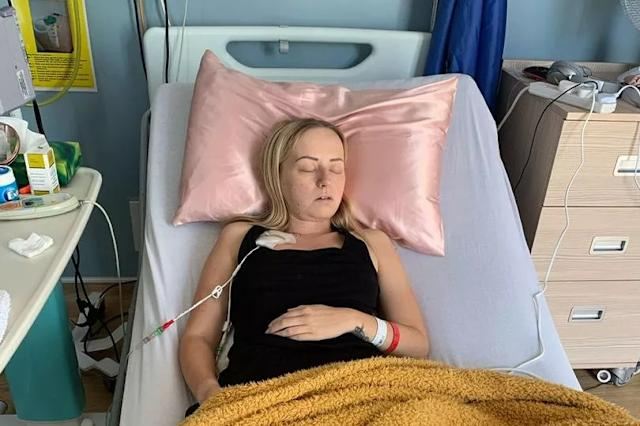
Ewing sarcoma is an aggressive cancer that primarily affects children and young adults. It often develops in the bones, but it can also spread to other tissues. In Kate’s case, the tumor was already large by the time it was detected, and doctors later speculated that it could have been growing in her body for as long as two years before it was finally identified.
Kate’s rapid decline began soon after her diagnosis. What had initially seemed like a minor issue of back pain transformed within weeks into a life-altering condition, as the cancer aggressively spread to her lungs, liver, skull, jaw, and other bones in her body.
Kate underwent a series of treatments, including chemotherapy and emergency radiotherapy, and at first, it seemed that the treatments were having a positive effect. She even showed signs of improvement for a brief time. Despite everything, Kate remained optimistic and strong throughout her treatment.
Kelly remembers her sister’s resilience during this time, remarking on her strength and positivity even as she faced such a devastating diagnosis. But by January 2022, the cancer had spread too far, and Kate’s health quickly declined. Her liver and kidneys began to fail, and she was unable to continue the treatments that had been keeping her stable.
A Life Taken Too Soon: The Lasting Impact on Family and Friends
Kate passed away on March 17, 2022, less than a year after her initial diagnosis. Her family was left to grapple with the immense loss of a young woman whose life had been full of promise. Kelly, devastated by her sister’s death, shared the family’s grief but also expressed her regret over the delayed diagnosis.
Although she understood that Kate’s tumor was already large when it was discovered, Kelly couldn’t help but wonder if the outcome could have been different if doctors had investigated her symptoms more thoroughly from the beginning.
Kate’s tragic story underscores the importance of listening to your body and advocating for yourself when seeking medical care. Kelly’s decision to push for a private MRI scan, when the doctors dismissed Kate’s pain as sciatica, ultimately led to the discovery of the tumor.

But the rapid progression of the cancer, once diagnosed, highlights just how unpredictable and aggressive some cancers can be. In Kate’s case, the delay in diagnosis resulted in a less favorable outcome, with the cancer spreading quickly and becoming too difficult to treat.
Kate’s family continues to honor her memory by living with the lessons she imparted during her brief life. Kelly, now sharing her sister’s story, hopes to encourage others to trust their instincts and advocate for their health.
She urges people to never ignore persistent pain or discomfort, especially when the symptoms do not seem to align with a simple explanation. Early diagnosis can make all the difference when it comes to cancer, and Kate’s story is a testament to how quickly things can change when the signs are not taken seriously.
Lessons Learned from Kate Drummond’s Tragic Journey
Kate’s story is a painful reminder of how important it is to take symptoms seriously and seek a second opinion when necessary. Despite her outward appearance of health and strength, Kate’s body was silently battling a deadly illness that had gone unnoticed for too long.
It’s easy to dismiss discomfort when we’re young and fit, but Kate’s experience shows that cancer can affect anyone, regardless of age or fitness level.

Her family’s plea is simple: listen to your body. If something doesn’t feel right, don’t wait for symptoms to worsen before seeking help. And most importantly, don’t be afraid to advocate for yourself in medical situations.
Kelly hopes that by sharing Kate’s story, others will learn to take action when they feel something is wrong, and that early intervention will lead to better outcomes for more people in the future.
Kate Drummond’s life was tragically cut short, but her memory lives on in the lessons she left behind. Her family’s dedication to sharing her story is a way to honor her legacy and continue advocating for early detection of cancer.
In a world where cancer is often difficult to detect early, Kate’s story highlights the importance of remaining vigilant and proactive about our health, no matter how healthy or fit we may seem.
As Kate Drummond’s family continues to cope with their grief, they take solace in knowing that her story is helping to educate others. It’s a bittersweet victory, but one that keeps Kate’s memory alive in a way that can potentially save lives.