

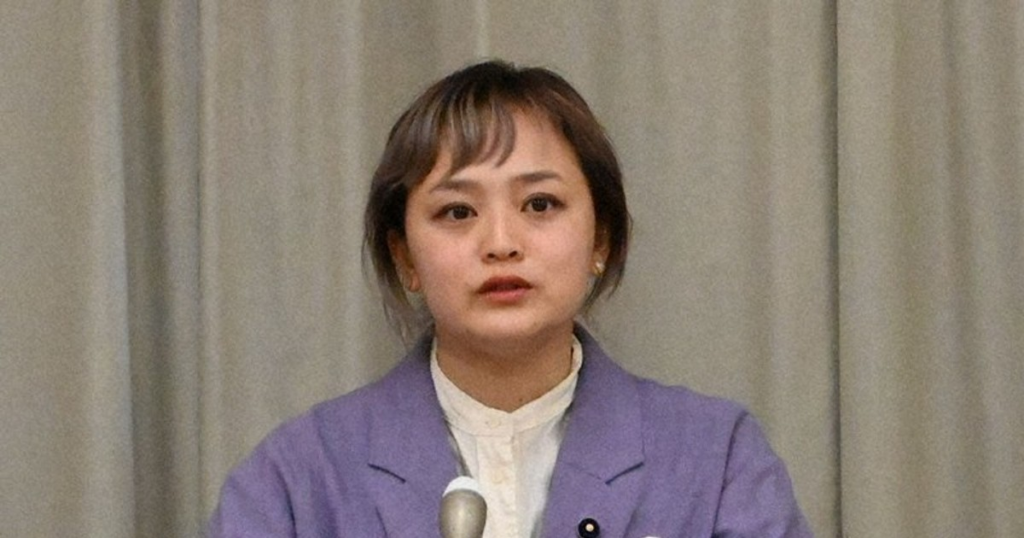
Ayaka Yoshida, a young and progressive member of the Japanese Communist Party, recently found herself at the center of a national controversy that highlights deep-rooted societal issues in Japan. At just 27 years old, Yoshida proposed a simple, compassionate idea: the free availability of sanitary napkins in public toilets, much like toilet paper.
Her proposal, intended to promote dignity and accessibility for women, instead sparked an unprecedented and chilling backlash. Within just four days, Ayaka Yoshida received over 8,000 death threats—messages not only threatening her life but also intended to suppress her voice and discourage other women from speaking out.
This alarming response to a straightforward public health proposal exposes a dark undercurrent of misogyny, stigma, and resistance to progress that continues to exist in some corners of Japanese society.
It also serves as a harsh reminder of the price women in politics often pay when advocating for gender-sensitive policies. In a society that prides itself on order and civility, the hate directed at Ayaka Yoshida is a sobering contradiction.
A Simple Request Turns into a Firestorm
The controversy began on 25 March, when Ayaka Yoshida posted on X (formerly Twitter) about her personal experience. She wrote, “I suddenly got my period today and it was a problem. Unfortunately, there were no napkins in the bathroom at Tsu City Hall when I stopped by.
I couldn’t deal with it properly until I got home. Even at 27 years old, this happens.” She concluded her message with a straightforward wish: “I want sanitary napkins to be available everywhere, like toilet paper.”
This candid and relatable post struck a chord with many, particularly women who have experienced similar situations. Yet, it also drew immediate backlash. Rather than being treated as a reasonable policy suggestion or a call for public health awareness, Ayaka Yoshida’s words triggered an avalanche of vitriol. The reaction was swift and overwhelmingly negative, culminating in a wave of death threats that would shock any democracy.
Read : Japanese YouTuber Airi Sato Stabbed While Livestreaming in Tokyo Street
According to reports, the Mie prefectural assembly—where Ayaka Yoshida serves as a member—received over 8,000 threatening emails starting on 28 March. Each of them came from a single address and contained the same chilling message:
“I will kill assembly member Ayaka Yoshida, who does not bring emergency napkins with her while being old enough to know better!”
The message is not only hostile but also shames Yoshida for experiencing a natural biological function—highlighting the extent to which menstruation remains a taboo in Japan.
Read : Top Ten Most Famous Japanese Foods: A Culinary Journey
Yoshida later shared on social media that she felt “scared” and added that the threats were having an intimidating effect, aiming to silence her political work. At a press conference, she revealed that a formal police complaint had been filed, and an investigation is now ongoing.
The Backlash Against Women in Japanese Politics
Ayaka Yoshida’s experience is not an isolated incident. The aggressive response she faced is part of a disturbing pattern in Japan, where women in politics often become targets of online abuse and harassment for raising gender-related issues.
Chisato Kitanaka, a sociology professor at Hiroshima University, has commented extensively on this phenomenon. According to Kitanaka, abusive messages directed at female politicians are becoming increasingly common in Japan, especially when they speak out on issues related to women’s rights and well-being.
“We are seeing similar things happening time and time again,” said Kitanaka. “Any time that a statement is made or a proposal is written by a female politician, they are almost always attacked.”
This pattern of intimidation reflects an underlying reluctance to confront gender inequality in Japanese society. Topics that should be straightforward policy discussions—like access to childcare, domestic violence prevention, and now menstrual hygiene—are transformed into ideological battlegrounds.
The backlash not only discourages meaningful debate but also reinforces a status quo where women’s issues are sidelined or trivialized.
Ayaka Yoshida’s call for free sanitary products, a practice already adopted in various parts of the world including Scotland and New Zealand, was painted by critics not as a public service, but as an unnecessary luxury or even a sign of personal irresponsibility. Instead of being met with empathy and consideration, her proposal became the spark for an outpouring of hate.
Menstrual Stigma and Cultural Resistance to Change
The intense reaction to Yoshida’s proposal also reveals how deeply menstrual stigma still runs in Japan. While menstruation is a natural and recurring part of life for half the population, it remains largely unspoken, especially in public discourse.
The idea of addressing it in policy-making is, for some, an affront to traditional norms that prize discretion, modesty, and silence around such topics.
This cultural silence has real consequences. Lack of access to sanitary products can result in missed school or work, health risks, and psychological stress.
For many women, particularly those experiencing poverty or homelessness, the absence of free menstrual products in public restrooms is a significant barrier to daily life. In this context, Yoshida’s proposal is not radical—it’s humane.
Nevertheless, breaking this silence is not without cost. By speaking openly about menstruation, Ayaka Yoshida not only challenged social taboos but also forced institutions to confront their lack of preparedness to support basic women’s health needs. This, in turn, provoked a defensive and hostile reaction from those who prefer to maintain the status quo.
Yet it is precisely this kind of pushback that proves how essential the conversation is. If a mere suggestion for sanitary pads in public toilets invites such vitriol, it underscores how far society still has to go in normalizing menstrual health as a matter of public welfare, not private shame.
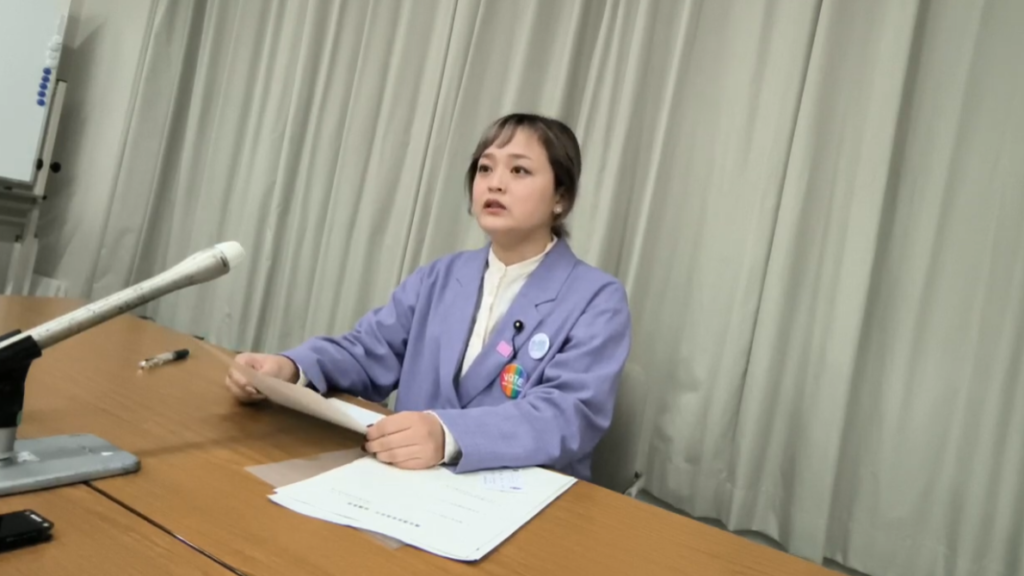
Despite the threats and the fear, Ayaka Yoshida remains a powerful symbol of resilience and advocacy. Her courage in sharing a personal moment for the sake of social change deserves recognition, not condemnation.
In facing down a tidal wave of hate, she stands not just for herself but for the many women across Japan—and the world—who silently endure similar struggles every day.
Her story should serve as a wake-up call for political institutions, law enforcement, and civil society in Japan. There must be stronger protections for politicians, especially women, who face harassment and violence for simply doing their jobs. There must also be a broader cultural reckoning with the stigma surrounding menstruation and other aspects of women’s health.
Education, media engagement, and public policy must all work in concert to create an environment where proposals like Yoshida’s are met with discussion—not death threats. And most importantly, women in positions of leadership must be supported, not silenced, when they advocate for change.
Ayaka Yoshida’s experience is both a cautionary tale and a call to action. It reflects the tensions in a society caught between tradition and modernity, between silence and speech, and between suppression and progress. How Japan responds to this moment will shape not only the future of its politics but also the everyday lives of its citizens.
Because in the end, a country’s strength is measured not just by its economy or diplomacy—but by its ability to care for all its people, with dignity, safety, and compassion.