

The recent stabbing incident on a London North Eastern Railway (LNER) service traveling from Doncaster to London King’s Cross has left communities across the United Kingdom deeply shaken. The event, which unfolded on a Saturday evening, has been described as one of the most serious violent attacks to have occurred on public transport in recent years. Police, emergency responders, and investigators have since been working intensively to piece together what happened and to support the many victims affected.
The suspect, identified as 32-year-old Anthony Williams, appeared in court charged with ten counts of attempted murder and several additional offences. The gravity of the situation, combined with the public nature of the attack, has prompted widespread concern regarding passenger safety, policing on transport networks, and mental health support structures. To understand the full context of the case, it is essential to examine both the timeline of events and the legal proceedings that have followed, as well as the broader implications for railway security and public trust.
Details of the Incident and Arrest
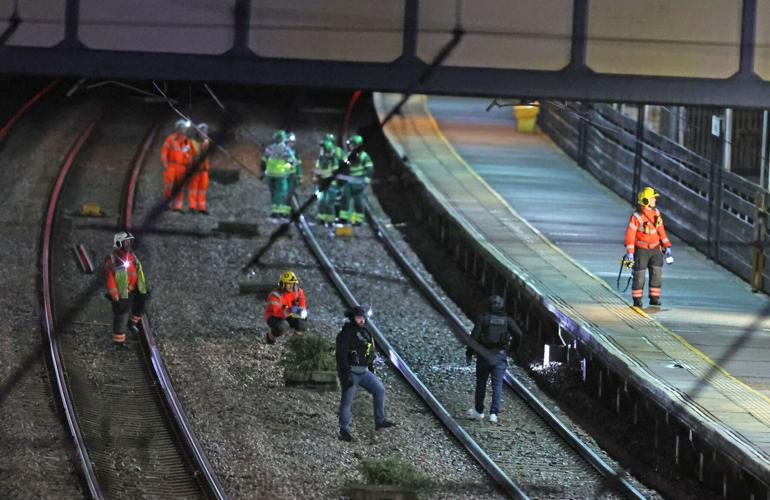
The attack occurred aboard the 18:25 LNER service departing Doncaster and bound for London King’s Cross. According to British Transport Police, the first emergency calls were made at approximately 19:39 when passengers reported multiple stabbings taking place inside one of the carriages. The train was quickly redirected to Huntingdon railway station in Cambridgeshire, where emergency medical teams and armed officers were ready to meet the service.
As soon as the doors opened, paramedics began treating injured passengers while armed police detained the suspected attacker. Eleven people were ultimately taken to hospital, with five continuing to receive care in the days following the incident. One of the most critically injured individuals was a member of the railway staff, who is reported to have intervened to try to protect passengers. According to Transport Secretary Heidi Alexander, that staff member remains in a critical but stable condition, and their actions have been widely praised as courageous and selfless.
The suspect, Anthony Williams, was arrested on the platform and taken into custody. When he appeared at Peterborough Magistrates’ Court, he provided no fixed address and was dressed in a grey tracksuit with handcuffs. In addition to the ten counts of attempted murder linked to the LNER train attack, Williams was charged with possession of a bladed article and actual bodily harm relating to an alleged assault on a police officer after being detained.
His court appearance revealed additional allegations linking him to a separate earlier knife attack that took place in east London at Pontoon Dock DLR station at around 00:45 on the same day. In that case, another victim sustained facial injuries. Those charges include a further count of attempted murder and possession of a bladed article. CCTV footage has played a major role in the investigation.
Read : 11-Year-Old Jaiden Shehata Killed by Train at Level Crossing Was Distracted by Phone
The BBC obtained an image showing Williams in Peterborough the previous evening wearing a hooded black coat and blue sweater. British Transport Police and the Crown Prosecution Service have stated that they have reviewed a large volume of visual evidence as part of the case. Deputy Chief Constable Stuart Cundy noted that the priority remains supporting the victims and establishing whether additional linked offences took place. Cambridgeshire Police are also reviewing three other incidents to determine whether any ties exist to the suspect’s behavior or movement patterns leading up to the attacks.
🚨 SHOCKING: UK Police Had 3 CHANCES to STOP Train Knife Massacre – But FAILED! Anthony Williams, 32, from Peterborough, charged with 11 counts of attempted murder, 1 ABH & knife possession after rampage on London-bound LNER from Doncaster. 11 injured, 1 critical.
— J Stewart (@triffic_stuff_) November 3, 2025
🔴 FRI:… pic.twitter.com/3YVcrSkrr0
The court formally named the victims of the Huntingdon station charges, acknowledging the significant human cost of the attack. They are: Scott Bletcher, David Presland, Sachin Balakrishnan, Michael Paffett, Kevin Neely, Jonathan Gjoshe, Stephen Crean, Samir Zitouni, Rasza Aslam, and Scott Green. Each suffered varying degrees of injury and trauma, and victim support services have been engaged to assist them as legal proceedings continue. Williams was remanded in custody and is scheduled to appear next at Cambridge Crown Court on 1 December.
Response from Authorities and Emergency Services
In the immediate aftermath of the incident, emergency medical teams and police acted swiftly to provide critical aid and secure the area. Addenbrooke’s Hospital in Cambridge, located roughly thirty minutes from the station, became the central point for treating victims. Eleven people were transported there, with specialist trauma teams mobilised quickly. As details emerged, government officials and railway organisations expressed solidarity with those affected. Rail unions and passenger advocacy groups highlighted the bravery of staff who stepped forward to protect travellers despite the danger they faced.
British Transport Police have been leading the criminal investigation, coordinating closely with Cambridgeshire Police and national forensic teams. Officers have conducted searches of the track area, train coaches, and nearby public locations to gather additional evidence. The breadth of the investigation reflects concerns about possible pre-planning or escalatory behavior. Tracy Easton, Chief Crown Prosecutor for the Crown Prosecution Service, affirmed that prosecutors have already reviewed extensive CCTV footage and other evidence, and that the number of charges may be updated as the investigation progresses.
The Independent Office for Police Conduct (IOPC) was notified regarding the incident, though it confirmed that it will not be investigating. The reason, according to its statement, is that there was no direct or indirect police contact with the individuals before the attack that would trigger oversight protocols. However, if any issues surrounding police conduct during or after the incident arise, the IOPC has instructed that they be referred for review. This procedural clarification reflects standard practice in cases where questions might be raised about response time, suspect handling, or pre-existing reports.

In Parliament and public discourse, the incident sparked immediate discussions regarding passenger safety, staffing levels, and potential preventive measures. While high-profile violent attacks on trains remain rare, this event underscores vulnerabilities in public transport environments. Security checks on rail networks differ from those found in airports due to scale, operational complexity, and the central role of railway systems in daily commuting.
Senior policing officials have emphasized that while armed patrols and surveillance networks have improved, identifying individuals who act alone and without warning remains one of the most difficult challenges modern policing faces. Another significant dimension to the unfolding case concerns the broader social factors that may influence such violent behavior. Investigators have not yet released information on possible motives, mental health evaluations, or personal background details.
As with similar incidents, it is expected that assessments regarding Williams’ mental state will be part of the legal process. Public discussion has already turned toward the pressures on mental health services in the UK, the difficulties in providing timely intervention, and the gaps between support systems and law enforcement. However, authorities have cautioned against premature speculation, noting that the legal process must run its course before clear assessments can be publicly shared.
Impact on Public Transport Safety and Community Trust
The psychological and social impact of the attack extends well beyond the individuals directly harmed. Train travel is a routine part of daily life for millions of people, and the knowledge that such a violent incident occurred unexpectedly in a public and confined environment has generated widespread concern. For many commuters, public transport is not only necessary but unavoidable, and confidence in safety is essential for maintaining normal travel behavior.
In the days following the attack, social media and community forums reflected heightened anxiety among railway users, with some expressing fear about traveling alone or in peak crowd conditions. Rail operators and the Department for Transport have emphasized that incidents of this severity remain exceptionally rare. Police presence on trains and at major stations has increased in the short term, both as a precaution and as a visible reassurance.
Rail staff, including conductors and service managers, have been provided with additional guidance and support resources. The bravery of the railway employee who attempted to shield passengers has become a focal point of public emotion, symbolizing both the vulnerability of frontline workers and their vital role in crisis situations. The legal process that follows will also play a key role in shaping public understanding and response. As the case proceeds to Crown Court, evidence will be presented methodically, and questions surrounding the suspect’s background, state of mind, and timeline of actions will likely receive closer examination.
The court will determine guilt and appropriate sentencing based on the severity of charges, including the multiple counts of attempted murder, which carry the possibility of a life sentence. For the victims and their families, the process ahead is expected to be lengthy and emotionally challenging, requiring ongoing medical, psychological, and legal support.
Community resilience and empathy have also played important roles in the aftermath. Local residents in Huntingdon and surrounding areas have expressed support for victims and railway workers, and messages of solidarity have appeared across local media. Such responses illustrate the ways communities attempt to process and respond to traumatic events, emphasizing collective care and shared responsibility.
Train operators, transport authorities, and policymakers will likely face continuing discussions about long-term strategies to strengthen safety. These may include increased patrol frequency, expanded surveillance coverage, more intensive staff training for crisis de-escalation, and renewed public information campaigns promoting awareness and reporting of suspicious behavior. However, such measures must be balanced with maintaining openness and accessibility in public transit systems, which are designed to move large numbers of people efficiently and without undue restriction.
The case of Anthony Williams remains ongoing, with investigators continuing to gather evidence and prosecutors preparing for the next court appearance scheduled for 1 December at Cambridge Crown Court. As the investigation and legal proceedings unfold, the focus remains firmly on supporting the victims, improving safety awareness, and maintaining public confidence in the transport network.