
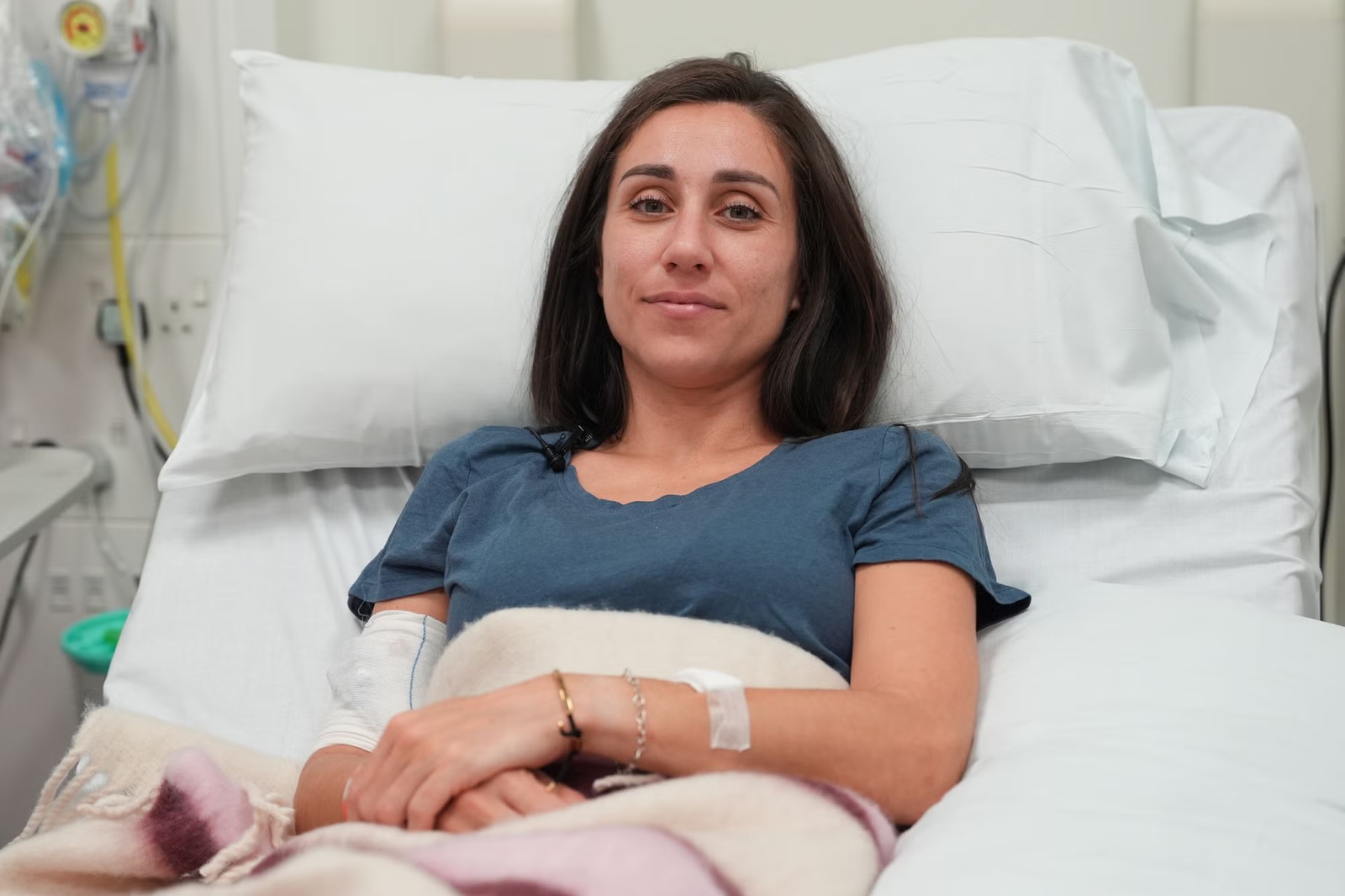
A biology teacher from Hertfordshire has made medical history by becoming the first patient in the United Kingdom to receive a pioneering new treatment for multiple sclerosis (MS), offering renewed hope to thousands living with the debilitating condition. Thirty-seven-year-old Emily Henders, a mother of two and dedicated educator, was diagnosed with MS on Christmas Eve in 2021. After years of battling relapses and physical decline, she recently underwent a groundbreaking therapy known as CAR T-cell treatment, which experts believe could transform how the disease is managed.
Multiple sclerosis is a long-term neurological condition that affects the brain and spinal cord, often leading to symptoms such as fatigue, muscle weakness, vision problems, and mobility issues. It is an autoimmune disorder, meaning the immune system mistakenly attacks the protective layer around nerve fibres. While there is no cure yet, advancements in research have significantly improved patients’ quality of life.
The introduction of CAR T-cell therapy marks an especially promising step forward—one that could potentially reset the immune system and halt disease progression altogether. For Emily Henders, the journey toward this innovative treatment has been both painful and inspiring. Her experience shines a light on the daily challenges faced by people with MS, while also demonstrating the extraordinary potential of medical science to change lives.
A Life Changed Overnight: Emily’s Battle with Multiple Sclerosis
Before her diagnosis, Emily Henders lived what many would describe as a busy yet fulfilling life—balancing her passion for teaching biology with her responsibilities as a wife and mother. But in late 2021, she began experiencing unusual tingling sensations in her hands. At first, she thought it might be stress or fatigue, but the symptoms soon intensified. Doctors conducted a series of tests, and on Christmas Eve 2021, Emily received the news that she had multiple sclerosis.
The diagnosis was devastating. “It was surreal,” Emily recalled. “I knew what MS was because of my background in science, but it’s very different when it’s suddenly your reality.”
Over the following years, Emily Henders suffered four debilitating relapses, each one eroding her strength and confidence. Despite being on one of the most effective MS medications available, her condition continued to worsen. Tasks that once came naturally—walking, writing on a whiteboard, or conducting classroom experiments—became increasingly difficult.
“I notice sometimes my foot hits the pavement in a funny way. No one else would notice it, but I feel it,” she said. “Or when I’m teaching and doing a science experiment, I can feel my hands shaking, and I’m very much aware that probably the students can see that too.”
The physical symptoms were only part of the struggle. The emotional burden of MS weighed heavily on her, particularly as a mother. Emily recounted one terrifying relapse that left her temporarily unable to stand. “I was just getting out of bed and my oldest son was there with me, and I couldn’t stand up, and it was very scary,” she said. “The ambulance came, and I’ll never forget my children’s faces as the medics were rushing in and then strapping me to a chair and carrying me down the stairs.”
Read : Elevating Heights: Discovering the Top 10 Largest Mountains Across the Globe
For Emily, the fear of her children witnessing her illness became one of her greatest motivators to seek better treatment options. “A good outcome for me,” she explained, “would be to never experience a relapse again—to be present and active for my children without worrying that my body will suddenly fail me.”
The Science Behind CAR T-Cell Therapy: A Revolutionary Approach
Emily Henders’s new treatment, known as CAR T-cell therapy, represents a bold step in medical innovation. The approach was originally developed for cancer patients, particularly those with leukemia and lymphoma. However, researchers have begun repurposing it for autoimmune diseases like lupus—and now, multiple sclerosis.
The treatment is highly personalised. It begins with extracting a patient’s own T cells, a type of white blood cell responsible for identifying and attacking harmful invaders. These cells are then genetically engineered in a laboratory to recognise and destroy the body’s overactive B cells, which play a key role in causing the immune system to attack the nervous system in MS patients.
Once modified, the T cells are infused back into the patient through a short procedure lasting only a few minutes. The idea is that these “reprogrammed” cells will reset the immune system, stopping the disease’s destructive process and potentially eliminating the need for ongoing medication.
Dr. Claire Roddie, a consultant haematologist at University College London Hospital (UCLH) and one of the trial’s lead investigators, believes this therapy could redefine MS treatment. “Our ultimate goal is to achieve long periods of disease remission with a single, one-time CAR T-cell treatment,” she said. “If we could achieve that in MS, it would transform so many people’s lives.”
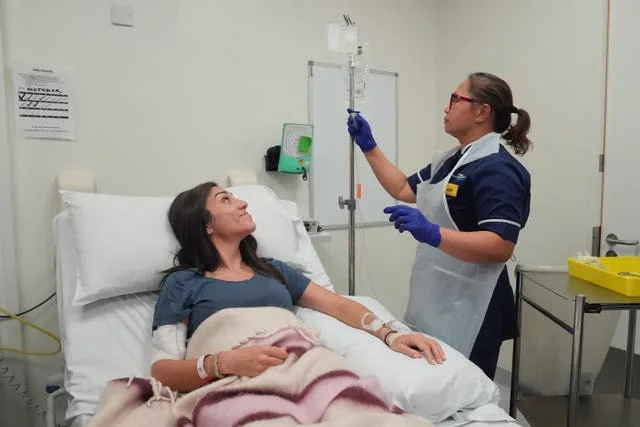
The therapy has already shown promise in other conditions. CAR T-cell treatments have been successful in certain cancers and the autoimmune disease lupus, where they produced long-lasting remissions. Dr. Roddie emphasised that CAR T-cells can access parts of the body that conventional drugs struggle to reach, which could make them particularly effective in targeting the central nervous system—the core battleground in MS.
She added that the “one and done” concept—a single treatment providing lasting results—is especially exciting. “We’re taking a therapy that has already saved lives in cancer care and repurposing it for a whole new spectrum of diseases,” she explained.
The trial Emily is participating in is part of a global study that aims to recruit up to 18 patients by early 2027. Researchers will monitor participants closely to evaluate how the therapy affects disease progression, symptom relief, and long-term immune function. Early results, according to experts, could pave the way for regulatory approval and widespread use in the coming decade.
A New Beginning: Hope, Healing, and the Future of MS Treatment
Just days after her treatment at UCLH, Emily reported feeling significantly better. “I’m feeling normal and I’ve got energy back,” she said. “I don’t have any nausea, I’ve had no fevers. I’m feeling pretty relaxed.”
While it’s too soon to know the full effects, her early response has given both patients and doctors tremendous optimism. The notion that a single infusion could stop MS in its tracks—or at least greatly reduce its severity—would represent a seismic shift in how the disease is managed.
For Emily, this new lease on life is deeply personal. She hopes that CAR T-cell therapy will help her avoid the fate that many MS patients face—gradual loss of mobility and eventual dependence on a wheelchair. “The thought of ending up in a wheelchair one day is terrifying,” she admitted. “If this treatment means I can keep up with my children, continue teaching, and live without fear of relapse, that would be everything.”
Her husband, Brandon, has been by her side through every setback and triumph. “Seeing her go through this has been incredibly hard,” he said in a family statement, “but to see her smiling and full of energy again—that’s something we didn’t think we’d get back so soon.”
Experts across the medical community are watching Emily’s case closely. Caitlin Astbury, senior research communications manager at the MS Society, described CAR T-cell therapy as “a potential gamechanger.” She noted that while it’s still early days, successful outcomes from this and similar trials could completely reshape the treatment landscape for MS.
Currently, MS patients rely on a range of disease-modifying therapies that can reduce the frequency of relapses but often come with significant side effects and do not stop the disease entirely. The possibility of a one-time treatment that induces long-term remission would not only ease the physical burden on patients but also transform healthcare delivery by reducing ongoing costs and medication dependence.
Beyond the scientific breakthrough, Emily’s case has sparked a wave of inspiration among the MS community. Support groups and advocacy organisations have hailed her courage for volunteering in such a cutting-edge clinical trial, recognising that early participants play a crucial role in advancing medicine for future generations.
As one neurologist at UCLH observed, “Emily’s willingness to take part in this study embodies the spirit of progress—the belief that science and compassion together can change the future.” Though the global trial will continue until 2027, the early signs are promising. If successful, CAR T-cell therapy could become the first truly curative treatment for multiple sclerosis, bringing hope to more than 130,000 people living with MS in the UK and millions worldwide.
For now, Emily is focusing on recovery, family, and teaching. Her story is not just one of medical innovation but of resilience, motherhood, and the unyielding human drive to fight back against illness. “I feel really good,” she said simply. “It feels like I’ve got my life back.” In a world where chronic conditions often mean lifelong medication and uncertainty, Emily’s journey stands as a beacon of what’s possible when science, hope, and humanity meet. If CAR T-cell therapy delivers on its promise, it may not only change the lives of those with multiple sclerosis—it may redefine the boundaries of medicine itself.