
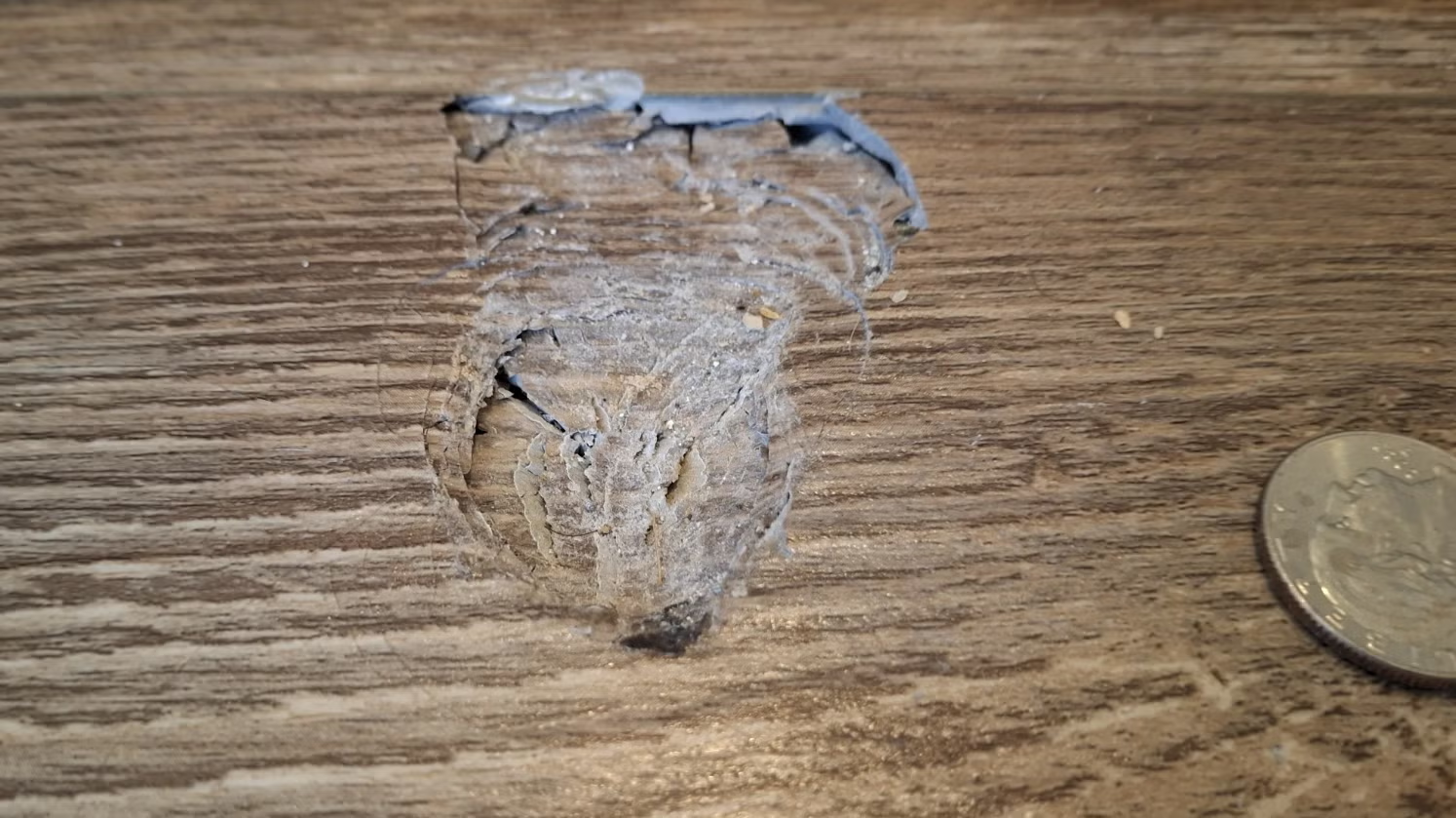
A rare cosmic event unfolded in June when a tiny fireball, no larger than a cherry tomato, crashed through the roof of a home in McDonough, a suburb of metro Atlanta, Georgia. Scientists later confirmed this small but extraordinary space rock to be a meteorite formed approximately 4.56 billion years ago—about 20 million years older than the Earth itself.
This remarkable discovery not only offers a window into the origins of our solar system but also highlights the growing role of modern technology and vigilant citizens in recovering and studying meteorites.
The Incident: A Fireball Pierces a Georgia Home
On a sunny afternoon in June, residents of McDonough were startled by a loud boom that reverberated through the neighborhood and rattled houses across Atlanta. Witnesses reported seeing a fiery fireball streaking across the sky. The meteor’s bright trail was visible from neighboring states, including North and South Carolina, captivating onlookers and triggering numerous reports to local authorities.
Shortly after the fireball’s passage, it became clear that the space rock had done more than just blaze across the atmosphere. The meteorite penetrated the roof of a suburban home, breaking through and striking the floor beneath. According to officials, the rock cracked the laminate flooring and dented the concrete below, a rare and dramatic example of a meteorite’s impact on a residential property.
The homeowner, who wished to remain anonymous due to having a small child, reported continued findings of tiny space dust specks scattered around the living room, evidence of the meteorite’s fragmented arrival.
Meteorite OLDER than Earth SMASHES into Georgia home
— RT (@RT_com) August 9, 2025
Fireball EXPLODED in sky on June 26
Fragments now REVEAL it’s 4.56 BILLION years old — formed 20 million years ahead of our planet pic.twitter.com/ML9Oy4nIJv
Emergency responders and local officials were initially baffled, as the National Weather Service’s global lightning mapper had registered the event as a lightning strike rather than a meteor. However, the local emergency management team quickly suspected a meteorite when damage to the home was discovered.
Scientific Analysis and Discoveries
The meteorite fragments recovered from the home — weighing about 23 grams in total — were sent to the University of Georgia, where planetary geologist Scott Harris and his colleagues began a detailed examination. Using powerful microscopes and advanced laboratory techniques, Harris’s team was able to determine the meteorite’s astonishing age: approximately 4.56 billion years old.
This age is particularly significant because it predates the formation of Earth, which scientists estimate to be around 4.54 billion years old. The meteorite’s ancient origin means it has preserved information about the early solar system, providing scientists with invaluable clues about the building blocks of planets and the history of our cosmic neighborhood.
Read : 15-Year-Old Muhannad Zakaria Eid Crushed to Death by Falling Aid Pallet in Gaza
Harris explained that the meteorite belongs to a group of asteroids residing in the main asteroid belt located between Mars and Jupiter. According to their research, the rock can be linked to a major breakup event of a larger asteroid roughly 470 million years ago. Such collisions in the asteroid belt produce fragments that sometimes stray toward Earth, like the McDonough meteorite.

The University of Georgia team plans to submit their findings to the Meteorological Society’s nomenclature committee with a proposal to name the meteorite after the community where it was found: the McDonough Meteorite. This event marks the 27th meteorite recovery in the state’s history since its founding in 1788 and is one of only six meteorites in Georgia whose fall was witnessed directly.
Scott Harris highlighted that while meteorite falls used to be rare, happening only every few decades, increased public awareness and advances in detection technology have led to more frequent recoveries. The combination of vigilant citizens and tools like global lightning mappers and video recordings means more meteorites are being found and studied than ever before.
The Broader Importance and Potential Risks
Studying meteorites like the McDonough specimen is more than just an academic pursuit; it plays a critical role in planetary defense and understanding potential asteroid threats. Harris emphasized that while this meteorite was small, the solar system occasionally sends larger, more dangerous asteroids toward Earth — objects that could cause catastrophic damage if they impacted populated areas.
By analyzing meteorites, scientists can better understand the composition, structure, and trajectories of these space rocks. This knowledge helps refine detection systems and impact prediction models, ultimately aiding efforts to protect Earth from future collisions.
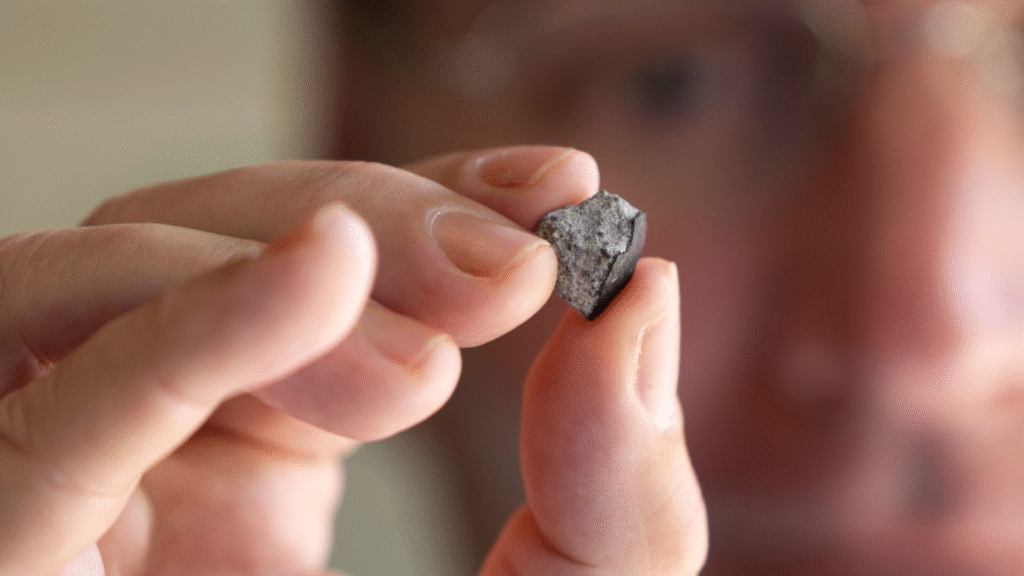
Harris also pointed out that the long history of this particular meteorite—from its formation over 4.5 billion years ago to its dramatic fall in McDonough—illustrates the dynamic and ongoing interactions between Earth and the solar system. “One day there will be an opportunity, and we never know when it’s going to be, for something large to hit and create a catastrophic situation,” Harris remarked. “If we can guard against that, we want to.”
The incident in metro Atlanta serves as a reminder of the cosmic environment we inhabit—where ancient fragments of rock and metal continually journey through space, sometimes intersecting with our planet in spectacular ways. It also underscores the importance of scientific vigilance, community awareness, and international cooperation in monitoring and mitigating extraterrestrial hazards.
In conclusion, the McDonough meteorite is a rare and extraordinary cosmic visitor, carrying with it a story that stretches back to the dawn of the solar system. Its dramatic arrival through the roof and onto the floor of a Georgia home is a vivid demonstration of the tangible connections between Earth and space. As scientists continue to study this remarkable specimen, it will help unravel the mysteries of planetary formation and enhance our readiness for future cosmic encounters.
Hi! I’m at work surfing around your blog from my new iphone 3gs! Just wanted to say I love reading your blog and look forward to all your posts! Keep up the superb work!