

A 40-year-old Australian man has been arrested and charged after allegedly stealing dozens of collectible Labubu dolls worth nearly A$9000 from a Melbourne shopping centre. The arrest, carried out by Victoria Police earlier this week, has shone a spotlight on the growing global craze for the fuzzy, elf-like figurines that have inspired long queues, social media hysteria, and even international smuggling and counterfeiting operations. The bizarre theft case has also raised questions about the lengths some collectors and resellers are willing to go in pursuit of these sought-after designer toys, which have evolved from niche art objects into luxury collectibles commanding four-figure sums on the resale market.
Police Raid Uncovers Dozens of Missing Labubu Dolls
The arrest took place after officers from the Melbourne East Neighbourhood Policing Team executed a search warrant at a property on Webb Road in Airport West at around 6am on Tuesday, 21 October. According to a statement released by Victoria Police, the operation—humorously titled “These Labubu are not for you you”—resulted in the recovery of at least 43 Labubu dolls believed to have been stolen in a string of burglaries across Melbourne’s central business district.
Authorities say the dolls were taken during four separate break-ins at a shopping centre located at the corner of La Trobe and Swanston streets between July and October. Each incident reportedly targeted stores that sold limited-edition collectible figures, including the increasingly valuable Labubu dolls produced by Chinese toy giant Pop Mart. Following months of investigation, police tracked the suspect to the Airport West property, where they discovered the missing toys alongside several other limited-edition figurines valued at around A$500 (£243) each.
In total, the haul recovered from the property was worth approximately A$9000 (£4390), police said. The accused, whose identity has not yet been made public, has been charged with burglary and theft. He is scheduled to appear before the Melbourne Magistrates Court on 5 May next year for a bail hearing.
A police spokesperson confirmed that investigations are ongoing, adding that further arrests have not been ruled out. “It is alleged the dolls were stolen during four separate burglaries at a shopping centre in Melbourne since July,” the statement read. “Officers have charged a 40-year-old man from Melbourne’s western suburbs with burglary and theft. The recovered items have been seized as evidence.”
Read : Group of Masked Thieves Steal Entire Collection of Labubu Dolls from La Puente Store
The arrest marks one of the more unusual theft cases in Victoria in recent months, underscoring the surprising value attached to what were once children’s playthings but are now considered collectible art toys commanding significant sums in both legitimate and black-market sales.
The Rise of Labubu: From Art Toy to Global Collectible Craze
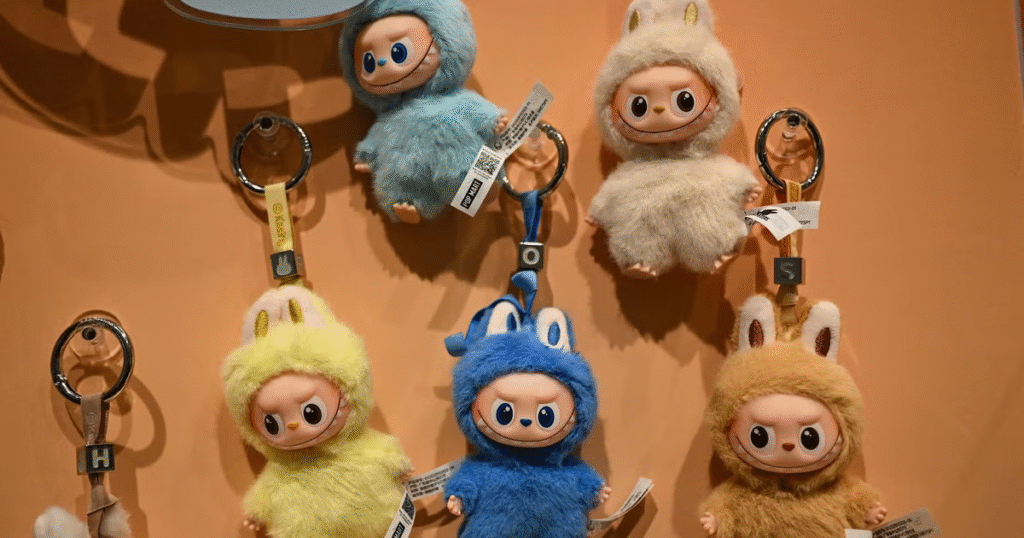
Labubu dolls were first introduced in 2015 by Hong Kong-born illustrator Kasing Lung as part of his “The Monsters” series, a whimsical collection inspired by Dutch and Nordic folklore. Produced and distributed by Pop Mart, the dolls feature a distinctive furry texture, large ears, and a mischievous grin that has made them instantly recognizable among fans of designer toys and urban vinyl art. Over the past decade, the franchise has become one of Pop Mart’s most iconic lines, with each figure often sold in blind boxes—sealed packages that conceal the exact design—adding to their allure and collectibility.
What began as a niche hobby for art toy enthusiasts has since exploded into a global phenomenon. Pop Mart’s expansion into brick-and-mortar retail stores, coupled with its viral TikTok live sales and limited-edition drops, has fuelled a culture of scarcity and exclusivity surrounding the brand. Fans camp outside stores before release days, while resale prices on online marketplaces can reach eye-watering levels.
Read : Truth Behind Viral Pic of Labubu Doll Placed at Karl Marx’s Grave
Earlier this year, reports surfaced of certain Labubu dolls reselling for over £1,000 each, while a rare child-sized version fetched more than $150,000 at auction. The frenzy has also been amplified by celebrity endorsements and online trends—one photograph showing a Labubu doll sitting courtside next to tennis star Naomi Osaka in New York quickly went viral, helping cement the toy’s cult status among collectors and pop culture enthusiasts alike.
Limited edition Labubu dolls have been seized after four alleged robberies. A 40-year-old man was arrested after 43 Labubus were discovered at an Airport West property. 📌 DETAILS: https://t.co/7G1A7GWgoa #Labubu #policeraid #AirportWest #Melbourne pic.twitter.com/7mO9BWAxq9
— 7NEWS Melbourne (@7NewsMelbourne) October 22, 2025
However, the enormous demand and limited supply have also attracted a darker side. Counterfeiting, price gouging, and theft have become increasingly common, as both genuine and fake Labubu dolls circulate through online platforms and international grey markets. Pop Mart has repeatedly warned consumers to purchase only from authorized retailers, as counterfeit versions—often distinguishable by twisted limbs, misshapen heads, or the wrong number of teeth—pose safety hazards and devalue the collectibles market. Genuine Labubu dolls are noted for their meticulous craftsmanship and signature nine teeth, a small but crucial detail often missed by counterfeit producers.
The surge in value of these designer toys has mirrored broader cultural shifts in consumer habits, where nostalgia, scarcity, and online fandoms intersect to turn once-childlike objects into status symbols. As collectibles become financial investments, cases like the Melbourne theft highlight how the boundary between playful hobby and high-stakes commerce continues to blur.
A Growing Problem: Theft, Counterfeits, and the Global Labubu Market
The Melbourne theft case is not an isolated incident but part of a broader trend of crime and controversy surrounding high-value collectibles. In the United Kingdom, authorities have reported a dramatic surge in counterfeit Labubu dolls entering the country. According to Home Office figures released in September, around 236,000 fake Labubu dolls—out of a total of 259,000 counterfeit toys seized—were intercepted by Border Force officers at ports and airports. These knock-offs, worth an estimated £3.5 million, represent about 90 per cent of all potentially “dangerous” fake toys stopped at the UK border this year.
The discovery has raised alarms not only about intellectual property theft but also about consumer safety, as many counterfeit dolls are made with substandard materials and lack regulatory safety certification. Officials have warned that the fakes could pose health risks to children due to the presence of toxic materials or small detachable parts.
Meanwhile, in Asia, the frenzy for Pop Mart collectibles has led to chaotic scenes in shopping malls, where limited edition releases trigger stampedes and long overnight queues. In China, Pop Mart’s flagship stores in cities like Shanghai and Beijing regularly attract hundreds of fans camping for the chance to buy the latest mystery box. On TikTok, videos of unboxing rare Labubu figures have garnered millions of views, further stoking global demand.
The increasing monetary value of these collectibles has turned them into lucrative targets for theft. Similar cases have been reported in Japan, Hong Kong, and the United States, where designer toys are stolen from stores or online shipments and resold through secondary markets at inflated prices. Experts say the ease of selling collectibles online has created an ecosystem ripe for exploitation. “What we are seeing is a shift where collectibles are being treated like commodities,” noted one retail analyst. “That creates both economic opportunity and criminal temptation.”
In the Melbourne case, police believe the suspect may have been motivated by potential resale profits, given the high value of limited-edition Pop Mart releases. While the total estimated worth of A$9000 may seem modest compared to international figures, the stolen items’ collectibility and rarity could have allowed the thief to earn significantly more on resale platforms. The operation to recover the dolls, authorities say, involved cooperation between local police units and retail security teams who tracked recent burglary patterns linked to collectible stores in the city’s central shopping districts.
For Victoria Police, the case illustrates how consumer trends can have unexpected consequences for law enforcement. “Designer toys are not the kind of property we used to associate with organised theft,” a police spokesperson said. “But with the rise of online resale culture, anything of high demand and limited supply becomes a potential target.”
The bizarre mix of art, commerce, and crime has turned Labubu dolls into a symbol of the modern collectibles boom—an industry where scarcity drives obsession and value breeds risk. What began as a whimsical artistic creation by Kasing Lung has evolved into a worldwide cultural and economic phenomenon, capable of inspiring both innocent fandom and criminal enterprise.
For Pop Mart, which has built a multibillion-dollar empire on the appeal of mystery boxes and adorable figurines, the challenge now lies in balancing hype with control. The company has increased its cooperation with law enforcement to combat counterfeiters and thieves, while also investing in authentication technologies such as QR-coded verification tags. Yet, as the Melbourne case demonstrates, even these measures may not fully deter individuals hoping to profit from the booming toy economy.
The accused in Melbourne will have his day in court next May, but his alleged theft has already added another strange chapter to the story of Labubu—a tale that continues to blur the line between plaything and prestige item. As collectors around the world chase the next rare release, the saga serves as a reminder of how even the most innocent objects can become entangled in the complex web of desire, profit, and crime that defines the modern collectibles market.