

In a case that has shocked the Cincinnati community, Emily Nutley, a 43-year-old former school counselor at St. Xavier High School, was sentenced to three years in prison on June 10, 2025, for engaging in a sexual relationship with a 17-year-old student. The incident, which unfolded in late 2023, has raised serious questions about trust, professional boundaries, and the safety of students in educational institutions.
Nutley, once a respected figure at the prestigious all-boys Jesuit school, pleaded guilty to two counts of sexual battery, resulting in her incarceration, mandatory registration as a Tier III sex offender, and five years of probation following her prison term.
The Details of the Case
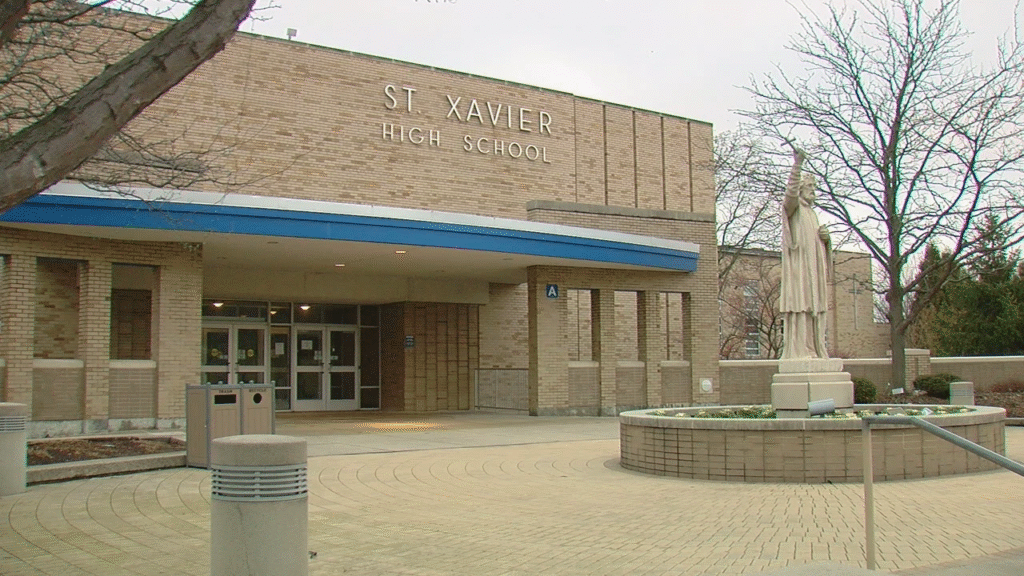
Emily Nutley was employed as a counselor at St. Xavier High School, a well-regarded Catholic institution in Cincinnati, Ohio, known for its academic rigor and Jesuit values. Her role involved providing guidance and support to students, a position that inherently required trust and professionalism.
However, between November and December 2023, Emily Nutley engaged in an inappropriate sexual relationship with a 17-year-old male student. Court documents reveal that the encounters took place in her office at the school, a space meant to be a safe haven for students seeking academic or emotional support.
The relationship came to light when authorities were alerted to the misconduct, though specific details about how the relationship was discovered have not been publicly disclosed to protect the victim’s privacy. Following an investigation by local law enforcement, Nutley was charged with sexual battery, a third-degree felony under Ohio law, which prohibits sexual conduct between a school employee and a student, regardless of the student’s age or consent. Ohio’s laws are stringent in such cases, reflecting the state’s commitment to protecting minors from exploitation by those in positions of authority.
On June 10, 2025, Emily Nutley appeared in Hamilton County Common Pleas Court, where she entered a guilty plea to two counts of sexual battery. The plea agreement likely spared the victim from having to testify in a public trial, a process that can be deeply traumatic. Judge [Name Withheld for Accuracy] sentenced Nutley to three years in prison, a term that reflects the severity of her actions while taking into account her lack of prior criminal history.
Read : Janot-Curie High School Teacher Suspended for Holding Minute’s Silence for Gaza Victims
In addition to her prison sentence, Emily Nutley was ordered to register as a Tier III sex offender, the highest classification under Ohio’s sex offender registry, requiring her to report her whereabouts every 90 days for life. She will also serve five years of probation upon release, with strict conditions to ensure compliance with legal and ethical standards.
Read : Panama is Preparing to Evacuate First Island Due to Rising Sea Levels
St. Xavier High School promptly terminated Emily Nutley’s employment upon learning of the allegations. The school issued a statement expressing deep regret and emphasizing its commitment to student safety. School officials cooperated fully with law enforcement during the investigation and have since implemented additional training and oversight measures to prevent future incidents. The case has left a stain on the institution’s reputation, prompting soul-searching within the school community about how such a breach of trust could occur.
The Legal and Ethical Implications
The Nutley case underscores the serious legal and ethical issues surrounding inappropriate relationships between educators and students. In Ohio, sexual battery laws are designed to address the power imbalance inherent in teacher-student relationships.
Even if a student is above the age of consent (16 in Ohio), the law recognizes that individuals in positions of authority, such as teachers or counselors, can exploit their influence, making consent questionable. This legal framework ensures that educators are held to a higher standard of conduct, reflecting their role as trusted figures in students’ lives.
Ethically, Nutley’s actions represent a profound betrayal of trust. As a counselor, she was tasked with supporting students’ mental and emotional well-being, a role that requires impeccable judgment and boundaries. Her decision to engage in a sexual relationship with a student not only violated professional ethics but also caused significant harm to the victim, his family, and the broader school community.

The psychological impact on the student, who cannot be named due to his status as a minor at the time of the offense, may be long-lasting, as such experiences can lead to trust issues, emotional distress, and challenges in future relationships. This case also highlights the importance of robust safeguarding policies in schools.
Educational institutions must ensure that staff are thoroughly vetted, trained, and monitored to prevent predatory behavior. Background checks, regular training on professional boundaries, and clear reporting mechanisms for students and staff are critical components of a safe school environment. St. Xavier High School’s response, including enhanced training and oversight, is a step in the right direction, but the incident serves as a reminder that vigilance must be ongoing.
From a broader perspective, the Nutley case is part of a troubling pattern of educator-student misconduct that has garnered significant media attention in recent years. While such cases are statistically rare, their high-profile nature amplifies public concern and erodes trust in educational institutions.
Schools must balance the need to protect students with the challenge of maintaining a supportive, open environment. This requires a culture of accountability, where inappropriate behavior is swiftly addressed, and victims are supported without stigma.
The Broader Context and Preventive Measures
The Nutley case is not an isolated incident but part of a larger societal issue concerning the abuse of power in educational settings. According to a 2017 report by the U.S. Department of Education, approximately 10% of students in grades 8–11 report experiencing some form of educator misconduct, ranging from inappropriate comments to physical abuse.
While sexual relationships between educators and students are a small subset of these cases, they are among the most egregious and damaging. The prevalence of such incidents underscores the need for systemic changes to prevent abuse and protect vulnerable students.
One key area of focus is training. Educators and school staff must receive regular, comprehensive training on maintaining professional boundaries, recognizing signs of grooming or inappropriate behavior, and understanding the legal and ethical consequences of misconduct. Training should also emphasize the importance of reporting concerns, even if they seem minor, to prevent escalation. Schools should foster an environment where students feel safe reporting inappropriate behavior without fear of retaliation or disbelief.
Another critical measure is the implementation of clear policies and procedures for handling allegations of misconduct. Schools must have transparent protocols for investigating complaints, ensuring that allegations are taken seriously and addressed promptly.
This includes protecting the anonymity of whistleblowers and providing support services for victims, such as counseling and academic accommodations. In Emily Nutley’s case, the swift response by law enforcement and the school suggests that existing protocols were followed, but the incident itself indicates that preventive measures may have been insufficient.
Technology can also play a role in safeguarding students. For example, schools can implement monitoring systems for communication between staff and students, such as requiring that all electronic correspondence occur through official school platforms.
Physical spaces, such as counselors’ offices, should be designed to ensure transparency, with windows or open-door policies to reduce the risk of inappropriate interactions. While these measures cannot eliminate all risks, they can create a safer environment and deter potential misconduct.
Public awareness and dialogue are also essential. Cases like Nutley’s spark important conversations about power dynamics, consent, and accountability. Parents, students, and community members should be educated about the signs of inappropriate behavior and encouraged to speak out if they suspect misconduct. Schools can host workshops or forums to engage stakeholders in discussions about creating a safe and supportive environment for all students.
Finally, the Nutley case raises questions about the rehabilitation and reintegration of offenders. While Nutley’s prison sentence and sex offender registration serve as punishment and deterrence, society must also consider how to address the root causes of such behavior.
This includes examining the psychological and social factors that lead individuals to abuse their authority and exploring ways to support their rehabilitation while prioritizing public safety. For victims, access to long-term counseling and support is critical to help them heal and move forward.
The sentencing of Emily Nutley for her actions at St. Xavier High School is a sobering reminder of the importance of maintaining trust and safety in educational settings. Her case highlights the devastating consequences of breaching professional boundaries and the need for robust safeguards to protect students.
While Emily Nutley will face significant consequences for her actions, including prison time and lifelong registration as a sex offender, the impact on the victim and the school community cannot be overstated. Moving forward, schools must prioritize prevention through training, clear policies, and a culture of accountability.
By learning from cases like this, society can work toward ensuring that schools remain safe spaces where students can learn and grow without fear. The Nutley case serves as both a cautionary tale and a call to action for educators, administrators, and communities to remain vigilant in protecting the most vulnerable among us.
tesisat su kaçak tespiti Küçükçekmece’deki evimizdeki su kaçağını kısa sürede tespit ettiler. Kesinlikle tavsiye ediyorum. https://soocian.com/read-blog/24813