
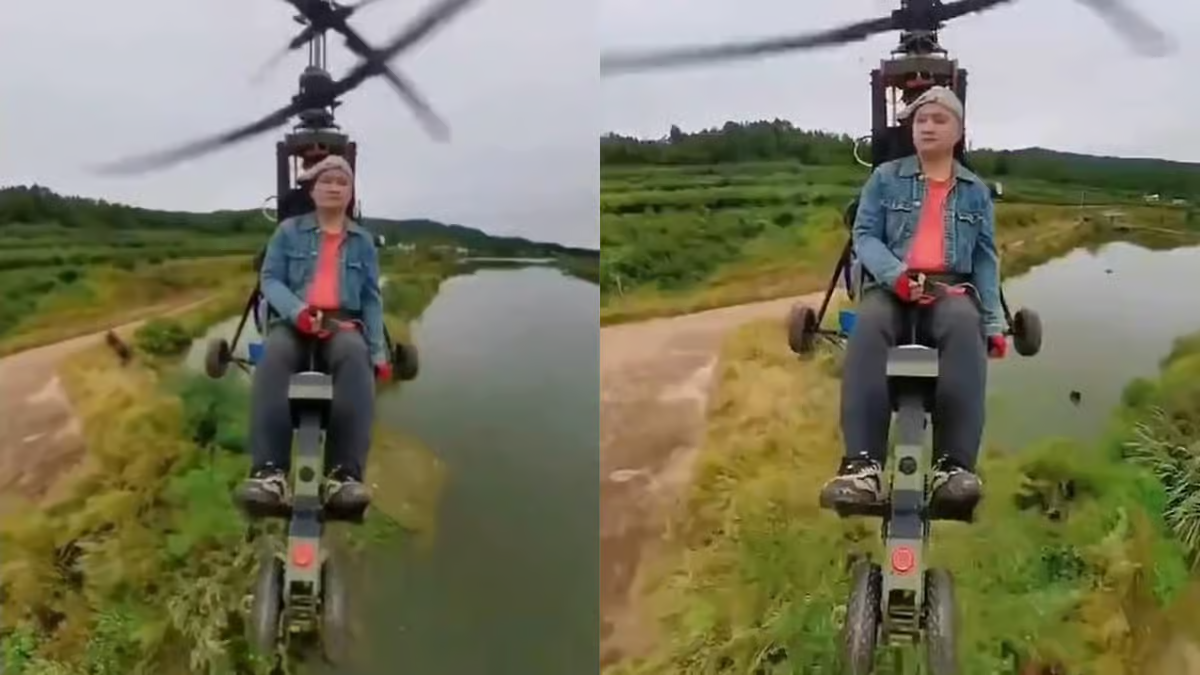
In a tragic incident that has sent shockwaves through China’s online community, 55-year-old influencer Tang Feiji lost his life on September 27, 2025, when his ultralight aircraft plummeted to the ground during a live broadcast on Douyin, the Chinese counterpart to TikTok. The crash, which occurred in Jiange County, Guangyuan City, Sichuan Province, was witnessed in real-time by hundreds of his followers, turning what was meant to be an exhilarating aviation showcase into a harrowing spectacle of loss.
Tang, known for his daring aerial content, had amassed over 100,000 followers on the platform, where he shared his passion for low-altitude flight. Local authorities and state-run media outlets, including China News Service and Cover News, confirmed the details of the accident, noting that the impact and subsequent fire left no chance for survival. As investigations continue, this event underscores the perilous intersection of social media fame and high-risk hobbies. The circumstances surrounding the crash highlight the raw unpredictability of ultralight aviation, a niche that Tang Feiji had enthusiastically embraced.
Eyewitness accounts from the livestream captured the moment the single-seat, coaxial rotor helicopter suddenly lost control mid-flight, spiraling downward before slamming into the terrain and erupting in flames. Video footage, now circulating widely despite the sensitivity of the content, shows Tang adjusting his camera angle shortly after a brief landing, only to take off again moments before the disaster. He was not equipped with a helmet or parachute, safety measures that experts later pointed out could have made a critical difference.
Emergency services were alerted by frantic viewers flooding the live chat with pleas to “save him” and “call for help,” but responders arrived too late to intervene. The aircraft, which Tang Feiji had proudly detailed in prior videos, weighed just 115 kilograms and was capable of reaching altitudes up to 600 meters and speeds of around 100 kilometers per hour. No other casualties or property damage were reported in the sparsely populated area, allowing authorities to focus solely on the recovery efforts and preliminary inquiry.
Tang Feiji’s Journey as an Aviation Enthusiast and Content Creator
Tang Feiji’s foray into the world of online influencing began as a natural extension of his lifelong fascination with flight, transforming him from a local enthusiast in Sichuan Province into a recognizable figure in China’s digital aviation scene. At 55, he represented an unconventional influencer profile—not a youthful daredevil, but a middle-aged man driven by unbridled curiosity and a desire to democratize the thrill of the skies for his audience. His Douyin channel, which boasted approximately 100,000 followers, was a repository of meticulously edited clips showcasing solo flights over the scenic landscapes of central China.
Tang Feiji’s content often blended technical breakdowns with personal anecdotes, explaining rotor mechanics or wind currents in accessible language that resonated with both novice viewers and fellow hobbyists. What set Tang apart was his hands-on approach to content creation. He wasn’t content with stock footage or simulations; every video featured him at the controls, helmetless and grinning, as he narrated the sensations of takeoff and ascent. His posts frequently delved into the affordability and accessibility of ultralight aircraft, positioning them as an attainable hobby for everyday people.
In one particularly popular stream from earlier in 2025, Tang demonstrated a low-altitude maneuver over rolling hills, captioning it with encouragement for viewers to “chase the horizon without fear.” This ethos of empowerment drew a loyal following, with comments sections filled with aspiring pilots seeking advice on entry-level models or basic flight principles. Tang’s authenticity—rooted in his self-taught expertise—fostered a community that celebrated his milestones, from his first unassisted hover to longer endurance flights.
Read : Irish Influencer Dara Tah Criticized for Offering Salt to Cannibal Tribe for TikTok Video
Behind the glamour of viral clips lay a story of personal investment and resilience. Tang acquired his aircraft in 2024 for 350,000 yuan, roughly equivalent to $49,000 USD, a significant outlay that he justified as a gateway to freedom. In interviews embedded within his videos, he described poring over online tutorials and aviation manuals, emphasizing self-reliance over formal schooling. This DIY spirit extended to his livestreams, where he would pause mid-flight to respond to viewer questions, fostering real-time engagement that boosted his channel’s interactivity metrics.
#TangFeiji, influencer chino, murió al estrellarse el helicóptero que él mismo construyó mientras lo mostraba en #vivo a sus seguidores.
— Sintexto (@SintextoMX) September 30, 2025
Una tragedia que sacude al mundo digital.#China #Influencer #Accidente #RedesSociales #Noticia pic.twitter.com/f9CNSJakPW
By mid-2025, Tang had become a minor celebrity in niche online forums, collaborating sporadically with other creators on joint flight challenges. His influence extended beyond entertainment; he inadvertently sparked interest in recreational aviation among urban dwellers, many of whom credited his videos with inspiring them to explore local flying clubs. Yet, even in his success, Tang’s content occasionally betrayed undercurrents of risk, with subtle hints at mechanical glitches glossed over in favor of triumphant narratives. This blend of inspiration and oversight painted a portrait of a man whose passion propelled him forward, often at the expense of caution.
The Incident: A Live Broadcast Turns Fatal
The fatal flight on September 27 unfolded under clear skies in Jiange County, a rural expanse ideal for Tang Feiji’s signature low-level demonstrations. What began as a routine livestream—titled something along the lines of “Afternoon Soar: Chasing Clouds in Sichuan”—quickly devolved into tragedy within minutes of going live. Hundreds tuned in, drawn by Tang’s reputation for unscripted aerial adventures, as he powered up the rotors and lifted off from a makeshift landing strip.
The feed captured crisp views of the landscape below, with Tang Feiji’s voiceover providing a steady stream of commentary on throttle adjustments and visibility conditions. Viewers responded enthusiastically at first, with emojis and queries lighting up the chat about optimal wind speeds for beginners. Disaster struck abruptly, approximately five minutes into the broadcast. Online videos reconstructed from the stream show the aircraft veering erratically, as if caught in an unseen gust or mechanical failure, before nosediving uncontrollably toward the ground.
The impact was instantaneous and violent, sending debris scattering across the field and igniting a fierce blaze fueled by the aircraft’s lightweight fuel system. Tang Feiji’s final words, muffled by engine noise, were a casual update on his altitude, underscoring the suddenness of the loss. The livestream cut to black shortly after, but not before capturing the horrifying sequence that left viewers in stunned silence. Emergency protocols on Douyin activated automatically, alerting moderators who scrambled to preserve the footage for investigative purposes while shielding the public from graphic replays.
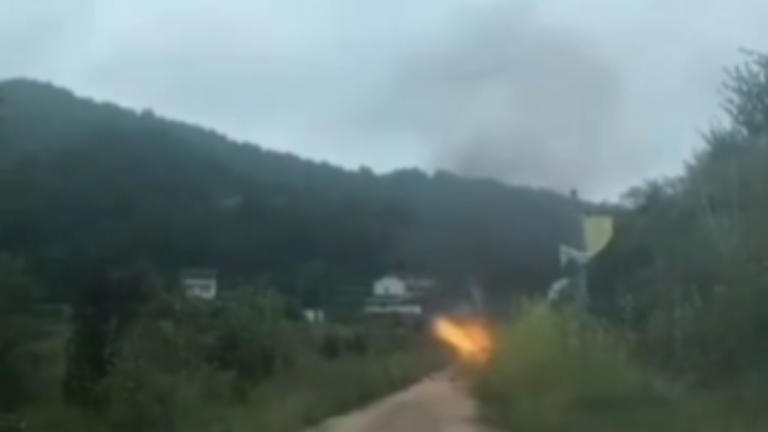
In the immediate aftermath, the site’s algorithms pushed notifications to Tang’s followers, many of whom flooded emergency lines with reports. Local fire and rescue teams, dispatched from nearby Guangyuan City, contained the fire within 20 minutes, but medical personnel pronounced Tang dead at the scene due to catastrophic injuries from the crash and burns. Forensic teams from the Sichuan Provincial Public Security Bureau arrived swiftly, securing the site for a thorough examination of the wreckage.
Preliminary assessments, as reported by Cover News, point to a possible control malfunction, though weather data from the region indicates stable conditions with minimal turbulence. The absence of black box data—standard for such recreational vehicles—complicates the probe, forcing investigators to rely on survivor footage and Tang’s own archived explanations of the aircraft’s quirks. This incident marks the third such aviation mishap involving influencers in China this year, prompting calls from netizens for platform-level interventions to flag high-risk streams.
Broader Implications: Safety, Regulations, and the Risks of Extreme Content
Tang Feiji’s untimely death has ignited a fierce national conversation about the blurred lines between personal passion and public spectacle in the era of live streaming. At its core, the tragedy exposes the vulnerabilities inherent in ultralight aviation, a sector regulated loosely in China despite its growing popularity among hobbyists. Aviation authorities mandate licensing and registration for low-altitude craft, yet enforcement remains patchy in rural areas like Jiange County, where Tang operated.
Experts from the Civil Aviation Administration of China (CAAC) have since reiterated that no exemptions exist for ultralights, regardless of their diminutive size or the operator’s experience. Tang’s claim of mastery after a mere six hours of practice—coupled with his lack of formal certification—has drawn sharp criticism, with analysts arguing that such shortcuts normalize dangerous precedents for impressionable audiences.
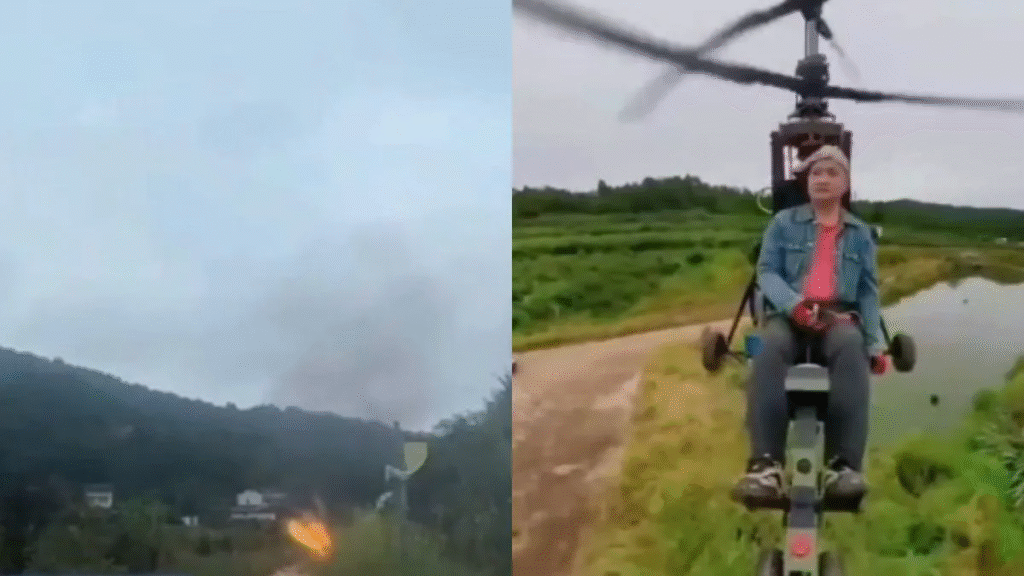
The incident also amplifies ongoing debates about influencer accountability on platforms like Douyin. With millions of creators vying for attention in a hyper-competitive ecosystem, extreme stunts have become a shortcut to virality, often prioritizing views over viability. Tang’s prior brushes with danger—two minor incidents in 2024 involving fuel gauge failures that caused brief drops of under 30 feet—served as red flags that went largely unheeded. In those cases, he walked away unscathed, even incorporating the stories into his narrative of resilience, which only heightened his allure.
Now, social media users are dissecting these episodes, questioning why algorithms amplify risky content without built-in safeguards. Hashtags like #LivestreamSafety and #AviationAwareness have trended across Weibo and Douyin, amassing millions of interactions as bereaved fans share tributes alongside pleas for reform. One prominent commentator, a former CAAC inspector, posted a thread outlining proposed changes: mandatory risk disclosures for aerial streams, AI-monitored alerts for unstable flights, and partnerships with emergency services for real-time monitoring.
On a societal level, Tang’s passing serves as a somber reminder of the human cost behind digital facades. His followers, now left to mourn a figure who felt like a virtual mentor, have flooded memorial threads with stories of how his videos ignited their own dreams—safely pursued, in many cases, through proper channels. Families of other aviation enthusiasts are voicing concerns, urging platforms to collaborate with regulators on content guidelines that balance innovation with protection.
As the investigation unfolds, expected to conclude within weeks, it may catalyze tangible shifts: stricter ultralight oversight, enhanced training mandates, or even Douyin-specific policies curbing unverified extreme activities. For now, Tang Feiji’s legacy endures not just in archived flights, but in the urgent questions his death has provoked about chasing horizons responsibly. In a nation where social media shapes aspirations, this loss demands a reckoning—one that honors the thrill-seeker while safeguarding the dreamers who follow.
cw39yt