
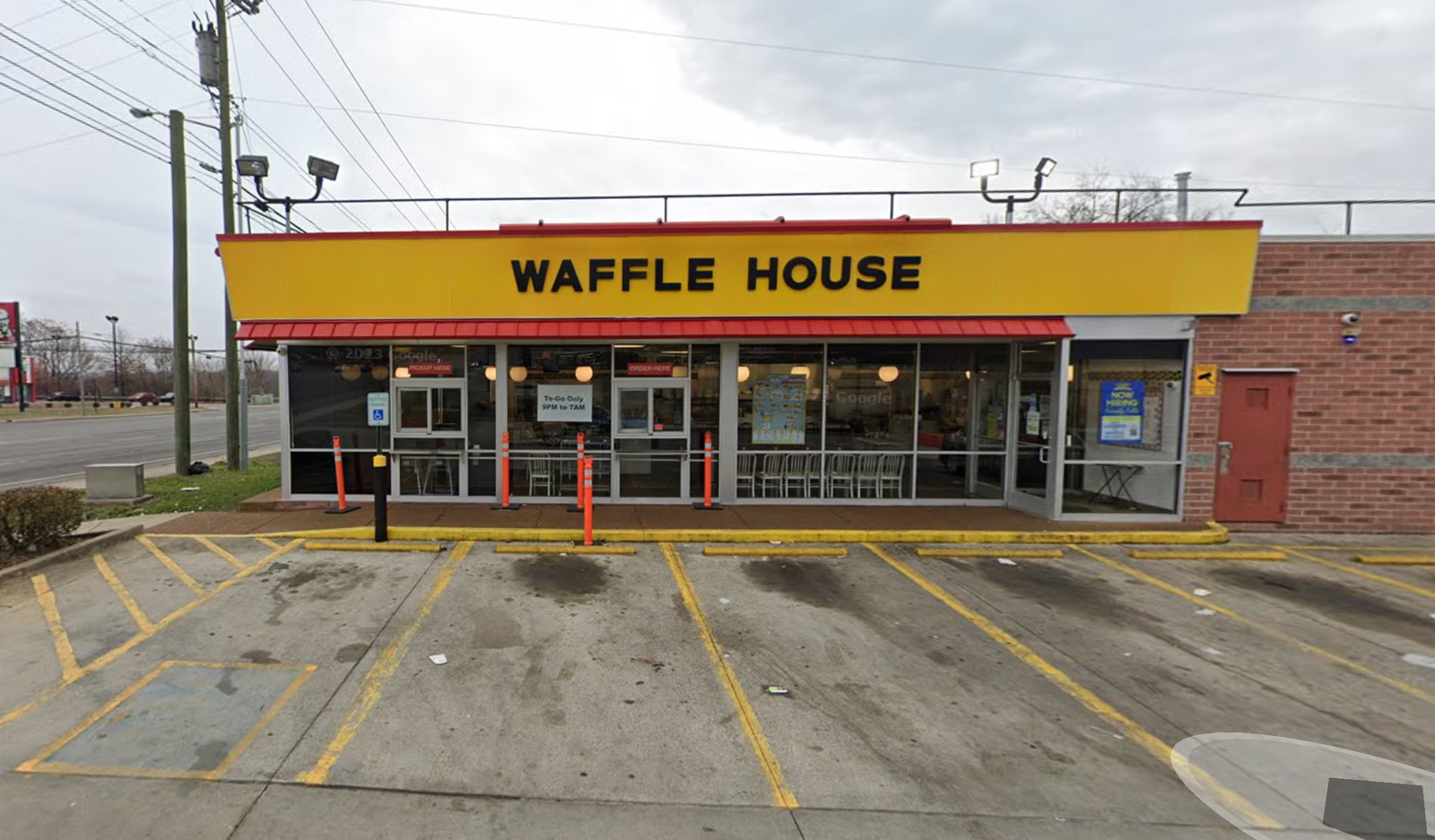
Late-night dining at a Nashville Waffle House has become the center of a high-stakes legal battle after a 62-year-old customer alleges he was violently subdued while attempting to order a meal. Gregory Lynn Hall claims a routine stop for food escalated into a physical confrontation that left him hospitalized and, according to court filings, suffering lasting physical and psychological harm. The incident, which reportedly occurred shortly before midnight in May 2024, now forms the basis of a lawsuit seeking at least $300,000 in damages.
At the heart of the dispute are sharply conflicting accounts: Hall contends he was subjected to excessive and unjustified force by a security guard wearing riot gear, while the Waffle House chain and related parties argue that his own behavior triggered the confrontation and necessitated non-lethal force. The lawsuit offers a detailed description of how a seemingly ordinary Waffle House visit spiraled into an encounter involving bear spray, a stun gun, and plastic restraints.
Gregory Lynn Hall’s claims and the defendants’ responses raise broader questions about security practices in public establishments, the use of force by private personnel, and the legal responsibilities businesses bear toward their customers. As the case moves toward a scheduled 2027 trial date, it has drawn attention not only for the dramatic nature of the allegations but also for what it may reveal about how disputes in customer-service environments are managed when tensions rise.
The Incident That Sparked the Lawsuit
According to Hall’s complaint, the confrontation began when he entered the Waffle House to order food and encountered a tense exchange between a cook and a female employee. The lawsuit states that the cook used profanity and instructed Hall to move to the service window to place his order. When Gregory Lynn Hall complied, the disagreement between the two employees reportedly continued, prompting Hall to question the cook’s treatment of the woman. The cook allegedly responded that the woman was his wife and dismissed Hall’s involvement.
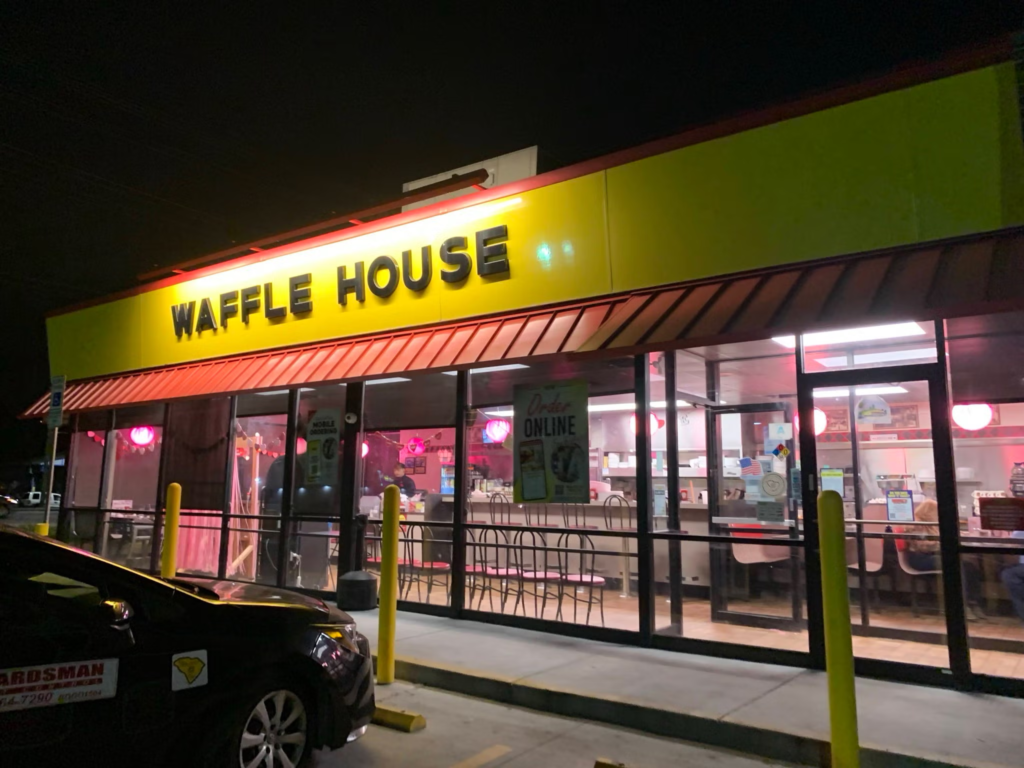
Hall claims he was unsettled by what he perceived as hostile behavior and decided to document the situation by taking a photograph inside the Waffle House. He alleges that shortly afterward, a security guard approached him and ordered him to leave the premises. Hall says he declined, explaining he intended to remain until his food order was completed. What happened next forms the core of the lawsuit.
The complaint asserts that the security guard left the immediate area, retrieved riot gear from a vehicle, and returned equipped with bear spray. Hall alleges the guard discharged the spray directly into his face. As he attempted to retreat from the effects of the spray, the lawsuit claims he was followed outside and subjected to a stun gun, which caused him to collapse. The complaint further states that the guard restrained him by pressing a knee into his back and binding his wrists with plastic zip ties.
Read : Ex Grill Cook Marilyn Smith Sues Waffle House Over Constant Sexual Harassment by Manager
Emergency medical services transported Hall to a hospital following the incident. He claims he suffered significant physical injuries requiring medical treatment and continues to experience emotional distress, including anxiety and disrupted sleep. The lawsuit characterizes the security guard’s actions as excessive and malicious, alleging they were carried out without reasonable justification and caused humiliation as well as harm.
Read : Hit TV Romance Series Bridgerton Boosted UK’s Economy by £275 Million
Hall also contends that both the Waffle House operator and the contracted security company failed in their duty to protect him as a customer. The complaint argues that the businesses either permitted or failed to prevent the use of force that was disproportionate to the situation. In addition to compensation for medical expenses and suffering, Hall is seeking punitive damages, which are typically awarded when conduct is found to be especially egregious.
Conflicting Accounts and Legal Arguments
The defendants dispute key elements of Hall’s version of events. In court filings, attorneys representing the Waffle House argue that Hall’s behavior played a substantial role in the escalation. They claim he was rude and verbally abusive toward employees, refused multiple instructions to leave the premises, and continued to engage aggressively with the security guard. According to this account, non-lethal force was used only after Hall failed to comply with repeated requests to exit the property.
The legal strategy advanced by the Waffle House includes the argument that even if a jury finds the company partly responsible, Hall’s alleged conduct should reduce or eliminate any damages awarded. This approach reflects the legal principle of comparative fault, under which liability can be divided among parties according to their share of responsibility for an incident.
The security company named in the lawsuit has also responded, asserting that the guard acted outside the scope of his employment and in violation of company policy. If accepted, this claim could limit or shift liability by arguing that the guard’s actions were not authorized or representative of the company’s procedures. Such arguments are common in cases involving contracted security personnel, where determining responsibility often hinges on whether actions were performed within assigned duties and approved protocols.
Both sides have agreed to a protective order restricting the release of certain sensitive information. This limits public disclosure of specific evidence and internal details as the case proceeds. With discovery ongoing and a trial scheduled for April 2027, the litigation remains in its early stages, and a final determination of facts has yet to be made.
The conflicting narratives highlight the legal complexity surrounding use-of-force incidents in commercial settings. Questions central to the case include whether the security guard’s response was proportionate, whether Hall posed a genuine threat, and what level of force is legally permissible when a customer refuses to leave private property. Courts often examine not only the actions taken but also the circumstances leading up to them, including communication, perceived risk, and available alternatives.
Broader Context and Implications for Public Safety
Beyond the specifics of the incident, the lawsuit touches on broader issues related to safety and conflict management in late-night dining environments. Restaurants that operate around the clock often encounter situations involving intoxication, disputes, and heightened emotions. As a result, some establishments employ security personnel to maintain order and respond to disturbances. However, the presence of security introduces additional legal and ethical considerations, particularly regarding training, oversight, and the appropriate use of force.

When security staff are equipped with tools such as chemical sprays or stun devices, questions arise about how and when those tools should be deployed. Many jurisdictions permit non-lethal force in certain circumstances, especially when individuals refuse to leave private property or pose a perceived threat. Yet the standard for what constitutes reasonable force can vary widely depending on context, training, and policy. Excessive force claims frequently hinge on whether less severe measures could have resolved the situation.
The case also draws attention to the relationship between employees and customers in tense situations. Hall’s complaint suggests that a workplace dispute between staff members created the initial atmosphere of conflict. If true, this raises issues about internal communication, professionalism, and how employee disagreements can influence interactions with patrons. Businesses are generally expected to maintain environments that do not expose customers to unnecessary risk, including risks arising from staff conflicts.
Another dimension involves public perception and reputation. High-profile allegations of aggressive security responses can affect how consumers view safety in commercial establishments. Even before legal findings are reached, lawsuits can shape public narratives about whether businesses are adequately balancing order and customer rights. For companies operating nationwide, the outcome of such cases may influence policies on training, incident reporting, and oversight of contracted personnel.
As the legal process unfolds, the court will evaluate evidence from multiple perspectives, including witness testimony, medical records, security protocols, and potentially surveillance footage. The eventual verdict may clarify the boundaries of acceptable conduct in similar situations and could influence how businesses structure their security arrangements in the future. For now, the case stands as a striking example of how a routine transaction in a public setting can evolve into a complex legal dispute involving questions of responsibility, proportionality, and the limits of authority exercised by private security.