

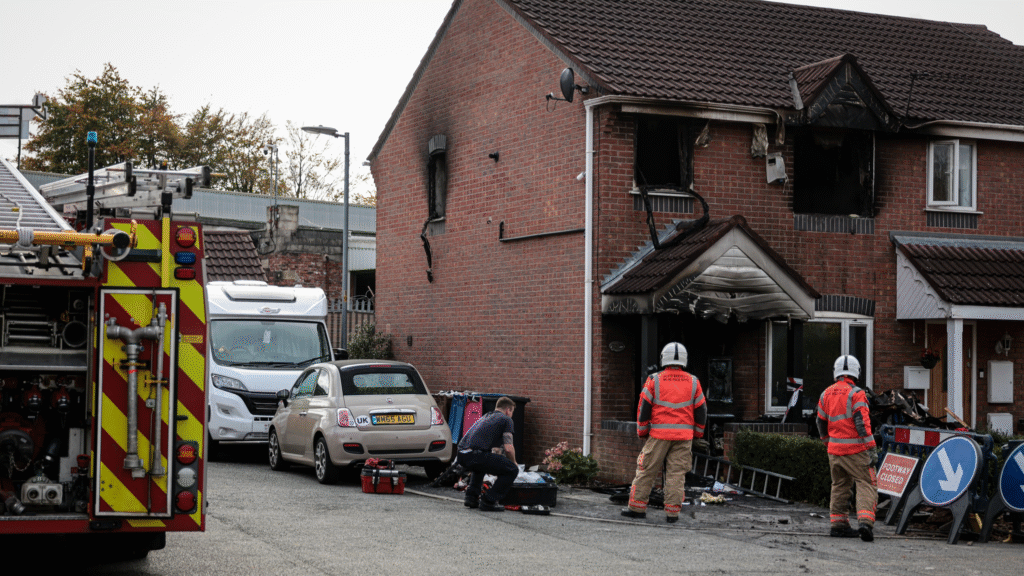
The sentencing of Nicholas Martin to 30 years in prison has drawn significant public attention due to both the horrific nature of the attack and the long pattern of abuse that preceded it. Martin, 63, carried out an act of extreme violence when he poured petrol through the letterbox of his former partner’s home in Worsley, Salford, in the early hours of the morning and set it alight while she was asleep. The victim survived only by leaping from a first-floor window, a fall that left her with two broken ankles and a broken vertebrae.
Her pet cat died in the fire, and the psychological devastation that followed has affected not only her life but those of her family members as well. The court heard detailed evidence of the coercive, controlling and escalating abusive behaviour that Nicholas Martin inflicted over several years, culminating in the attempted murder for which he has now been convicted. His case serves as a stark and deeply troubling example of the risks posed by persistent domestic abuse when warnings go unheeded or interventions are not enough to prevent further harm.
A Pattern of Coercive Control and Escalating Abuse
Nicholas Martin’s relationship with the victim began in 2019, initially appearing to be a typical partnership but later becoming increasingly defined by manipulation and isolation. Evidence presented in court demonstrated that Nicholas Martin exerted substantial control over nearly every aspect of the woman’s daily life.
He monitored her movements, criticised her interactions with others, and worked to separate her from family members. The investigation revealed that he had installed home cameras to supervise and restrict her behaviour inside the property. The victim reported being told what she was allowed to eat, wear and watch, further demonstrating a sustained effort by Nicholas Martin to assert dominance and enforce dependence.
Such coercive control is a recognised form of abuse and has been increasingly acknowledged in domestic violence legislation. It is defined not only by physical harm but by the erosion of personal autonomy, emotional security and freedom of everyday decision-making. In this case, the psychological impact on the victim was profound and enduring, even before the physical violence escalated.
By 2021, the abuse had begun to manifest in physical assaults. The victim eventually contacted police in September 2024 regarding a previous attack, and Nicholas Martin was charged and placed on bail. Conditions were imposed that prohibited him from contacting her or visiting her home, and required him to reside in Leicester. However, rather than respecting these restrictions, Martin continued to monitor and pursue her. He rented a car, left his designated bail address and drove to Worsley, demonstrating premeditation and intent in the events that followed.
Nicholas Martin’s breach of bail underscored the serious threat he posed, yet his final act went far beyond intimidation or harassment. Instead, he chose to carry out an attack that could easily have resulted in multiple fatalities.
The Attempted Murder: Early Morning Fire and Desperate Escape
In the early hours of 22 October 2024, Nicholas Martin positioned himself outside the victim’s home when he knew she would be asleep. He poured petrol through the letterbox and set it alight. The choice of timing and method indicated an awareness that fire spreads quickly while victims remain disoriented and vulnerable. The victim awoke to the sound of the letterbox snapping shut and the crackling of flames. As smoke and fire blocked her escape through the home, she made the desperate decision to jump from her bedroom window.
The physical injuries she sustained during the escape were severe, including two broken ankles and a broken vertebrae. Even after surviving the fall, she faced the trauma of losing her home, her possessions and her pet cat. Personal items of sentimental value, such as photographs and mementos of deceased family members, were destroyed. The fire turned her home from a place of safety into a scene of loss and upheaval.

In the aftermath, Nicholas Martin attempted to flee. He booked himself into a hotel in the Lake District, where police later found him along with a canister of petrol hidden in a wardrobe. During his police interview, Martin made no comment and initially denied intending to kill. He later acknowledged causing the fire but continued to insist that his purpose had not been to end his former partner’s life. The jury rejected this claim, determining that his actions were deliberate and carried out with forethought, leading to his conviction for attempted murder and assault occasioning actual bodily harm.
The consequences of the attack extended beyond the immediate physical harm. The victim described ongoing trauma, including flashbacks, recurring distress and an enduring fear connected to the memory of the night of the fire. Her mother and children have also required trauma therapy, as the emotional impact radiated outward to those closest to her. Their lives were affected not only by the near loss of a loved one but also by the knowledge that the danger had once seemed preventable.
A Severe Sentence and the Role of Justice in Supporting Recovery
Nicholas Martin was sentenced in Manchester in September and formally jailed for 30 years on Monday. This sentence reflects both the gravity of his actions and the prolonged nature of the abuse he inflicted. It also acknowledges the level of risk he would pose to others if not detained. Prosecutors, investigators and victim support personnel involved in the case emphasised the importance of the victim’s courage in assisting with the case and participating in the judicial process despite the emotional difficulty.
Read : Shaine March Killed Pregnant Girlfriend Alana Odysseos After Accusing Her of Cheating
In her victim impact statement, she articulated the depth of the harm that Nicholas Martin’s actions had caused, stating that he had “utterly destroyed and decimated” her life. She expressed guilt for not recognising the danger sooner, a common response among survivors of domestic abuse who often internalise responsibility due to prolonged emotional manipulation. She also described the terror she experienced upon realising her home was ablaze and the ongoing psychological burden of living with the memory of that moment.
Detective Constable Zoe Bellis of Salford CID noted that Nicholas Martin engaged in a “campaign of abuse” that escalated over several years. She stated that the sentencing ensures he is no longer able to harm the victim or others and recognised the victim’s resilience throughout the investigation. Professionals working in domestic abuse cases frequently observe that survivors’ willingness to participate is essential to securing convictions, particularly when abusers deny wrongdoing or attempt to distort the narrative.
The victim’s recovery process remains ongoing. Beyond the physical injuries, the psychological repercussions of domestic abuse can be long-lasting. Survivors often face challenges in rebuilding a sense of security, independence and self-trust. Loss of home and personal belongings can intensify the feeling of dislocation, particularly when meaningful or irreplaceable items have been destroyed. Family members affected by the trauma may also require long-term support while adjusting to new emotional realities.
The wider context of this case highlights the importance of continued improvements in identifying and responding to patterns of coercive control and escalating domestic abuse. A single incident of physical harm rarely represents the beginning of a dangerous situation. Instead, it often emerges after extended periods of manipulation, isolation and emotional erosion. Effective intervention requires careful attention to behavioural patterns over time and the circumstances under which a perpetrator may be likely to escalate.
The sentence handed down to Nicholas Martin marks a significant legal response to a serious crime informed by an understanding of this broader pattern of abuse. The outcome provides a degree of legal closure for the victim, though the personal process of rebuilding life and recovering from trauma will continue.
Giao diện XN88 Game tối màu giúp bảo vệ mắt khi chơi lâu – chi tiết nhỏ nhưng thể hiện sự chăm sóc người dùng tận tâm. TONY03-20
đăng ký XN88 có hệ thống cảnh báo chơi có trách nhiệm – giúp bạn kiểm soát thời gian và ngân sách, tránh nghiện cược. TONY03-20