
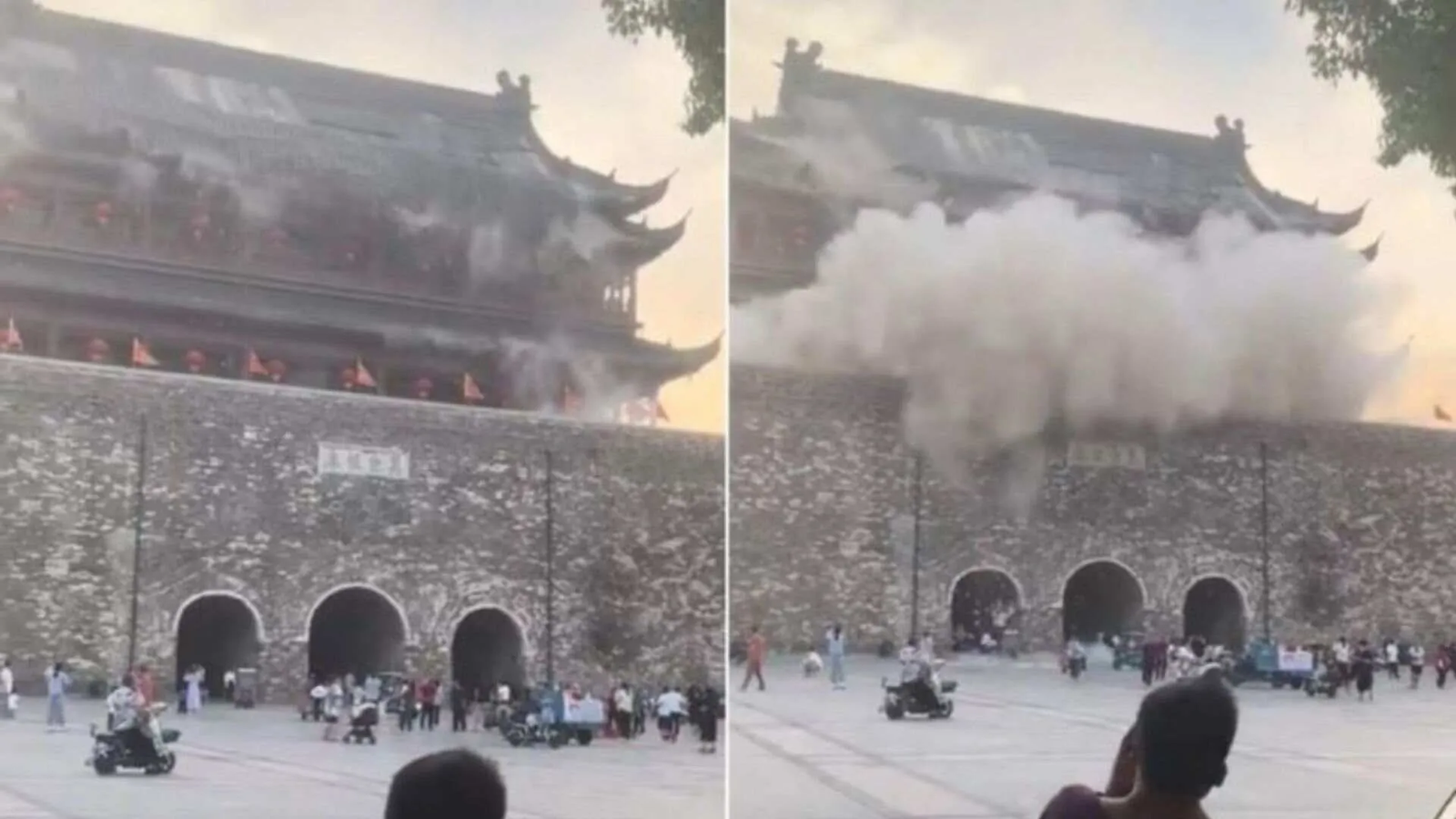
The sudden partial collapse of the 650-year-old Fengyang Drum Tower in China has shocked many, sparking widespread concern about the preservation and restoration of ancient landmarks. This historic structure, a symbol of Chinese architectural heritage and history, partially gave way on a calm Monday, forcing tourists to flee as hundreds of roof tiles came crashing down from two floors above.
The incident, captured in a viral video, highlighted both the fragility of centuries-old buildings and the challenges modern restoration efforts face in maintaining their integrity. Here is a detailed look into the event, the history of the Drum Tower, and the reactions from the public and experts.
The Incident: Chaos and Narrow Escape
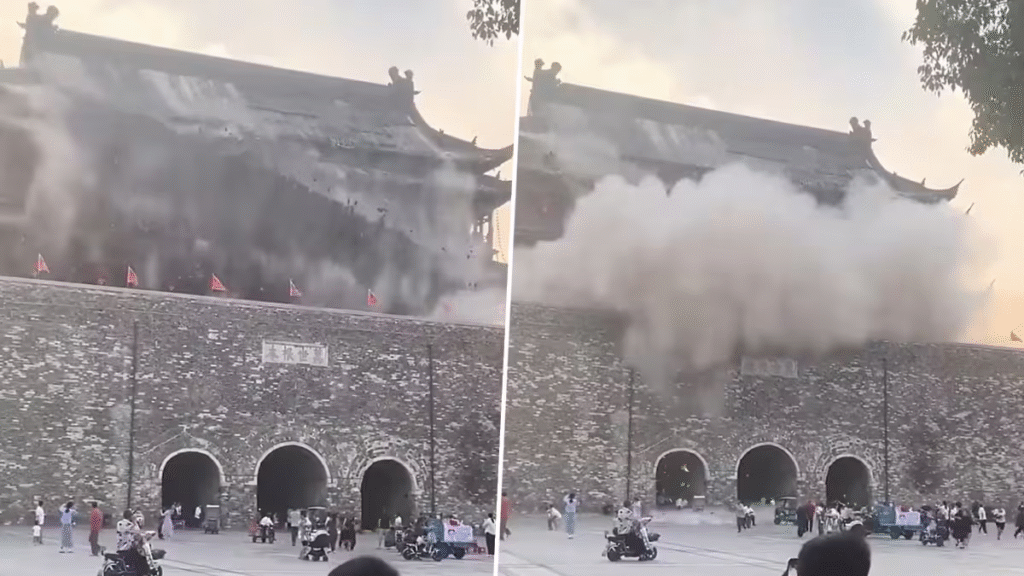
The collapse took place on a seemingly ordinary day at the Fengyang Drum Tower, located in Fengyang County, Anhui Province, approximately 320 kilometers from Beijing. The tower, a major tourist attraction, was bustling with visitors exploring its ancient structure and absorbing its historical significance. Without warning, a section of the roof suddenly gave way, sending a cascade of tiles plummeting to the ground two floors below.
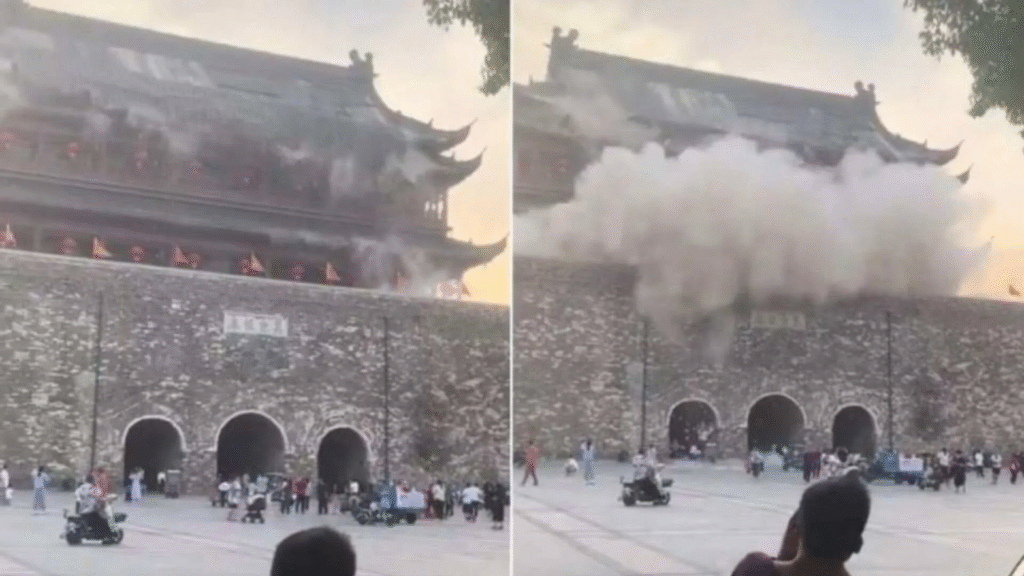
Video footage circulating on social media vividly shows the moment the roof tiles break loose, followed by a dense cloud of brown dust enveloping the area. Visitors near the tower were caught off guard, with many scrambling to safety as debris rained down around them. The situation quickly descended into chaos, with some tourists running frantically to avoid the falling rubble.
Eyewitness accounts helped paint a picture of the tense moments during the collapse. One witness told Yangcheng Evening News that the tile falling lasted for about a minute or two, indicating that the collapse was not instantaneous but a prolonged and frightening experience.
Read : China’s Most Beautiful Fugitive Qing Chenjingliang Banned from Social Media
Another eyewitness quoted by the Beijing News emphasized the luck involved: there was no one in the square at the time, and no injuries were reported. They noted that had the collapse occurred slightly later, when children often play near the tower after dinner, the consequences might have been far worse.
NEW: The roof of a 650-year-old drum tower in Anhui, China, collapses.
— Collin Rugg (@CollinRugg) May 20, 2025
The incident happened at the Fengyang Drum Tower in eastern China. Officials have since launched an investigation.
The structure was first built in 1375 during the Ming Dynasty.
Part of the building was… pic.twitter.com/5Py0YJOGak
Authorities responded promptly, cordoning off the area and launching an investigation into the cause of the collapse. Despite the destruction, the good news is that no one was hurt. The incident, however, has raised pressing questions about the safety and quality of the recent restoration work carried out on this historic landmark.
Historical Significance and Restoration Efforts
The Fengyang Drum Tower is not just a structure but a vital link to China’s rich past. Originally built in 1375 during the Ming Dynasty, the tower has witnessed centuries of history, standing as a testament to ancient Chinese architecture and craftsmanship. Fengyang County itself holds a special place in history as the hometown of Zhu Yuanzhang, the founder of the Ming Dynasty, which ruled China from 1368 to 1644.
Over its long existence, the Drum Tower has faced numerous challenges. A significant portion of the building was destroyed in 1853 during the Qing Dynasty. For many years, the tower remained in a ruined state until a restoration effort began 150 years later, culminating in a reconstruction completed in 1995.
More recently, the tower underwent another restoration project starting in 2023, with efforts aimed at preserving the structural integrity and historical authenticity of the site. This restoration wrapped up in March 2024. Ironically, the roof that partially collapsed during the recent incident was constructed just a year ago as part of this restoration.
The tower’s collapse has led to critical discussions about modern restoration techniques versus traditional building methods. Many social media users expressed shock and frustration, comparing the durability of ancient construction techniques with the apparently fragile nature of recent renovation work.
Comments on social platforms highlighted this contrast vividly. One user remarked on the remarkable endurance of the original building, lasting more than six centuries, while the modern restoration roof failed in less than two years. Another lamented how old Chinese building methods have allowed structures to stand the test of time, whereas modern renovation efforts seem less reliable.
These public reactions reflect a broader concern about the balance between preserving cultural heritage and employing contemporary building materials and methods. It also raises the question of oversight and quality control in restoration projects, especially when dealing with priceless historical monuments.
What’s Next? Investigation and Preservation
In the aftermath of the collapse, authorities have launched an official investigation to determine the exact causes behind the failure. While the investigation is ongoing, several potential factors could have contributed to the partial collapse, including the quality of materials used during restoration, workmanship, structural design flaws, or unforeseen environmental stresses.
Experts in heritage conservation emphasize the complexity involved in restoring ancient buildings. Maintaining historical authenticity while ensuring safety requires careful planning, the use of appropriate materials, and often collaboration between historians, architects, and engineers specialized in conservation.
The Fengyang Drum Tower collapse serves as a stark reminder of the challenges involved in preserving ancient monuments. It underscores the need for thorough inspections, transparent restoration processes, and regular maintenance to protect such irreplaceable cultural treasures.
Despite this setback, efforts to conserve the Drum Tower and other historic sites in China are likely to continue with renewed urgency. The incident might also prompt stricter regulatory standards for restoration projects, ensuring that modern interventions do not compromise the longevity of ancient structures.
For tourists and locals alike, the Fengyang Drum Tower remains a symbol of China’s historical legacy and architectural genius. Moving forward, the focus will be on repairing the damage, safeguarding the site, and learning important lessons to prevent similar incidents in the future.
The partial collapse of the Fengyang Drum Tower is a poignant episode in the ongoing story of heritage preservation. It reminds us of the delicate nature of history — a fragile yet invaluable legacy that demands respect, care, and vigilance in every effort to conserve it for future generations.