
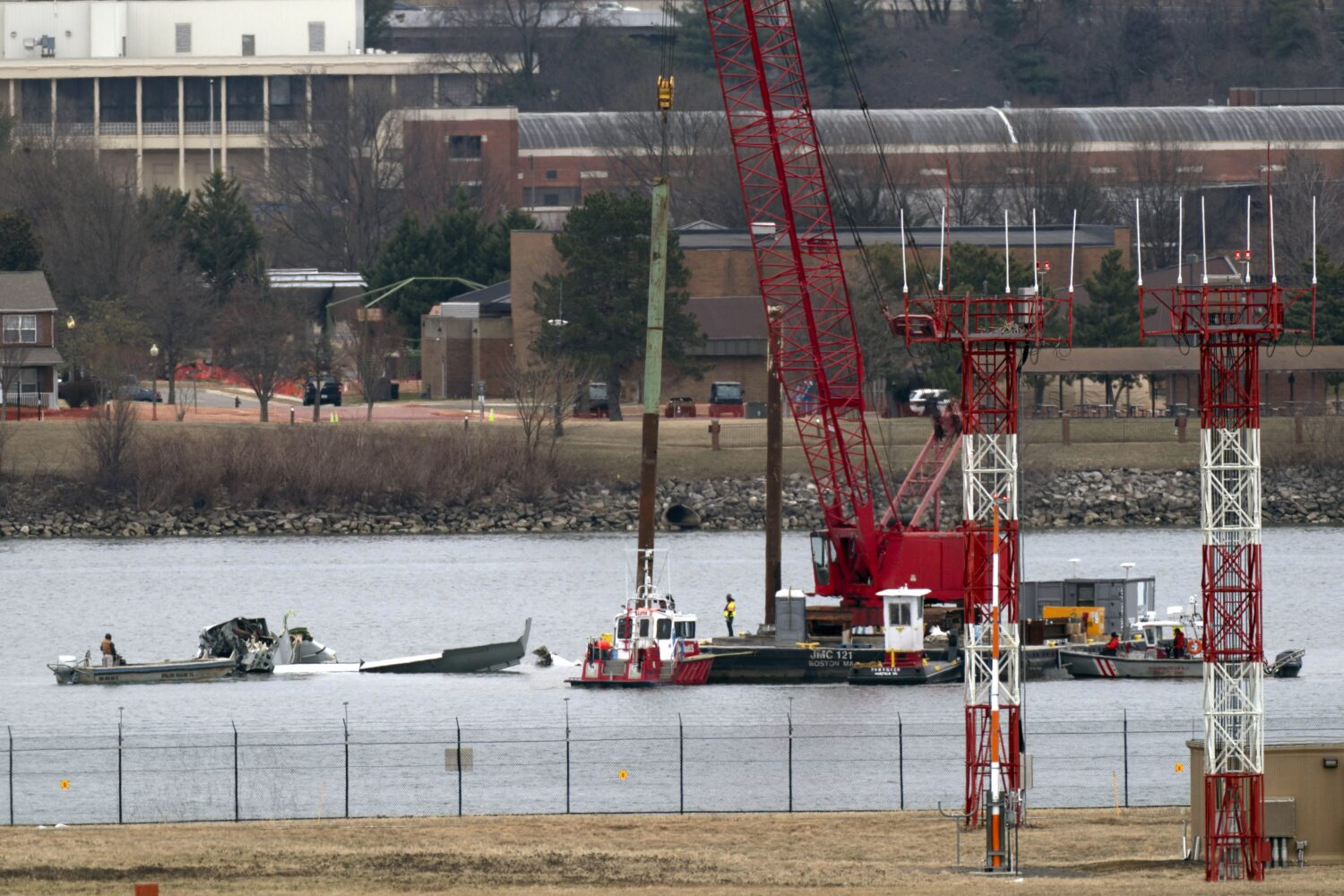
A devastating mid-air collision over Washington, D.C.’s Potomac River has left the nation in mourning as recovery teams have now retrieved all 67 victims from the tragic accident.
The collision, which involved an American Airlines Bombardier CRJ700 jet and a U.S. Army Black Hawk helicopter, remains under investigation as authorities work to determine what led to the catastrophic event.
The accident marks one of the deadliest aviation disasters in recent history, and the painstaking recovery effort has highlighted the immense challenges faced by divers and salvage teams in retrieving wreckage from the frigid waters.
The Collision and Initial Response
The mid-air crash took place last week when American Airlines Flight 5342 collided with an Army Black Hawk helicopter during what should have been routine operations.
The jet, a Bombardier CRJ700, was on its scheduled flight while the Black Hawk was conducting a training mission. The crash sent debris plummeting into the Potomac River, making immediate rescue efforts nearly impossible.
Emergency teams responded swiftly, but the severity of the crash meant that there were no survivors among the 67 passengers and crew aboard the commercial jet or the personnel aboard the helicopter.
In the aftermath, the National Transportation Safety Board (NTSB) launched a full-scale investigation, working alongside the Federal Aviation Administration (FAA), the U.S. military, and American Airlines.
Authorities quickly mobilized a large-scale recovery effort involving local law enforcement, the Coast Guard, and specialized dive teams. Despite challenging conditions, the recovery teams managed to locate and retrieve all the victims over the course of a week.
Read : Apollo 8 Astronaut Who Took Iconic “Earthrise” Photo Dies in Plane Crash
By Tuesday, 66 of the 67 recovered bodies had been identified, bringing closure to grieving families while investigators continued piecing together the sequence of events that led to the collision.
Challenges in the Recovery Effort
The search and recovery process was one of the most complex and difficult in recent aviation history. The wreckage of the aircraft lay scattered in the depths of the icy Potomac River, requiring divers to navigate treacherous conditions to retrieve bodies and debris.
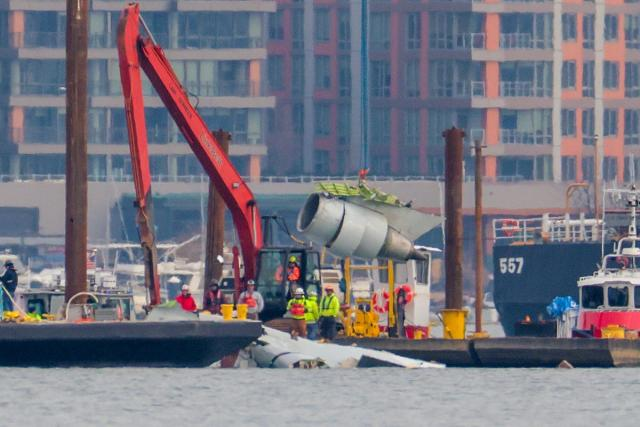
Specialized underwater hydraulic rescue tools were deployed to cut through metal and access submerged sections of the fuselage. A significant breakthrough in the recovery came when teams managed to retrieve large sections of the aircraft.
The tail of the American Airlines jet, with its distinctive red, white, and blue livery, was lifted from the water on Tuesday. Investigators also recovered a portion of the fuselage, a jet engine, and various pieces of debris essential for reconstructing the final moments before impact.
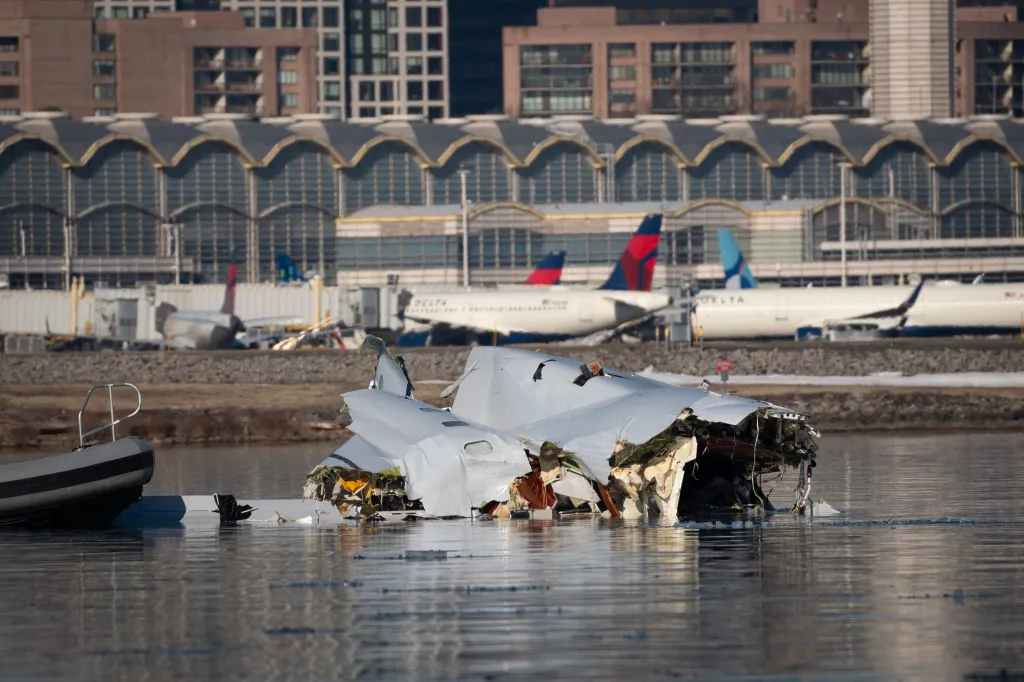
Divers faced additional obstacles, including strong water currents, low visibility, and fluctuating tidal levels. The harsh winter weather further complicated efforts, with impending snow, sleet, and freezing rain expected to make operations even more challenging.
The recovery of the Black Hawk helicopter, still submerged in the river, is expected to take several more days due to its entanglement with parts of the jet’s wreckage.
Officials also faced logistical hurdles in preserving evidence critical to the investigation. The crash site had to be meticulously examined, ensuring that crucial flight data and cockpit recordings were not lost or damaged during the retrieval process.
The NTSB, which has been analyzing data from the Black Hawk’s flight recorder, delayed a planned public briefing due to the need for additional verification of radar and altitude readings.
Unanswered Questions and Ongoing Investigation
With the recovery phase nearing completion, investigators have turned their focus to determining what led to the fatal collision. Initial reports indicate that the American Airlines flight data recorder showed a sudden upward movement of the aircraft’s nose just before the crash, while radar readings suggested that the Black Hawk may have been flying at an altitude higher than its designated limit.
The NTSB has been reviewing radar data, flight records, and eyewitness accounts to understand the precise mechanics of the collision. One of the key points of investigation is whether the Black Hawk was flying at an altitude above the 200-foot restriction it was supposed to maintain.
Early findings suggest that radar data from the control tower showed the helicopter at 300 feet just before the impact, conflicting with the original assumption that it never exceeded 200 feet.
Investigators are working to resolve this discrepancy, with experts analyzing air traffic control data, black box recordings, and real-time flight tracking information. Given the five-second intervals between radar updates, the possibility of rapid altitude changes is also being considered.
President Donald Trump spoke with American Airlines CEO Robert Isom to express his condolences and acknowledge the efforts of airline employees supporting the victims’ families. The airline has announced that it will observe a moment of silence to honor those lost in the tragedy.
The road to finding definitive answers will be a long one. The NTSB has stated that a preliminary report on the crash is expected within a month, though a full investigation could take much longer.
Former FAA official Steven Wallace has expressed confidence that investigators will be able to determine the cause of the accident, given the extensive data available, including radar tracking, eyewitness testimonies, and wreckage analysis.
The tragic loss of 67 lives in a single aviation accident has sent shockwaves across the nation. As families mourn and investigators continue their work, the focus remains on ensuring that such a catastrophe does not happen again.
The aviation community and military authorities will likely use the findings from this investigation to reassess flight safety protocols, airspace regulations, and the coordination between commercial and military aircraft operating in the same airspace.
The Potomac River now holds the remains of one of the most devastating air disasters in recent history, but the lessons learned from this tragedy will shape future aviation safety measures.