

Mary Robinson, a 69-year-old grandmother from Oklahoma, faced a serious legal ordeal in the Bahamas after authorities discovered a loaded firearm and ammunition in her purse during a cruise vacation. What Robinson and her family described as an accidental oversight quickly escalated into an arrest in Nassau, raising concerns about strict international gun laws, cruise ship security procedures, and the severe penalties travelers can face when crossing borders with prohibited items. The incident, which occurred during what was meant to be a celebratory trip for her adopted son’s birthday, placed Robinson at risk of a lengthy prison sentence before a court ultimately imposed a substantial fine instead.
Robinson had boarded Royal Caribbean’s Liberty of the Seas in Fort Lauderdale, Florida, with her 12-year-old adopted son, Johnny. The cruise was planned to celebrate his birthday, a milestone the family hoped would be marked by a joyful vacation. According to family members, Robinson regularly carried a firearm for personal protection when traveling but was careful to leave it in her car when prohibited. On this occasion, however, she allegedly forgot that the .380 pistol, along with four bullets, remained inside her purse when she boarded the ship.
The situation came to light not during embarkation in the United States, but later in the Bahamas, where the firearm was detected during a security check in Nassau ahead of an excursion. Robinson was immediately detained by local authorities, separated from her son, and taken into custody. The discovery triggered an automatic legal response under Bahamian law, which treats the possession of unlicensed firearms and ammunition as a serious criminal offense regardless of intent.
The Arrest in Nassau and Immediate Legal Consequences
Once the gun and ammunition were discovered, Mary Robinson was arrested and charged under Bahamian firearms laws, which impose mandatory penalties for possession. Unlike in the United States, where gun ownership laws vary widely by state and intent can play a role in legal outcomes, the Bahamas enforces strict regulations with limited discretion for authorities at the point of arrest. Carrying an unlicensed firearm or ammunition carries a default sentence of up to 24 months in prison.
Robinson was taken to the Central Police Station in Nassau, where she remained in custody for two days. According to her attorney, Bjorn Ferguson, the conditions of her detention were difficult. Ferguson told reporters that Robinson was held in a cell where she encountered aggressive rats, adding to the distress of her confinement. The experience was particularly alarming given her age and health, factors that would later be raised in her legal defense.
During Robinson’s detention, her 12-year-old son was cared for by a friend who had been traveling with them. Family members expressed deep concern about both Robinson’s wellbeing and the emotional impact on her son, who had expected a birthday celebration but instead found himself separated from his mother in a foreign country. The sudden shift from vacation to incarceration underscored how swiftly international legal issues can arise when travelers inadvertently violate local laws.
Read : Bahamas’ Breathtaking Selfie Spots: Top Ten Destinations to Capture Paradise
Robinson eventually appeared before Magistrate Lennox Coleby Sr. in Nassau. She pleaded guilty to the charges, a decision that reflected both the factual nature of the case and the limited scope for contesting firearm possession under Bahamian law. While the offense carried the possibility of a two-year prison sentence, the court exercised discretion in sentencing, taking into account mitigating circumstances presented by the defense.
Family’s Account, Health Claims, and the GoFundMe Appeal
Following Robinson’s arrest, her family launched a public fundraising campaign to help cover potential legal costs and fines. The GoFundMe was created by her granddaughter, Gracie Exendine, who described the situation as dire and appealed for urgent assistance. In her post, Exendine explained that Robinson had taken the cruise specifically to celebrate Johnny’s 12th birthday and emphasized that the firearm had been forgotten, not intentionally concealed.
Read : Former Army Ranger Brent Slough In ICU After Being Struck by Boat Propeller in the Bahamas
Exendine wrote that Robinson typically carried some form of protection when traveling but was accustomed to leaving it behind when entering restricted areas such as cruise ships. According to the family, this routine failed on this occasion, resulting in the accidental possession that led to her arrest. The fundraiser highlighted the possibility that Robinson would need to pay as much as $10,000 to avoid imprisonment, framing the situation as a crisis requiring immediate help.
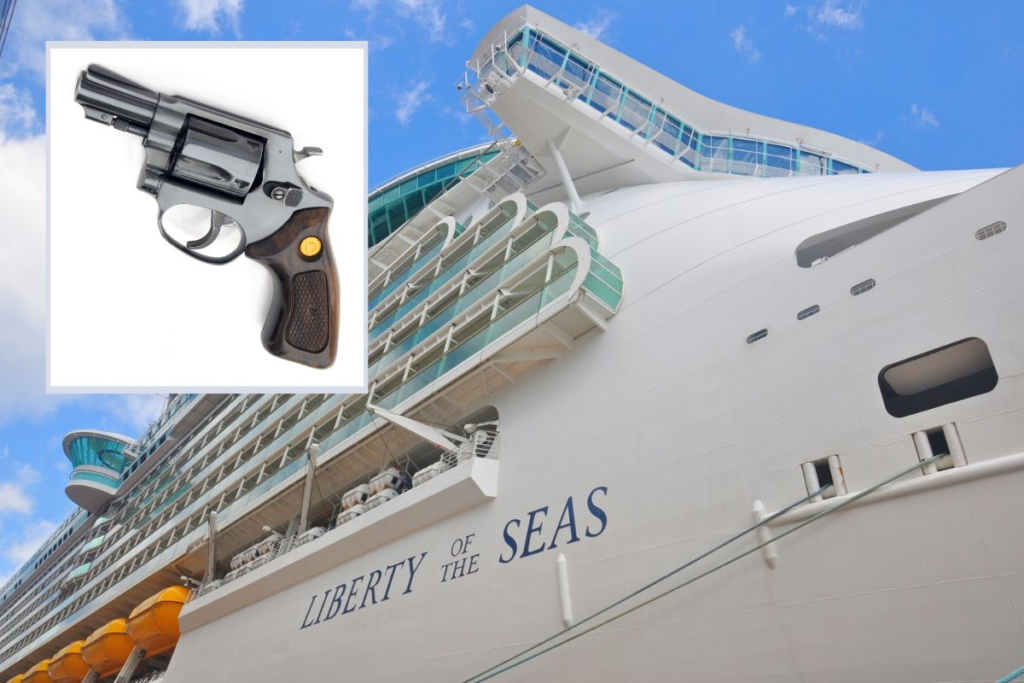
Attorney Bjorn Ferguson provided additional context about Robinson’s background and the firearm itself. He stated that the .380 pistol had been a gift from Robinson’s aunt more than 50 years earlier and that Robinson was legally licensed to carry it in the United States. Ferguson also told reporters that Robinson had “a touch of dementia,” suggesting that memory issues may have contributed to her failure to remove the gun from her purse before boarding the ship.
The mention of Robinson’s age and alleged cognitive issues became central to the family’s narrative, portraying her as a vulnerable elderly woman rather than a willful offender. Supporters of the GoFundMe echoed this framing, expressing sympathy and emphasizing that Robinson posed no threat. Critics, however, noted that international firearm laws are explicit and that travelers bear responsibility for ensuring compliance regardless of intent or personal circumstances.
As the case gained media attention, it also raised questions about cruise ship security. According to reports, the firearm was not detected when Robinson boarded the ship in Fort Lauderdale. It was only discovered later during checks in Nassau, prompting scrutiny of embarkation screening procedures and whether stricter enforcement at U.S. ports might prevent similar incidents.
Court Decision, Fine, and Broader Implications for Travelers
When Mary Robinson’s case came before the magistrate, the court opted for a financial penalty rather than incarceration. Magistrate Lennox Coleby Sr. agreed to spare her a prison sentence after she pleaded guilty and consented to pay an $8,000 fine. The decision allowed Robinson to avoid serving time in a Bahamian prison, a prospect that had alarmed her family given her age and health.
Read : US Embassy Issued Sexual Assault Warning for American Women Renting Jet Skis in The Bahamas
The fine, while substantial, marked a significant reduction from the potential 24-month sentence prescribed by law. It reflected a degree of judicial leniency, though it did not diminish the seriousness with which Bahamian authorities treat firearm offenses. The outcome underscored that even when courts show mercy, the financial and emotional toll of such cases can be severe.

Robinson’s case serves as a stark reminder to travelers about the risks of carrying prohibited items across international borders. Firearm laws vary dramatically from country to country, and ignorance or forgetfulness offers little protection once an item is discovered. In destinations like the Bahamas, where gun violence is tightly regulated, authorities have adopted zero-tolerance policies designed to deter weapons from entering the country under any circumstances.
The incident also highlights the importance of thorough pre-travel checks, particularly for individuals accustomed to carrying firearms in jurisdictions where such possession is legal. Legal experts frequently advise travelers to inspect luggage, purses, and personal items multiple times before departure, especially when traveling internationally or boarding cruise ships that visit foreign ports.
For cruise operators, the case may prompt renewed attention to security screening processes at embarkation points. The fact that a loaded firearm passed undetected onto a ship raises concerns about potential gaps in enforcement and passenger safety. While responsibility ultimately rests with the individual traveler, cruise lines may face pressure to review and strengthen screening measures to prevent similar incidents.
Mary Robinson’s experience transformed a family celebration into a legal crisis, illustrating how quickly a moment of oversight can carry serious consequences abroad. While the court’s decision allowed her to avoid imprisonment, the case remains a cautionary example of the uncompromising nature of international firearms laws and the high stakes travelers face when those laws are violated, intentionally or not.
Just giving bet188vina a quick shoutout. Layout seems pretty good, easy on the eyes. Check it out at bet188vina